Mia Khoirunisa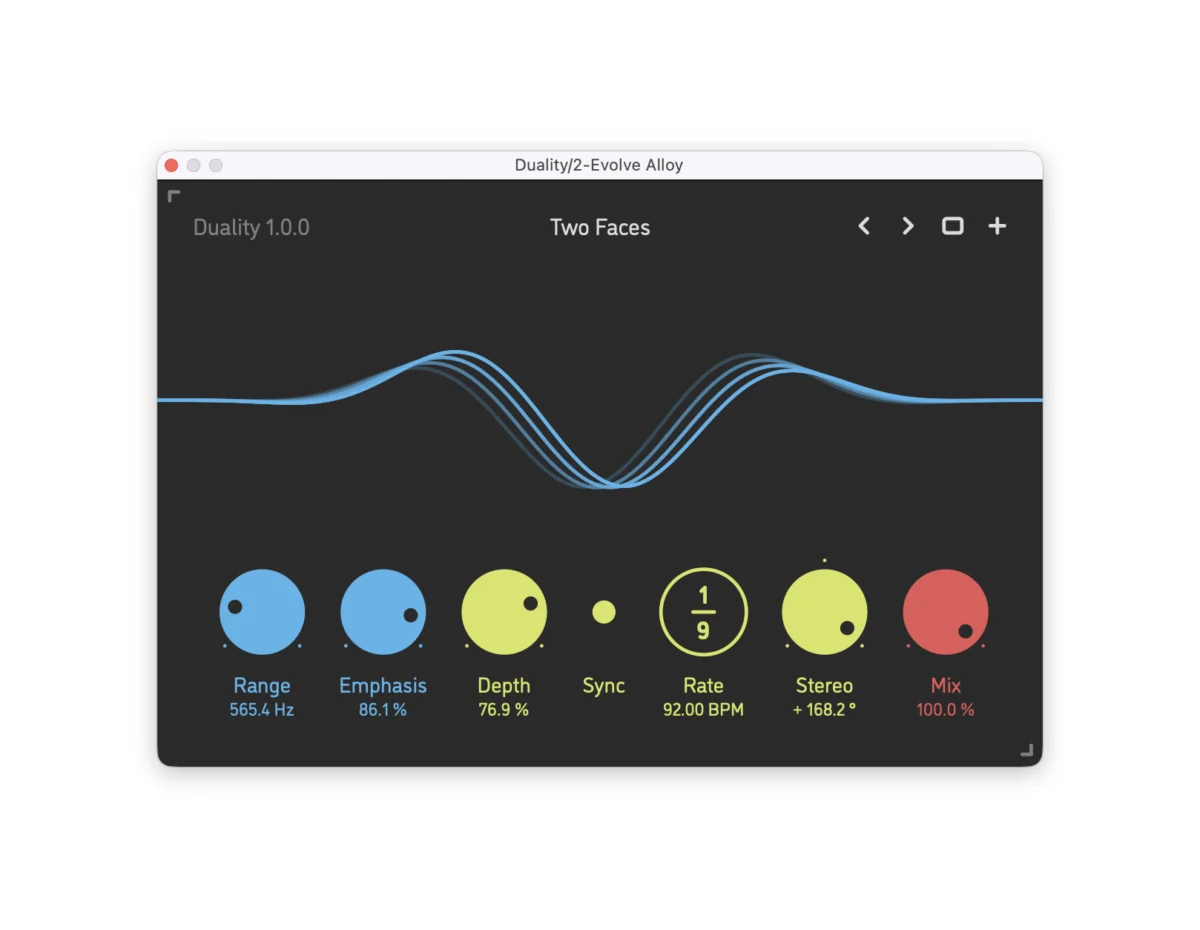
Sinevibes has unveiled Duality, a new audio effect plugin that promises to redefine pitch modulation with its innovative "hybrid vibrato" approach. By decoupling frequency spectrum emphasis from phase modulation, Duality offers a unique method for generating clean, stereo-spinning pitch modulation, positioning itself as one of Sinevibes’ most nuanced yet compelling offerings to date. The development process, which involved extensive testing of prerelease builds and observing the evolution of the user interface, underscores a commitment to meticulous craftsmanship.
A Novel Approach to Pitch Modulation
At its core, Duality operates on a principle that deviates significantly from traditional effects like phasers. The key innovation lies in its ability to treat frequency spectrum manipulation and phase modulation as independent processes, achieved through the integration of multiple digital signal processing (DSP) blocks. This separation allows for a level of control and sonic purity that is not achievable with conventional techniques.
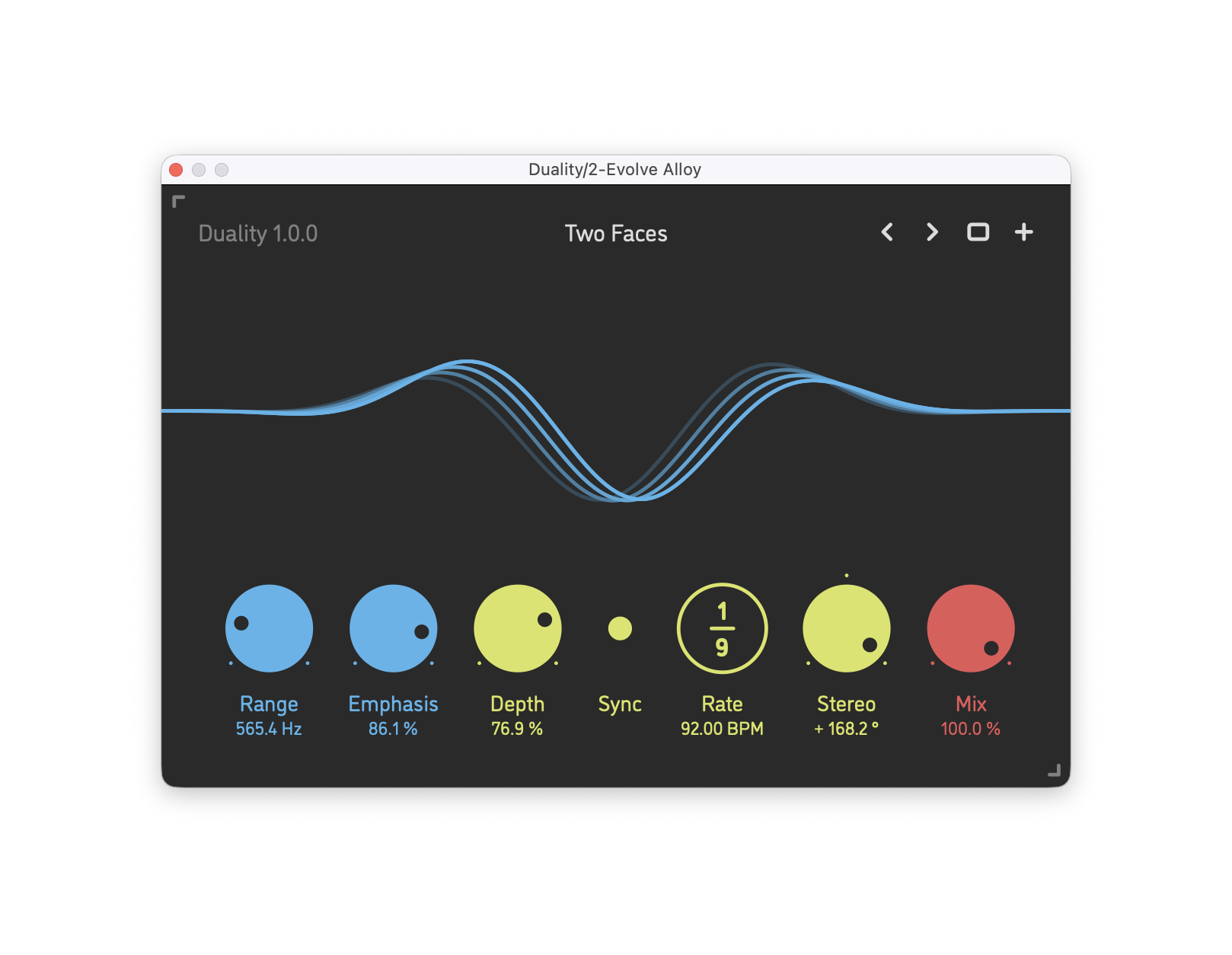
The developers at Sinevibes highlight that a deep technical understanding of the underlying algorithms is not strictly necessary for users to appreciate Duality’s capabilities. The visual feedback provided by the plugin, which dynamically illustrates the effect through dancing wave patterns, serves as an intuitive guide to its function. However, for those with a technical inclination, the architecture can be conceptualized as a sophisticated fusion of distinct DSP operations, eschewing feedback loops or delay lines. This design choice eliminates output latency, making Duality an ideal companion for live instrument performances, even when used in demanding laptop-based setups, and crucially, preserves the sonic integrity of the output.
The developer, Artemiy at Sinevibes, is recognized for incorporating user-centric features such as click-free lag filters and other subtle yet impactful details. Duality’s control scheme is designed for intuitive operation, allowing users to set modulation frequencies in Hertz or synchronize them to the host tempo through divisions. Parameters for spectrum notch emphasis, effect depth, stereo field positioning, and overall mix are readily accessible. This inherent simplicity fosters an environment where both serendipitous sonic discoveries and deliberate sound sculpting can flourish.
The Engineering Behind Duality
The conceptual framework behind Duality is elegantly articulated by its creator, who also serves as the designer and copywriter, a testament to Sinevibes’ integrated development ethos. The official description states: "While it’s somewhat similar in nature to a phase shifter, in this effect, the notches in the frequency spectrum and the phase modulation are created separately – using multiple different DSP algorithm blocks. With this unique setup, Duality makes it possible to control the spectrum notch emphasis independently from vibrato, and is capable of producing cleaner and deeper pitch modulation – akin to a rotating speaker."
This technical explanation reveals a sophisticated architecture. Traditional phase shifters typically manipulate the phase of different frequency bands simultaneously, often leading to a characteristic "sweeping" sound that can sometimes be perceived as muddy or less precise. Duality, by contrast, isolates the manipulation of the frequency spectrum (creating notches) from the modulation of the pitch itself. This separation is achieved through the careful orchestration of multiple, distinct DSP algorithms.
The result is a more refined control over the sonic character. Spectrum notch emphasis dictates the specific frequencies that are attenuated or boosted, influencing the timbre and resonance of the sound. Vibrato, on the other hand, directly controls the perceived pitch variations. By allowing these two aspects to be adjusted independently, users can sculpt a much wider range of modulation effects. The analogy to a rotating speaker, such as a Leslie speaker, is particularly apt. Leslie speakers achieve their signature sound by physically rotating speaker horns and bass rotor cabinets at different speeds, creating complex Doppler shifts and amplitude modulation that result in a rich, swirling sound. Duality aims to emulate this complexity through digital means, offering a cleaner, more controllable, and potentially more extreme form of this sonic movement.
The absence of feedback and delay lines is a crucial engineering decision. Feedback loops in audio effects can introduce unwanted coloration and increase latency. Delay lines, while fundamental to many modulation and time-based effects, can also contribute to latency. By avoiding these elements, Sinevibes ensures that Duality remains a low-latency solution, which is paramount for real-time audio processing. This is particularly important for musicians who rely on immediate sonic feedback, whether performing live or working on intricate productions.
Applications and Sonic Exploration
Sinevibes suggests conventional applications for Duality, particularly with instruments that benefit from the "rotating speaker" effect. Electric guitar, electric piano, and tonewheel organs are cited as prime candidates, where Duality can add a classic yet refined vibrato or chorus-like texture. The plugin’s ability to produce clean, deep pitch modulation makes it suitable for emulating the sonic richness of iconic hardware units without the associated artifacts.
Beyond these traditional uses, Duality also opens up avenues for more experimental sound design. The plugin has been demonstrated in conjunction with various synthesizers and sequencers, showcasing its versatility. For instance, the review highlights experiments using custom patches from AAS Multiphonics CV-3 and Minimal Audio Current, coupled with the Manifest Audio Polyfold sequencer for Ableton Live. These combinations illustrate how Duality can imbue synthesized lines with dynamic, evolving pitch and stereo movement, creating textures that are both captivating and uniquely modern.
Further explorations delve into more unconventional sonic territories, where Duality is used alongside a suite of other Sinevibes plugins, including Excite Audio Evolve Alloy and Multiphonics CV-3. These more abstract experiments, while perhaps not intended for product demonstrations, underscore the plugin’s potential as a creative catalyst for pushing sonic boundaries. The ability to layer and combine Duality with other effects allows for the creation of complex, evolving soundscapes that defy easy categorization.
The availability of Duality across multiple platforms and formats further enhances its accessibility. It is offered for macOS in AU, VST3, and AAX formats, for Windows in VST3 and AAX formats, and for Linux in VST3 (Intel/AMD). This broad compatibility ensures that Duality can be integrated into a wide range of digital audio workstations (DAWs) and user workflows.
Development Timeline and Context
While specific dates for the initial conception and development phases of Duality are not publicly detailed, the review mentions the author’s involvement with prerelease builds, extending up to the final version. This suggests a development cycle that likely spanned several months, involving iterative testing, bug fixing, and UI refinement. The observation of the user interface taking shape indicates a hands-on, collaborative approach to the development process.
Sinevibes, as an independent developer, has a history of releasing innovative and well-crafted audio plugins. Their catalog often features effects that offer unique takes on familiar concepts or introduce entirely new sonic possibilities. Duality appears to fit this pattern, building upon the company’s reputation for sonic ingenuity and meticulous attention to detail. The consistent quality of their output, from initial concept to final release, has earned them a dedicated following within the music production and sound design communities.
The plugin’s release at this time places it within a competitive landscape of audio effect plugins. However, its distinct "hybrid vibrato" approach and the promise of clean, stereo-spinning pitch modulation offer a compelling alternative to existing modulation and pitch-shifting tools. The emphasis on low latency and sonic purity further strengthens its appeal to both professional and enthusiast users.
Broader Impact and Implications
The introduction of Duality has several implications for the audio effects market and for sound designers. Firstly, it pushes the boundaries of what is considered "standard" modulation. By separating spectral emphasis from phase modulation, Sinevibes has created a new paradigm for pitch manipulation that can yield results distinct from phasers, flangers, chorus units, and even traditional vibrato plugins.
Secondly, Duality’s success could encourage further exploration into hybrid effect architectures. The modularity and independent control offered by its design might inspire other developers to investigate similar approaches, leading to a richer and more diverse array of audio processing tools in the future. The trend towards increasingly sophisticated DSP and algorithmic design in plugins suggests that innovations like Duality are likely to become more common.
For musicians and producers, Duality offers a powerful new tool for adding character, depth, and movement to their audio. Its versatility, ranging from subtle embellishments to dramatic sonic transformations, makes it a valuable addition to any toolkit. The low-latency design also democratizes the use of such advanced modulation effects, making them accessible even to users with less powerful hardware or those who prioritize real-time performance.
The availability on Linux is also a noteworthy aspect, catering to a user base that is often underserved by plugin developers. This commitment to cross-platform support further solidifies Sinevibes’ position as a developer that values inclusivity and broad accessibility.
In conclusion, Sinevibes Duality represents a significant advancement in pitch modulation technology. Its innovative "hybrid vibrato" concept, meticulous engineering, and intuitive design combine to deliver a powerful and inspiring tool for audio professionals and enthusiasts alike. The plugin’s ability to produce unique, clean, and stereo-spinning pitch modulation, coupled with its low-latency performance, sets a new benchmark for what can be achieved in the realm of audio effects.