Nayara Elvina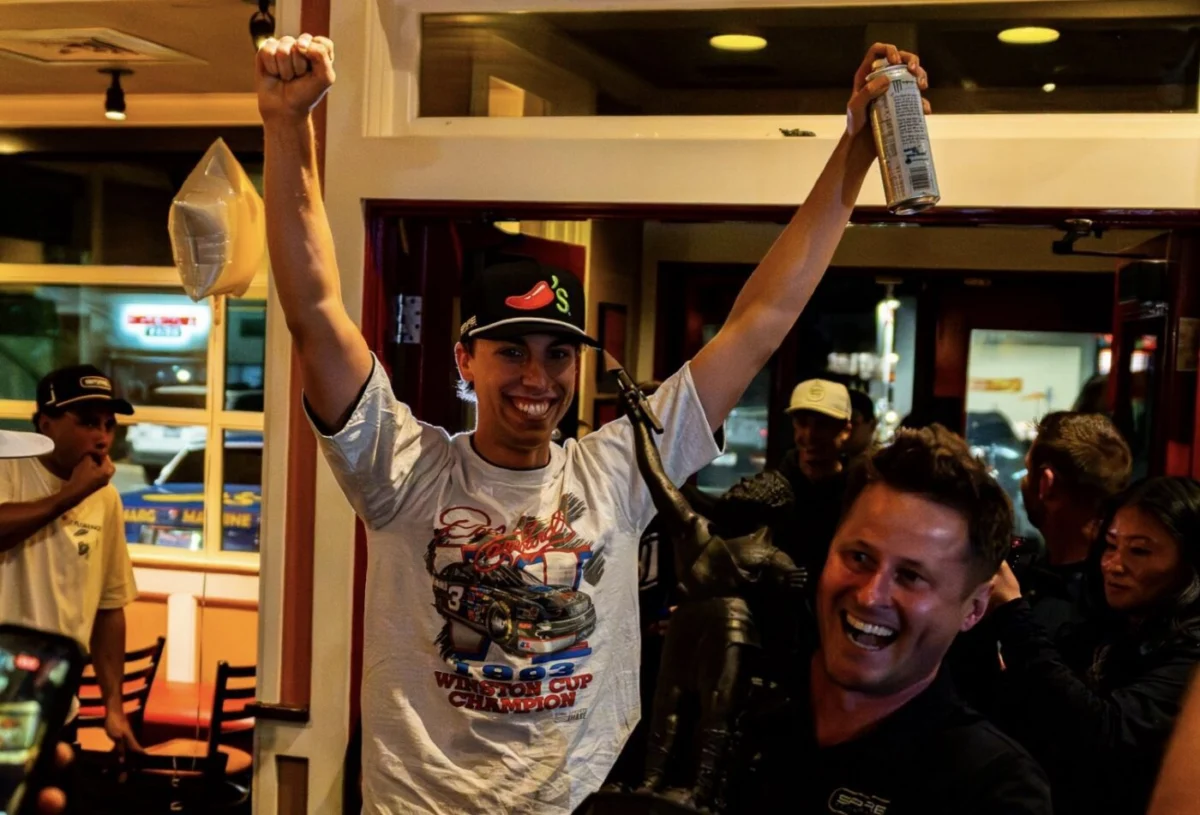
In a career-defining performance at one of professional auto racing’s most unpredictable venues, Carson Hocevar captured his first career NASCAR Cup Series victory this past weekend in the Jack Link’s 500 at Talladega Superspeedway. The 23-year-old driver of the #77 Spire Motorsports Chevrolet Camaro ZL1 reached the milestone in his 91st career start, navigating a chaotic final stage to claim the checkered flag at the 2.66-mile tri-oval. The victory marks a significant turning point for both the driver and the Spire Motorsports organization, which has been steadily investing in talent and infrastructure to compete with the sport’s elite multi-car teams.
The victory was punctuated by an unconventional celebration that saw Hocevar maneuvering his vehicle around the track while partially hanging out of the driver-side window to salute the fans in the grandstands. This display of raw emotion and connection with the audience set the stage for an evening of festivities that eventually relocated from the Alabama infield to a restaurant in Mooresville, North Carolina. Following the race, Hocevar appeared on the Dale Jr. Download podcast to detail the logistical hurdles and spontaneous decisions that defined his post-win experience, highlighting a unique partnership between a modern athlete and a national corporate sponsor.
The Path to Victory at Talladega
Talladega Superspeedway is renowned for its high-speed drafting and the "Big One"—large-scale multi-car accidents that often dictate the outcome of the race. Hocevar’s victory in the Jack Link’s 500 was a product of strategic patience and precise execution by the #77 team. Led by veteran crew chief Luke Lambert, the team focused on maintaining track position within the lead draft while managing fuel consumption and tire wear during the final 50-lap sprint.
Hocevar, who transitioned to full-time Cup Series competition after a successful but sometimes controversial stint in the NASCAR Craftsman Truck Series, has been praised by analysts for his rapid maturation. Entering the weekend, the Michigan native had shown flashes of brilliance on superspeedways but had yet to close out a race in the premier series. By avoiding the late-race incidents that claimed several championship contenders, Hocevar positioned himself on the front row for a green-white-checker finish, ultimately holding off a hard-charging pack to secure the win.
The statistical significance of the win cannot be overstated. For Spire Motorsports, a win at Talladega provides not only a massive boost in points but also secures a provisional spot in the NASCAR playoffs. For Hocevar, the victory validates his promotion to the Cup Series and silences critics who questioned his ability to handle the pressure of the sport’s highest level.
A Spontaneous Celebration at Chili’s Grill & Bar
While victory lane celebrations are typically choreographed affairs involving hats, trophies, and sponsor-mandated photographs, Hocevar’s post-race itinerary took an organic turn. Speaking with Dale Earnhardt Jr., Hocevar revealed that the decision to visit a Chili’s Grill & Bar—the primary sponsor of his #77 car—was driven by a combination of hunger and corporate synergy.
The driver explained that because the race was a designated "Chili’s race," numerous corporate representatives from the restaurant chain were on-site at Talladega. As the team celebrated in victory lane, these executives began coordinating with the Chili’s location in Mooresville, North Carolina, where many NASCAR teams are headquartered. Despite the restaurant typically closing at 11:00 PM, the staff reopened the doors specifically to host the winning driver, his crew chief, and the Spire Motorsports team.
Hocevar noted that the gesture was not planned in advance, stating that the corporate office and the local franchise "both had the same idea" simultaneously. Upon their arrival, the team was met with a celebratory atmosphere, including a customized cake and a spread of the restaurant’s signature "Triple Dipper" appetizers. Hocevar recounted that the staff had gone as far as purchasing a cake on short notice to ensure the milestone was properly recognized. The event featured speeches at the bar and a rare moment of relaxation for a crew that had spent the previous several days in the high-stress environment of the garage.
Chronology of the Post-Race Festivities
The timeline of the celebration reflects the grueling schedule often faced by NASCAR personnel during the season. After completing the mandatory media rotations, technical inspections, and victory lane ceremonies at Talladega, the team traveled back to the Charlotte area, arriving well after midnight.
- Sunday Afternoon: Hocevar wins the Jack Link’s 500 at Talladega.
- Sunday Evening: Post-race technical inspection and media obligations are completed.
- Late Sunday/Early Monday: The team travels from Alabama to North Carolina.
- Monday, 1:00 AM – 3:00 AM: The private celebration at the Mooresville Chili’s takes place, featuring the team and corporate sponsors.
- Monday, 3:30 AM: The party moves to the residence of crew chief Luke Lambert.
- Monday, 6:00 AM: Hocevar concludes the celebration and departs for home.
Hocevar admitted that by the time the party moved to Lambert’s home, the physical and emotional exhaustion of the race weekend had begun to set in. He described sitting on a couch, unable to move due to the "bruises" and physical toll of his post-race celebration antics and the 500-mile race itself. The driver eventually returned home at 6:00 AM on Monday morning, notably having to borrow his crew chief’s truck because his own vehicle remained parked at the Talladega Superspeedway.
The Evolution of the Hocevar-Chili’s Partnership
The partnership between Carson Hocevar and Chili’s has become a focal point of NASCAR’s marketing landscape. In an era where traditional sponsorship models are evolving, the "Hurricane Hocevar" and Chili’s collaboration represents a successful integration of brand identity and athlete personality.
Chili’s, which had a historical presence in NASCAR through various team associations in the late 1990s and early 2000s, re-entered the sport with a strategy focused on digital engagement and fan-centric promotions. By aligning with a young, aggressive driver like Hocevar, the brand has tapped into a demographic that values authenticity. The "electric" celebration of hanging out the window of a car branded with Chili’s logos provided the kind of viral marketing "earned media" that sponsors covet.
Industry analysts suggest that the success of this partnership may serve as a blueprint for other mid-tier teams. By focusing on a single, high-energy personality and leaning into the "lifestyle" aspect of the sponsor’s product, Spire Motorsports has maximized the ROI for Chili’s. The decision to reopen a restaurant for a 2:00 AM victory party further solidifies the brand’s image as a supporter of the sport and its participants.
Physical Demands and the "Adrenaline Crash"
Hocevar’s comments regarding his physical state following the race provide insight into the hidden demands of superspeedway racing. While the cars are equipped with advanced safety features and ergonomic seating, the G-forces, heat, and vibration of a 500-mile race at Talladega are substantial. Hocevar mentioned being "so worn out" and "bruised," likely a result of the intense buffeting cars experience in the draft and the physical exertion required to maintain control during high-speed maneuvers.
The "adrenaline crash" described by Hocevar is a common phenomenon among professional athletes following high-stakes victories. The transition from the high-octane environment of a victory lane in front of thousands of fans to a quiet couch in a crew chief’s living room highlights the human element of the sport. Despite the fatigue, Hocevar emphasized the importance of the camaraderie shared with his team during those early morning hours, noting that they "talked forever" about the race and their journey to the top of the podium.
Broader Implications for Spire Motorsports
The victory at Talladega is a landmark moment for Spire Motorsports. Founded by Jeff Dickerson and Thaddeus Campane, the team has grown from a small operation to a multi-car organization with technical alliances and high-profile sponsorships. Winning a "crown jewel" style event like a Talladega race provides the organization with increased leverage in future sponsorship negotiations and helps in recruiting top-tier engineering and mechanical talent.
Furthermore, the win places Hocevar in the conversation for "Rookie of the Year" or "Most Improved Driver" honors, depending on the specific criteria of the season. It also ensures that the #77 car will be a focal point of the NASCAR playoffs, providing sustained television exposure for Chili’s and other team partners through the autumn months.
Conclusion and Future Outlook
Carson Hocevar’s first Cup Series win was more than just a statistical entry in the NASCAR record books; it was a cultural moment for the sport. From the daring post-race celebration to the early-morning "Triple Dippers" at a local restaurant, the event underscored the unique relationship between NASCAR drivers, their teams, and the brands that fund their pursuit of speed.
As the series moves forward, the focus will shift to whether Hocevar can maintain this momentum on different track types, such as short tracks and intermediate ovals. However, for one night in Mooresville, the logistics of the championship took a backseat to a simple celebration of a young driver’s breakthrough. The success of the weekend demonstrates that when a driver’s personality aligns perfectly with a sponsor’s brand, the results can be "electric" both on and off the track. With a secured spot in the post-season and a growing fan base, the "Hurricane" has officially made landfall in the NASCAR Cup Series.