Johan Budi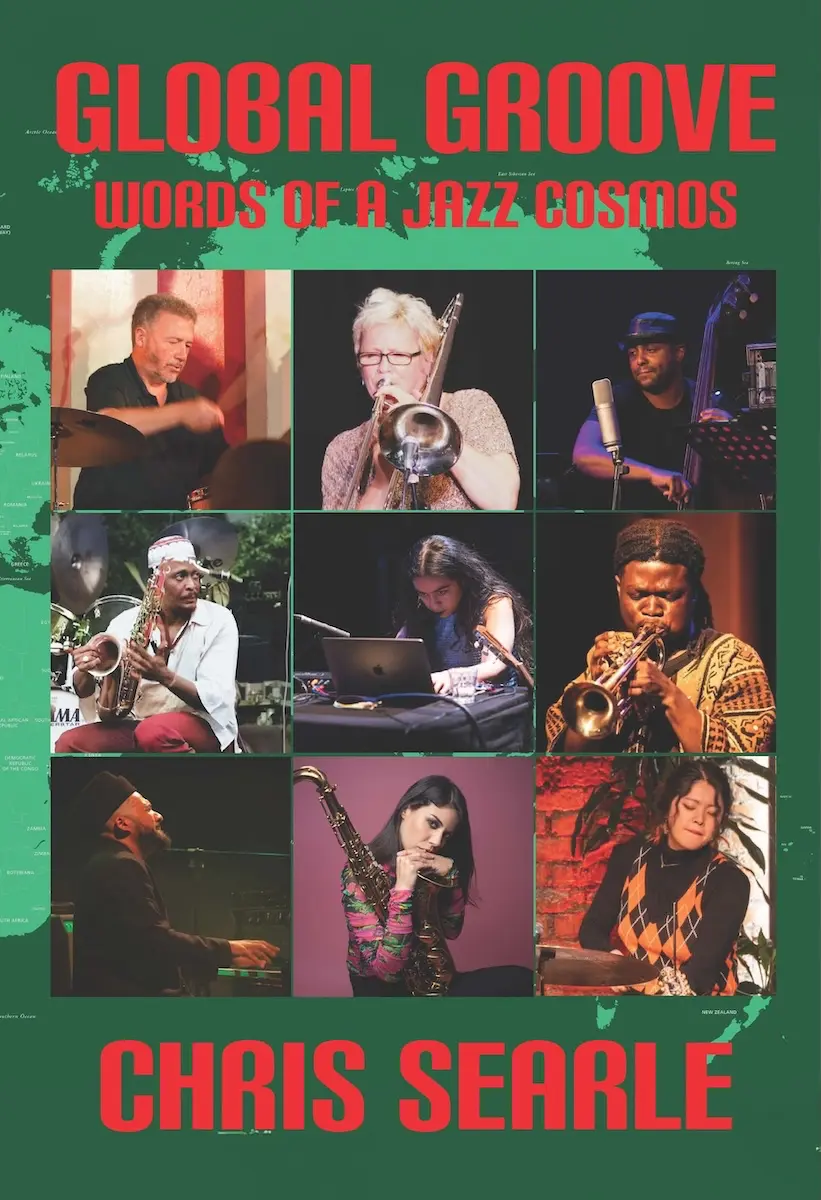
The Evolution of Jazz Criticism: From History to Advocacy
The publication of Global Groove marks a significant departure from traditional jazz historiography. While Gary Giddins’ Visions of Jazz provided a retrospective analysis of the genre’s first hundred years, Searle focuses on the "new millennium" and the closing years of the 20th century. Where Giddins maintained a largely objective historical distance, Searle’s writing is characterized by what critics describe as a "moral insistence." His work operates on the premise that jazz is inherently a campaigning music—an art form rooted in the quest for freedom and popular justice.
Searle’s background with the Morning Star is pivotal to understanding the book’s framing. In his view, jazz is a sonic manifestation of political resistance. He explicitly categorizes the music as a vehicle for "women’s equality, a rejection of authoritarianism, and a love of peace between the world’s peoples." This perspective transforms the act of music criticism into an act of political observation. For Searle, a performance is rarely just a display of technical virtuosity; it is a statement on the human condition and a challenge to established power structures.
A Global Census of Sound: Scope and Statistical Reach
The sheer scale of Global Groove is a testament to the music’s contemporary reach. The book covers musicians from over 100 countries, effectively mapping a "jazz cosmos" that extends far beyond the traditional hubs of New Orleans, Chicago, and New York. By documenting the work of artists from diverse geographic and cultural backgrounds, Searle highlights the indigenization of jazz—how the genre absorbs local folk traditions and instruments to create entirely new subgenres.
Key examples of this internationalism include:
- Morocco: The work of Majid Bekkas, a virtuoso of the guembri (a three-stringed bass lute), whose integration of Gnawa music with jazz improvisation illustrates the genre’s African lineage and its capacity for cross-cultural synthesis.
- Trinidad and Tobago: The contributions of steel-pan specialist Rudy Smith, demonstrating how Caribbean percussive traditions have expanded the harmonic and rhythmic possibilities of the jazz idiom.
- Peru: The compositions of Gabriel Alegría, whose Afro-Peruvian jazz sextet bridges the gap between the mythical traditions of the Andes and modern trumpet improvisation.
This statistical breadth suggests that jazz has become the world’s "lingua franca" for improvisation. The inclusion of over 300 distinct pieces of writing ensures that the book serves as a primary source for researchers looking to understand the globalization of the arts in the 21st century.
Chronology of a Shifting Landscape: 1961 to 2025
Though primarily focused on the last 30 years, Global Groove utilizes a non-linear chronological approach to connect modern performances with the historical giants of the past. This timeline allows readers to trace the lineage of influence from the hard bop era to the contemporary avant-garde.
- 1961: Searle recalls a formative performance by Art Blakey’s Jazz Messengers in Manchester. This lineup, featuring Lee Morgan, Wayne Shorter, Bobby Timmons, and Jymie Merritt, represents the "gold standard" of American jazz that would eventually inspire the global movements documented later in the book.
- 1998: The publication of Gary Giddins’ Visions of Jazz, which established the "jazz is everywhere" thesis that Searle’s book seeks to prove in the contemporary era.
- 2005: A pivotal concert in Canada featuring Michael Brecker, Roy Hargrove, and Herbie Hancock. Searle’s review of this event is notable for its rare moment of critical dissent, where he describes Hancock’s reliance on electronic devices as "twiddling buttons," illustrating the tension between acoustic tradition and technological experimentation.
- 2017: The review of Robert Glasper’s I’m Dying of Thirst, an album that directly addresses police violence in the United States. This entry highlights Searle’s commitment to jazz as a medium for social commentary and "Black Lives Matter" era activism.
- 2025: A forward-looking review of Gabriel Alegría’s El Muki, an album celebrating the protectors of Andean miners, showcasing the ongoing vitality and ecological consciousness of modern jazz.
The London Magnet and the UK Jazz Renaissance
A significant portion of the book is dedicated to the thriving jazz scene in London, which Searle portrays as a global magnet for improvisational talent. The reviews frequently center on venues that have become synonymous with the "UK Jazz Renaissance," including:
- Café Oto (Dalston): Known for its focus on avant-garde and experimental music.
- The Vortex: A hub for both established international stars and emerging local talent.
- Ronnie Scott’s and Pizza Express (Dean Street): Traditional pillars of the London jazz circuit that continue to host high-caliber international acts.
While the focus on London reflects the city’s status as a global cultural capital, Searle’s writing also acknowledges the broader UK landscape. By documenting performances in Manchester and other regions, he argues that the importance of jazz in Britain is not confined to the capital but is a national phenomenon that raises the country’s stature as a center for serious musical evaluation.
Analysis of Implications: Advocacy vs. Traditional Criticism
One of the more nuanced aspects of Global Groove is the author’s unwavering positivity. Unlike traditional critics who may focus on technical flaws or "unfulfilled expectations," Searle adopts a style of "unconditional enjoyment and praise." This approach has sparked a dialogue within the jazz community regarding the role of the critic.
Critics of this style argue that by eschewing negativity, the reviewer may overlook the "featureless mundane" or the "stultifyingly demotic" aspects of the touring musician’s life. However, Searle’s supporters argue that in an era where jazz struggles for mainstream media representation, the role of the critic should be that of an advocate. By focusing on the "ideal" rather than the "flaws," Searle creates a celebratory archive that emphasizes the music’s capacity to break boundaries and foster human connection.
The book’s "catholic taste" is further evidenced by its inclusivity. Searle grants equal weight to the legendary Louis Armstrong and Humphrey Lyttelton as he does to contemporary figures like Hiromi, Maria Schneider, and Evan Parker. This sense of historical continuity suggests that the "global groove" is not a replacement for the jazz tradition, but a vibrant and necessary expansion of it.
Societal Impact and Future Outlook
Global Groove: Words Of A Jazz Cosmos ultimately suggests that the vitality of jazz is inextricably linked to its relevance to contemporary social issues. By documenting how jazz addresses themes of racial justice, gender equality, and international peace, Searle provides a roadmap for the genre’s survival in a rapidly changing cultural market.
The book serves as an essential resource for several key demographics:
- Musicologists: Who require data on the international proliferation of jazz instruments and styles.
- Cultural Historians: Interested in the intersection of socialist politics and the arts in late 20th and early 21st-century Britain.
- Jazz Enthusiasts: Who seek to discover artists from outside the traditional American and Western European canons.
As the jazz world moves further into the 21st century, the "global groove" identified by Searle is likely to become the dominant narrative. The music’s ability to adapt to local contexts while maintaining its core identity of "freedom and popular justice" ensures its continued relevance. Through the advocacy and exhaustive documentation found in this volume, the importance of jazz as a global force is not only appreciated but solidified for future generations.
Global Groove: Words Of A Jazz Cosmos, by Chris Searle. Jazz In Britain, 492 pp, pb, £15. ISBN 978-1-0683644-2-6