Johan Budi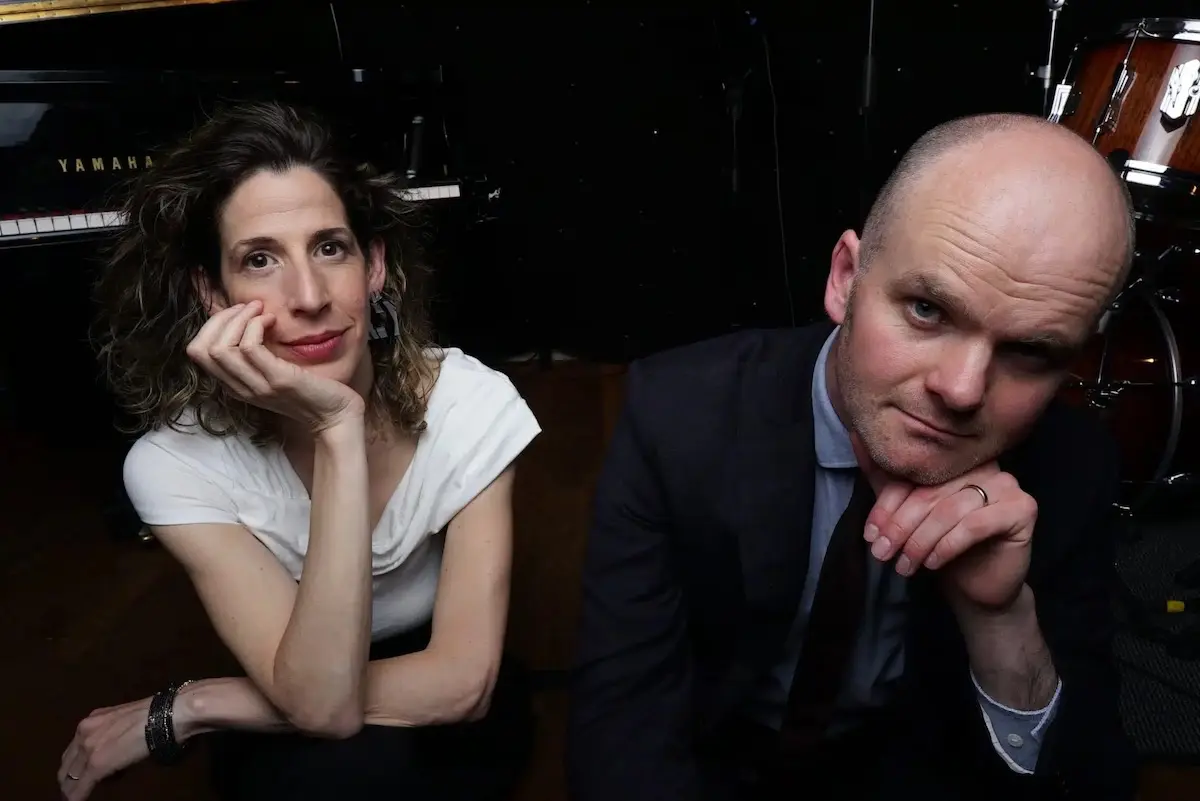
The first of these projects, Portrait In Evans, serves as a bridge between the San Francisco jazz scene and the United Kingdom’s vibrant instrumental community. Vocalist Noa Levy, a newcomer to the London circuit, has partnered with pianist Paul Edis—the recipient of the prestigious 2023 Parliamentary Jazz Award—to explore the melodic and emotional depths of the Bill Evans songbook. This collaboration is further bolstered by the presence of veteran reedman Alan Barnes, whose contributions on three of the ten tracks provide a rich, multi-instrumental texture to the ensemble.
A New Vocal Perspective on the Bill Evans Canon
The central ambition of Portrait In Evans lies in its attempt to humanize and verbalize the often-ethereal compositions of Bill Evans. While Evans is primarily remembered for his revolutionary approach to the jazz trio and his harmonic sensitivity, many of his works have been fitted with lyrics over the decades. This album draws from a diverse pool of lyricists, including the renowned Gene Lees, Bob Dorough, and Meredith d’Ambrosio, as well as contributions from Paul Edis and Noa Levy themselves.
Recorded at Red Gables Studio in London on July 9 and 10, 2024, the album features a rhythm section comprised of bassist Adam King and drummer Joel Barford. The project aims to "paint a portrait" of Evans as an artist, focusing on compositions that span his career. Levy’s stated objective was not to alter the compositions but to "step inside them," acknowledging the emotional openness that defined Evans’s style.
The tracklist includes several of the most iconic pieces in the jazz repertoire:
- Blue in Green: Originally appearing on Miles Davis’s Kind of Blue, this piece is widely attributed to Evans’s harmonic genius.
- Waltz For Debby: Perhaps Evans’s most famous composition, written for his niece.
- Very Early: A complex, early-career composition that showcases Evans’s mastery of form.
- Peri’s Scope and Nardis: Pieces that highlight the rhythmic and modal exploration of the post-bop era.
Technical Execution and Collaborative Dynamics
The instrumental execution of the Paul Edis Trio, alongside Alan Barnes, has been noted for its high technical standard. Edis, whose 2023 award solidified his standing as one of the UK’s premier jazz pianists, displays a sensitive touch that mirrors the influence of Evans without falling into mere imitation. Alan Barnes provides essential contrast, utilizing the clarinet, bass clarinet, and alto saxophone to embellish the vocal lines. His work on "Blue In Green" and "Time Remembered" is particularly noteworthy for its ability to anticipate and support the melodic shifts of the compositions.
However, the vocal component of the album—the primary experiment of the recording—has met with mixed critical observation. While Levy’s scatting on "Nardis" is cited for its rhythmic swing and her performance on "Only Child" is considered a highlight of the ensemble’s synergy, some critics have pointed toward inconsistencies in diction and rehearsal on tracks such as "Peri’s Scope." Despite these hurdles, the interpretations of "Waltz For Debby" and "Turn Out The Stars" are viewed as successful realizations of the project’s goal to translate Evans’s instrumental language into a vocal format.
Archival Excellence: The Kuumbwa Jazz Centre Recordings
Contrasting the new studio work of Levy and Edis is the release of Michel Petrucciani: Kuumbwa, a two-CD archival set that captures a high-water mark in the career of the late French pianist Michel Petrucciani. Produced by Zev Feldman, often referred to as the "Jazz Detective" for his work in unearthing lost recordings, this release documents a live performance at the Kuumbwa Jazz Centre in Santa Cruz, California, on May 17, 1987.
Petrucciani, who lived with osteogenesis imperfecta (a condition characterized by brittle bones and short stature), was a titan of the piano whose physical limitations were entirely eclipsed by his virtuosity and melodic intensity. In 1987, Petrucciani was in his mid-20s and already a global sensation. This specific recording captures him in the company of a world-class rhythm section: bassist Dave Holland and drummer Eliot Zigmund.
The Legacy of Michel Petrucciani: Virtuosity Amidst Adversity
The Kuumbwa performance is characterized by what Eliot Zigmund describes as a "real feeling of love and joy." The recording provides a snapshot of a period when Petrucciani was balancing his deep respect for the jazz tradition with his own burgeoning voice as a composer. The setlist is a masterclass in the Great American Songbook, featuring "Stella By Starlight," "Autumn Leaves," and "My Funny Valentine," alongside Petrucciani’s original works such as "Eugenia" and "Morning Blues."
The historical significance of this release is enhanced by an 18-page illustrated booklet. It contains contributions from:
- Zev Feldman: Detailing the process of locating and restoring the tapes.
- Alexandre Petrucciani: The artist’s son, who reflects on his father’s emotional legacy.
- Eliot Zigmund: Providing a first-hand account of the trio’s chemistry.
- Thierry Peremarti: Offering critical context on Petrucciani’s place in jazz history.
The presence of Dave Holland, a bassist known for his work with Miles Davis and his own avant-garde ensembles, ensures that the performances are grounded in a robust harmonic and rhythmic framework. Zigmund, who also famously worked with Bill Evans, provides a link between the two artists featured in this news cycle, further cementing the stylistic lineage that connects these releases.
Broader Impact and Implications for the Jazz Industry
These two releases underscore a bifurcated trend in the modern jazz industry: the push for new, conceptual interpretations of the "classics" and the preservation of historical "buried treasures."
The Portrait In Evans project illustrates the ongoing desire of contemporary artists to find new ways into the canon. By adding lyrics to Bill Evans’s music, the Edis Trio and Levy are participating in a tradition of "vocalese" and lyricization that seeks to make instrumental jazz more accessible to broader audiences. However, the critical reception of this album suggests that the transition from instrumental to vocal jazz remains a difficult tightrope to walk, requiring a perfect balance of technical precision and emotional resonance.
Conversely, the Kuumbwa release represents the "gold standard" of archival preservation. The work of Elemental Records and Zev Feldman has become a vital part of the jazz economy, providing fans with high-quality, legally produced alternatives to bootleg recordings. The inclusion of extensive liner notes and interviews serves an educational purpose, ensuring that the context of the music is preserved for future generations.
Chronology and Production Details
The timeline of these releases reflects a busy period for the artists involved. Paul Edis and his trio recorded their tribute in the summer of 2024, aiming for a quick turnaround to maintain the momentum of his 2023 award win. In contrast, the Petrucciani tapes sat in obscurity for 37 years before being meticulously restored for this 2024 release.
Discography and Technical Information:
Portrait In Evans (Dot Time Records DT9168)
- Personnel: Noa Levy (vocal); Paul Edis (piano); Alan Barnes (alto sax, clarinet, bass clarinet); Adam King (bass); Joel Barford (drums).
- Recorded: July 9-10, 2024, at Red Gables Studio, London.
- Tracklist Highlights: "Peri’s Scope," "Only Child," "Nardis," "Waltz For Debby."
- Note: Critically noted for its lack of detailed liner notes and participant information in the physical CD packaging.
Kuumbwa (Elemental 5990459)
- Personnel: Michel Petrucciani (piano); Dave Holland (bass); Eliot Zigmund (drums).
- Recorded: May 17, 1987, at Kuumbwa Jazz Centre, Santa Cruz, California.
- Tracklist Highlights: "Stella By Starlight," "Autumn Leaves," "All The Things You Are," "Nardis."
- Note: Recognized for its comprehensive 18-page booklet and high production value.
Ultimately, these two recordings offer listeners a choice between a modern reimagining of the past and a direct window into it. While the Edis/Levy collaboration represents an ambitious, if inconsistent, step toward a new vocal tradition, the Petrucciani set stands as a definitive document of a master at the height of his powers. Together, they demonstrate the enduring power of the piano trio format and the lasting influence of Bill Evans on both the instrumentalists and vocalists of today.