 Reynand Wu
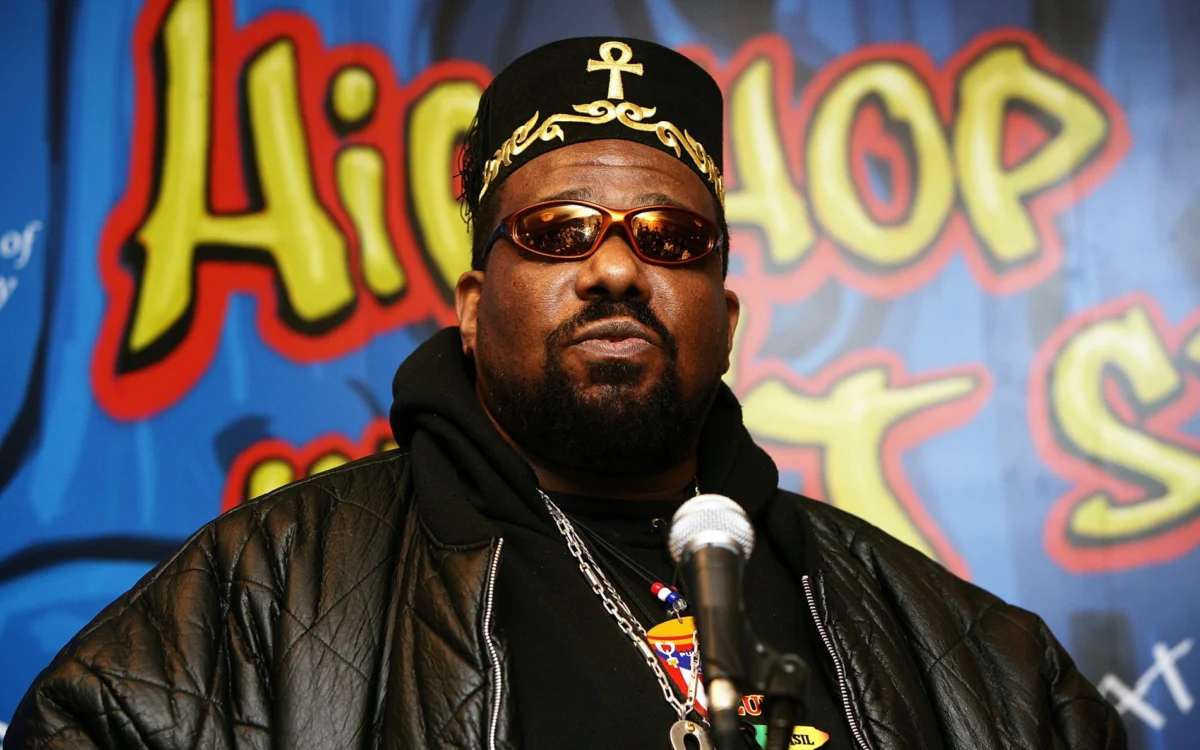
The visionary producer, DJ, and community activist—born Lance Taylor—passed away on Thursday, April 9, in Pennsylvania. His legal counsel confirmed to the Associated Press that the cause of death was complications related to prostate cancer. His passing marks the end of a life defined by extraordinary cultural contributions and a profound, deeply troubling legacy that has sparked intense debate within the music industry for nearly a decade.
The Architect of a Global Movement
To understand the magnitude of Afrika Bambaataa’s influence, one must look back to the social and economic climate of the South Bronx in the 1970s. Amidst urban decay and systemic neglect, Bambaataa emerged from the ranks of the Black Spades, one of the most prominent street gangs of the era. However, his trajectory shifted from conflict to community-building. By establishing the Universal Zulu Nation, Bambaataa channeled the energy of disaffected youth into a creative outlet that eventually coalesced into the four pillars of hip-hop: DJing, graffiti, breakdancing, and MCing.
Bambaataa’s philosophy was rooted in "Peace, Unity, Love, and Having Fun." By shifting the focus of street culture from violence to artistic competition, he provided a blueprint for what would eventually become the most dominant cultural export of the 21st century.
Musical Innovation and the Planet Rock Legacy
While his social work through the Zulu Nation laid the cultural groundwork, Bambaataa’s musical output solidified his status as an innovator. His 1982 magnum opus, "Planet Rock," recorded with the Soulsonic Force, remains a watershed moment in music history. By blending the rhythmic sensibilities of funk with the synthesized, futuristic textures of the German electronic band Kraftwerk, Bambaataa effectively birthed electro-funk and paved the way for the development of dance-pop and techno.
"Planet Rock" reached number 48 on the Billboard Hot 100, but its impact far exceeded chart success. It demonstrated that hip-hop was not a localized trend but a versatile, modular art form that could incorporate global sounds. This willingness to experiment with drum machines and synthesizers at a time when hip-hop was primarily defined by live break-beats helped elevate the genre to a professionalized, global standard.
Chronology of a Controversial Career
The narrative of Bambaataa’s life is bifurcated by the emergence of serious allegations regarding his personal conduct. The following timeline outlines the progression of his public status and the subsequent legal challenges:
- 1970s: Bambaataa forms the Universal Zulu Nation, promoting hip-hop as a positive force for social change.
- 1982: Release of "Planet Rock," cementing his status as a pioneer in electronic and hip-hop music.
- 2000s: Bambaataa receives numerous accolades, including induction into various music halls of fame and recognition as a "Godfather" of the culture.
- 2016: Ronald Savage publicly accuses Bambaataa of sexual abuse dating back to the 1980s. The allegations trigger a massive reckoning within the hip-hop community.
- 2017–2020: Additional individuals come forward with similar allegations, casting a shadow over the Zulu Nation’s historical narrative.
- 2021: An anonymous plaintiff files a civil lawsuit against Bambaataa, alleging years of abuse and trafficking starting in 1991.
- 2025: After failing to participate in the legal proceedings, Bambaataa loses the civil suit by default, with the court awarding damages to the plaintiff.
- 2026: Bambaataa passes away in Pennsylvania.
The Weight of Allegations and Legal Reckoning
The allegations that surfaced in 2016 fundamentally altered the perception of Bambaataa’s legacy. When Ronald Savage first went public, it sparked a dialogue about the accountability of cultural icons. While Savage eventually retracted his claims in 2024, citing a belief that the encounters were consensual, the damage to Bambaataa’s reputation was already cemented by the mounting weight of other accusations.
The 2021 civil lawsuit represented the most significant legal challenge of his career. The plaintiff, who was a minor at the time of the alleged abuse, sought justice for long-term trauma. Bambaataa’s refusal to engage with the judicial process—culminating in a default judgment in 2025—was interpreted by many as an admission of guilt, further alienating him from the community he helped organize.
Institutional Responses and Cultural Reflection
The reaction to Bambaataa’s death has been characterized by a distinct duality. Kurtis Blow, serving as the executive director of the Hip Hop Alliance, issued a statement that sought to balance the historical importance of the man with the gravity of the accusations against him.
"Today, we acknowledge the transition of a foundational architect of Hip Hop culture," Blow stated. "He helped shape the early identity of Hip Hop as a global movement… At the same time, we recognize that his legacy is complex and has been the subject of serious conversations within our community."
This statement reflects a growing consensus among historians and cultural critics: that an artist’s contributions cannot be erased, but they must be viewed through a lens that does not excuse or minimize harm. Institutions that once championed Bambaataa have, in recent years, distanced themselves, highlighting the difficulty of maintaining historical archives while honoring the victims of those figures.
Broader Implications for Hip-Hop History
The death of Afrika Bambaataa forces the music world to grapple with the "separate the art from the artist" dilemma on a grand scale. Because Bambaataa was not just a performer but an institutional architect, his personal failures feel, to some, like a failure of the culture itself.
Sociologists note that the rise of hip-hop was inherently tied to the grassroots leadership of figures like Bambaataa. When those leaders are found to have engaged in predatory behavior, it creates a vacuum in the historical narrative. The challenge for future historians will be to document the origins of hip-hop with the necessary nuance: acknowledging the genius that created "Planet Rock" and the Universal Zulu Nation, while ensuring that the stories of the survivors are woven into the same fabric of history.
As of 2026, the industry remains in a state of reflection. While his music will likely continue to be sampled and his historical influence taught in classrooms, the discourse surrounding Bambaataa has shifted permanently from a celebration of his achievements to a somber analysis of the cost of power and the importance of accountability.
Ultimately, Bambaataa’s life serves as a cautionary tale of how quickly a legacy can be obscured by one’s own actions. He leaves behind a genre that has grown to dominate global culture, a testament to his vision, but also a community that is increasingly vigilant about the conduct of those it holds in high esteem. The silence of his final years, marked by legal defeat and personal isolation, serves as the final, somber chapter in a story that remains, for many, an open wound.