 Reynand Wu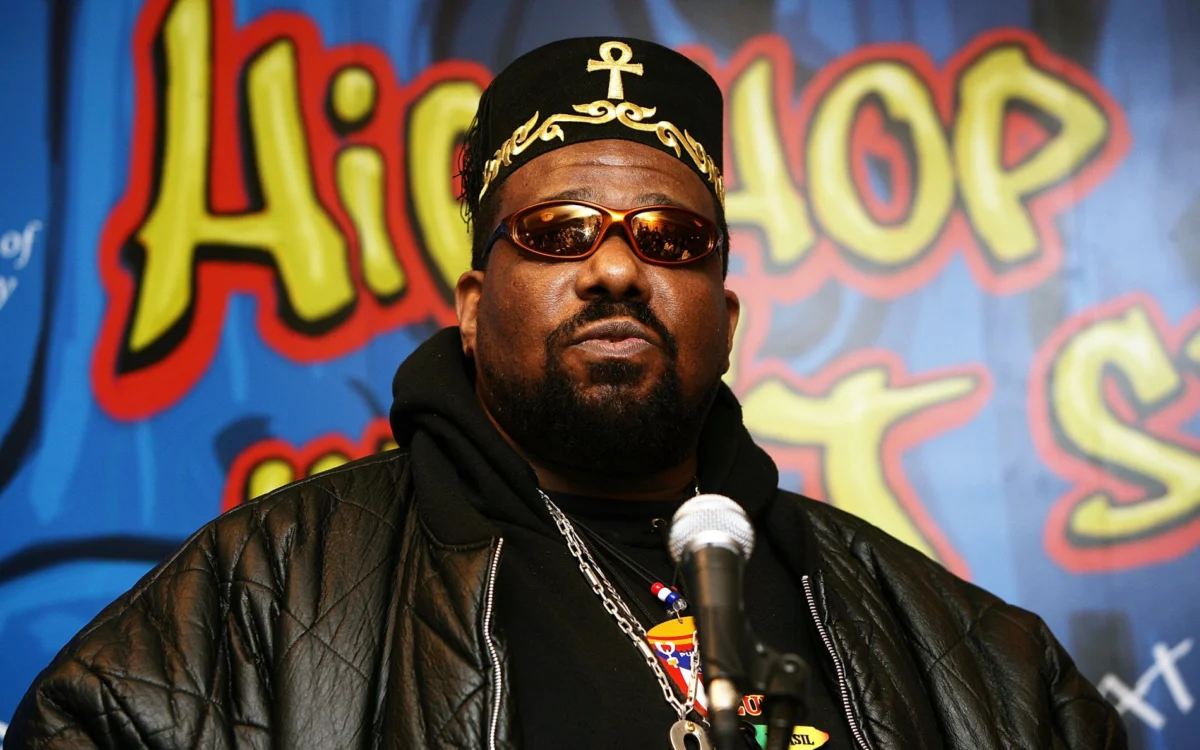
Lance Taylor, known globally as Afrika Bambaataa, the visionary DJ, producer, and one of the undisputed founding fathers of hip-hop, passed away on Thursday, January 23, 2024, in Pennsylvania at the age of 68. His death, confirmed by his lawyer to The Associated Press, was attributed to prostate cancer, bringing to a close the life of a figure whose monumental contributions to global culture are inextricably linked to grave allegations of sexual abuse that emerged in the later years of his life.
The Genesis of a Global Movement: From the Bronx to Universal Zulu Nation
Born in the South Bronx, New York, in 1957, Afrika Bambaataa’s early life was shaped by the turbulent socio-economic landscape of his neighborhood. The 1970s Bronx was a crucible of urban decay, poverty, and gang violence, a backdrop against which a new cultural phenomenon would emerge. Taylor, initially involved with the notorious Black Spades street gang, experienced a profound transformation after witnessing the violence and despair around him. Inspired by a trip to Africa and a growing awareness of civil rights movements, he sought to channel the raw energy of the streets into positive, creative outlets. This pivotal shift marked the birth of Afrika Bambaataa, a name derived from an ancient Zulu chieftain, signifying "affectionate leader."
Bambaataa’s vision extended beyond simply playing records. He became a community organizer, a cultural evangelist, and ultimately, the architect of a philosophy that would define an entire generation. In the mid-1970s, he founded the Universal Zulu Nation, an organization that began as a collective of former gang members and aspiring artists. Its core tenets — peace, unity, love, and having fun — offered an alternative to the prevailing violence, advocating for self-knowledge, cultural awareness, and artistic expression. The Zulu Nation rapidly grew into a global movement, establishing chapters worldwide and serving as a vital incubator for hip-hop culture. Bambaataa is widely credited with conceptualizing and codifying the four foundational elements of hip-hop: DJing (the art of mixing and scratching records), MCing (rapping and lyrical expression), breakdancing (athletic street dance), and graffiti art (visual expression). These elements, nurtured within the Zulu Nation, provided a structured framework for a burgeoning subculture, transforming it from local street jams into a global artistic language.
Musical Innovation and the Birth of Electro-Funk
As a recording artist and producer, Afrika Bambaataa’s impact on music was revolutionary. He transcended the early raw, party-rocking sound of hip-hop by experimenting with electronic music and global rhythms, pushing the genre into uncharted sonic territory. His most iconic work, "Planet Rock," released in 1982 with the Soulsonic Force, stands as a seminal moment in music history. The track was a groundbreaking fusion of funk, hip-hop, and European electronic music, heavily sampling German electronic pioneers Kraftwerk, particularly elements from their tracks "Trans-Europe Express" and "Numbers."
"Planet Rock" was not just a hit; it was a sonic manifesto. It peaked at No. 4 on the Billboard Hot R&B/Hip-Hop Songs chart and reached No. 48 on the Billboard Hot 100, a significant achievement for an electro-hip-hop track at the time. More importantly, its futuristic sound, driven by the Roland TR-808 drum machine and a distinctive synth melody, ignited the electro-rap and dance-pop genres. It influenced countless artists across various genres, from hip-hop and techno to pop and R&B, demonstrating hip-hop’s inherent capacity for innovation and cross-cultural synthesis. Its influence is still felt today, having been sampled and referenced by a vast array of artists, cementing its status as one of the most sampled tracks in history. Alongside DJ Kool Herc, who pioneered the breakbeat, and Grandmaster Flash, who perfected turntable techniques, Bambaataa completed the triumvirate of "founding fathers" who laid the essential groundwork for hip-hop to evolve into the most culturally influential movement of the last 50 years.
A Shadowed Legacy: The Sexual Abuse Allegations
Despite his monumental cultural contributions, Afrika Bambaataa’s legacy became profoundly complicated by a series of disturbing allegations of sexual abuse that emerged in the mid-2010s. These accusations cast a long, dark shadow over his celebrated status, forcing the hip-hop community and the wider public to grapple with the difficult question of separating art from the artist.
The initial public accusation surfaced in 2016 when Ronald Savage, a former protégé and member of the Zulu Nation, publicly alleged that Bambaataa had sexually abused him in the 1980s when Savage was a young teenager. Savage’s courageous decision to come forward sent shockwaves through the hip-hop community, which had largely revered Bambaataa as an untouchable icon. Bambaataa vehemently denied these initial allegations, but the controversy quickly gained momentum.
Following Savage’s initial revelation, several other men subsequently came forward with similar claims, alleging that Bambaataa had sexually abused them as teenagers while they were involved with the Universal Zulu Nation or under his mentorship. These allegations painted a pattern of predatory behavior that spanned decades, severely eroding Bambaataa’s public image and the integrity of the Zulu Nation itself. Many chapters of the Universal Zulu Nation disaffiliated from the central organization in protest and solidarity with the alleged victims, leading to a significant decline in the collective’s global influence and membership.
The legal ramifications of these allegations culminated in a civil lawsuit filed in 2021 by an anonymous plaintiff, referred to as John Doe. The lawsuit alleged that Bambaataa had sexually abused and trafficked the plaintiff for four years, beginning in 1991 when the plaintiff was just 12 years old and Bambaataa was in his mid-30s. The specifics of the lawsuit detailed a harrowing account of exploitation and manipulation. Crucially, Afrika Bambaataa never formally responded to the lawsuit and failed to appear in court to defend himself against the accusations. As a result, in November 2023, a default judgment was awarded to the alleged victim, marking a significant legal victory for the plaintiff and a de facto acknowledgment of the claims in the absence of a defense. A default judgment, while not a trial on the merits, legally establishes liability against the defendant due to their failure to respond to the complaint.
Adding another layer of complexity to this already fraught narrative, Ronald Savage, the initial accuser, later walked back some of his claims in an interview with AllHipHop in early 2024. He stated, "Bambaataa is not a pedophile and, in my eyes, he was doing something that was consensual with someone that he thought was of age." This retraction, while notable, did not erase the other allegations or the legal default judgment against Bambaataa, leaving many within the community to question its timing and implications. The legal and moral weight of the other accusations and the court’s judgment remained unchallenged by Savage’s revised statements.
Industry Reactions and the Broader Implications
The news of Afrika Bambaataa’s death elicited a complex and often muted response from the hip-hop community. While many acknowledged his undeniable artistic and cultural contributions, the lingering cloud of the abuse allegations made outright eulogies challenging. Kurtis Blow, a fellow pioneering rapper and executive director of the Hip Hop Alliance, issued a statement that eloquently captured this duality: "Today, we acknowledge the transition of a foundational architect of Hip Hop culture, Afrika Bambaataa… [He] helped shape the early identity of Hip Hop as a global movement rooted in peace, unity, love, and having fun. His vision transformed the Bronx into the birthplace of a culture that now reaches every corner of the world… At the same time, we recognize that his legacy is complex and has been the subject of serious conversations within our community."
This sentiment was echoed across the industry, with many prominent figures choosing silence or issuing carefully worded statements that balanced his artistic legacy with the gravity of the accusations. The controversy surrounding Bambaataa forced a difficult reckoning within hip-hop, a genre often celebrated for its raw authenticity but also criticized for its historical blind spots concerning issues of power, exploitation, and abuse. His death, while closing one chapter, leaves many unresolved questions and continues the difficult conversation about how a community should honor its pioneers while simultaneously holding them accountable for their alleged transgressions.
The implications extend beyond the music industry. Bambaataa’s story reignites the broader societal debate about how to assess the legacies of public figures whose immense contributions are marred by personal failings or alleged criminal acts. It forces a contemplation of whether it is possible, or even ethical, to separate the art from the artist, especially when the alleged victims were vulnerable individuals within the artist’s sphere of influence. For the alleged victims, Bambaataa’s death means that their quest for justice through a direct confrontation in court has ended, though the default judgment stands as a legal recognition of their claims. The emotional and psychological scars, however, endure.
An Enduring Cultural Footprint and Its Unavoidable Shadow
Afrika Bambaataa’s passing marks the end of an era for one of hip-hop’s most enigmatic and influential figures. His role in shaping hip-hop from a localized subculture into a global phenomenon is indisputable. From the foundational elements he articulated to the genre-bending soundscapes he pioneered with "Planet Rock," his creative genius laid much of the groundwork for hip-hop’s ascendancy. Today, hip-hop is not merely a musical genre but a dominant cultural force, generating billions of dollars annually, influencing fashion, language, art, and social discourse across every continent. This global footprint owes a significant debt to Bambaataa’s early vision and innovation.
Yet, his legacy will forever be viewed through a dual lens. The bright light of his pioneering artistry will always contend with the long, dark shadow cast by the severe allegations of sexual abuse. His death means that the full truth, as might have been revealed through a contested legal trial, will likely remain elusive. However, the default judgment awarded to one of his alleged victims stands as a crucial legal marker. Afrika Bambaataa’s life presents a profound paradox: an undisputed visionary whose monumental contributions to culture are inextricably linked to grave accusations of personal misconduct, leaving an indelible, yet profoundly complicated, mark on history. The conversation about his impact, both positive and negative, will undoubtedly continue for generations, serving as a poignant reminder of the complexities inherent in evaluating human legacy.