Nana Wu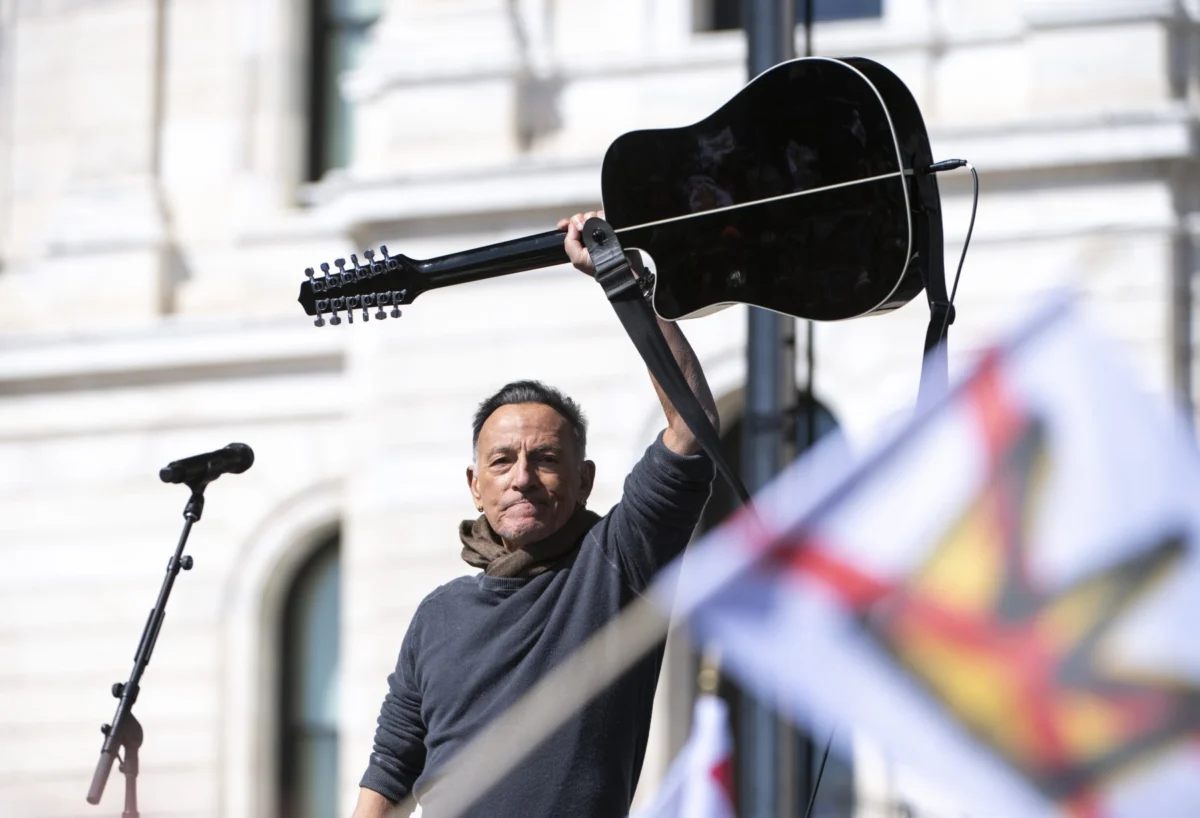
On the final day of an eventful Tribeca Festival, June 13, music icon Bruce Springsteen was bestowed with the prestigious Harry Belafonte Voices for Social Justice Award. The ceremony, held in lower Manhattan, brought together a constellation of influential figures including U2 frontman Bono, punk poet laureate Patti Smith, and Tribeca co-founders Robert De Niro and Jane Rosenthal, all gathered to celebrate Springsteen’s unwavering commitment to activism and his powerful use of art as a catalyst for change. The accolade recognized Springsteen’s decades-long career not only as a musician but as a profound voice for the marginalized and a staunch advocate against political overreach, cementing his legacy as a vital figure in the ongoing struggle for civil liberties and democratic ideals.
The Genesis of an Award: Honoring a Legacy of Dissent
The Harry Belafonte Voices for Social Justice Award, established by the Tribeca Festival, serves as a poignant tribute to the late Harry Belafonte, a titan of both entertainment and human rights advocacy. Belafonte, who passed away in April 2023, was renowned for his groundbreaking career as a singer and actor, but equally, if not more so, for his relentless activism. A close confidante of Dr. Martin Luther King Jr., Belafonte was a pivotal figure in the Civil Rights Movement, utilizing his platform and resources to champion racial equality, humanitarian causes, and global peace. His legacy is one of courage, integrity, and an unyielding belief in the power of art to inspire change. By honoring Springsteen, the Tribeca Festival underscored its commitment to perpetuating Belafonte’s spirit of civic engagement and artistic responsibility, celebrating artists who fearlessly speak truth to power and mobilize communities for a better future. The award itself, therefore, is not merely a recognition of artistic achievement but a powerful statement on the moral imperative of public figures to lend their voices to societal causes.
The Tribeca Festival, co-founded by Robert De Niro, Jane Rosenthal, and Craig Hatkoff in 2002, emerged in the aftermath of the September 11th attacks with a mission to revitalize lower Manhattan and celebrate New York City as a hub for film, art, and storytelling. Over the years, it has evolved into a significant cultural event, known for its diverse programming that often blends entertainment with critical social commentary. The "Tribeca Storytellers" series, under which Springsteen’s honor was presented, specifically highlights artists whose work transcends entertainment to provoke thought and inspire action, making it a fitting platform for such a distinguished award.
A Humble Acknowledgment and a Resonant Dedication
During the ceremony, Bruce Springsteen, affectionately known as "The Boss," accepted the honor with characteristic humility. "I’m a little embarrassed to get this award," he admitted during a candid sit-down conversation with Bono, reflecting his often-expressed discomfort with personal accolades. However, his subsequent dedication of the award resonated deeply, shifting the focus from himself to the broader societal struggles he champions. Springsteen dedicated the award to "the people of Minneapolis, Portland and Los Angeles for standing against the federal invasion of their cities this year." This statement directly referenced the tumultuous period of civil unrest and racial justice protests that swept across the United States, particularly in the summer of 2020. Cities like Minneapolis, following the murder of George Floyd, and Portland, which saw sustained demonstrations, became focal points for national conversations on police brutality, systemic racism, and the right to protest. The deployment of federal agents to these cities, often against the wishes of local officials, sparked widespread controversy and accusations of federal overreach, igniting a fervent debate about constitutional rights and executive power. Springsteen’s dedication was a powerful endorsement of these movements and a direct challenge to the perceived authoritarian tactics employed during that period, reaffirming his role as a "concerned citizen" willing to take a public stand.
The Tribeca Storytellers: Democracy, Dissent, and Dialogue
The heart of the event was a lengthy and engaging conversation between Springsteen and Bono, framed as a "Tribeca Storytellers" session. Bono, who self-deprecatingly described himself as a "fan masquerading as a friend," navigated the discussion with a thoughtful intensity, posing questions that were both insightful and challenging. The central theme that emerged was the erosion of democracy in America and the perceived federal overreach of the Trump administration – topics that have consistently fueled Springsteen’s artistic and political commentary in recent years.
Robert De Niro, in his introduction, offered a stirring endorsement of Springsteen’s activism, articulating precisely why the award was so fitting. "This is a man who knows how to use his voice," De Niro declared, his words echoing the sentiment of many who view Springsteen as a moral compass. He lauded Springsteen for his ability "to give voice to the powerless" and "to lead the resistance," highlighting the musician’s fearless stance against perceived injustices. De Niro did not shy away from naming the political adversary, stating, "He knows what the problem is and he names it: Donald Trump. Donald J. Trump and his feckless enablers." This directness underscored the urgency of the political climate and Springsteen’s willingness to confront it head-on. De Niro further elaborated, "This isn’t about reasonable disputes on policy: this is about the corruption and megalomania of one person. Bruce Springsteen puts a face on it, and he does it with the words of a poet." This tribute not only celebrated Springsteen’s political courage but also acknowledged the profound poetic quality of his lyrics, which have consistently explored the American experience, its dreams, its struggles, and its often-unrealized promises.
Bono’s interview delved into the complex relationship between rock stars and the working class, a demographic both he and Springsteen hail from. Bono candidly expressed his concern that "we on the left lost a little bit of it and that the accusations of elitism that are out there for people like me are not inaccurate." He then turned to Springsteen, posing a tough question about the potential personal and professional cost of his outspoken political views: "Has it cost you? Do you feel torn at all thinking there’s people in this town that used to come see my shows who don’t now? Or have you made peace with that?"
Springsteen’s response was characteristically honest and reflective. "I’m not sure," he admitted, grappling with the nuanced realities of celebrity activism. He articulated a dual responsibility for public figures in such polarized times: "You have to do two things. There’s the classic folk song, ‘Which Side Are You On?’: you have to make your stand and follow your beliefs and you have to have the faith in them that they will be explicable and understandable by your fellow citizens. And you have to believe that America is a sacred argument and a compromise." This statement encapsulates Springsteen’s enduring vision of America – a nation built on robust debate and the ultimate pursuit of common ground, even amidst profound disagreements. It speaks to his belief in the democratic process, however imperfect, and the essential role of informed civic engagement.
A Career Defined by Activism: The "Land of Hopes & Dreams Tour"
The conversation naturally segued into Springsteen’s recent "Land of Hopes & Dreams Tour," which he readily acknowledged as "the most explicitly political one he’s done in a career marked by socio-political concerns." Throughout his five-decade career, Springsteen has consistently woven narratives of working-class struggles, economic inequality, social injustice, and the American dream into the fabric of his music. From the Vietnam War veterans depicted in "Born in the U.S.A." (a song often misinterpreted as a jingoistic anthem) to the struggles of ordinary Americans in "The River" and the resilience celebrated in "The Rising" following 9/11, his discography is a testament to his deep engagement with the social and political landscape of his country. The "Land of Hopes & Dreams Tour" intensified this engagement, directly addressing the contemporary political climate and the anxieties facing the nation. Springsteen, with a chuckle, noted his transparency regarding the tour’s message: "I warned everybody what the tour was gonna be like so they didn’t waste their money before they came. I figured I did my job and it was every man for himself after that." This candid remark highlighted his conviction and his willingness to risk alienating segments of his fanbase for the sake of his beliefs, further solidifying his image as an artist unwilling to compromise his principles for commercial gain.
The Nuance of Engagement: Selective Activism and Regret
Despite his consistent activism, Springsteen revealed that he chooses his battles carefully, illustrating the complexities faced by public figures balancing their artistic integrity with their desire for social impact. Bono recounted instances where he had asked Springsteen to sign various petitions or lend his music to specific causes, only to be met with polite but firm refusals. One particular anecdote stood out: Bono recalled asking Springsteen to license his 2007 song "Girls In Their Summer Clothes" for a Gap commercial as part of the (PRODUCT) RED campaign. (PRODUCT) RED, co-founded by Bono and Bobby Shriver in 2006, is a licensed brand that partners with global companies to raise money for the Global Fund to Fight AIDS, Tuberculosis and Malaria. Participating brands create (RED)-branded products, with a portion of the proceeds going to the fund. Springsteen’s initial response to Bono’s request was a definitive "No."
However, during their Tribeca conversation, Springsteen offered a surprising reversal. "That was a big mistake, too," he cut in, seemingly to Bono’s genuine surprise. "I should have said yes." Explaining that "Girls In Their Summer Clothes" was one of his favorite songs, even if it wasn’t a major hit, Springsteen admitted, "I should have f***ing done it. I have to apologize." This moment of candid self-reflection provided a rare glimpse into the internal deliberations of an artist navigating the intersection of commerce, art, and activism. It underscored that even seasoned activists like Springsteen are constantly evaluating their choices and sometimes come to regret missed opportunities to contribute to causes they believe in. The two musicians then stood up and shared a warm hug, a gesture that spoke volumes about their mutual respect and shared journey.
A Symphony of Solidarity: Musical Interludes for Justice
The evening concluded with powerful musical performances that served as a testament to the enduring power of song in the pursuit of social justice. Following the conversation and their embrace, Springsteen and Bono welcomed a third Rock & Roll Hall of Famer, Patti Smith, to the BMCC Tribeca Performing Arts Center stage. Accompanied by Tony Shanahan on keys, Smith delivered a poignant rendition of "Peaceable Kingdom," a soft plea for peace inspired by the tragic story of Rachel Corrie. Corrie, an American activist, was killed in 2003 by an Israeli military bulldozer while protesting the demolition of Palestinian homes in the Gaza Strip, making the song a powerful elegy for non-violent resistance and human dignity.
Smith then transitioned into a live favorite, "People Have the Power," a rousing and anthemic call-to-activism that has become a staple at protests and rallies worldwide. As Smith passionately sang, Springsteen joined her on acoustic guitar, and though Bono had initially left the stage, Bruce called him back out to contribute backup vocals, creating an impromptu supergroup of legendary artists uniting their voices for a common cause. The spontaneous collaboration underscored the camaraderie and shared purpose among these icons.
While the advance program for the Tribeca event had not promised a live performance from Springsteen, the anticipation in the room was palpable. Unlike past Tribeca Q&As, such as Miley Cyrus’s event where vocal fans heckled until she sang, the audience for Springsteen’s honor maintained a respectful quiet, their hopes for a musical moment unspoken but keenly felt. Springsteen did not disappoint. He offered an utterly mesmerizing solo acoustic version of "Land of Hope and Dreams," a song that perfectly encapsulated the evening’s themes of resilience, community, and the persistent pursuit of a better future. The song, often a centerpiece of his live shows, with its uplifting message of hope and its vision of a welcoming, inclusive society, served as a powerful emotional climax to the ceremony.
Broader Implications and a Quintessentially New York Farewell
Bruce Springsteen’s receipt of the Harry Belafonte Voices for Social Justice Award at the Tribeca Festival is more than just another accolade; it is a profound affirmation of his enduring relevance as both an artist and an activist. It solidifies his position as a cultural touchstone, a voice that not only reflects the struggles and aspirations of ordinary people but actively champions their cause. In an era marked by increasing political polarization and complex social challenges, the award highlights the critical role artists play in fostering dialogue, inspiring resistance, and advocating for justice. It underscores the belief that art is not merely entertainment but a powerful tool for social commentary and change, a tradition championed by Belafonte and continued by Springsteen.
The event at Tribeca served as a microcosm of this larger phenomenon, bringing together diverse voices to reflect on the state of democracy and the importance of civic engagement. The candid conversations, the powerful musical performances, and the collective spirit of solidarity demonstrated the potential for art and activism to intersect, offering both comfort and challenge in turbulent times. Springsteen’s willingness to engage in difficult conversations, to admit past misjudgments, and to consistently use his platform for what he believes is right, exemplifies the very spirit the Belafonte award seeks to honor.
Before leaving the stage amidst a thunderous standing ovation, Springsteen offered one final, quintessentially New York thought to the audience: "Go Knicks." It was a lighthearted yet deeply resonant sign-off, a nod to the city’s beloved basketball team and a reminder of the common bonds that unite people beyond the serious discussions of the day, bringing a moment of local pride and levity to a profoundly impactful evening. The award ceremony for Bruce Springsteen was not just a celebration of an individual; it was a reaffirmation of the enduring power of courageous voices in the ongoing fight for a more just and equitable world.