Indra Aziz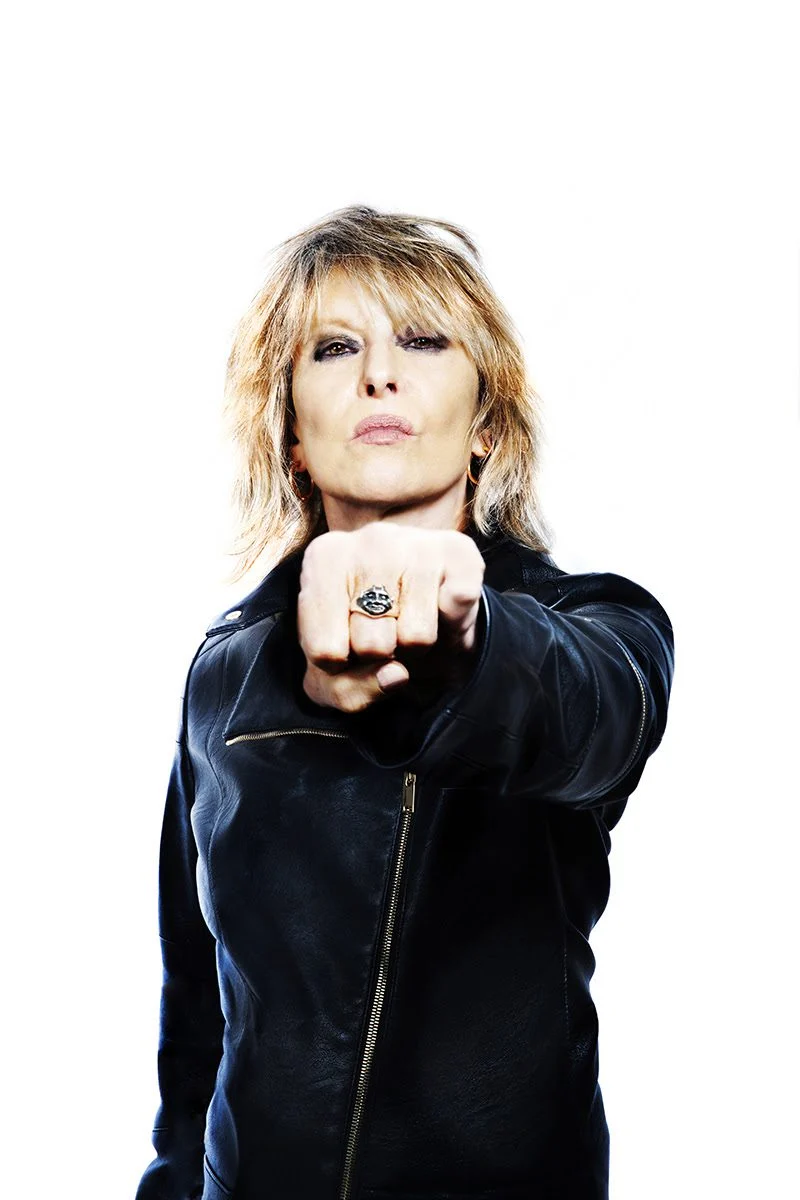
Rock icon Chrissie Hynde, a formidable presence in the music industry for over five decades, has issued a passionate and unvarnished denunciation of the pervasive use of mobile phones at live concerts and cultural venues. The Pretenders frontwoman, whose career spans half a century of electrifying performances, articulated her deep-seated frustration with concertgoers and museum visitors who prioritize capturing content over experiencing the moment. Her statement, disseminated across social media platforms, has ignited a broader conversation about digital etiquette and the erosion of present-moment engagement in an increasingly connected world.
Hynde’s critique extends beyond the immediate annoyance of a phone screen obstructing a view; she questions the fundamental societal impulse driving this behavior. "What is it with people and their phones?" she queried, her words resonating with a palpable exasperation. "Why do people have to know how many steps they take every day? What difference does it make?" This rhetorical question points to a larger concern about the relentless pursuit of data and quantifiable metrics that, in her view, often distract from more meaningful aspects of human experience.
However, it is the act of filming or photographing performances and artworks that draws the most potent criticism. "But my real question is: why do people have to film or take pictures at concerts or museums? Why???" Hynde’s direct questioning highlights a perceived disconnect between the act of witnessing and the act of documenting. She elaborated on this point, sharing a conversation with fellow music legend Emmylou Harris, whose own status as an "undoubted legend" underscores the weight of their shared observations. "It’s a subject that comes up every time I meet any artist," Hynde revealed, painting a picture of a shared artistic grievance. "It’s become like an unpleasant fug hanging over the head of all artists." This "fug" signifies a persistent, oppressive atmosphere that artists are forced to contend with, impacting their creative output and their enjoyment of sharing their work.
A Persistent Problem, Echoed by Peers
The issue of audience phone usage is not confined to Hynde’s personal observations. Her statement implicitly acknowledges a broader artistic consensus. The reference to Bob Dylan’s stringent no-phones policy serves as a concrete example of an artist attempting to reclaim the concert space for undistracted listening and viewing. While Dylan’s policy aims to enforce a phone-free environment, Hynde notes the persistent difficulty in achieving this. "somehow – people still find a way round it," she observed, likening the compulsion to a "weird compulsion that people can’t control." This suggests a behavioral pattern deeply ingrained in contemporary society, one that transcends simple rules or restrictions.
This sentiment has been echoed by numerous artists and cultural institutions. In 2017, the Royal Shakespeare Company implemented a ban on mobile phones during performances, citing their disruptive nature and the negative impact on the theatrical experience. Similarly, numerous music festivals have explored varying degrees of phone restrictions, from complete bans in certain areas to encouraging mindful usage. Data from event organizers consistently indicates that the visual and auditory disruptions caused by mobile phones are among the most frequent complaints received from attendees seeking an immersive experience.
An Unflattering Analogy and the Artist’s Perspective
Hynde’s frustration culminates in a stark and provocative analogy, comparing the act of filming concerts to "monkeys wanking in full view of the people standing around their enclosure." While undoubtedly graphic, the analogy serves to emphasize her feeling of being subjected to an intrusive and unwanted spectacle. She extends this by stating that in the case of the monkeys, the public "deserve to be wanked at because monkeys should not be in an enclosure in the first place." However, she pointedly contrasts this with the artist on stage, implying that performers are unwilling participants in a performance they do not control.

To further illustrate the artist’s perspective, Hynde draws a parallel to the annoyance of a "mosquito buzzing around your head when you’re trying to go to sleep." This relatable image effectively conveys the constant, irritating distraction that filming and photography can represent for a performer striving to connect with their audience and deliver their art. The persistent presence of illuminated screens, the subtle clicks of shutters, and the raised arms holding devices can fragment the artist’s focus and dilute the communal energy of a live performance.
Personal Anecdotes Underscore the Problem
Hynde’s own experiences lend further weight to her argument. She recounts a personal anecdote of attending an Emmylou Harris concert at London’s Royal Albert Hall, where her view was initially obstructed by someone filming the performance. It was only after a nearby fan intervened that the situation was resolved, highlighting both the prevalence of the behavior and the potential for audience members to push back against it. This incident underscores the irony of attending a live event only to be confronted by a screen replicating the very experience one is present to witness.
Her disillusionment extends to the realm of visual arts. Hynde describes a "nightmare experience" at a Van Gogh retrospective, where "morons holding their phones up in front of the masterpieces so that no one could see them." This anecdote highlights how the pervasive use of phones can not only disrupt individual experiences but also diminish the collective appreciation of cultural heritage. The desire to "cry" reflects a deep sense of loss and frustration at the inability of others to appreciate the art directly, opting instead for a mediated, digital representation.
The Ubiquity of the Phone: A Societal Critique
Hynde’s statement concludes with a sweeping observation about the near-universal grip of mobile technology: "If Jesus Christ were to walk into a room the first thing everyone would do would be to pull out their phone." This hyperbolic statement, while dramatic, effectively encapsulates her concern that even the most profound or awe-inspiring moments are now subject to immediate digital documentation, potentially at the expense of genuine engagement. She concludes with a plea for understanding: "Can someone please explain?"
Broader Implications and the Future of Live Experience
Chrissie Hynde’s powerful statement taps into a growing societal debate about the impact of constant connectivity and the rise of the "experience economy," where the act of sharing an experience online often becomes as important, if not more important, than the experience itself. The implications of this trend are far-reaching:
- Erosion of Authenticity: When every moment is curated for social media, the genuine, unscripted nature of live events and cultural immersion can be lost.
- Diminished Artistic Connection: Artists may feel increasingly disconnected from their audiences when faced with a sea of screens rather than engaged faces.
- Accessibility Issues: As Hynde pointed out, phones can physically block the view for other attendees, creating an inequitable experience.
- Impact on Memory and Retention: Studies suggest that over-reliance on recording can hinder memory formation, as individuals are less likely to actively process and internalize information when they are passively documenting it.
The challenge for artists, venues, and audiences alike is to find a balance. While mobile phones offer undeniable benefits for communication and information access, their unbridled use in spaces dedicated to shared, present-moment experiences raises fundamental questions about what we value in art, performance, and human connection. Hynde’s vocal stance serves as a potent reminder that the power of art lies not just in its creation but in its reception – a reception that, for many, is best experienced with undivided attention.
The statement, originally posted on June 2, 2026, on X (formerly Twitter) by the official Chrissie Hynde account, has garnered significant attention, prompting widespread discussion among fans, fellow musicians, and cultural commentators. The full text of her statement is available for review, continuing to fuel a vital dialogue about our relationship with technology and its influence on our cultural lives.