Johan Budi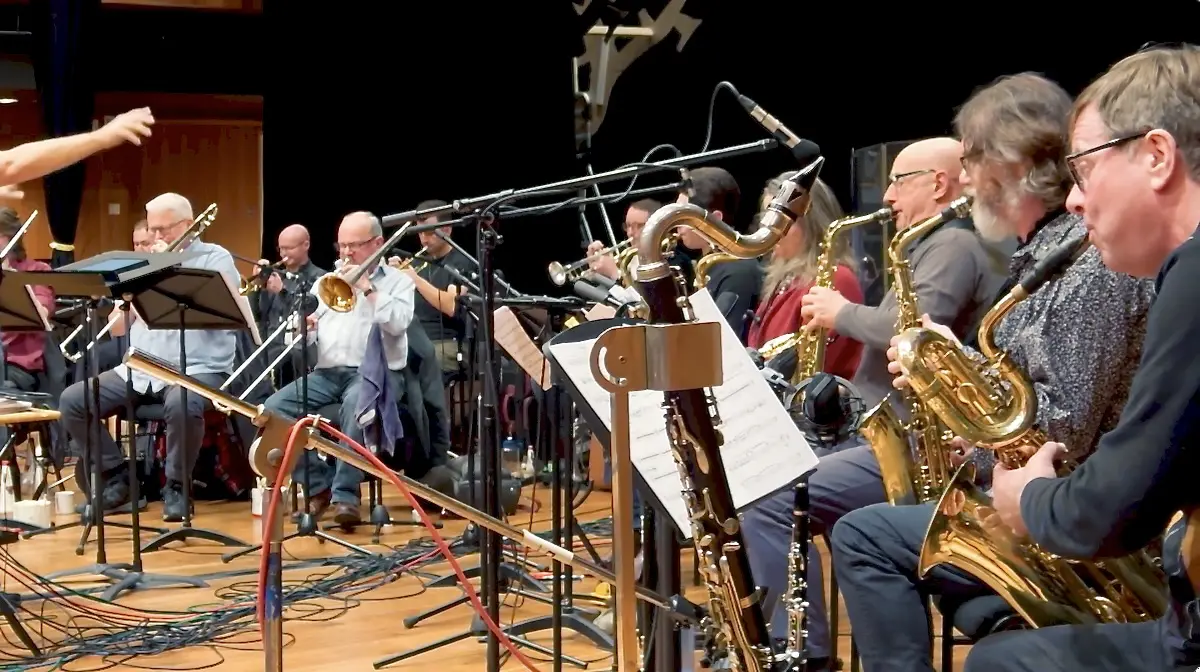
The global jazz landscape is currently undergoing a period of significant diversification, marked by a surge in cross-cultural collaborations, high-fidelity archival restorations, and experimental large-ensemble projects. As the industry moves through 2025 and into 2026, a series of new releases highlights the genre’s enduring capacity for reinvention. From the resurgence of traditional African and Asian influences to the meticulous preservation of late-career performances by 20th-century masters, these projects represent a broad spectrum of creative expression. The following report details the key figures, historical contexts, and technical innovations defining this new wave of recorded music.
The Convergence of Global Traditions and Cross-Cultural Synthesis
A primary trend in the current jazz cycle is the integration of non-Western musical languages into the jazz idiom. Ray Lema and the Ensemble Partage exemplify this with the release of Passion Congo. Lema, a pianist and composer of international standing, has spent decades bridging the gap between European classical structures and the diverse rhythmic traditions of the Democratic Republic of Congo. By drawing on the heritage of over 200 Congolese ethnic groups, Lema’s work functions as a sonic bridge between the African continent and European conservatories.
Similarly, guitarist Jay Matharu’s Disillusion represents a decisive shift into jazz fusion that incorporates Indian classical influences. Now based in Sweden, the British-born Matharu utilizes his background in progressive rock and Carnatic music to create a personal, introspective project. This trend of cultural synthesis is further reinforced by Oddrun Lilja’s Muna. Originally commissioned for the 50th anniversary of Vossa Jazz in 2023, the album blends Nordic modal shapes with Middle Eastern and Carnatic contours. Lilja is supported by a formidable cast of "nu-jazz" pioneers, including keyboardist Bugge Wesseltoft and vocalist Beate Lech, highlighting the collaborative nature of the contemporary Norwegian scene.
In the realm of archival releases, the Jin Hi Kim Collection offers a massive 10-hour, 9-CD set documenting the career of the komungo pioneer. Kim has long been recognized for her work as a composer and improviser, utilizing the traditional Korean fourth-century zither in avant-garde contexts. The collection features a "who’s who" of improvisational masters, including Bill Frisell, Derek Bailey, and the Kronos Quartet, providing a historical record of the intersection between East Asian traditional music and the Western avant-garde.
Archival Discoveries and Historical Preservation
The preservation of jazz history remains a priority for major and independent labels alike. Blue Note Records has announced the July 24 release of Sangam & Friends by Charles Lloyd. This project serves as a tribute to tabla master Zakir Hussain and documents a deep musical affinity between Lloyd, Hussain, and drummer Eric Harland. The recordings, which began in Mumbai in 2009, feature an expanded ensemble including Carnatic singer Vijay Prakash and Rakesh Chaurasia on bansuri. The completion and release of these sessions provide a missing link in Lloyd’s discography and emphasize the global reach of the Blue Note catalog.
Another significant archival milestone is Ole Matthiessen’s Subcurrents. Released by Storyville Records to coincide with the Danish pianist’s 80th birthday, the compilation spans 57 years of musical exploration. By gathering performances from 1968 through 2025, the album offers a rare longitudinal view of the improvisational currents within the European jazz scene.
On the legacy front, the reissue of Charles Mingus’s Mingus Ah Um continues to serve as a cornerstone for jazz education and appreciation. Originally recorded in 1959—a year often cited as the most important in jazz history—the album includes "Goodbye Pork Pie Hat," a tribute to Lester Young, and "Better Git It in Your Soul," which incorporates the gospel influences of Mingus’s upbringing in Watts, Los Angeles. These re-releases ensure that the foundational works of the hard-bop and post-bop eras remain accessible to new generations of listeners.
Experimental Frontiers and Large Ensemble Innovations
The "undectet" and big band formats are seeing a resurgence, driven by composers seeking broader harmonic palettes. Kirsten Symczycz’s debut with the Kirsten Sym Undectet, Somehow It Will Be, showcases the creative development of the Perth-based composer. The 11-piece ensemble explores original compositions shaped by memory and geographic place, balancing the power of a large group with the individual voices of the players.
In the United Kingdom, altoist Martin Speake has launched a new big band project featuring 18 leading musicians. The ensemble’s repertoire consists of arrangements by 24-year-old Charlie Rees, who expanded Speake’s diverse catalog for the larger format. This collaboration between an established master and a rising arranger highlights the mentorship structures that sustain the London jazz scene.
Experimentalism also takes center stage with Arthur King’s UMN (Fantastic Planet). This project is part of an ongoing series of live quadraphonic scoring experiments. The ensemble utilizes collective improvisation to create what is described as "cosmic jazz," pulling from the ceremonial spirit of the 1970s space-jazz movement while utilizing modern recording technology to create immersive soundscapes. Similarly, the Florida-based collective Madre Vaca has released Tunnel To The Moon, a hybrid of rock opera, chamber music, and song-cycle. Based on a poetic text written nearly two decades ago, the work explores themes of rebirth and perception through a wild, improvisational lens.
Technical Standards and the Audiophile Experience
The technical quality of jazz recordings has become a major selling point, as evidenced by the late Chuck Mangione’s final album, Everything For Love. Released on Chesky Records, the album adheres to the label’s strict audiophile standards. Recorded in "reverberant spaces" using a single microphone, the session captures the natural acoustics of the room without the use of overdubs or corrections. This "live-to-tape" philosophy is also seen in the work of Kwella & Stowell. Their album The Room was recorded in a single day following a 2025 tour, capturing the shared language developed by the Danish and American guitarists over 16 years of collaboration.
In Scandinavia, the trio format continues to evolve with the Krupka Trio’s Hymns In A Jazz Mood Vol. 3. Since 2010, the trio—consisting of Ulf Krupka, Line Falkenberg, and Tine Asmundsen—has been reimagining Norwegian hymns through a modern jazz lens. Their approach combines the tonal heritage of the church with contemporary improvisation, a hallmark of the Losen Records aesthetic.
The Swedish scene also offers Finn Loxbo’s Lummerknikt, a solo guitar outing that challenges the traditional sound of the instrument. Loxbo’s technique involves rapid-fire arpeggiated permutations that evoke the sound of the West African kora or a concert harp. This focus on the "extraordinary touch" and dynamic potential of the instrument reflects a broader trend toward solo instrumental mastery in the European improvisational circuit.
Tributes and Modern Commemorations
The 100th anniversary of jazz icons remains a potent catalyst for new music. Jason Miles, an American keyboardist and producer who worked closely with Miles Davis during the Tutu and Amandla era, has announced 100 Miles For Miles Davis. Set for release on May 1, the project honors what would have been Davis’s 100th birthday. Miles, who spent five years by Davis’s side, uses this collection to reflect on the fusion sound they helped pioneer together. This project underscores the lasting influence of Davis’s electric period on contemporary synthesizers and production techniques.
In Italy, Nicola Meneghini and his band Synergika are exploring the boundaries of electric jazz and fusion with Metropolitan Views. Released in early 2026, the album prioritizes collective interplay over individual virtuosity, a philosophy that mirrors the "synergy" the band’s name implies. Meanwhile, Francesco Miniaci’s Pithagóras introduces a unique instrumental combination, featuring the 22-member Falaut Flute Orchestra. This project blends classical structure with jazz improvisation, exploring the dialogue between solo piano and a massed flute ensemble.
Industry Implications and Broader Impact
The sheer volume and variety of these releases indicate a healthy, albeit fragmented, jazz economy. The shift toward independent labels and self-released projects (such as those by Jay Matharu and Madre Vaca) suggests that artists are taking greater control over their intellectual property and creative direction. Furthermore, the reliance on international tours to "road-test" material before entering the studio—as seen with Kwella & Stowell and the Martin Speake Big Band—remains a vital part of the jazz ecosystem.
The integration of diverse cultural elements and the continued focus on high-fidelity recording suggest that jazz is positioning itself not just as a historical genre, but as a sophisticated, globalized art form. The upcoming years will likely see a continued blurring of the lines between "world music," classical, and jazz, as composers like Kevin Harris draw inspiration from figures as diverse as Leonardo Da Vinci to inform their "music discourse."
As these albums reach the public throughout 2025 and 2026, they will provide a comprehensive map of where the genre stands. Whether through the archival preservation of past masters or the experimental reaches of new collectives, the upcoming season of jazz releases promises to be one of the most diverse and technically accomplished in recent memory. The focus remains on "originality and human expression," a sentiment echoed by the Kevin Harris Project and reflected in the myriad voices contributing to this global musical dialogue.