Johan Budi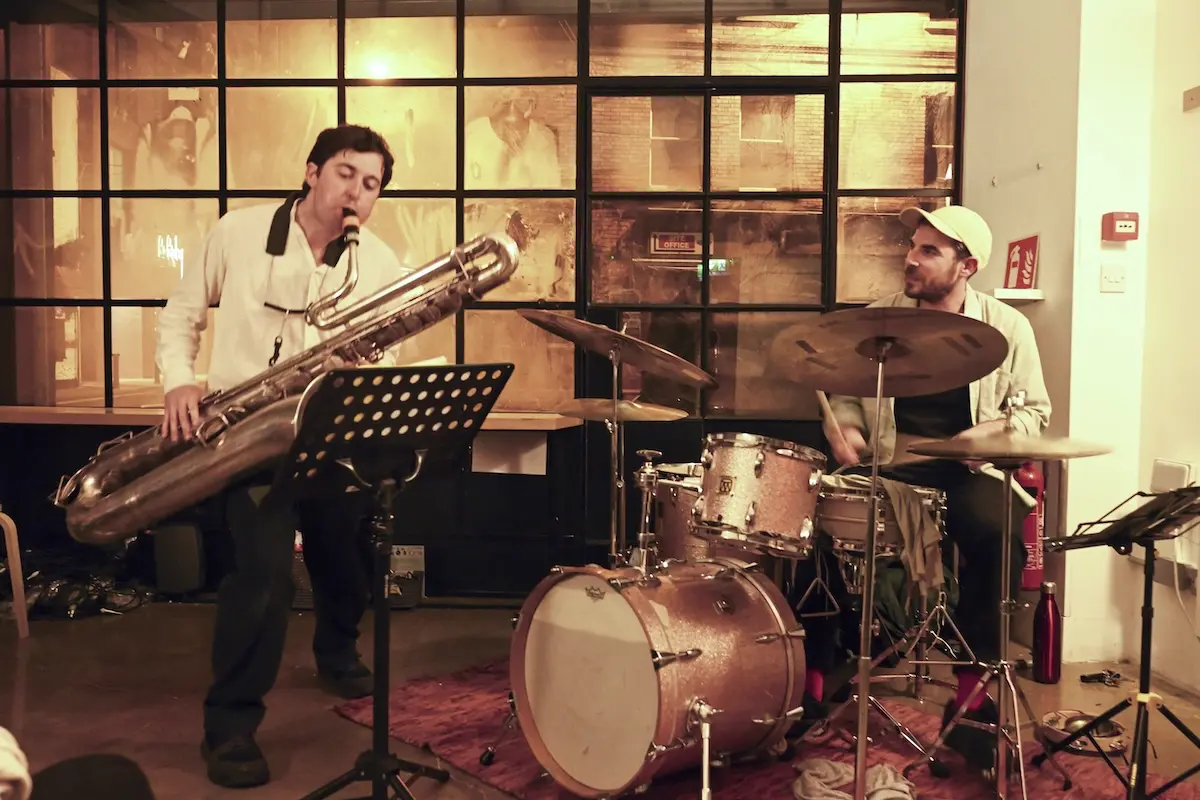
The international jazz community is currently witnessing a significant convergence of traditional mastery and avant-garde exploration, highlighted by a series of high-profile releases from Eliane Elias, Nduduzo Makhathini, and the experimental duo Insufficient Funs. These recordings, spanning from the sophisticated Brazilian-American fusions of San Francisco to the deep cultural invocations of South Africa and the burgeoning improv scene in Dublin, illustrate the diverse trajectories of 21st-century jazz. As the industry shifts between legacy labels like Blue Note and boutique imprints like Candid and Diatribe, these artists are navigating the complexities of cultural identity, technical innovation, and the enduring power of live performance.
Eliane Elias and the Mastery of Brazilian Jazz
Eliane Elias, a figure synonymous with the sophisticated intersection of bossa nova and post-bop piano, has returned to the forefront with her latest live recording, Ao Vivo. Recorded at the SFJAZZ Center’s Miner Auditorium in San Francisco on October 21, 2023, the album represents a pivotal moment in Elias’s career as she transitions to Candid Records. This move is viewed by industry analysts as a strategic shift toward greater creative autonomy, moving away from the "guest-heavy" production models often favored by larger labels.
Elias’s trajectory began as a precocious talent in São Paulo. Born in 1960, her professional foundations were laid alongside the architects of Brazilian popular music. By the age of 17, she was performing with Toquinho and touring with the legendary lyricist Vinicius de Moraes and composer Antônio Carlos Jobim. Her 1984 relocation to New York City marked the beginning of her ascent as a premier global jazz artist, eventually leading to multiple Grammy Awards and a reputation for blending technical piano precision with intimate vocal delivery.
The new album, Ao Vivo, features a quartet consisting of her husband and long-time collaborator Marc Johnson on bass, Rafael Barata on percussion, and Leandro Pellegrino on guitar. Johnson, renowned for his tenure in the final Bill Evans Trio, provides a foundational support system that allows Elias’s piano work—characterized by pellucid articulation and rigorous thematic development—to take center stage. The repertoire serves as a retrospective of both the Brazilian songbook and Elias’s own catalog, including a reimagined version of "At First Sight" from her late-1980s Blue Note era. The inclusion of Ary Barroso’s 1939 samba "Brasil (Aquarela Do Brasil)" and Jobim’s "A Felicidade" reinforces the album’s grounding in historical excellence while maintaining a contemporary edge through live improvisation.
Nduduzo Makhathini and the Philosophy of South African Sound
In a starkly different yet equally profound corner of the jazz world, Nduduzo Makhathini’s fourth album for Blue Note, The Myth We Choose, offers a deep meditation on African wisdom and the socio-political history of South Africa. Produced alongside his 18-year-old son, Thingo, the album is a family and community affair that transcends standard jazz tropes. Makhathini, often cited as the preeminent living South African jazz musician, continues to draw inspiration from his mentor, the late Bheki Mseleku, as well as American giants like John Coltrane and McCoy Tyner.
Makhathini’s work is deeply rooted in the concept of "grace" within the context of post-apartheid South Africa. The album serves as a linguistic and cultural manifesto, prioritizing Zulu over English or Afrikaans to challenge the historical hierarchies of language. Tracks such as "Kuzodlula" feature the leader singing in Zulu, incorporating the complex "click" sounds of the language into the rhythmic fabric of the music. This linguistic choice is not merely aesthetic; it is a deliberate act of cultural preservation and "white consciousness"—a call for awareness of privilege and the necessity of reciprocating the grace shown by oppressed peoples.
The personnel on The Myth We Choose reflects a globalized African diaspora, featuring multi-instrumentalist Shabaka Hutchings, DJ Black Coffee, and Makhathini’s spouse, the vocalist Omagugu. While major label releases are sometimes criticized for "pot-pourri" guest lists, critics have noted that Makhathini’s collaborations feel essential to the narrative arc of the album. The music ranges from neo-soul inflections in "Tethered" to the hypnotic, Abdullah Ibrahim-style balladry of "Unembeza." The inclusion of electronics and programming marks a broadening of Makhathini’s palette, signaling an evolution from his earlier, more strictly acoustic Coltrane-influenced works.
Insufficient Funs and the European Avant-Garde
Representing the experimental wing of the current jazz landscape, the duo Insufficient Funs—comprising drummer Matthew Jacobson and bass saxophonist Sam Comerford—has released their debut full-length album, Chunk, via Dublin’s Diatribe Records. This release follows a ten-year hiatus since their eponymous EP, marking a significant milestone for the Irish and Belgian-based improvisational scene.
The duo occupies a unique niche, primarily due to Comerford’s mastery of the bass saxophone, an instrument often relegated to the background due to its size and technical difficulty. Insufficient Funs positions the instrument as a melodic and rhythmic lead, drawing ambitious comparisons to the legendary pairings of Don Cherry and Ed Blackwell. Jacobson’s compositions, which make up the bulk of the album alongside standards like Jerome Kern’s "The Song Is You," are designed to explore the "musical eco-system" with a sense of playfulness and "fun" that the duo feels is often missing from contemporary avant-garde circles.
Recorded in Dublin in August 2023, Chunk is an exercise in minimalism and mobility. Despite the inherent "idiosyncrasies" of the bass saxophone, Comerford demonstrates a surprising agility, navigating tightly argued lines that complement Jacobson’s textured drumming. The album serves as a testament to the health of the Irish improv scene and the role of independent labels like Diatribe in fostering unconventional instrumental configurations.
Chronology of Development and Label Shifts
The recent releases by these three artists highlight a broader timeline of evolution within the jazz industry over the last four decades:
- 1977–1984: Eliane Elias establishes her roots in Brazil with Jobim and Moraes before moving to New York, eventually signing with Blue Note Records.
- 1990s–2000s: Nduduzo Makhathini develops his style under the mentorship of Bheki Mseleku, while the South African jazz scene begins to gain more international traction post-apartheid.
- 2014: Insufficient Funs releases their debut EP, beginning a decade-long period of refinement in the European improv circuit.
- 2021–2023: A period of significant label movement. Elias shifts to Candid Records to regain creative control. Makhathini solidifies his relationship with Blue Note, releasing his fourth album. Insufficient Funs returns to the studio to record Chunk.
- October 2023: Elias records Ao Vivo in San Francisco, capturing the energy of a live audience that has followed her for forty years.
Analysis of Implications and Industry Impact
The simultaneous success of these three distinct projects points to several key trends in the global jazz market. First, there is a clear movement toward "cultural essentialism" as a form of artistic strength. In the case of Makhathini, the use of Zulu and African idioms is not seen as a limitation but as a primary driver of the music’s power. This reflects a broader trend in the arts where specific local identities are finding universal resonance through global distribution networks like Blue Note.
Second, the career of Eliane Elias demonstrates the enduring value of the "live" experience. In an era of highly polished studio productions, the enthusiasm of the audience at SFJAZZ and the inclusion of a singalong in "Só Danço Samba" suggest that jazz listeners still crave the authenticity of a shared moment. Her move to Candid Records also suggests that veteran artists are increasingly prioritizing artistic freedom over the marketing muscle of major corporations, particularly when those corporations insist on "idiotic guests" that may dilute the artist’s vision.
Finally, the work of Insufficient Funs highlights the importance of the "micro-scene." While Elias and Makhathini operate on a global stage, the Irish improv scene provides a vital laboratory for instrumental experimentation. The success of Chunk suggests that there is a sustainable audience for avant-garde music when it is presented with technical proficiency and a clear conceptual framework.
Official Responses and Critical Reception
While official statements from the labels emphasize the "visionary" nature of these artists, critical reception has provided a more nuanced view. Musicologists, such as Chris Ballantine, have noted the potential for "African essentialism" in Makhathini’s work to be a point of debate, though most agree that the musicality of the album transcends such academic concerns. In San Francisco, the reception of Elias’s live performance was overwhelmingly positive, with critics praising her "pellucid articulation" and her ability to maintain "allure" four decades into her career.
In Dublin, the debut of Insufficient Funs has been welcomed as a necessary injection of energy into the local jazz eco-system. Publicity for the duo has leaned into their "shortage of fun" philosophy, a message that has resonated with listeners tired of the perceived austerity of modern jazz.
Conclusion
The current releases from Eliane Elias, Nduduzo Makhathini, and Insufficient Funs represent the three pillars of modern jazz: tradition, philosophy, and experimentation. Elias continues to refine the Brazilian-American synthesis with a newfound sense of freedom; Makhathini uses the piano as a tool for cultural and spiritual invocation; and Insufficient Funs explores the physical and sonic limits of their instruments. Together, they provide a comprehensive snapshot of a genre that remains as vibrant, diverse, and socially relevant as ever. As these artists continue to tour and record, their influence will likely be felt in the next generation of musicians who seek to balance technical mastery with deep cultural and personal expression.