 Aveline Kirana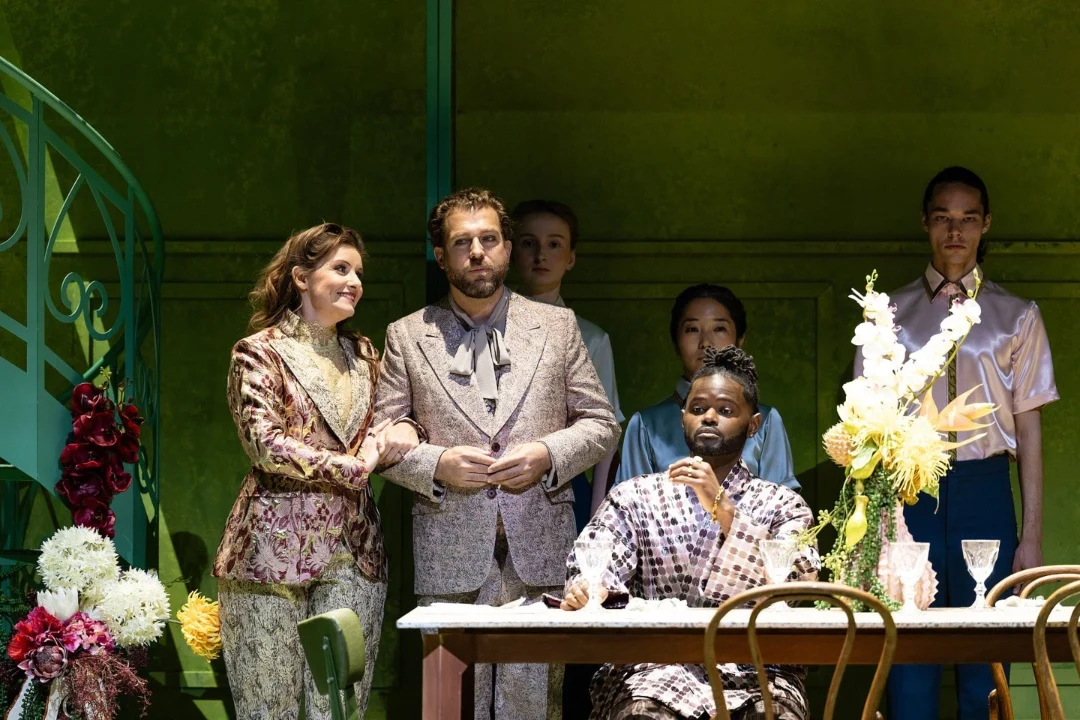
The opulent grandeur and psychological depths of George Frideric Handel’s 1735 masterpiece, "Alcina," a cornerstone of Baroque opera, recently graced the stage, presenting a compelling, albeit uneven, theatrical experience. Based on episodes from Ludovico Ariosto’s epic poem "Orlando Furioso," the opera, first performed in London, transcends mere vocal display to offer a profound exploration of love’s deceptive, possessive, and ultimately destructive power. This production, however, sought to reinterpret the opera’s traditional fantastical setting, opting for a psychologically driven narrative that, while ambitious, struggled to fully coalesce with the inherent magic of the source material. The performance, which unfolded on July 16th, showcased a remarkable cast and a conductor whose intuitive grasp of Handel’s dramatic language illuminated the score’s enduring power, even as the directorial vision presented significant challenges.
Background and Context: Handel’s Alcina and Its Enduring Appeal
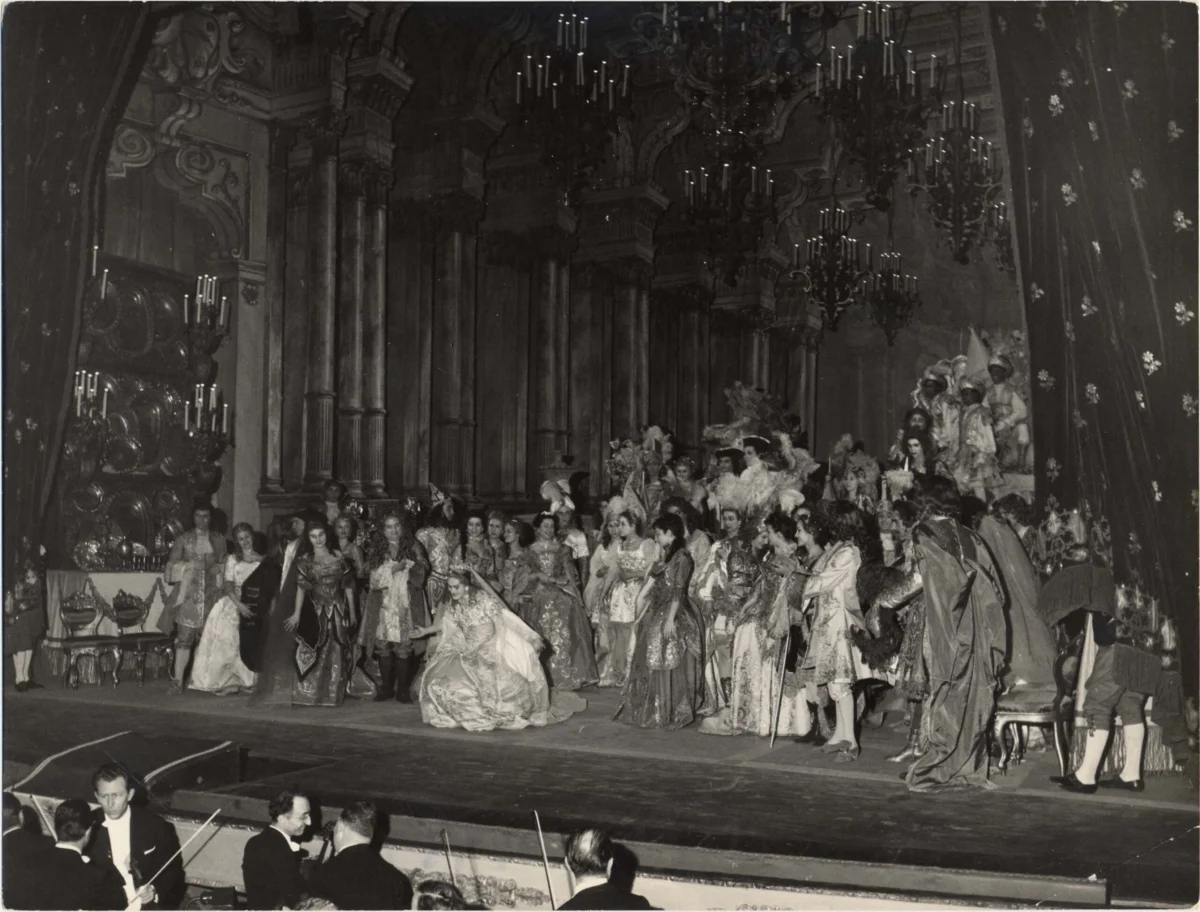
Handel’s "Alcina" arrived on the operatic scene during a period of intense creativity for the composer in London. The opera, which premiered at the Covent Garden Theatre, was a significant success, captivating audiences with its intricate plot, stunning vocal demands, and profound emotional resonance. The story unfolds on the enchanted island of the sorceress Alcina, where men ensnared by her charms are transformed into animals, plants, or stone once their allure fades. The narrative pivots when Alcina herself experiences genuine love, leading to the unraveling of her carefully constructed world. The arrival of the knight Ruggiero, under a spell that makes him forget his betrothed Bradamante, sets in motion a complex web of disguises, misunderstandings, and shifting affections. The opera’s enduring appeal lies not only in its spectacular arias, particularly for the title role, but also in its sophisticated psychological portrait of its titular sorceress and the men caught in her thrall. Handel’s genius lies in his ability to imbue even the most fantastical elements with a deep sense of human emotion, making "Alcina" a work that continues to resonate with modern audiences.
A Divergent Staging: Psychology Over Enchantment
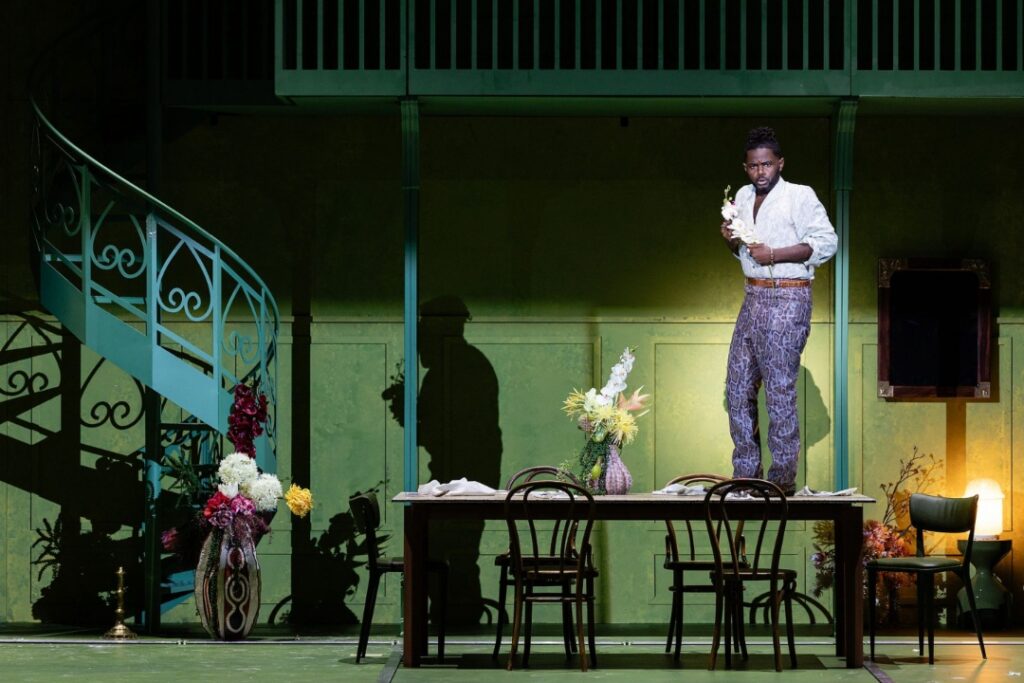
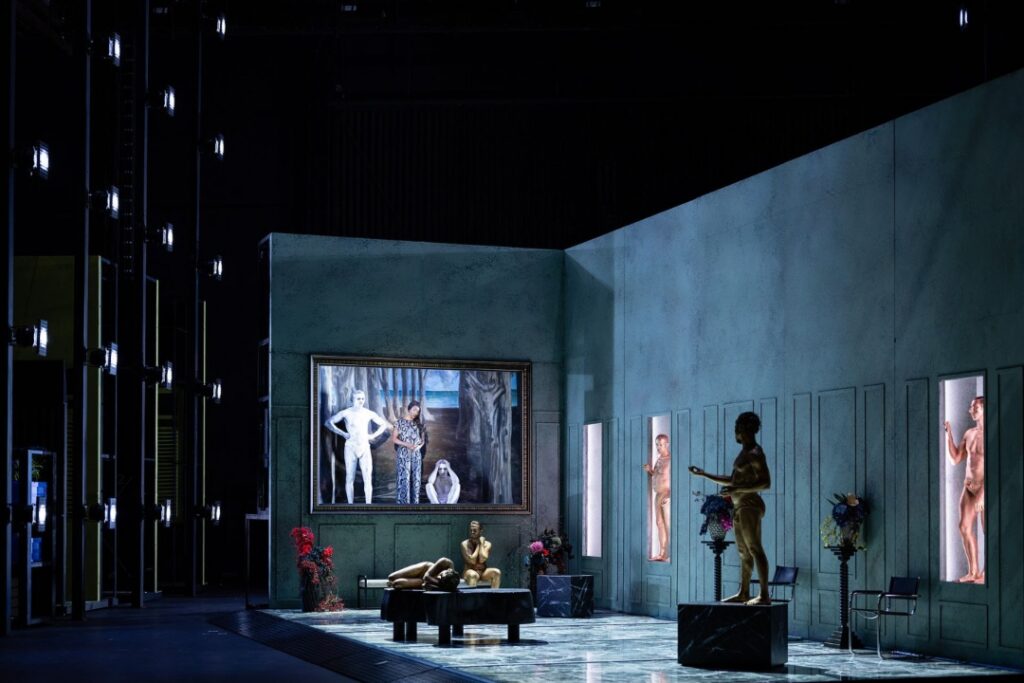
Director Johanna Wehner consciously departed from the conventional depiction of Alcina’s island, choosing instead to ground the action within the seemingly elegant confines of a villa. This setting aimed to highlight the emotional decay festering beneath a polished surface, suggesting that Alcina’s power derived from personal allure and immense wealth rather than supernatural sorcery. While Benjamin Schönecker’s set designs aspired to evoke luxury, the execution fell short. A limited selection of high-end furniture and opulent floral arrangements struggled to convey the dominion of an all-powerful enchantress, often suggesting a comfortable suburban environment rather than a magical realm. The presence of silent servants hinted at considerable wealth, yet the overall impression was undermined by the perceived ordinariness of the surroundings. This conceptual choice created a fundamental inconsistency: if Alcina was neither overtly magical nor extravagantly wealthy, the production offered no satisfactory explanation for the profound hold she exerted over the men who abandoned their lives for her. The inclusion of petrified lovers returning to life in the final act, a remnant of the opera’s fantastical origins, felt particularly jarring within this resolutely realistic framework, straining credulity and weakening the production’s central premise.
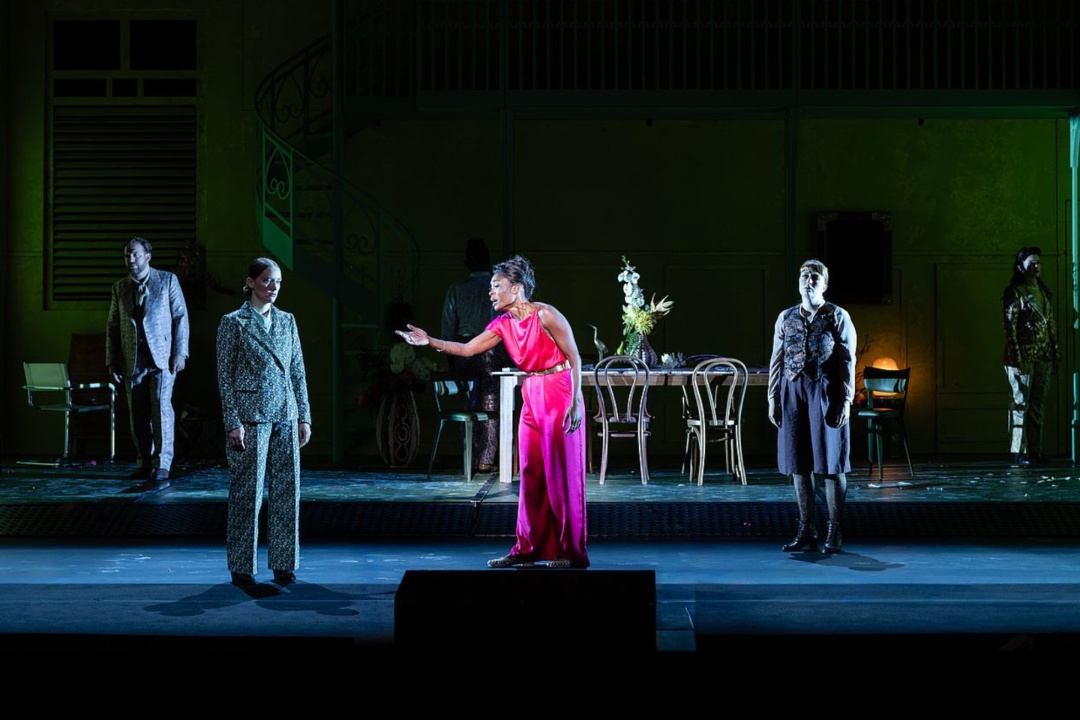
The opera’s opening scene immediately signaled this shift in focus. Instead of a magical transformation, the audience witnessed a domestic upheaval: smashed crockery, overturned furniture, and an enraged Alcina. This was followed by an army of silent servants meticulously restoring order, establishing a household obsessed with maintaining appearances while simmering with emotional turmoil. This arresting image effectively set the tone for the production’s psychological exploration, though it foreshadowed a reliance on this initial insight that would later prove to be a limitation.
Michael Bauer’s atmospheric lighting, tinged with melancholy, and Ellen Hofmann’s chic contemporary costumes further reinforced the production’s emphasis on interpersonal psychology over fantastical spectacle. This approach, while defensible given Handel’s own exploration of emotional truth in his heroines, ultimately failed to fully convince. The production’s Alcina emerged as an attractive woman rather than a formidable sorceress or an immensely wealthy femme fatale. Her physical beauty alone was insufficient to explain the hypnotic devotion she inspired, nor did it account for the lingering supernatural elements that the production retained. In its attempt to strip away the opera’s magic without adequately replacing the dramatic logic that sustained it, Wehner’s interpretation remained caught between realism and fantasy, satisfying neither completely.
Narrative Momentum and Visual Inconsistencies
Beyond its initial conceptual insight, the production struggled to develop sustained dramatic momentum. Once Alcina was established as a lonely, emotionally unstable hostess fearing abandonment, the direction frequently settled into a predictable routine. Characters entered, engaged in brief interactions, performed their arias, and exited, with a noticeable lack of compelling dramatic progression. Extended passages often resembled elegantly staged concerts rather than fully realized music theater. The galleries of gilded statues, presumably Alcina’s petrified lovers, which later miraculously returned to life, sat awkwardly within the otherwise realistic framework. Similarly, Alcina’s final retreat into a picture frame, a gesture hinting at transformation into a museum exhibit, suggested intriguing symbolism without fully articulating its significance. The production’s visual sophistication and psychological ambition were evident, yet a desire for greater theatrical coherence and more sustained dramatic momentum was palpable.
A Stellar Cast Illuminates the Score
Fortunately, the musical aspects of the performance offered a profound compensation for the staging’s shortcomings. The cast assembled was of exceptional caliber, delivering performances that largely transcended the limitations of the direction.
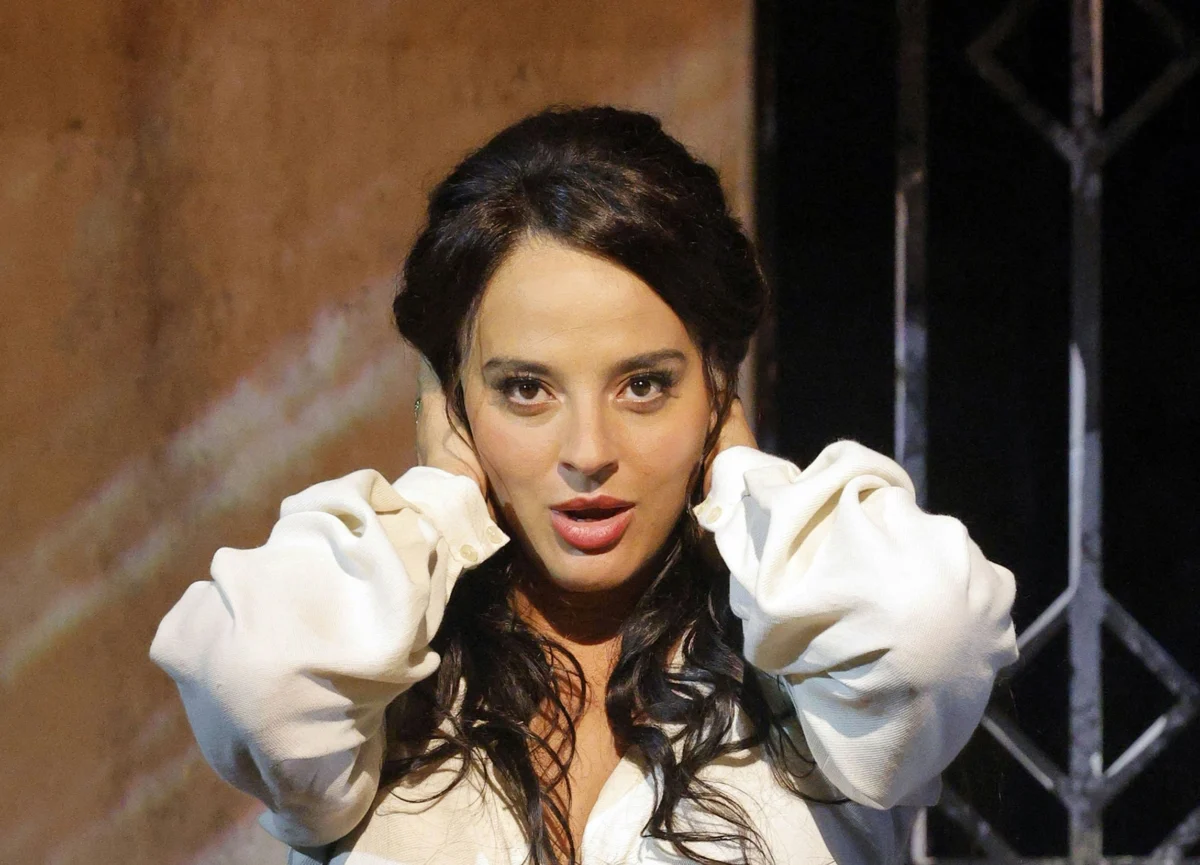
Jeanine De Bique, as Alcina, delivered a portrayal of uncommon distinction. Eschewing conventional imperiousness, she navigated the sorceress’s gradual emotional disintegration with remarkable sensitivity, revealing increasing vulnerability beneath a façade of poise and authority. Her soprano exhibited an extraordinary freedom throughout its range, sustaining long, luminous phrases with seemingly effortless breath control. Exquisitely floated pianissimi expanded naturally into radiant climaxes, never sacrificing tonal beauty or textual clarity. In the pivotal aria "Ah! mio cor, schernito sei," time appeared to suspend as Handel’s profound portrait of desolation unfolded with devastating intimacy. Despite a slight hardening of her upper register under pressure, De Bique’s performance was a masterclass in emotional insight and formidable technical accomplishment, solidifying her interpretation as one of the most compelling Alcina’s in recent memory.
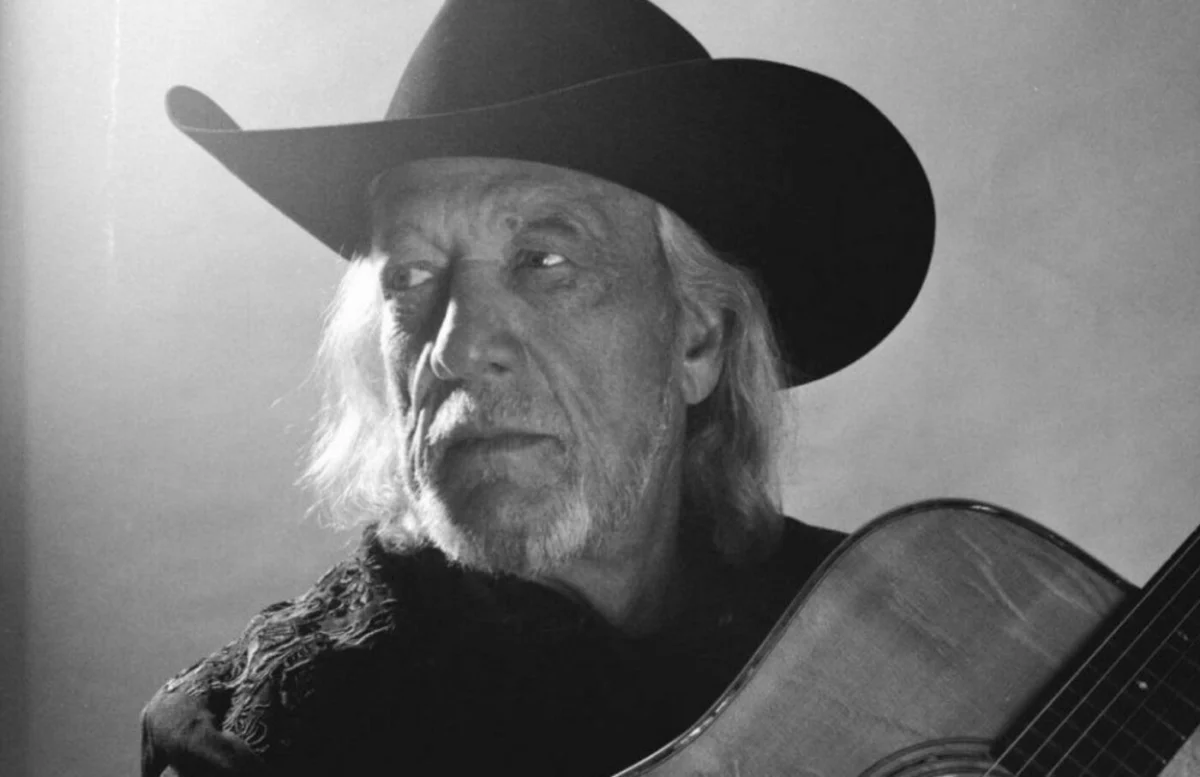
John Holiday as Ruggiero was equally compelling, blending lyrical warmth with impressive dramatic conviction. His countertenor remained remarkably even across its compass, effortlessly transitioning between moments of heroic brilliance and lyrical introspection. His rendition of "Verdi prati" transformed the aria from a pastoral interlude into a deeply personal meditation, sung with unaffected simplicity, immaculate legato, and a finely judged sense of inward reflection. Holiday navigated the more virtuosic passages with admirable assurance, credibly portraying Ruggiero’s gradual awakening from enchantment with quiet psychological credibility.
Elsa Benoit was an irresistible Morgana, imbuing every appearance with crystalline coloratura, infectious vivacity, and impeccable stylistic assurance. Her dazzling account of "Tornami a vagheggiar" combined effortless virtuosity with sparkling charm, capturing the character’s flirtatious exuberance without resorting to caricature. Benoit also impressed with the emotional depth she brought to Morgana’s eventual remorse, allowing a character who can easily appear capricious to acquire genuine dramatic substance.
Avery Amereau sang Bradamante with a handsome tone, musical intelligence, and admirable stylistic integrity. Her warmly colored mezzo-soprano lent dignity and nobility to the role, though the tessitura occasionally seemed to sit a little low for her voice, slightly diminishing its presence in the lower reaches. Her heroic rendition of "Vorrei vendicarmi" stood out as a highlight, and despite a somewhat reserved dramatic portrayal, her vocal musicianship remained unwavering.
Carine Tinney made an unusually strong impression as Oberto, transforming a potentially subsidiary role into one of the evening’s most affecting characterizations. Her fearless coloratura was matched by touching sincerity, lending genuine emotional urgency to the young boy’s search for his father. Oberto’s scenes, rather than functioning as mere episodic subplots, acquired moving dramatic weight through Tinney’s combination of technical assurance and expressive conviction.
Gerrit Illenberger brought quiet authority and sonorous dignity to Melisso, his firmly grounded bass providing an effective foil to the surrounding emotional volatility. Julian Prégardien offered an intelligent and stylish Oronte, shaping Handel’s long melodic lines with elegance and sensitivity, and investing the character with greater emotional complexity than is often encountered. While demanding coloratura passages occasionally revealed a degree of vocal effort, his refined musicianship and nuanced characterization more than compensated.
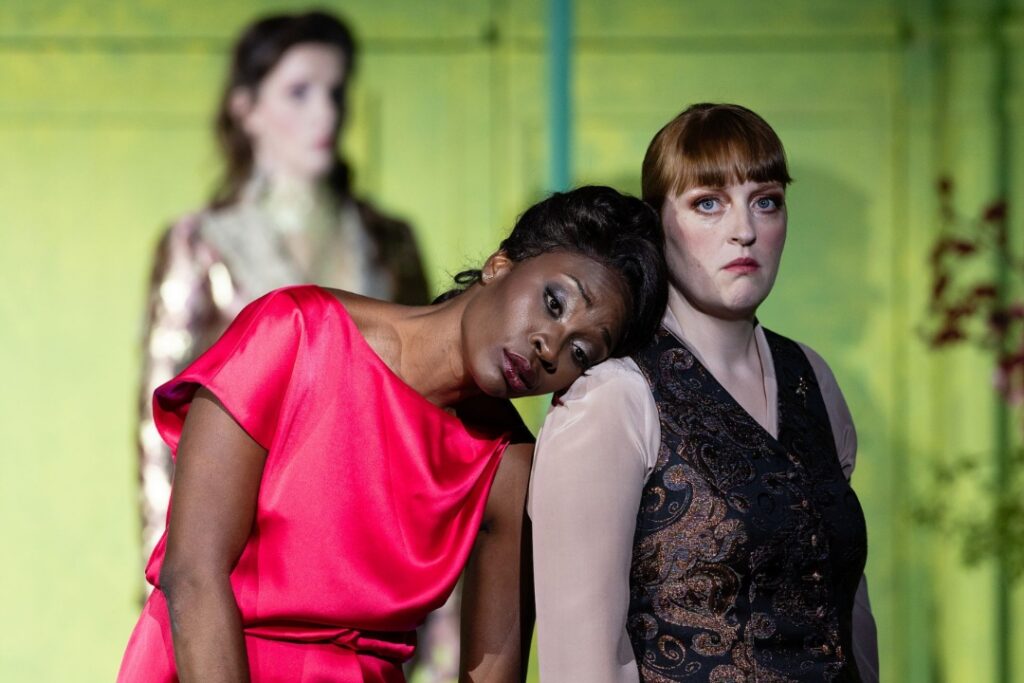
Collectively, the cast demonstrated an impressive command of Handel’s style. Ornamentation was consistently tasteful and dramatically motivated, recitative remained animated and conversational, and ensemble work was exemplary. In a work that relies heavily on performers’ ability to sustain psychological tension through extended da capo arias, this ensemble proved consistently engaging, ensuring that the opera’s emotional core remained compelling even when the staging faltered.
Conductor and Orchestra: A Musical Triumph
The undisputed triumph of the evening resided in the pit. Stefano Montanari conducted with an instinctive understanding of Handel’s dramatic language, eliciting playing of extraordinary vitality, refinement, and stylistic assurance from the Bavarian State Orchestra, augmented by specialists in historically informed performance. The reduced orchestral forces brought remarkable transparency to the texture without sacrificing warmth or richness of sound, allowing Handel’s orchestration to emerge with exceptional clarity.
From the opening bars, Montanari demonstrated an unfailing sense of dramatic pacing. Tempi were alert yet never breathless, responsive to the emotional trajectory of the drama rather than dictated by historical convention. Dance rhythms possessed irresistible buoyancy, while moments of lyrical repose unfolded with natural flexibility, allowing the music to breathe without losing momentum. Recitatives, often relegated to mere connective tissue, became animated theatrical exchanges, shaped with conversational ease and acute responsiveness to the singers. The drama, under Montanari’s direction, seemed to arise organically from the score itself.
Montanari’s command of silence was particularly striking. Carefully judged pauses became expressive devices, heightening anticipation or allowing moments of emotional revelation to resonate fully. This subtle manipulation of tension testified to a conductor thoroughly immersed in Handel’s theatrical instincts, moving beyond mere accompaniment of arias.
The obbligato instrumental solos were among the evening’s greatest pleasures. Handel’s writing frequently places individual instruments in intimate dialogue with the voice, and these exchanges possessed the spontaneity and refinement of chamber music. The principal cello, violin, flute, and oboe all played with exceptional elegance, matching the singers in expressive nuance and tonal beauty. These were not mere accompaniments but equal dramatic participants, enriching the emotional landscape.
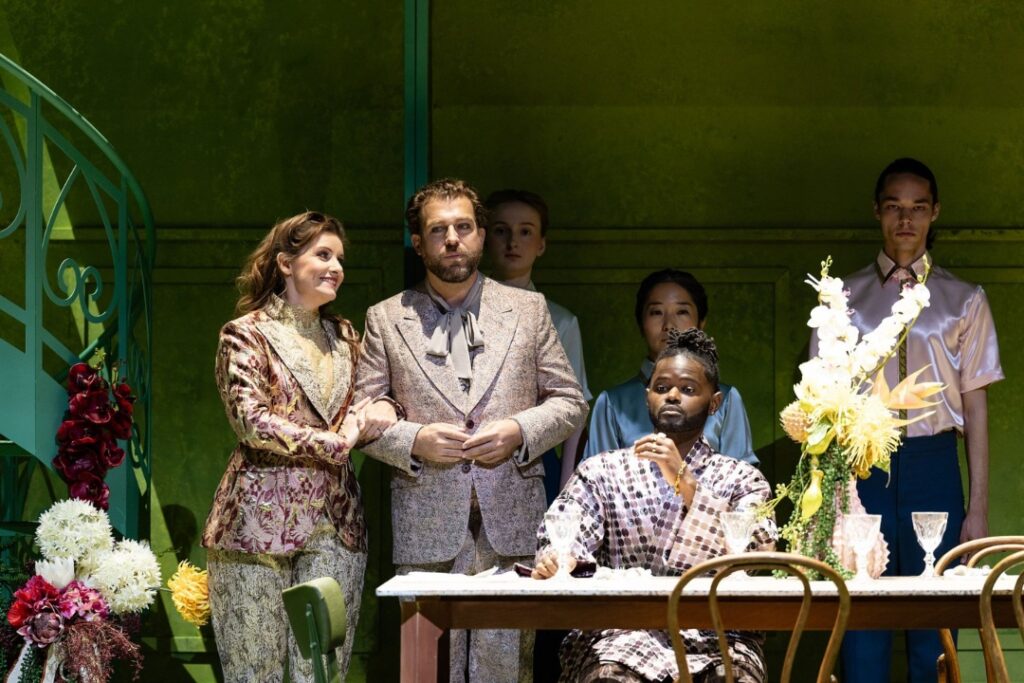
The treatment of da capo repeats was equally impressive. Rather than becoming predictable displays of vocal virtuosity, they blossomed into imaginative and stylistically apt ornamentation that illuminated characters’ evolving emotional states. Conductor and singers alike understood that Handel’s repeats invite dramatic development as much as musical embellishment, maintaining a compelling sense of forward momentum.
The Bavarian State Orchestra responded magnificently. Strings played with remarkable precision and suppleness, articulating Handel’s dance-inspired rhythms with effortless grace and producing a sonority of striking warmth and transparency. The continuo group provided a constant source of vitality, offering an imaginative harmonic foundation that enlivened every recitative. Wind principals contributed playing of exceptional finesse, their finely judged phrasing and immaculate intonation lending color and character to Handel’s richly varied orchestral palette.
The degree of stylistic unanimity achieved was perhaps most impressive. While the Bavarian State Orchestra is not a period ensemble, the freshness, rhythmic acuity, and stylistic confidence of the playing suggested otherwise. Modern instruments were employed with an acute awareness of Baroque rhetoric, producing performances that combined the tonal richness of a great symphony orchestra with the agility and textual clarity of specialist ensembles.
Under Montanari’s direction, Handel’s score emerged not as a museum piece but as living theater of extraordinary immediacy. Even across a performance lasting well over three and a half hours, musical tension rarely slackened. This was conducting of rare intelligence and imagination, consistently illuminating both the work’s architecture and its characters’ emotional complexities, reaffirming "Alcina" as a supreme achievement of 18th-century opera.
Conclusion: A Kingdom Divided
Ultimately, this production of "Alcina" presented a curious imbalance. Johanna Wehner’s staging sought to replace enchantment with psychological realism, but in stripping away much of the opera’s supernatural dimension, it failed to fully compensate with sufficiently compelling theatrical insight. The central premise was intriguing, and there were moments when the production illuminated the emotional fragility at the heart of Handel’s heroine with genuine sensitivity. However, the execution remained uneven. Its handsome visual surfaces, intelligent ambitions, and occasional flashes of inspiration could not entirely conceal a lack of sustained dramatic imagination or resolve the inherent contradictions of its resolutely realistic framework. The result was a staging that invited admiration more readily than emotional involvement.
Handel’s masterpiece, however, proved remarkably resilient. Few operas unite psychological penetration and musical invention with such consistency. This performance demonstrated how completely the score can transcend an imperfect theatrical conception. The uniformly excellent singing ensured that the emotional core of the drama remained compelling, while Stefano Montanari’s magnificent conducting revealed anew the extraordinary dramatic vitality of Handel’s writing. Under his direction, the Bavarian State Orchestra played with a stylistic assurance, elegance, and expressive immediacy that ranked among the finest Handel performances one could hope to hear in a modern opera house. If the staging only intermittently achieved the sense of wonder promised by the work, the musical performance supplied it in abundance, leaving the audience profoundly moved by the eloquence of Handel’s score and a performance that reaffirmed "Alcina" as a timeless masterpiece.