Nayara Elvina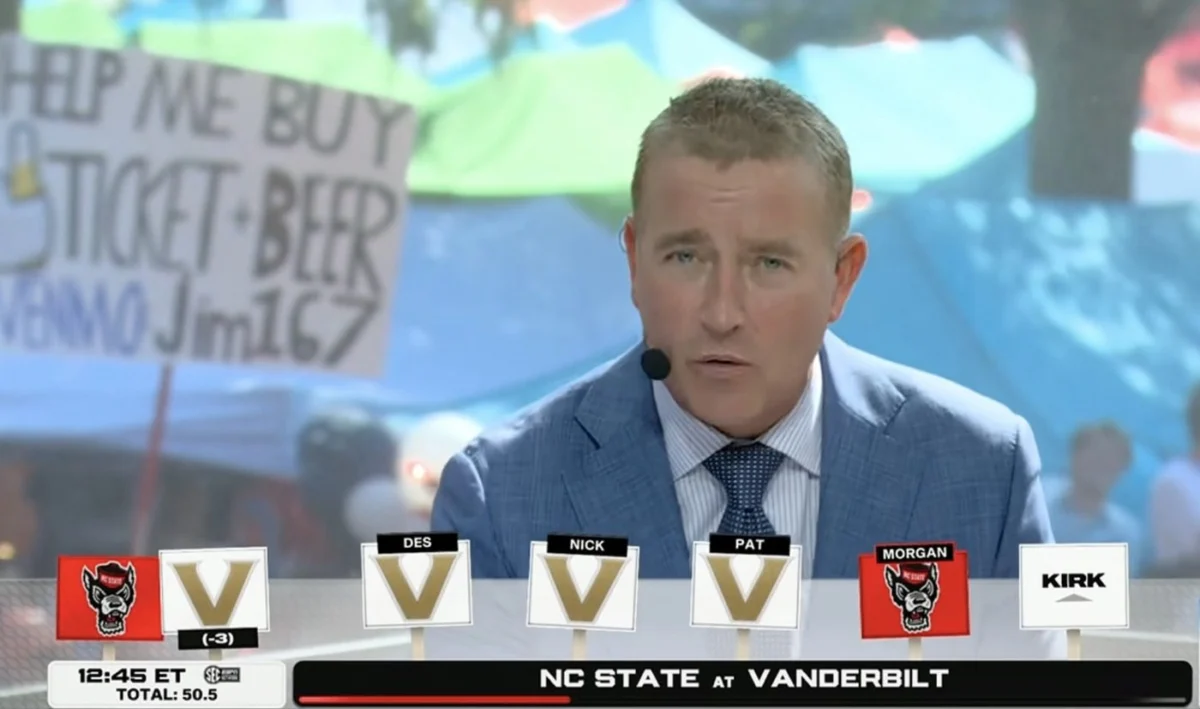
The intersection of college football fanaticism, digital peer-to-peer payment platforms, and modern broadcast culture reached a lucrative zenith in Oxford, Mississippi, when a single spectator leveraged a rudimentary poster board into an unexpected financial windfall. While the primary narrative of the weekend centered on a high-stakes Southeastern Conference showdown between two top-ten programs and the highly publicized return of a polarizing former head coach, a secondary storyline captured the attention of internet spectators nationwide. In an era where traditional sign-making at televised sports events often relies on hyper-localized trash talk or satirical commentary, one enterprising student bypassed the standard repertoire of insults to solicit direct financial contributions from the college football viewing public.
By the time the broadcast concluded its morning festivities, the unidentified individual had accumulated more than $18,000 in peer-to-peer transfers. This viral phenomenon highlights the evolving nature of spectator participation in live sports broadcasting, demonstrating how digital infrastructure can transform passive viewers into active financial participants in a broadcast’s live-audience subculture.
The Stage: A Powder Keg in Oxford
The atmosphere in Oxford, Mississippi, was defined by historical animosity and high athletic stakes. The university’s flagship football program, the Ole Miss Rebels, prepared to host the Louisiana State University Tigers in a contest that held immense implications for the national rankings and the SEC West standings. However, the athletic implications were secondary, at least emotionally, to the homecoming of Lane Kiffin.
Kiffin, who had served as the head coach of the Ole Miss program before executing a controversial departure for Baton Rouge the previous November, was returning to Vaught-Hemingway Stadium for the first time since his exit. The transition had left lingering resentment among the local fan base, who viewed the timing and manner of his departure as a betrayal of the program’s ascending trajectory. Consequently, the fixture transformed into a cultural referendum, drawing intense national media scrutiny.
ESPN’s flagship pre-game program, College GameDay, established its production set on the university campus to capture the electric, volatile atmosphere. Thousands of supporters converged on the location hours before dawn, hoisting satirical, provocative, and celebratory signage designed to catch the eye of the broadcast cameras. Among the sea of displays targeting the opposing coaching staff, a minimalist white poster board stood out not for its rhetorical cleverness, but for its functional simplicity: it displayed a prominent Venmo handle accompanied by a direct request for funds designated for game tickets and beverages.
Chronology of the Event
The timeline of the financial acquisition mirrors the rapid-fire distribution typical of viral internet events.
Early Saturday Morning (6:00 AM – 9:00 AM CST): As the crowds gathered around the College GameDay set, the student positioned himself within sight of the primary camera angles. The sign remained visible for extended durations during the three-hour broadcast, appearing intermittently in the background behind the desk analysts.
Midday Saturday (9:00 AM – 12:00 PM CST): Digital distribution accelerated as television viewers across the country began noticing the handle on their home screens. Screenshots of the broadcast began circulating on social media platforms, notably X (formerly Twitter), which spurred a secondary wave of curiosity-driven contributions from individuals watching remotely.
Saturday Afternoon (12:00 PM – 3:30 PM CST): Kickoff commenced for the top-ten matchup. While the athletic contest unfolded on the field, digital transactions continued to process. Ole Miss initially established a commanding lead, jumping out to a 24-7 advantage by halftime. However, a resilient LSU side mounted a substantial comeback, equalizing the score in the fourth quarter.
Late Afternoon (3:30 PM – 7:00 PM CST): The athletic climax of the day saw Ole Miss quarterback Trinidad Chambliss orchestrating a late-game scoring drive, converting a high-stakes two-point conversion with six minutes remaining to secure a 32-24 victory. Concurrently, as the final whistle blew, the sign’s creator accessed his digital wallet to reveal a balance exceeding $18,000.
Anatomy of the Contributions: A Cross-Section of Fanbases
An analysis of the incoming transactions reveals a diverse geographic and institutional origin for the funds. While a significant portion of the donations originated from local supporters celebrating the athletic victory, contributions were also logged from fans of rival programs, neutral observers, and industry professionals.
Publicly shared screenshots of the account history showcased messages attached to the monetary transfers, reflecting the multifaceted culture of college football fandom. A contributor from College Station, Texas, home of Texas A&M University, offered a tongue-in-cheek message hoping the recipient’s team fared better than their own. Another donation arrived with a greeting from an official graphics technician employed by the broadcasting network, while supporters representing perennial national contenders like Ohio State University and the University of Georgia also participated.
This broad-based participation underscores how collegiate sports rivalries can temporarily bridge geographic divides, manifesting through micro-philanthropy and lighthearted digital interactions. Rather than inciting hostility, the transparent appeal for beer and ticket money served as a unifying novelty item for viewers scattered across multiple time zones.
Historical Precedents in College GameDay Fundraising
While the scale of the Oxford student’s fundraising effort is notable, it is not without precedent within the ecosystem of ESPN’s Saturday morning broadcast. The intersection of televised signs and charitable or personal fundraising entered the cultural lexicon most prominently during the 2019 season.
In September 2019, an Iowa State University supporter named Carson King hoisted a sign during a College GameDay broadcast in Ames, Iowa. The placard featured a similarly straightforward request: an invitation for viewers to fund his personal supply of Busch Light beer. However, as contributions swiftly accumulated into the hundreds of dollars, King announced a pivot in his strategy. He committed to retaining only the funds necessary to purchase a single case of beer, pledging the entirety of the remaining balance to the University of Iowa Stead Family Children’s Hospital.
The initiative quickly escalated beyond initial projections. Corporate entities, including the beverage brand and national media figures, amplified the campaign. By the time the fundraising concluded, King had generated over $3 million for pediatric healthcare, fundamentally altering the perception of what could be achieved through spontaneous broadcast signage.
Subsequent regulatory adjustments by network producers and venue security attempted to curb the proliferation of commercial and peer-to-peer payment handles on signs, citing potential policy violations regarding unsolicited solicitations and copyright restrictions. Despite these administrative guardrails, the recent incident in Oxford demonstrates that determined spectators can still find operational windows to bypass production filters.
Implications for Broadcast Production and Digital Culture
The successful capitalization of a televised audience via peer-to-peer payment systems introduces complex considerations for broadcast networks, event organizers, and platform operators.
From a production standpoint, live television broadcasts operate under strict regulatory and ethical standards concerning commercial solicitations, gambling promotions, and endorsements. While a peer-to-peer request for personal consumption does not violate federal broadcast laws in the manner that a commercial advertisement might, networks maintain an interest in curating the visual environment of their programs to align with corporate sponsorships and brand safety guidelines. The ability of spectators to consistently smuggle financial identifiers onto national television forces production teams to deploy increasingly rigorous monitoring protocols.
Conversely, the phenomenon illustrates the diminishing barrier between traditional mass media and decentralized digital economies. Peer-to-peer applications have integrated seamlessly into everyday commerce and social signaling. When applied to the high-visibility canvas of a live sporting event, these platforms enable instantaneous monetization of ephemeral attention spans.
Economic and Sociological Context
The willingness of sports spectators to distribute funds to absolute strangers highlights shifting sociological norms regarding digital generosity and parasocial interaction. In an era marked by economic pressures and ubiquitous connectivity, micro-donations have transformed into a form of interactive entertainment. For the donor, the transfer of a nominal sum—ranging from one to ten dollars—serves as an admission ticket to a collective inside joke, allowing them to participate tangibly in a viral moment broadcast to millions.
Furthermore, the geographic dispersion of the donors reinforces the concept of a national community united by athletic culture. The digital ledger of the recipient’s account functions as a mosaic of contemporary college football fandom, capturing regional dialects, inter-conference banter, and institutional loyalties in real time.
Conclusion
As the dust settled in Oxford following the emotional victory over their former head coach, the financial reality of the weekend set in for a single undergraduate. What began as a rudimentary craft project executed hours before dawn ultimately yielded a four-figure sum, outstripping the standard financial outcomes associated with college employment over a comparable timeframe.
Whether this incident will inspire a wave of imitation during subsequent weekends of the college football calendar remains to be seen. Broadcasters and security personnel will likely adjust their operational strategies to preempt similar displays. However, the event serves as a striking reminder of the unpredictable synergies that occur when mass media broadcasting, hyper-engaged subcultures, and modern financial technology converge in a single physical space.