Mia Khoirunisa
In a significant development for the modular synthesizer community, Bastl Instruments, a Czech Republic-based manufacturer renowned for its innovative and user-centric hardware, has introduced the Déjà Vu module. This compact yet remarkably versatile unit promises to streamline and enhance signal manipulation within Eurorack systems, offering a sophisticated array of functionalities typically requiring multiple individual modules. The Déjà Vu module is not merely a collection of features; it represents a thoughtful integration of core audio and control voltage (CV) processing tools, designed to address common workflow challenges and unlock new creative possibilities for musicians and sound designers.
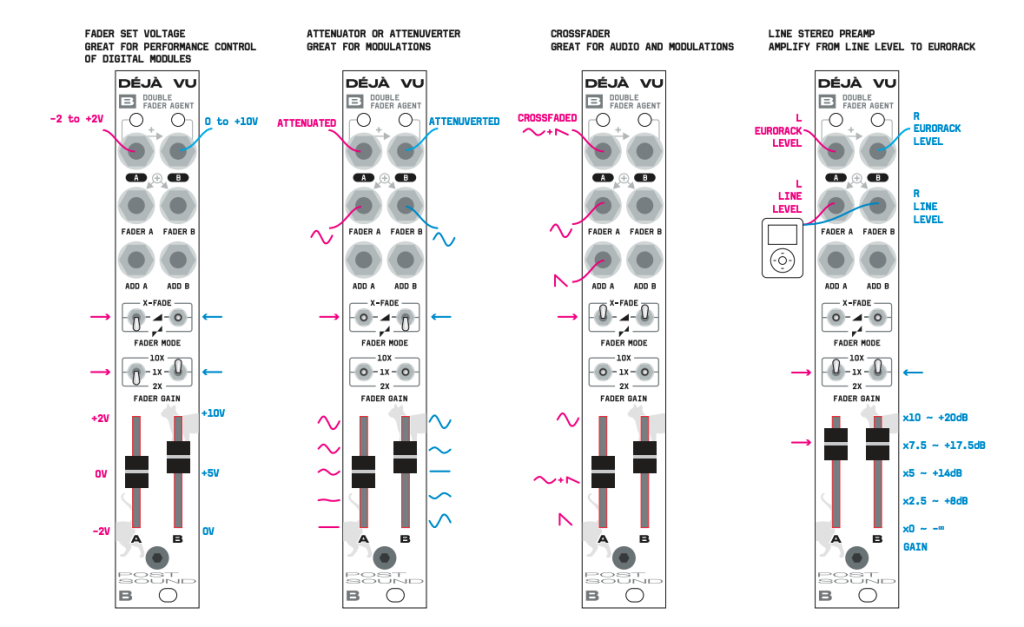
The core innovation of the Déjà Vu lies in its deceptively simple two-fader design, each controlling a dedicated channel, A and B. However, the true power of this module unfolds through its multifaceted operational modes, accessible via intuitive physical switches. Bastl Instruments has meticulously engineered the Déjà Vu to function as an attenuator, attenuverter, crossfader, preamplifier, line-level booster, panner, and a four-channel mixer, among other capabilities. This extensive functionality is packed into a standard 4U Eurorack width, a format choice that suggests a strategic effort to maximize utility within a constrained rack space.
Unpacking the Multifunctionality of Déjà Vu
At its heart, the Déjà Vu is built around two independent channels, each equipped with a fader for manual control and a dedicated CV input for automation. The module’s clever design allows these faders to perform a wide range of operations beyond simple volume adjustment. By engaging different switch configurations, users can transform the faders into precise attenuators, reducing the amplitude of incoming signals, or attenuverters, which not only attenuate but also invert the signal’s polarity. This inversion capability is particularly valuable for CV manipulation, enabling complex modulation sculpting and unexpected sonic behaviors.
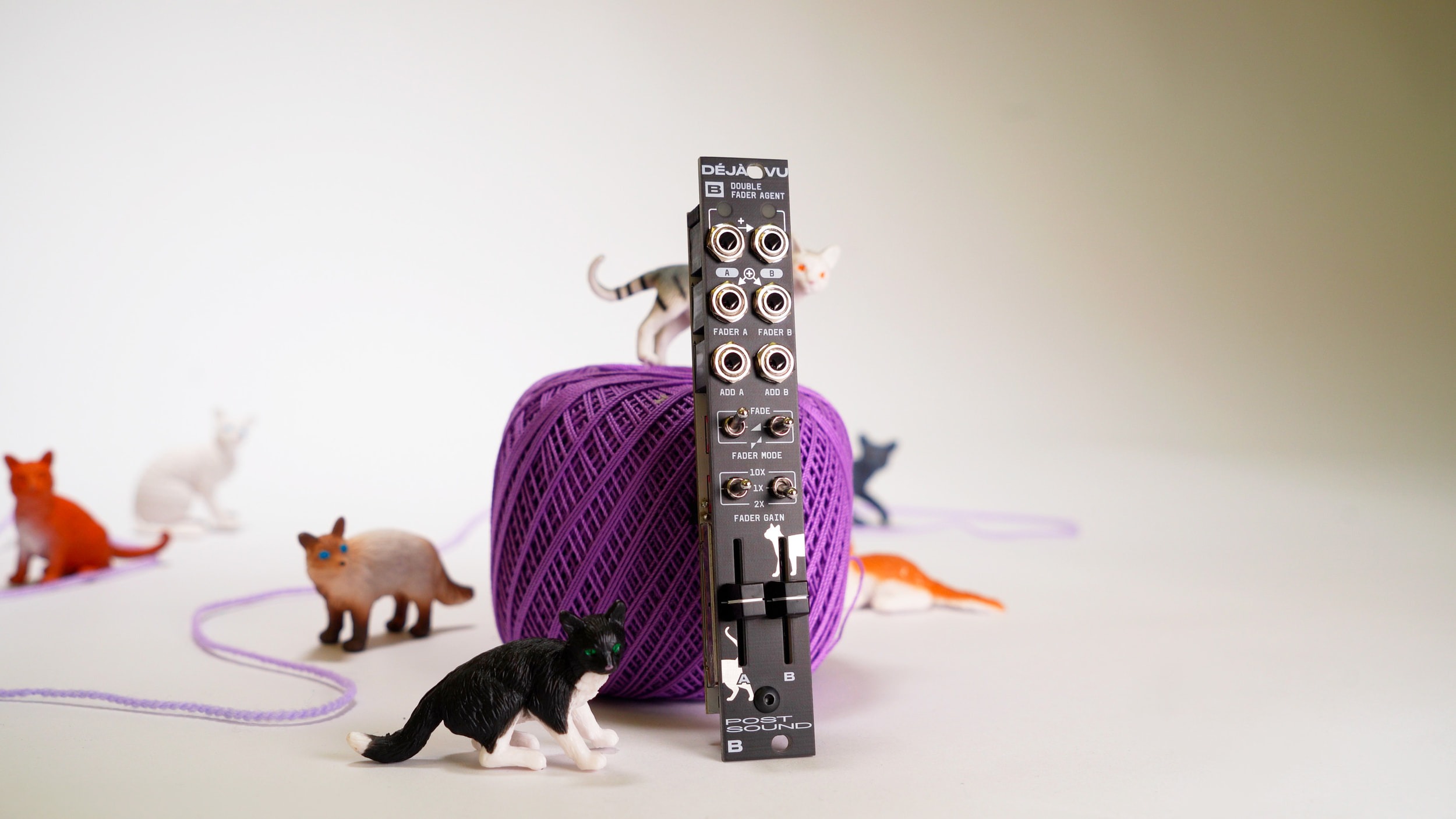
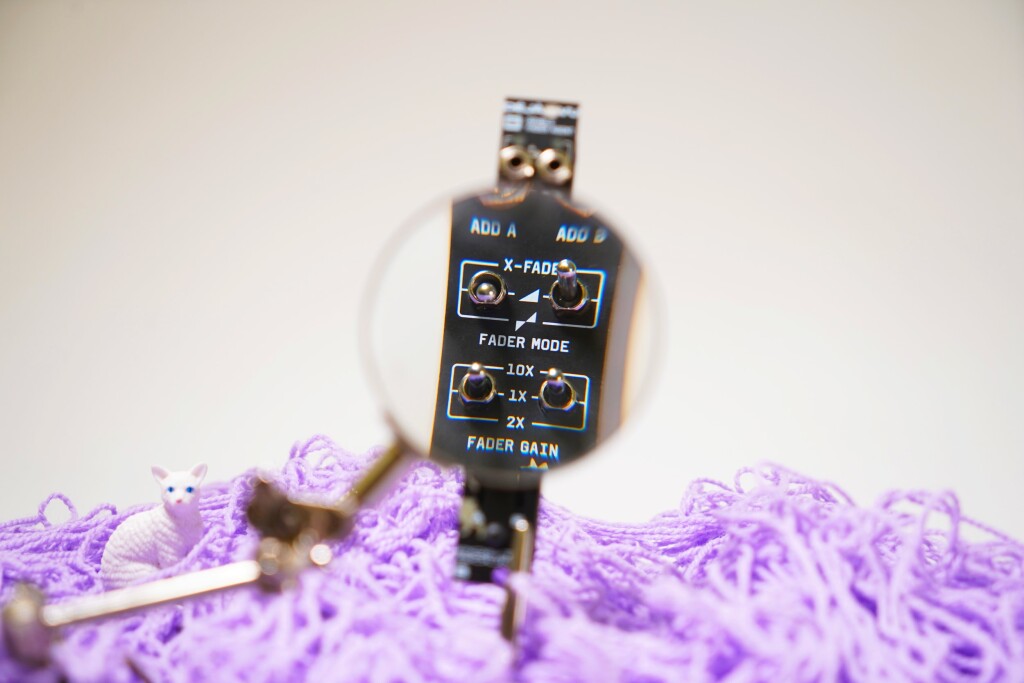
The crossfading functionality is another standout feature. The Déjà Vu offers multiple crossfading modes, allowing for seamless blending between channels A and B. This is crucial for creating dynamic transitions in audio or for morphing between different modulation sources. The inclusion of dedicated switches for fader modes – offering 1x, 2x, and 10x gain settings – further enhances the module’s adaptability. These gain stages provide ample headroom for boosting weak signals or taming overly hot ones, a common concern in the often-unpredictable signal landscape of Eurorack.
Furthermore, the Déjà Vu incorporates a bias distortion clipper, specifically designed to handle the high signal levels characteristic of Eurorack. This feature allows for the introduction of saturation and harmonic richness at the Eurorack level without the risk of digital clipping or signal degradation. This is a significant advantage for producers seeking to add analog warmth and character to their digital or hybrid setups.
The module’s capacity as a four-channel mixer is also noteworthy. By utilizing the two main input channels and the "ADD" input jacks, users can combine up to four signals. This integrated mixing capability reduces the need for external mixing modules, further consolidating the Eurorack setup and freeing up valuable rack space. Beyond audio, the Déjà Vu’s ability to process and mix CV signals opens up a vast territory for complex control patching and generative music. Oscillator waveform mixing is another practical application, allowing for the blend of different timbres to create rich, evolving sounds.
A Strategic Design Philosophy
The design philosophy behind the Déjà Vu appears to be rooted in the principle of maximizing creative potential through integrated, user-friendly hardware. In a modular ecosystem where complexity can often be a barrier, Bastl Instruments has opted for a strategy of consolidation, packing a multitude of essential functions into a single, accessible unit. This approach contrasts with the "unitasker" philosophy, where modules are designed for a single, highly specialized purpose. Instead, the Déjà Vu embodies the "multitasker" ideal, offering a broad spectrum of capabilities that can be employed in numerous creative contexts.
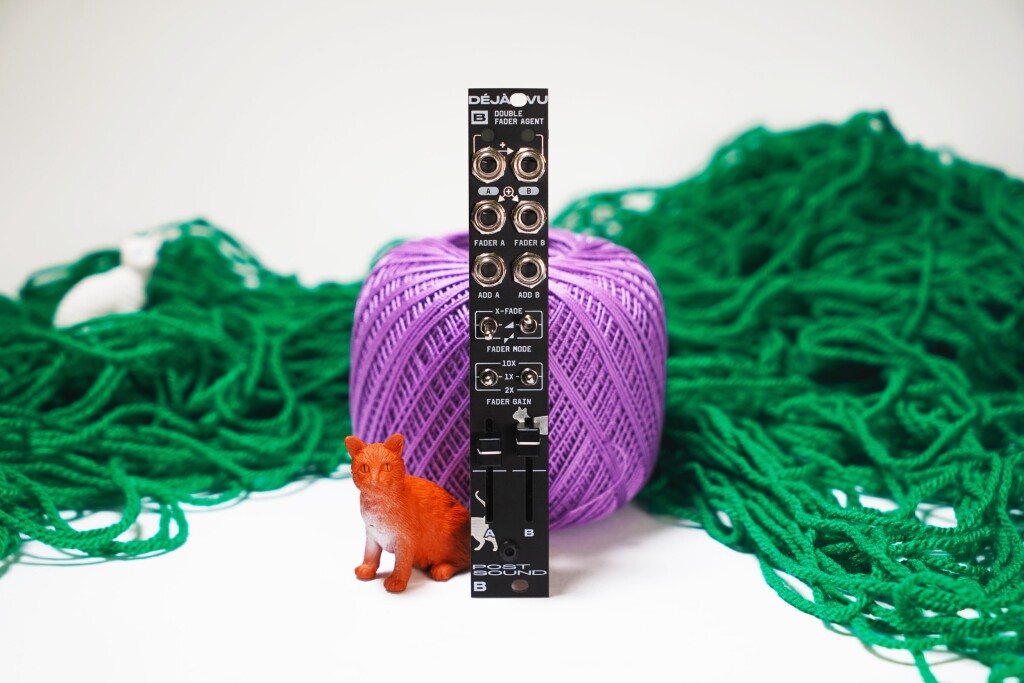
The inclusion of a comprehensive "cookbook" PDF, detailing various use cases and patching ideas, further underscores Bastl’s commitment to empowering users. This resource, alongside visual demonstrations such as the accompanying YouTube video, provides a clear pathway for musicians to explore the module’s full potential, from subtle signal adjustments to intricate sonic sculpting. The cookbook acts as a valuable guide, demonstrating how the Déjà Vu can be employed in scenarios ranging from basic mixing and attenuation to more experimental applications like complex modulation routing and sound design.
Context and Potential Impact on Eurorack Workflows
The introduction of the Déjà Vu arrives at a time when Eurorack users are increasingly seeking modules that offer greater efficiency and flexibility. The proliferation of high-quality, specialized modules has led to a rich and diverse ecosystem, but it has also resulted in racks that can become cluttered and complex. Modules like the Déjà Vu, which consolidate multiple functions, address this challenge directly by offering a more streamlined approach to signal management.
The potential impact on Eurorack setups is significant. For users with limited rack space, the Déjà Vu could effectively replace several individual modules, such as a dedicated attenuator, attenuverter, crossfader, and a small mixer. This not only saves space but also simplifies patching and reduces the overall cost of building a functional system. Furthermore, the intuitive switch-based operation minimizes the need for deep menu diving or complex configuration, allowing for more immediate creative engagement.
Bastl Instruments also suggests pairing the Déjà Vu with their Neo Trinity modulation hub. While this pairing is presented as complementary, the Déjà Vu’s independent functionality ensures its seamless integration into a wide array of existing Eurorack systems, regardless of manufacturer. This broad compatibility is a key factor in its potential for widespread adoption. The Neo Trinity, a six-channel modulation hub, offers a robust platform for generating and managing complex modulation signals. When combined with the Déjà Vu, it allows for intricate crossfading and mixing of these modulation sources, leading to highly dynamic and evolving sonic textures.
Historical Context and Precedents
While the Déjà Vu’s specific combination of features is novel, the concept of multifunctional modules in Eurorack is not entirely new. Manufacturers have consistently sought to offer more utility within smaller footprints. Early examples include VCA (Voltage Controlled Amplifier) modules that also incorporate mixers or attenuators. More recently, complex utility modules that blend LFOs, envelopes, and sequencers have become commonplace. However, the Déjà Vu distinguishes itself through its direct focus on fader-based control and the sheer breadth of core signal processing functions it encompasses within a single, elegantly designed unit.
The emphasis on physical controls, particularly the tactile faders and clearly labeled switches, reflects a growing trend in modular synthesis towards immediate, hands-on interaction. This design choice caters to musicians who prefer to sculpt their sound through direct manipulation rather than relying solely on digital interfaces or complex patching. The inclusion of CV inputs for the faders ensures that the module remains highly flexible and programmable, bridging the gap between manual control and automated performance.
Technical Specifications and Data
While precise technical specifications were not fully detailed in the initial announcement, key operational parameters can be inferred. The module operates within the standard Eurorack voltage ranges, supporting both audio and CV signals. The "hot signals" mention implies an input stage capable of handling up to +/- 10V or even higher, common in Eurorack, with an output stage designed to provide a clean line-level signal or a boosted signal suitable for driving other modules. The "bias distortion clipper" likely operates on the output stage of each channel or the master output, providing analog-style saturation. The 4-channel mixer functionality suggests that the ADD inputs sum into the main stereo or mono output bus, along with channels A and B. The module’s 4U width confirms it occupies a standard space in most Eurorack cases.
Official Response and Developer Intent
A representative from Bastl Instruments, when asked about the design philosophy behind Déjà Vu, stated, "We aimed to create a module that would be a true workhorse for any Eurorack setup. We saw a need for a single module that could handle a multitude of common signal processing tasks without compromising on sound quality or ease of use. The Déjà Vu is the result of extensive prototyping and listening to feedback from the modular community. We wanted to give users a tool that is both powerful and inspiring, encouraging experimentation and new creative approaches to sound design and composition." The emphasis on user feedback and iterative design is a hallmark of Bastl Instruments’ approach to product development, often leading to modules that resonate deeply with their target audience.
Broader Implications and Future Outlook
The success of the Déjà Vu could signal a further trend towards highly integrated utility modules in the Eurorack market. As the modular ecosystem matures, developers are increasingly focusing on solutions that offer maximum value and efficiency. This could lead to a future where complex signal chains are assembled using fewer, more versatile modules, making modular synthesis more accessible to a wider range of users. The module’s success will likely depend on its performance in real-world applications and its ability to live up to its ambitious feature set. However, based on Bastl Instruments’ track record and the initial information, the Déjà Vu appears poised to become an indispensable tool for many Eurorack enthusiasts, offering a blend of simplicity, power, and creative potential that is rarely found in such a compact package. The inclusion of playful elements, such as the unexpected feline imagery in accompanying materials, while not directly related to the technical specifications, does reflect a broader trend in the creative technology space of incorporating personality and artistic flair into product presentation, fostering a deeper connection with the user community.
The availability of the Déjà Vu module is anticipated to be through Bastl Instruments’ direct channels and select retailers. Interested parties are encouraged to visit the official Bastl Instruments website for the most up-to-date information on pricing, availability, and detailed technical specifications. The module’s introduction, coupled with resources like the "cookbook," suggests a strategic effort to ensure users can quickly and effectively integrate this versatile tool into their existing creative workflows, potentially reshaping how many approach signal manipulation within the Eurorack environment.