Kholidah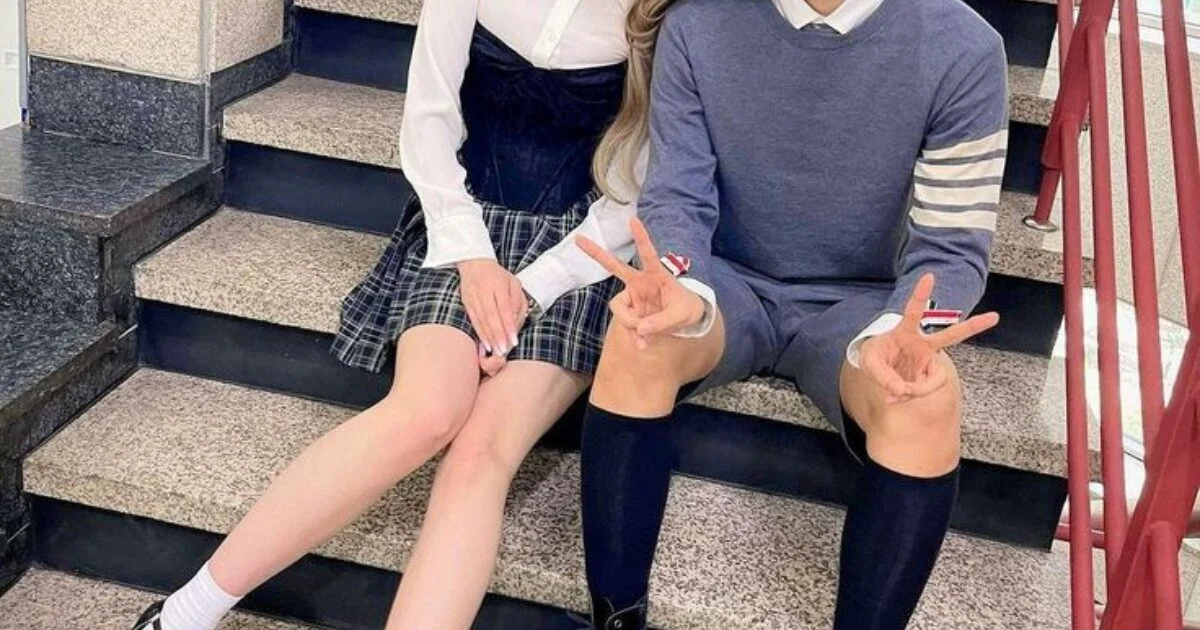
The Origins of a Decadelong Bond
The friendship between Jeon Somi and Lee Daehwi dates back to their formative years as trainees under JYP Entertainment, one of South Korea’s "Big Three" talent agencies. This period, often referred to as the "JYP trainee era," was a foundational time for both artists as they navigated the rigorous demands of the idol development system. Somi, who first gained public attention through the survival show Sixteen and later solidified her stardom as the center of the project group I.O.I, and Daehwi, who rose to fame as the center of the theme song for Produce 101 Season 2 and subsequently debuted in Wanna One, have remained vocal supporters of one another throughout their respective career transitions.
According to the accounts shared by the duo, their friendship was solidified by a mutual commitment to maintaining a social connection despite the physical and professional obstacles inherent in their schedules. Somi recounted that during their trainee days, the two lived in geographically distinct areas of Seoul, which required significant effort to bridge. While Somi resided in Yeonnam-dong, a neighborhood in the Mapo District known for its residential charm and artistic atmosphere, Daehwi was based in Cheongdam-dong, the luxury and commercial hub of the Gangnam District.
Navigating the Geography of Seoul: A Trainee’s Commute
The logistical details of their meetings underscore the depth of their friendship. The distance between Cheongdam-dong and Yeonnam-dong is approximately 15 to 20 kilometers, depending on the route. In the context of Seoul’s dense urban traffic, a one-way commute can take anywhere from 45 minutes to over an hour by public transit or taxi. For a trainee undergoing intensive daily practice sessions in dance, vocals, and language—often lasting upwards of 12 to 14 hours—the decision to travel such a distance for a social visit is a testament to the emotional value placed on the relationship.
Somi expressed her longstanding gratitude for Daehwi’s persistence during this period. "Daehwi always came to visit, so I was grateful," she noted, highlighting that he would make the long trip frequently just to spend time with her and her family. This consistency eventually led to a level of familiarity where the traditional formalities of visiting were bypassed in favor of a more familial arrangement.
The Passcode Incident and Family Integration
As the frequency of Daehwi’s visits increased, he became a fixture in the Jeon household. Somi revealed that the level of trust reached a point where Daehwi was privy to the digital passcode of her home, allowing him to enter without waiting for someone to open the door. This level of access is relatively uncommon in South Korean social etiquette, where privacy and formal boundaries are typically respected, even among close friends.

The familiarity led to a humorous encounter involving Somi’s mother. The residential arrangement at the time involved Somi’s parents living on the first floor of the building, while Somi occupied the second floor. On one occasion, Somi’s mother heard footsteps on the upper floor and, assuming an intruder or an unexpected guest, rushed upstairs to investigate.
Daehwi recounted the moment with levity: "I got scolded by her mom once. Since I went over so often, I knew the passcode and would just input it to go in. I went in once, and her parents heard the movement and rushed up. Her mom screamed at me like, ‘Hey! Lee Daehwi!’" However, the initial shock quickly dissipated, reflecting the idol’s status as an "adopted" member of the family. Daehwi noted that the incident ended with the three of them—Daehwi and Somi’s parents—sitting down together to discuss his personal worries and career concerns, illustrating a deep level of intergenerational trust.
Financial Pranks and Mutual Support
Beyond the logistical and familial aspects of their bond, Somi shared a specific anecdote involving a playful financial "prank" that highlighted both their youthful dynamic and Somi’s underlying concern for her friend’s well-being. She recalled that during their trainee years, Daehwi would often carry significant amounts of cash.
"When he’d go to the toilet, I would take out around ₩50,000 KRW (approximately $34 USD) from his wallet," Somi explained. "As soon as he came out, I would give it back to him, saying that he suffered coming the long distance and he should use the money as his taxi fare." Somi admitted that she often missed the timing to tell him the money was actually his own, effectively "tricking" him into accepting a reimbursement for his travel expenses under the guise of her own generosity. While humorous, the story reflects the economic realities of trainees, who often operate on limited budgets, and the subtle ways they look out for one another’s resources.
From Trainees to Superstars: Parallel Career Trajectories
The longevity of the Somi-Daehwi friendship is particularly notable given the volatile nature of the K-pop industry. Since their trainee days at JYP, both have navigated significant shifts in their professional lives:
- Jeon Somi: After the conclusion of I.O.I in 2017, Somi eventually departed JYP Entertainment in 2018. She signed with The Black Label, a subsidiary of YG Entertainment, where she debuted as a highly successful soloist with hits like "Birthday," "DUMB DUMB," and "Fast Forward."
- Lee Daehwi: Following his tenure with the record-breaking group Wanna One (2017–2019), Daehwi debuted as a member of AB6IX under Brand New Music. He has distinguished himself not only as a performer but also as a prolific producer and songwriter, crafting tracks for his own group as well as other artists.
Despite being managed by different agencies and operating in different sectors of the industry (soloist vs. group member), the two have maintained a public and private connection. They have been seen together at award shows, music programs, and have frequently mentioned each other in interviews, serving as a rare example of a long-term, cross-gender friendship in an industry where such relationships are often scrutinized or misinterpreted by the public.

The Cultural Significance of Platonic Friendships in K-Pop
In the K-pop fandom culture, male and female idols are often subjected to "shipping"—the act of fans imagining or wishing for a romantic relationship between two celebrities. This cultural phenomenon can often make idols hesitant to publicize close friendships with members of the opposite sex for fear of dating rumors or backlash from "parasocial" fans who feel a sense of ownership over an idol’s personal life.
The candid nature of Somi and Daehwi’s stories serves as a counter-narrative to these industry pressures. By sharing details about house passcodes and family interactions, they frame their relationship as purely platonic and familial. This transparency can have a normalizing effect, encouraging a broader acceptance of healthy, non-romantic boundaries between male and female colleagues in the entertainment sector.
Industry Implications and the Importance of Social Support Networks
The revelation of this friendship also sheds light on the psychological importance of peer support during the trainee process. The South Korean trainee system is known for its grueling intensity, high stakes, and isolation from traditional social structures like school or extended family. For Somi and Daehwi, having a peer who understood the specific pressures of the "JYP system" while also being welcomed into a family environment (the Jeon household) likely provided a critical emotional buffer.
Industry analysts suggest that such friendships are vital for the long-term mental health of idols. The ability to "decompress" in a domestic setting, away from the watchful eyes of managers and cameras, allows trainees to maintain a sense of normalcy. Daehwi’s admission that he discussed his "worries" with Somi’s parents further indicates that these relationships often provide the mentorship and guidance that may be lacking in a purely corporate training environment.
Conclusion: A Model for Enduring Industry Relations
The viral story of Lee Daehwi and Jeon Somi is more than a collection of humorous anecdotes; it is a documentation of a decade-long support system that has survived the transition from childhood dreams to global stardom. As the K-pop industry continues to evolve, the openness with which these two artists discuss their history provides a refreshing look at the human element behind the idol persona.
By maintaining their bond through agency changes, group disbandments, and the pressures of solo careers, Somi and Daehwi have demonstrated that the relationships formed in the practice rooms of Seoul are often the most resilient assets an artist can possess. Their story remains a favorite among fans, not for the "scandal" of a shared passcode, but for the wholesome reality of two friends who found a second home in each other’s lives.