Nana Wu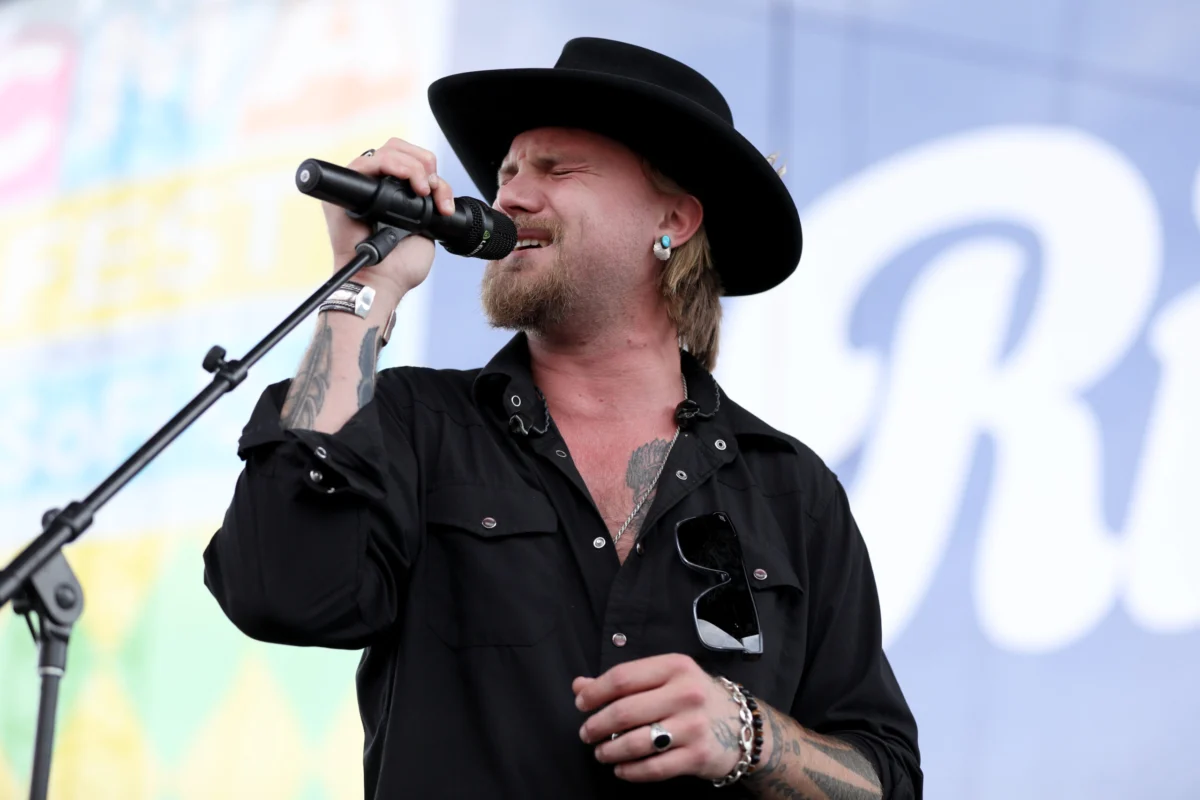
With the release of his latest album, Magnolia Sage, acclaimed artist Jackson Dean has embarked on a compelling evolution, skillfully reinterpreting his signature gritty persona through a fresh lens of vulnerability and musical exploration. This new chapter marks a significant departure from his previous work, notably his 2022 Big Machine debut, Greenbroke, which was characterized by its raw, swampy soundscapes and a deliberate scarcity of romantic themes. Greenbroke offered a stark, unvarnished portrayal of life and emotion, largely eschewing overt declarations of love in favor of more rugged narratives.
In contrast, Magnolia Sage, released on the newly established Blue Highway label, finds Dean openly embracing themes of interpersonal connection and romance. The album, which delves into richer, more intricate soul textures, reflects a pivotal moment in the artist’s personal life: his engagement in January 2026. This personal milestone appears to have deeply influenced his creative direction, as Magnolia Sage repeatedly revisits the complexities and joys of love, signaling a matured perspective on relationships both on and off the stage. This shift suggests an artist confidently stepping into new emotional territory, allowing his personal journey to inform and enrich his musical output in profound ways.
The Enduring Partnership: Dean and Dick
Dean’s willingness to embrace these musical chances and explore new thematic depths is underpinned by a crucial professional relationship: his long-standing collaboration with esteemed producer Luke Dick. Dick, known for his work with industry heavyweights such as Miranda Lambert and Little Big Town, has been an instrumental force in shaping Dean’s sound since their fortuitous meeting in 2019. The encounter took place at a party celebrating "Burning Man," a song Dick co-wrote for Dierks Bentley and Brothers Osborne. At just 18 years old, Dean found himself introduced to a seasoned creative, and it wasn’t long before their synergy became undeniable, forging a powerful musical alliance.
Reflecting on their unique connection, Dean shared insights during a recent discussion at BMI Nashville, ahead of a celebratory event for his single "Heavens to Betsy." "Sometimes you just click with somebody," Dean mused, his voice measured and contemplative. "When I met him, I was like, ‘Wow, this is a plethora of knowledge that I have standing right in front of me.’ I never really know how to explain, like, what it is between us. He’s Sensei, I am student."
While Dean’s description hints at a mentor-mentee dynamic, the reality of their relationship is more nuanced and profoundly collaborative. Dick, then in his mid-30s and a married father, indeed possessed a different life stage and wealth of experience. However, both artists describe their bond more akin to musical brothers. This fraternal connection is evident in their shared passions, particularly their mutual enthusiasm for delving into diverse musical origins and exploring new sounds. On a particular day, they expressed a collective fascination with the progressive Canadian folk group The Barr Brothers, exemplifying their shared intellectual curiosity and commitment to expanding their musical palates.
Their collaborative process is marked by an almost obsessive dedication, driving them down "deep rabbit holes" in pursuit of the perfect guitar solo or lyrical nuance. Yet, this meticulousness is balanced by a remarkable flexibility, allowing them to seize last-minute opportunities, such as placing a song in an external project, demonstrating their adaptability and responsiveness to creative impulses.
Contrasting Styles, Complementary Strengths
The complementary nature of their personalities further strengthens their partnership. Dean, arriving at BMI in a crisp black suit, speaks slowly and deliberately, meticulously mulling over his words as he endeavors to articulate abstract concepts. Dick, in contrast, presented himself in a bright, striped shirt and comfortable, shitabaki-style pants, communicating with a more forceful cadence, adept at transforming intangible ideas into concrete, relatable phrases. This blend of ethereal creativity and grounded pragmatism was a hallmark of Dick’s own journey when he first immersed himself in the Nashville music scene.
Dick vividly recalls his early days: "I was 20 years old, and I rebuilt this double-wide trailer in return for engineering experience and a record to be made," he recounted. "That’s how I got schooled [on the business] to begin with, driving down on the weekends in between jobs because I couldn’t afford a record, you know, raising a kid and figuring it out." This background instilled in him a practical, hands-on approach that complements Dean’s more introspective artistic leanings.
Their initial co-writing session in June 2019, following their "Burning Man" party introduction, was not marked by dramatic fireworks but by a quiet, undeniable compatibility. "You never know what’s going to happen," Dick reflected on that first session. "It could be something that just doesn’t move, there’s no chemistry or something like that. But it felt really good the first time. And to me, you’re following the breadcrumb of: Are you compelled to write again? How does he feel in there? Did he want to do it again? And so you follow these little breadcrumbs one step at a time, rather than getting ahead of yourself with creativity and relationship in general." This organic, unforced evolution laid the groundwork for a robust and enduring creative bond.
Musical relationships, particularly between an artist and producer, are inherently complex and central to the ultimate artistic outcome. The success of such a partnership often hinges on navigating the full panorama of personalities involved and aligning creative visions. For Dean and Dick, their professional circles significantly overlap, further cementing their collaboration. Both are signed as songwriters to Little Louder Music, a publishing company co-owned by country superstar Eric Church and Arturo Buenahora Jr., who notably played a role in introducing the two artists. This shared professional ecosystem fosters a deeper understanding and trust, allowing their partnership to flourish in both the writers’ room and the recording studio.
Crafting the Sound of Magnolia Sage

The fruits of their synergy are evident throughout Magnolia Sage, where Dick and Dean co-wrote all but one of the album’s tracks. Their collaborative approach is geared towards maximizing Dean’s creative freedom and comfort within the high-pressure environment of a recording studio, where expensive musicians and ticking clocks demand efficiency. "I’ll get on the mic and just do what I do," Dean explains, drawing a parallel to legendary vocalists. "You know, I heard somebody talk about Robert Plant one time, how he was one of the most interesting singers, because where you think he would go up, he’d go down and do something different, and where you think he’d go down, he’d do something sideways."
In this scenario, Dick’s role as producer is paramount. He has cultivated a familiar core of session players, providing a sense of continuity and a safe, supportive environment. This allows Dean the psychological space to take vocal and instrumental chances, experimenting with unconventional melodies and deliveries that might not emerge in a less secure setting. Dick describes his contribution as "creating the space for an expression that someone doesn’t know that they need." He visualizes their collaboration with a poignant metaphor: "It’s the way that things fit together. There’s the ring, and then there’s the jewel." Dean, in this analogy, is the precious jewel—the raw talent and unique voice—and Dick provides the meticulously crafted setting that allows it to shine.
Seven years into their journey, the artist and producer have developed a profound connection that not only feeds their individual creative needs but also significantly contributes to Jackson Dean’s expanding relationship with his growing audience. They have learned the cyclical nature of their collaboration: album creation is an exhaustive process, and once completed, a period of rest and idea generation is essential for the next creative phase. "You gotta let the tank fill back up," Dean asserts, acknowledging the need for replenishment.
Even as Magnolia Sage is being promoted, the nascent stirrings for future projects are already perceptible. Dick recently observed Dean perform for the first time in several months and sensed new creative vocal and guitar threads emerging—undefined abstractions that, in the context of their brotherhood, Dick will help bring into clearer form. Their shared path appears indefinite, driven by a mutual respect and a continuous desire for artistic growth, until a natural pause becomes necessary. Dick encapsulates his philosophy on collaboration with a profound statement: "In my purest form, I really do want people to find ways to expand themselves. If that’s with me, great, and if it’s not, that’s great, too. I don’t take things personally when it comes to this. I am personal about the music. I don’t take change personally." This outlook ensures their partnership remains dynamic, open to evolution, and ultimately focused on the music’s highest potential.
75 Years Ago: When Hank Williams Got Hot With ‘Cold, Cold Heart’
Seventy-five years ago, country music icon Hank Williams cemented his legendary status as a songwriter with a song that would not only top the country charts but also achieve unprecedented crossover success in the pop world. "Cold, Cold Heart," a poignant ballad born from the tumultuous realities of his personal life, became a pivotal moment in his career and a testament to his raw, emotionally resonant songwriting.
Williams built much of his formidable reputation by transforming the intimate struggles of his marriage to Audrey Williams into universal anthems of heartache and resilience. "Cold, Cold Heart" emerged directly from one of their many heated confrontations in the fall of 1950. Audrey was hospitalized with an infection, and during a particularly acrimonious argument, Hank allegedly remarked to an associate that she had a "cold, cold heart." The phrase immediately resonated with him, sparking the genesis of a new song.
With a remarkable display of his songwriting prowess, Williams penned "Cold, Cold Heart" in a scant hour on Thanksgiving Day. Just four days before Christmas that year, he recorded the track at the historic Castle Studio in Downtown Nashville. MGM Records, recognizing its potential, released it as the b-side to "Dear John" on February 2, 1951, fittingly Groundhog Day. The song quickly gained traction, and by the May 12, 1951, issue of Billboard, it had ascended to No. 1 on the country jockeys chart.
At the time, Billboard maintained three distinct country rankings: a chart for best-selling records, another for jukebox play, and the jockeys chart, which reflected radio airplay. "Cold, Cold Heart" became the fifth of Williams’ remarkable eleven singles to top one or more of these prestigious country charts, solidifying his dominance within the genre.
Pop Crossover and Enduring Legacy
The song’s impact, however, extended far beyond the country music landscape. Just a few months after Williams’ original release, in May 1951, rising pop sensation Tony Bennett recorded his own rendition. Bennett’s smooth, sophisticated interpretation struck a chord with mainstream audiences. By November of that year, his version began an impressive six-week run on Billboard‘s list of best-selling pop singles, later adding two more weeks atop the pop airplay tally. This crossover success was groundbreaking, demonstrating the universal appeal of Williams’ songwriting beyond traditional genre boundaries.
Bennett’s recording was not an isolated phenomenon. Billboard chronicled a remarkable nine different "Cold, Cold Heart" covers during the final quarter of 1951 alone, featuring an eclectic array of artists. These included jazz legend Louis Armstrong, whose distinctive vocal and trumpet stylings brought a new dimension to the mournful tune, and blues and jazz powerhouse Dinah Washington, who infused the ballad with her characteristic soulful depth. The sheer number and diversity of these covers underscored the song’s widespread cultural penetration and its burgeoning status as a standard.
The enduring legacy of "Cold, Cold Heart" continues to resonate in contemporary music. In recent years, it has been referenced in the lyrics of modern country hits, serving as a touchstone for new generations of artists. Maren Morris’s Grammy-winning 2016 single "My Church" famously name-checks Williams and his iconic song, with the line "Can I get a ‘Hallelujah,’ can I get an ‘Amen’? Feels like the Holy Ghost running through ya, when I play the Highwayman. And a little bit of ‘Cold, Cold Heart,’ and a little bit of ‘Brother Jukebox.’" Similarly, Sam Hunt’s 2020 hit "Hard To Forget" incorporates a direct melodic and lyrical nod to the song, blending a sample of Webb Pierce’s 1950 hit "There Stands the Glass" with a clear reference to Williams’ classic. These contemporary inclusions highlight "Cold, Cold Heart’s" lasting influence, cementing its place not just as a historical country classic but as a timeless piece of American musical heritage that continues to inspire and inform artists across genres. The song remains a powerful reminder of Hank Williams’ unparalleled ability to translate personal pain into universal art, a quality that continues to define great songwriting, much like Jackson Dean and Luke Dick aim to do with their own evolving collaboration.