Aveline Kirana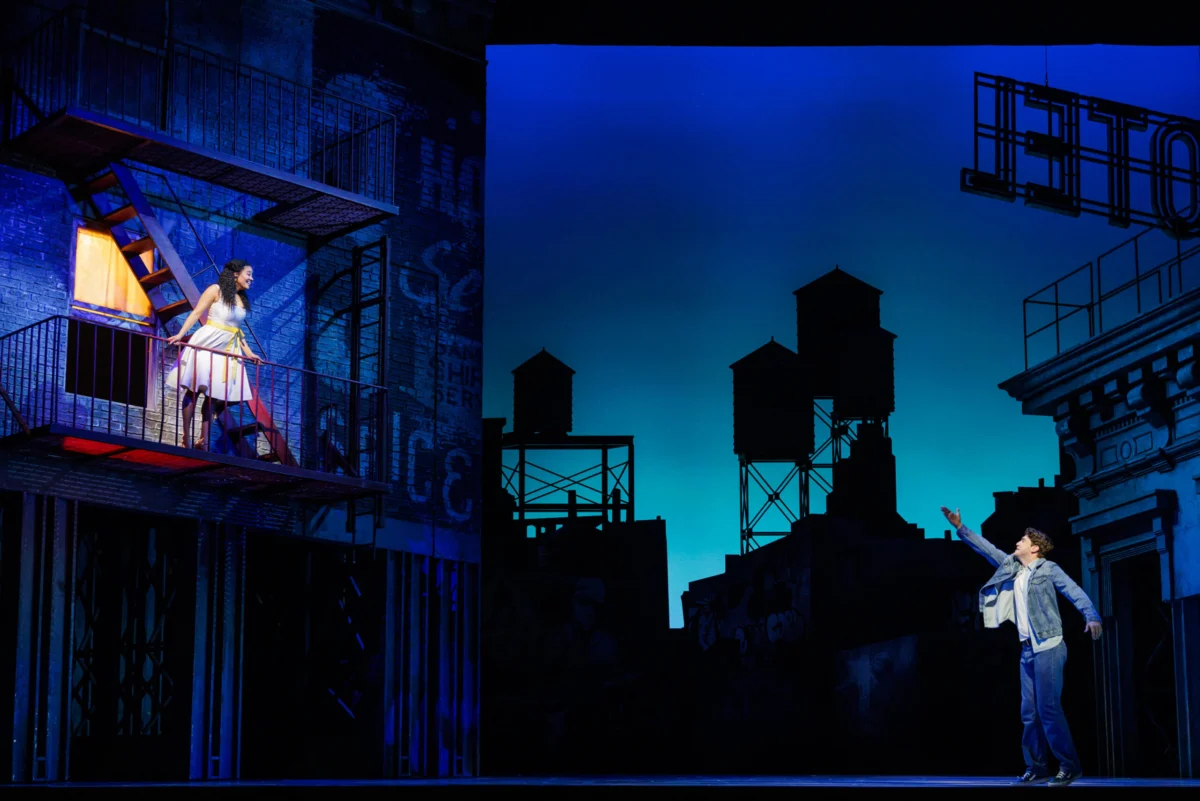
The Washington National Opera’s (WNO) fully staged production of “West Side Story” at Lyric Baltimore stands as a powerful testament to the organization’s resilience and artistic vision, transforming a potentially disruptive situation into a resounding success. In a bold and calculated move, WNO opted to depart from its long-standing venue at the Kennedy Center, a decision that, while financially more practical to remain at the venue subsequently renamed the “Trump Kennedy Center,” was rooted in a profound moral choice. This strategic relocation has allowed WNO to forge a new path, designing a season deeply integrated within the community, thereby truly embodying its identity as Washington’s National Opera.
A Strategic Pivot and Community Embrace
The WNO’s artistic director, Francesca Zambello, and general director and CEO, Timothy O’Leary, have been met with enthusiastic acclaim for their commitment to presenting fully staged opera productions in new and accessible venues. Following successful runs at Lisner Auditorium, the WNO’s engagement at Lyric Baltimore has further solidified this community-centric approach. Looking ahead, the WNO will expand its reach to the elegant Music Center at Strathmore in Bethesda, Maryland, on May 14-15, 2026, for a semi-staged presentation of “West Side Story.” The overwhelmingly positive reception from audiences has been palpable, with widespread applause and unwavering support for the management’s initiatives, even during on-stage addresses. This enthusiastic audience engagement has, in turn, translated into significant support from prominent donors, including Jacqueline Mars and David Rubenstein, underscoring a renewed faith in WNO’s direction and its innovative approach to expanding opera’s audience. This strategic redirection positions the WNO as a vanguard in the global opera community, actively charting a future course toward cultivating new audiences and ensuring the enduring success of its productions.
The Enduring Power of Bernstein’s Masterpiece
“West Side Story” remains a pivotal work in American musical theater and a significant contribution to the modern operatic canon. The music of Leonard Bernstein, celebrated for its intrinsic beauty and its masterful avoidance of predictable clichés, continues to resonate deeply. Leading the 50-member WNO Orchestra was Marin Alsop, music director laureate of the Baltimore Symphony Orchestra. Maestra Alsop’s conducting in this performance underscored her reputation as one of the most gifted conductors of her generation. Her direct engagement with the singers and her precise cues for the complex orchestral score were exemplary. Her rendition of the orchestral writing was both powerful and nuanced, seamlessly transitioning from delicate chamber music passages to the full force of the orchestra, mirroring the escalating conflict and violence depicted on stage.
Bernstein’s orchestration in the first act is characterized by its vibrant, youthful energy, ingeniously blending elements of jazz with the orchestral intensity found in Igor Stravinsky’s groundbreaking ballet, “The Rite of Spring.” The second act offers a more lyrical and lighter musical texture, evoking the charming ballets of Aaron Copland and Bernstein’s own early ballet, “Fancy Free” (1944). Alsop’s direction of this performance was particularly thrilling, given her status as a protégé of Bernstein and her extensive experience conducting major orchestras, a legacy she clearly honored with this interpretation.
Stagecraft and Lyrical Brilliance
The stagecraft employed in this production was nothing short of magical. The WNO demonstrated a profound commitment to supporting the artistic integrity of this monumental work. The set design was a meticulously crafted evocation of the gritty, urban landscape of Harlem. Elements such as a towering skyline complete with water towers, a tenement building featuring a detailed fire escape, and chain-link fences created an immersive environment. The lighting design further enhanced the dramatic impact, utilizing rich, deep blues for introspective moments and fiery reds during the sunrise dance sequences. The inclusion of a detailed dress shop interior and a clever set that could swing open to reveal Anita and Maria’s shared bedroom contributed to a truly outstanding production. The dynamic and ever-evolving set design, far from being static, consistently engaged the audience, eliciting gasps of appreciation for its ingenious construction and theatrical artistry.
The authenticity of the language coaching, specifically the New York accents, was remarkable. While the dialogue of “West Side Story” is widely known, the WNO’s cast delivered the lines with a freshness that made them feel new and compelling. The performances avoided drawing undue attention to familiar phrases, instead propelling the narrative forward with a naturalistic cadence. A significant part of the work’s enduring appeal lies in Stephen Sondheim’s lyrical genius. Sondheim possessed an unparalleled ability to capture the nuances of natural speech, sentence structure, and human emotion, transforming them into poetic song. The narrative, a direct homage to William Shakespeare’s “Romeo and Juliet,” centers on the tragic conflict between two warring factions, the Jets and the Sharks. This underlying theme is powerfully conveyed through iconic lines such as, “When you’re a Jet, you stay a Jet…” and the poignant affirmation of solidarity, “When the spit hits the fan, you got brothers around, you’re a family man. You’re never alone, you’re never disconnected, you’re well protected.” The rhythmic vitality of Latin American dance, interwoven with jazz, permeates the score, most notably in the energetic high school dance scene culminating in the electrifying shout of “Mambo!” This Cuban-born musical genre, which gained significant popularity in the United States during the 1940s, was rendered with exceptional skill by the WNO Orchestra, particularly in the dance and ballet sequences. The production also showcased the balletic elements with creative choreography by Joshua Bergasse, building upon the foundational work of Jerome Robbins, a choreographer whose legacy undoubtedly secures him a place in any esteemed Hall of Fame for his art form.
Musical Depth and Societal Reflection
The opening alto saxophone solo in Eb, with its alternating dissonant chords, masterfully captures the inherent tension and impending conflict between the feuding families, gangs, and cultures. On a deeper level, the production offers a subtle, yet potent, reflection of contemporary society, characterized by the rejection and denigration of marginalized groups, often while clinging to the erroneous belief in inherent inequalities. While the portrayal of police officers as corrupt and inept, used here for comedic effect, is a point of contention for some, it highlights the complex social commentary embedded within the narrative, acknowledging that many law enforcement officers themselves have faced racial or cultural profiling.
Vocal Prowess and Directional Acumen
The distinct demands of vocal technique for Broadway musicals and operatic performances present a unique challenge, yet the cast of this “West Side Story” production, comprising many artists with extensive Broadway experience, navigated this with exceptional skill. Ryan McCartan’s performance of “Something’s Coming” was an immediate showstopper, his vocal delivery marked by a rich tone, effortless transitions to higher registers, and a seamless vocal line that captivated the audience. He emerged as a clear star within this genre. Shereen Pimentel embodied a youthful and vibrant Maria, delivering a performance that was both vocally strong and emotionally resonant. Her singing conveyed the innocence and burgeoning hope of Maria, and she occasionally revealed flashes of a powerful operatic soprano voice, hinting at a potential future in the full operatic repertoire. Her acting was convincing, effectively capturing Maria’s journey. Equally outstanding were Amanda Castro as the fiery Anita, Taylor Harley as the resolute Riff, and Yurel Echezarreta as the charismatic Bernardo. Francesca Zambello’s direction was precise and impactful, a remarkable achievement that guided the production with a clear and compelling vision.
Enduring Relevance and Emotional Resonance
Among the most profoundly moving moments of the production was the scene between Anita and Maria following Tony’s fatal stabbing of Bernardo. The climax, culminating in Tony’s tragic demise, was equally poignant, with the entire ensemble bearing witness to the violence. The depiction of youthful exuberance, the intensity of young love, and the formidable obstacles it faced were rendered with such conviction that “West Side Story,” much like Shakespeare’s “Romeo and Juliet” or Puccini’s “La Bohème,” continues to hold its power and breathtaking relevance today, echoing the impact it first made upon its premiere at the National Theater in Washington, D.C., in 1957. The WNO’s courageous decision to reimagine its operational landscape has not only preserved the artistic integrity of this iconic work but has also ushered in a new era of community engagement and artistic innovation for the company. This strategic pivot, driven by artistic conviction rather than purely fiscal concerns, has reaffirmed WNO’s position as a leader in adapting and thriving within the evolving landscape of opera.