 Nana Wu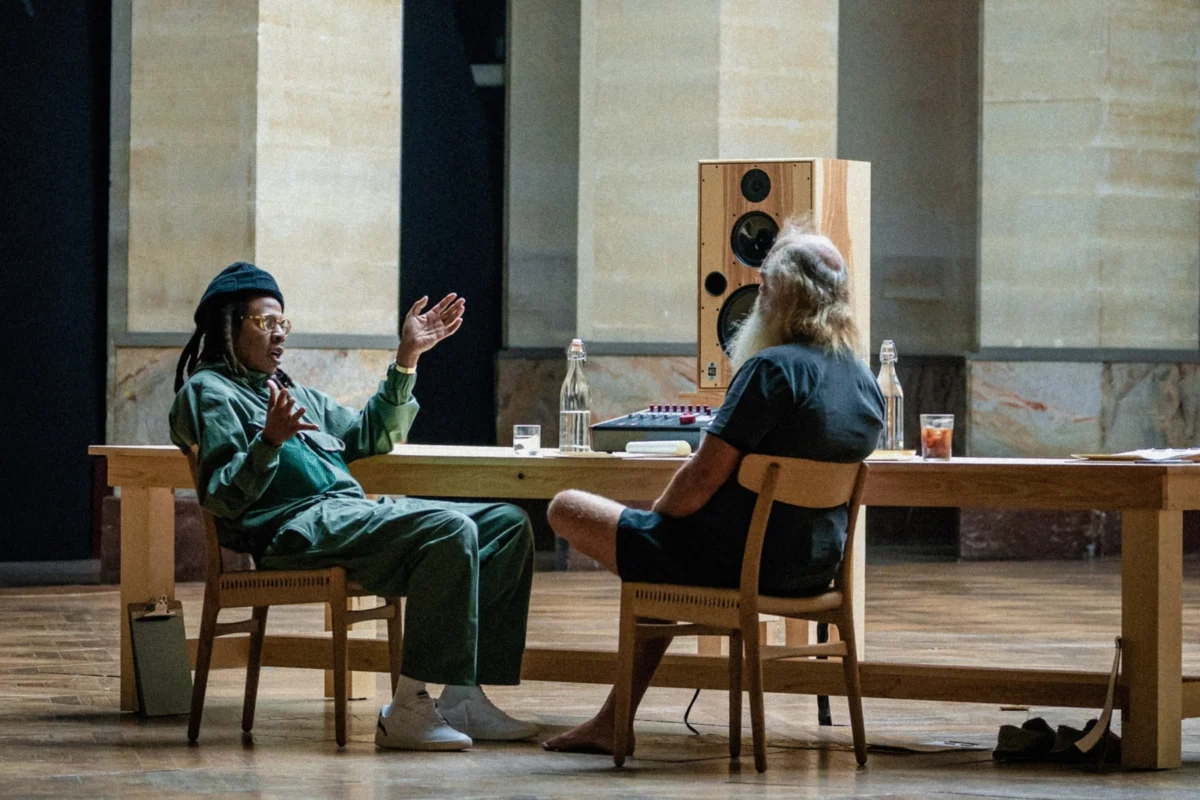
The curtain has officially fallen on the ambitious docuseries documenting the life and career of Shawn "Jay-Z" Carter, as the final two installments of the eight-part HBO Max production were released on the evening of Friday, Oct. 9, 2026. Directed by legendary producer Rick Rubin, the series has served as an intimate, retrospective deep dive into the creative evolution of one of music’s most influential figures. By utilizing Rubin’s unique position as both a peer and a mentor to Carter, the documentary has provided a granular look at the songwriting process, the business maneuvers, and the cultural shifts that have defined the Brooklyn rapper’s trajectory.
A Retrospective on Evolution and Artistry
Episode seven of the series shifts the focus toward the late-2000s era of Carter’s discography, a period marked by both immense commercial success and a significant transition in his creative aesthetic. During the episode, Jay-Z and Rubin dissect the mechanics behind perennial hits such as "Hard Knock Life (Ghetto Anthem)" and the Alicia Keys-assisted "Empire State of Mind."
A central theme of this installment is the maturation of the artist’s public image. During the discussion, Carter confirms a long-held observation by Rubin: that the release of the 2009 LP The Blueprint 3 served as a pivot point for his relationship with visual media and high art. Carter noted that his burgeoning interest in art collecting began to influence the way he presented his albums, moving away from conventional hip-hop tropes toward a more curated, sophisticated visual language. This evolution marked a shift from simply being a recording artist to functioning as a comprehensive cultural curator, a role he has since expanded into the realms of fine art, luxury spirits, and fine dining.
The eighth and final episode takes a more cerebral turn, focusing on the overt sociopolitical commentary that has permeated Carter’s later work. The conversation centers on his ability to address systemic issues through a lens of personal and communal history. The duo deconstructs the thematic depth of "The Story of O.J.," a track that serves as an unflinching examination of internal struggles within the Black community, as well as "No Church in the Wild," a song that remains a cornerstone of contemporary critique regarding power dynamics and religious institutions. Furthermore, the episode explores the concept of generational healing, drawing parallels between the family-centric narratives of "Family Feud" and "Legacy."
The Cultural Significance of the Docuseries
The series, a Tetragrammaton production, is executive produced by Academy Award-winning actor and filmmaker Daniel Kaluuya alongside Carter and Rubin. By opting for a broad-strokes approach to biography rather than a chronological play-by-play, the series positions rap music as a foundational pillar of American art.
Industry analysts have noted that the documentary’s timing is significant. It arrives at a moment when hip-hop is increasingly being re-evaluated by academic and cultural institutions as a vital repository of American history. By positioning Jay-Z’s discography as a serious subject for intellectual inquiry, the docuseries invites viewers to treat the genre with the same reverence historically reserved for jazz or blues. The collaboration between Rubin—a man credited with bridging the gap between hip-hop and mainstream rock—and Carter, an artist who has bridged the gap between street culture and corporate boardrooms, offers a unique vantage point on the maturation of the genre over the last four decades.
A Year of Milestone Events
The release of the finale follows a remarkably busy 2026 for the artist. Following a headlining performance at the Roots Picnic in May, where his appearance prompted widespread discourse regarding his longevity and stylistic evolution, Carter embarked on a series of stadium-level events branded as the "JAY-Z 30" tour. These performances, held in major global hubs including Los Angeles, London, Paris, and New York City, served to solidify his status as a live performer capable of commanding massive audiences nearly three decades into his career.
The New York City leg of the tour, held at Yankee Stadium, was particularly notable for the breadth of its guest list. The three-night residency featured an exhaustive list of collaborators, spanning multiple generations of hip-hop and R&B, including Beyoncé, Rihanna, Eminem, Usher, and Teyana Taylor. The event underscored the sheer density of the networks Carter has cultivated, effectively functioning as a living exhibit of his influence on the music industry.
Addressing Legal Challenges
The conclusion of the documentary comes on the heels of a significant development in a long-standing legal matter. On Sept. 24, 2026, a woman who had previously leveled accusations of sexual assault against Jay-Z, dating back to when she was a minor, formally recanted her allegations. In statements provided to a federal judge, the accuser characterized her previous claims as "false," citing significant mental health challenges and an improper due diligence process by her former legal counsel.
The resolution of this case has been viewed by industry observers as a major development, effectively clearing the cloud that had hung over the artist’s personal and public narrative for the duration of the litigation. With the allegations now retracted, the release of the final episodes of the documentary is seen as the final step in a broader period of consolidation for the artist’s public legacy.
The Broader Impact on Hip-Hop Documentation
The structure of JAY-Z in 8—breaking down the career into eight distinct thematic threads rather than a linear biography—serves as a blueprint for future music documentaries. By focusing on the "why" rather than the "what," the series provides an educational component that is often missing from music journalism.
Producers Leila Mattimore and David Rohde have emphasized that the intention behind the project was not merely to archive hits, but to analyze the socio-economic conditions that allowed for the birth and proliferation of hip-hop as a global phenomenon. For students of music history, the docuseries offers a rare glimpse into the collaborative dynamic between a producer and an artist during the recording process, stripping away the polish of the final product to reveal the trial-and-error nature of the creative process.
Final Thoughts and Industry Reception
As the final episodes become available on HBO Max, the series is already being hailed as a definitive piece of archival work. The consensus among music critics is that the documentary succeeds in stripping away the "mythology" of the billionaire mogul to reveal the dedicated craftsman underneath.
While the documentary naturally highlights the successes, its strength lies in the moments of vulnerability shared between Rubin and Carter. Whether discussing the burden of representing a community, the pressures of maintaining relevance in a rapidly changing industry, or the intricacies of business ownership, the series provides a comprehensive look at the realities of long-term artistic success.
With the conclusion of JAY-Z in 8, the industry is left to consider what the next chapter for the artist might look like. Given his recent history of stadium-filling performances and his continued presence in the discourse surrounding the evolution of the American music industry, it is clear that while the documentary may be finished, the impact of his career continues to resonate across the cultural landscape. For now, the eight-part series stands as a definitive, high-level analysis of a career that has done more to define the modern American sound than almost any other in the 21st century.
All eight episodes are currently available to stream on HBO Max, providing a complete, curated history for those looking to understand the mechanics behind one of the most prolific creative careers in music history.