Johan Budi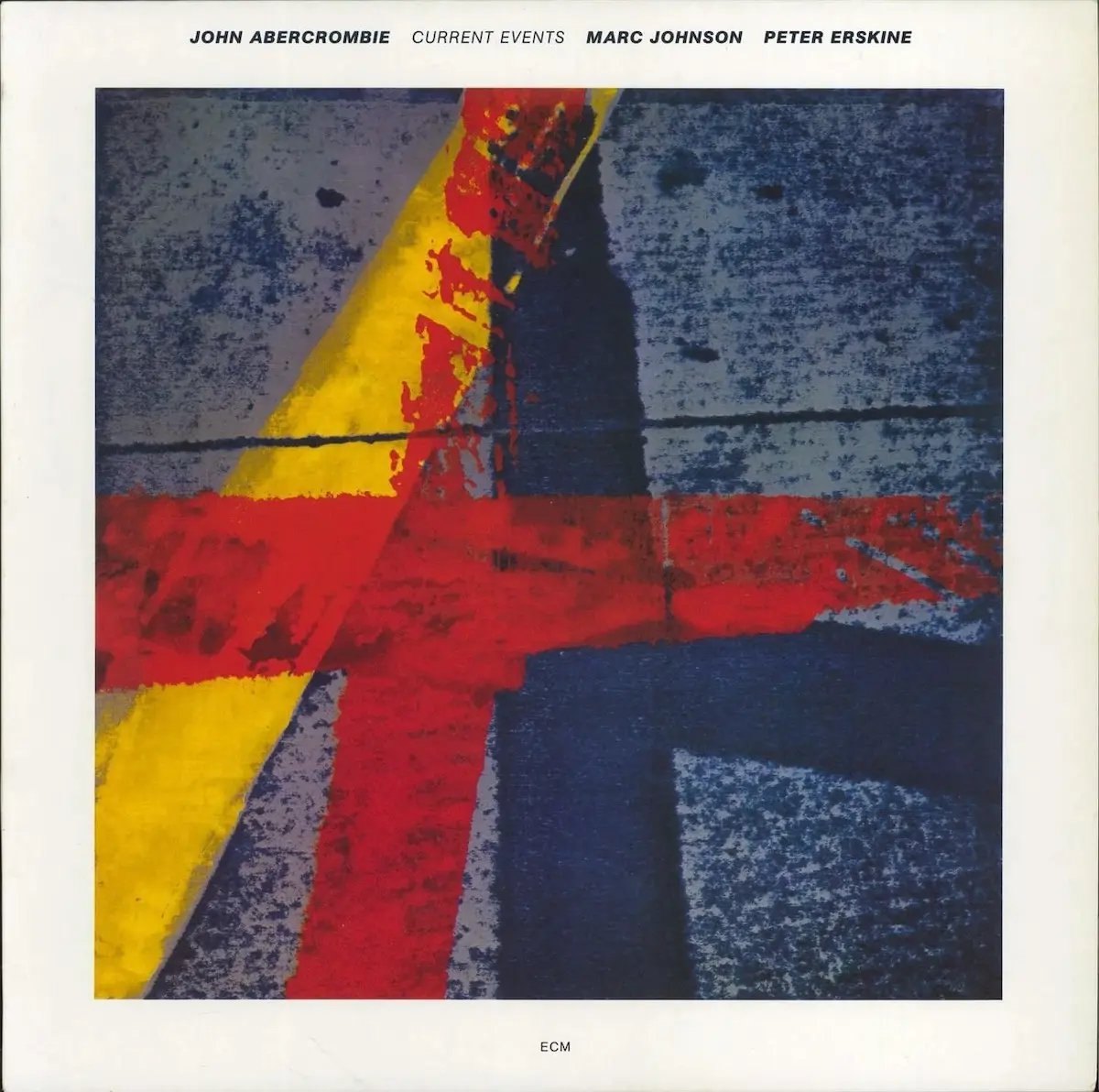
The contemporary landscape of modern jazz continues to be shaped by the enduring legacy of the late guitarist John Abercrombie, whose September 1985 recording sessions in Oslo yielded a defining chapter in his extensive discography with the ECM label. Released under the catalog designation ECM 1311, the album features Abercrombie alongside long-time collaborators Peter Erskine on drums and Marc Johnson on bass. This powerhouse trio, combining technical mastery with an understated aesthetic, delivered a body of work that encapsulates the mid-1980s evolution of European-influenced chamber jazz. The sessions, which resulted in a carefully balanced sequence of compositions, showcase Abercrombie’s signature blend of acoustic warmth, melodic introspection, and selective experimentation with contemporary guitar synthesizer technology.
Chronology and Recording Background
The genesis of the Current Events project dates back to the autumn of 1985 at the renowned Talent Studios in Oslo, Norway, under the auspices of producer Manfred Eicher. By this point in his career, Abercrombie had already established himself as a central figure in the ECM stable, having contributed landmark recordings both as a leader and as a sideman with artists such as Jan Garbarek, Ralph Towner, and Jack DeJohnette.
The pairing of Abercrombie with bassist Marc Johnson and drummer Peter Erskine was not a nascent collaboration; the trio had developed a telepathic interplay through extensive touring and previous studio dates. Johnson, celebrated for his foundational work with the legendary Bill Evans Trio, brought a lyrical yet robust harmonic foundation to the group. Erskine, whose pedigree included pivotal tenures with Weather Report and Stan Kenton, injected a sophisticated rhythmic dynamism that could pivot seamlessly from delicate brushwork to driving intensity. The Oslo sessions captured a moment of peak synergy among the three virtuosos, translating their live chemistry into the pristine, expansive sonic architecture characteristic of the ECM house style.
Musical Analysis and Repertoire
The album’s repertoire is neatly divided into two distinct suites of music, captured across two vinyl sides totaling roughly forty-eight minutes of material. Side one features the tracks Clint, Alice In Wonderland, Ralph’s Piano Waltz, and Lisa, running approximately twenty-three minutes and twenty seconds. Side two comprises Hippityville, the title track Killing Time, and Still, spanning twenty-five minutes and sixteen seconds.
Throughout these performances, Abercrombie navigates a stylistic tightrope between established acoustic traditions and the seductive pull of new electronic music technology. On tracks like Clint and Hippityville, the guitarist steps away from his familiar acoustic comfort zone to embrace the guitar synthesizer. These moments introduce a relative stridency and a modern edge to the proceedings, though they remain carefully contained within the broader sonic palette curated by Eicher.
Despite these electronic excursions, the core identity of the record rests on its mild and melancholic ballads. Cuts such as Alice, Ralph, Lisa, and Still find Abercrombie fondly cradling his trusted acoustic instrument or coaxing willowy, breathy tones from his guitar synth. These compositions provide a spacious environment where the leader functions as a thoughtful, deliberate soloist who deliberately avoids cliches or forced climaxes. Rather than overwhelming the listener with pyrotechnics, Abercrombie specializes in evoking moods of dreaminess and stark desolation, leading critics to occasionally position him as an unlikely godfather of the nascent New Age movement of that era.
In stark contrast to the prevailing gentleness of the ballads stands the eponymously titled Killing Time. This track represents the most abrasive and avant-garde exploration on the album, a piece where conventional notions of time and forward motion are periodically suspended. Unlike the tightly structured thematic statements found elsewhere on the recording, Killing Time appears to organically germinate from the moment-by-moment interaction and spontaneous communication among the three musicians. Jazz historians and critics have frequently drawn comparisons between this collaborative, tension-filled approach and the dynamic interplay heard on the second side of Pat Metheny’s 1984 Rejoicing album, which featured jazz royalty Billy Higgins and Charlie Haden.
The Rhythm Section: Erskine and Johnson in Profile
The success of the trio format on Current Events relies heavily on the peerless contributions of Peter Erskine and Marc Johnson. Both rhythm section members exhibit a rare mastery of restraint, attacking the more energetic blowing sections of tracks like the comparatively bright Clint and the slightly more sinister, modal-leaning Hippityville with a vigorous understatement.
Erskine’s approach to the drum kit avoids bombast, utilizing dynamic shading, intricate cymbal work, and subtle polyrhythms to propel the music forward without ever crowding Abercrombie’s harmonic space. Johnson similarly anchors the ensemble with a warm, woody upright bass tone that serves as the gravitational pull for the entire session. Together, they provide an elastic framework that accommodates both the serene, ballad-heavy stretches and the angular, exploratory bursts of improvisation.
Production Aesthetics and the ECM Ethos
Recorded in the acoustic clarity of Oslo’s premier recording facilities, the album stands as a quintessential artifact of the "ECM sound." Producer Manfred Eicher’s aesthetic philosophy—often summarized by the famous dictum that "silence is also music"—permeates every track on Current Events. The generous use of acoustic reverberation, careful microphone placement, and an overarching dedication to atmosphere allow each instrument to occupy its own distinct sonic space.
For Abercrombie, this production environment proved to be an ideal milieu. While some contemporaries sought out larger ensembles or more aggressive fusion styles during the mid-1980s, Abercrombie remained committed to the intimacy of the guitar trio format. The ECM house style provided him with the institutional support and sonic canvas required to explore the more nuanced intersections of jazz, chamber music, and ambient textures.
Broader Impact and Historical Legacy
In the decades following its initial release in late 1985 and early 1986, Current Events has maintained a respected position within John Abercrombie’s extensive catalog. While it may not always receive the same mainstream commercial recognition as his early 1970s quartet albums with Jan Hammer, it is widely regarded by musicians and dedicated jazz aficionados as a masterclass in interactive trio playing.
The album’s legacy lies in its demonstration of how veteran jazz artists could incorporate technological innovations—such as early guitar synthesizers—without sacrificing emotional depth or stylistic integrity. Furthermore, the album cemented the Abercrombie-Johnson-Erskine partnership as one of the most cohesive and telepathic small groups of the late twentieth-century jazz landscape.
As contemporary listeners and jazz historians continue to re-evaluate the catalog of ECM Records, Current Events serves as a vital historical marker of a transitional era in modern improvised music. It captures a major artist at the height of his creative powers, supported by a rhythm section operating at the absolute pinnacle of their craft, delivering a timeless statement of European-inflected American jazz.