Aveline Kirana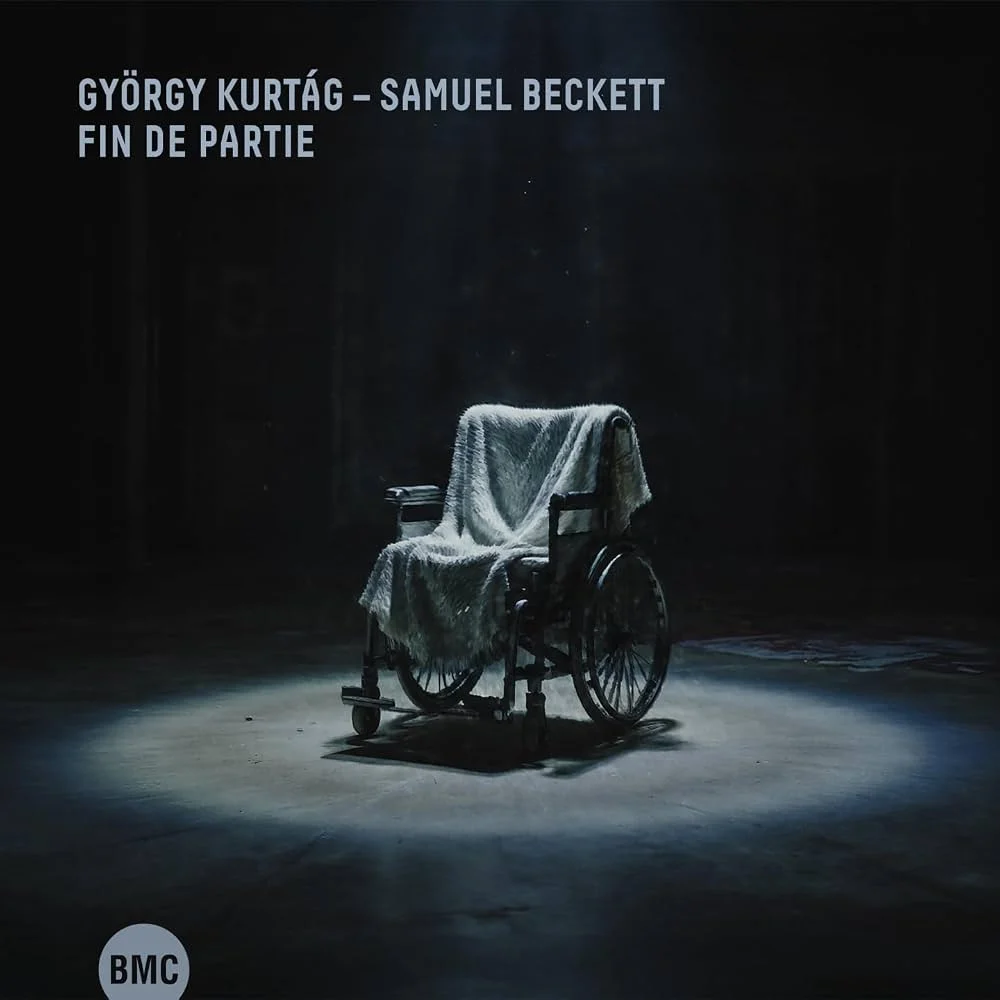
The recent release of the first commercial recording of György Kurtág’s Fin de partie—an opera based on the 1957 Samuel Beckett play of the same name—marks a significant milestone in contemporary music history. Recorded live during a 2020 concert performance in Budapest and released by the Budapest Music Center (BMC) records label, the set (BMC CD 363) documents the realization of a monumental, long-gestating project by one of the 20th and 21st centuries’ most revered composers. Kurtág, who celebrated his 100th birthday this past February, spent the final years of his ninth decade crafting this work, which ultimately premiered at Milan’s La Scala in 2018. The release provides listeners with an opportunity to engage with a score that is not only an operatic debut for a centenarian composer but also a rigorous structural interpretation of one of the most existential texts in modern drama.
A Chronology of Creation and Premiere
The development of Fin de partie serves as a testament to the endurance of the creative process. Kurtág, long known for his mastery of the musical miniature—often writing pieces that last only a few seconds—undertook a profound expansion of his compositional scope for this project. The work, which spans two hours, represents the longest single score in the composer’s extensive catalog.
The project’s timeline is marked by meticulous deliberation. Following years of internal development and the intensive study of the French language of Beckett’s original text, the work reached its public zenith in 2018 at La Scala. The choice of the venue was historically resonant; it was at La Scala that Giuseppe Verdi, at the age of 79, premiered his own final masterpiece, Falstaff, in 1893. Kurtág’s achievement mirrors this legacy of "geriatric mastery," wherein the perspective of an artist in the final stages of life brings a unique, lived-in authority to the material. Much of the score was completed at the Budapest Music Center, an institution that provided the composer with both the space and the resources necessary to navigate the complexities of Beckett’s minimalist, circular dialogue.
Musical Analysis: The Zeno Paradox and Leitmotifs
Central to Kurtág’s musical strategy is the concept of "additive" development. As the characters in Beckett’s play—Hamm, Clov, Nagg, and Nell—navigate a static existence, Kurtág mirrors their psychological entrapment through mathematical precision. Clov’s opening lines, "Finished, it’s finished, it will finish," are set with a rhythmic structure where each phrase increases in length by exactly one note. This structural technique, which the composer repeats throughout the work, serves as a musical manifestation of the "millet grains" metaphor.
This is a direct reference to Zeno of Elea, the Greek philosopher whose paradoxes concerning the divisibility of motion inform the opera’s internal logic. By scattering these additive "grain" motives, Kurtág creates a soundscape that functions as an hourglass of time. While the score avoids the systematic development associated with Richard Wagner’s heavy use of leitmotifs, Kurtág employs a more fluid, associative approach. Themes are constructed from consistent intervals but appear in varied forms, functioning as "vague recollections" rather than static musical labels.
The exception to this rule is a recurring folk-inflected waltz, originally written by Kurtág during his youth as a composition exercise. This theme serves as a nostalgic bridge, appearing when the character Nell recalls a boat trip on Lake Como. The juxtaposition of this sentimental, waltz-like melody against the bleak, sparse orchestration surrounding the characters’ current existence in dustbins creates a sharp aesthetic tension. The composer further enhances this environment by incorporating unexpected instrumental textures—including the steel drum, the cimbalom, and the Russian bayan—to mimic bodily sounds such as coughing, sneezing, and shivering, thereby blurring the line between high art and grotesque realism.
Performance Dynamics and Character Portrayal
The 2020 Budapest recording captures the performances of a cast intimately familiar with the work’s demands. Under the baton of conductor Markus Stenz, who also led the 2018 La Scala premiere, the Danubia Orchestra delivers a reading characterized by both rhythmic precision and spontaneous, chamber-like intimacy.
Frode Olsen, in the role of the blind, tyrannical Hamm, anchors the production with a vocal performance that captures the character’s weariness and cruelty. Kurtág frequently doubles the vocal line with percussion—specifically the timpani—to add a resonant, ominous weight to Hamm’s monologues. In contrast, Zsolt Haja offers a nuanced depiction of the servant Clov, articulating the character’s stifled resentment and the sense of entrapment that prevents his departure.
The performance of Hilary Summers as Nell is particularly notable. Given the limited nature of the role, Summers provides an essential emotional center, particularly through the inclusion of a prologue setting of Beckett’s poem "Roundelay." Her interplay with Leonardo Cortellazzi (Nagg) creates a distinct sense of vocal kinship; the two utilize "hocket"—a technique where notes are rapidly alternated between voices—to simulate the shared, repetitive history of an elderly couple. Cortellazzi’s delivery of Nagg’s "tailor joke" serves as a rare moment of dark humor that highlights the composer’s ability to balance the pathetic with the ridiculous.
Broader Impact and Industry Context
The commercial release of this recording is an essential development for musicologists and contemporary performance scholars. As noted in the liner materials and the wider reception of the opera, the lack of an included libretto due to copyright restrictions with the Beckett estate remains a challenge for listeners. However, the work’s adherence to the original text is so precise that those familiar with Beckett’s English or French versions can readily track the narrative progression.
The broader implication of this release is the validation of the "miniaturist" style on a grand scale. By proving that a composer known for brevity can sustain a two-hour narrative through the accumulation of thousands of discrete, atomized musical moments, Kurtág has challenged traditional operatic structures. The work does not rely on traditional plot development; rather, it demands that the audience acclimate to a "grey eternity" where the end is always impending but never reached.
Institutional Response and Legacy
The Budapest Music Center has positioned this release as a definitive document of the composer’s later years. For the institution, which has fostered a long-standing relationship with Kurtág, the recording serves as both a historical record and a tribute to the composer’s centennial. While the opera itself has been met with varied responses regarding its length and the repetitive nature of its monologues, the consensus among contemporary music critics is that the score represents a rare, authentic engagement with the philosophy of the absurd.
As Kurtág enters his second century, the existence of a definitive recording of his only opera ensures that his interpretation of Beckett’s vision will remain accessible for future study. The work stands as a landmark in the history of the genre, proving that even at the final stage of life, the creative impulse can produce something as complex, challenging, and enduring as the "impossible heap" of grains described by Beckett. The recording is not merely a collection of music, but an architectural achievement in sound, mapping the territory between human existence and the silence that follows.