
 Jia Lissa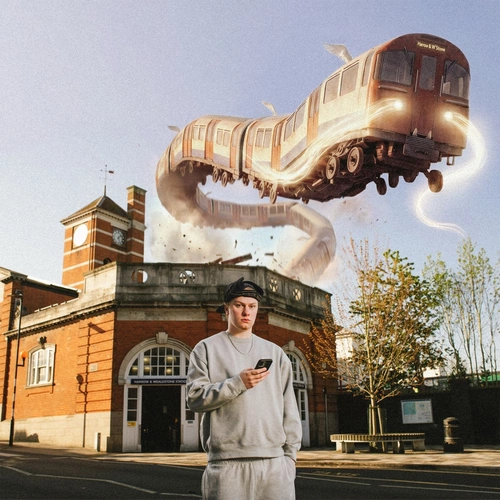
A Visionary Redefinition of UK Urban Sound
The album, Kwengletaria:Ragamyff, is more than just a collection of tracks; it is a meticulously crafted sonic narrative that showcases Kibo’s unique artistic philosophy. It eschews simple pastiche or nostalgic rehashing, instead opting for a faithful yet thoroughly modern expansion of foundational sounds. By blending the raw energy of early 2000s grime with futuristic elements, disparate electronic genres, and a deeply personal lyrical perspective, Kibo has engineered an album that is both deeply rooted in its heritage and aggressively forward-thinking. This work serves as a testament to the dynamic nature of UK music, constantly absorbing and transforming influences into something entirely new.
The Genesis of a Maverick: Influences and Evolution
Kibo’s artistic journey began not in the recording studio, but in the realm of visual arts. As a child, his ambition was to draw cartoons and comics, a pursuit that speaks to an early inclination towards narrative construction and imaginative world-building. This foundational interest in visual storytelling would later find its parallel in his musical approach, where intricate lyrical architectures and vivid sonic landscapes replace pen and ink. The pivotal shift from visual to auditory artistry occurred with his discovery of Wu-Tang Clan. The legendary Staten Island collective, renowned for their gritty, cinematic soundscapes, intricate lyrical narratives, and individual personas contributing to a cohesive mythology, revealed to Kibo that "there was more than one way to skin a cat." Wu-Tang’s influence on hip-hop in the 1990s was monumental, establishing a blueprint for group dynamics, a distinct aesthetic, and an uncompromising artistic vision that resonated deeply with Kibo, opening his eyes to music as a powerful medium for expression.
Later, the enigmatic MF DOOM emerged as another critical influence, frequently cited by Kibo. DOOM, known for his abstract lyricism, multi-syllabic rhyme schemes, complex wordplay, and a masked supervillain persona that transformed him into an anti-hero of underground hip-hop, demonstrated the immense "potential there was for word-building in music." DOOM’s ability to craft intricate narratives and character arcs through densely packed verses, often drawing from obscure pop culture references and a detached, observational wit, provided Kibo with a masterclass in lyrical craftsmanship. While the influence of DOOM is undeniably present on Kwengletaria:Ragamyff, it is crucial to note that Kibo avoids mere imitation. Instead, he internalizes DOOM’s spirit of inventive wordplay and unique persona creation, filtering it through his own distinct North West London lens. This results in a sound that is reverent but never derivative, celebrating his predecessors while carving out an entirely original artistic space.
Kwengletaria:Ragamyff – A Deep Dive into Sonic Landscapes
The album’s title itself, Kwengletaria:Ragamyff, is a linguistic mosaic that hints at the multifaceted nature of its content. "Kwengletaria" appears to be a portmanteau, possibly blending "kweng" – a slang term often associated with money, power, or street life – with "proletariat," referring to the working class. This juxtaposition suggests a commentary on socio-economic realities, power dynamics, and street narratives, perhaps offering a critique or observation from a ground-level perspective. "Ragamyff" could be a unique coinage, evoking "ragamuffin" (a term with historical ties to reggae and dancehall culture, often referring to a streetwise individual) or a mythological creature, hinting at the diverse sonic textures and fantastical storytelling embedded within the album. This dualistic title encapsulates Kibo’s "irreverent yet very serious take on the world," where playful wordplay coexists with profound societal observations.
At its core, Kwengletaria:Ragamyff is presented as Kibo’s "2026 revamp on early 2000s grime," a genre born from the council estates and pirate radio stations of London. Grime, characterized by its sharp, often aggressive lyrical delivery, syncopated rhythms, and bass-heavy instrumentals typically around 140 BPM, was a revolutionary sound pioneered by artists like Wiley, Dizzee Rascal, and Kano. Kibo’s approach is not to reheat "Eskibeat" (Wiley’s foundational instrumental style) or rehash "Grime 2.0" (the mid-2010s resurgence), but rather to expand the genre’s lexicon significantly. He applies his distinct modus operandi (M.O.) to "new tempos and new styles," ensuring that while the spirit of grime’s pioneering era remains, the execution is unequivocally contemporary and forward-looking. This expansion demonstrates a deep understanding of grime’s historical trajectory while fearlessly propelling it into uncharted sonic territories.
Track-by-Track Exploration of Genre Fusion
The album’s tracklist serves as a testament to Kibo’s eclectic vision and his masterful ability to weave disparate musical threads into a cohesive tapestry:
- "Woke Up In A Gundam": This track immediately establishes Kibo’s penchant for juxtaposing modern pop culture with urban realities. The imagery of waking up inside a Gundam – iconic Japanese giant robots from anime – is starkly contrasted with the "2020s North West London grime" sound. This moves beyond the "Saturday morning cartoons" references common in 2000s New York boom bap, instead embracing contemporary anime and sci-fi tropes to create a futuristic narrative grounded in the gritty energy of London’s streets. The track’s production likely features crisp, driving beats and intricate synth work characteristic of modern grime, infused with atmospheric, almost cinematic, sound design evoking a sci-fi epic.
- "Red Starz": A notable departure from traditional grime tempos, "Red Starz" sees Kibo adopt a "slower style with an R&B sheen." This demonstrates his versatility, allowing for more melodic vocalizations and smoother instrumental textures, potentially exploring themes with a more introspective or melancholic tone, while still maintaining the lyrical depth expected of his work. The R&B influence adds a layer of soulful sophistication, showcasing a broader emotional range.
- "Bakerloo Dragon": This track is described as treading "the space between grime and drill with cosmic results." Drill, a subgenre of trap music that emerged from Chicago and gained significant traction in the UK, is known for its dark, often nihilistic lyrics and menacing, sliding 808 bass lines. Kibo’s fusion of grime’s intensity with drill’s rhythmic aggression, coupled with "cosmic results," suggests a highly atmospheric and expansive sound, perhaps incorporating ethereal synths or otherworldly sound effects over a hard-hitting beat. The "Bakerloo" reference to a London Underground line grounds this futuristic sound in a distinctly local context, suggesting journeys or narratives unfolding across the city.
- "Parrow-On-Da-Hill": Delving into "deeper, dubbier territory," this track likely incorporates elements of dub music – characterized by its emphasis on bass and drum, echo, reverb, and delay effects, creating a spacious, hypnotic sound. The title "Parrow-On-Da-Hill" is a clear nod to Harrow-on-the-Hill, Kibo’s hometown, embedding a sense of place and local identity within an expansive sonic framework. This track might explore the more introspective or contemplative aspects of his artistic vision, utilizing the atmospheric qualities of dub to create an immersive experience.
- "ShubzOnline": In an unexpected twist, Kibo "goes full donk" on this track. Donk is a niche, high-energy subgenre of Scouse house and hard dance, originating in the North West of England, characterized by its distinctive, compressed "donk" bass sound and often playful, almost cartoonish, melodies. Its inclusion highlights Kibo’s irreverent side and his willingness to pull from the furthest reaches of UK electronic music, injecting a burst of unexpected, high-octane energy into the album.
- "Zero Fux (Sim Card Samurai)": This track folds "Eastern melodies and jungle leanings together." Jungle, a pioneering UK electronic genre from the early 1990s, is defined by its complex breakbeats, deep basslines, and ragga influences. The integration of Eastern melodies suggests a global outlook, blending traditional sonic aesthetics with the raw, rhythmic energy of jungle. The "Sim Card Samurai" moniker evokes a blend of ancient warrior spirit with modern technological identity, hinting at themes of digital identity, resilience, or subtle rebellion.
- "Headside In Da Skiez (Babycham Supernova)" and "Yes Boss": These tracks showcase "futuristic garage and 2-step echoing throughout." UK garage, a highly influential genre from the late 1990s and early 2000s, spawned subgenres like 2-step, known for its swung rhythms, soulful vocals, and deep basslines. Kibo’s "futuristic" take implies an evolution of these classic sounds, incorporating modern production techniques and pushing their stylistic boundaries, perhaps with more experimental synth work or unconventional song structures. The title "Babycham Supernova" adds a whimsical, explosive dimension, linking a classic alcoholic drink with a cosmic event.
- "Our War Game": This track "feels like it could have been a Mad Capsule Markets collab." The Mad Capsule Markets were a Japanese digital hardcore/industrial rock band known for their aggressive fusion of punk, metal, electronic music, and sampling. This comparison suggests "Our War Game" features a raw, abrasive energy, potentially incorporating distorted vocals, industrial textures, and a relentless, almost chaotic rhythmic drive, demonstrating Kibo’s willingness to push into extreme sonic territories beyond traditional urban music.
The Broader Tapestry: Cultural References and Context
Central to Kibo’s narrative is the "Channel U mythos of his early years." Channel U, a free-to-air music television channel launched in the UK in 2003, was instrumental in breaking unsigned and independent grime and UK hip-hop artists. It provided a vital platform for artists who were otherwise ignored by mainstream media, fostering a DIY ethos and a strong community. For many, Channel U was the visual soundtrack to early grime, showcasing raw talent directly from the streets. Kibo’s album, while acknowledging this foundational era, has "been shot into the future and reaches far beyond those initial confines." This signifies a maturation and expansion of vision, where the grassroots energy of his formative years is now channeled into a globally conscious, sonically adventurous project.
The continuous thread of anime, sci-fi, and other pop culture elements throughout Kwengletaria:Ragamyff is not merely superficial adornment but an integral part of Kibo’s artistic DNA. These references serve as cultural touchstones that bridge generations and geographies, allowing Kibo to communicate complex ideas through universally recognizable symbols. The evolution from "Saturday morning cartoons" to "modern-day anime and sci-fi" reflects not just Kibo’s personal growth but also the broadening cultural horizons of UK urban youth, who are increasingly engaging with global media narratives.
Critical Reception and Industry Impact
The album’s release has been met with significant anticipation and critical acclaim, further solidifying Kibo’s standing as a formidable force in contemporary music. He has been lauded as a "visionary many times, by both his heroes and his contemporaries," a testament to his unique ability to innovate while respecting the legacies that paved his way. This praise is not merely hyperbole; Kwengletaria:Ragamyff delivers on the hype, showcasing an artist at the peak of his creative powers.
Music critics have highlighted the album’s audacious genre-bending, its intricate lyrical craftsmanship, and its cohesive yet wildly varied sonic palette. Reviewers from leading music publications have commended Kibo for his fearless experimentation, noting how he manages to integrate seemingly disparate genres like grime, drill, R&B, dub, donk, jungle, garage, and even industrial rock elements without sacrificing artistic integrity or creating a disjointed listening experience. Instead, these elements converge to form a rich, dynamic, and unpredictable sound that challenges listeners while remaining undeniably engaging.
Industry insiders and fellow artists have pointed to Kwengletaria:Ragamyff as a benchmark for how established genres can evolve. Its success demonstrates that authenticity lies not in rigid adherence to tradition, but in a respectful yet revolutionary reinterpretation. The album is being cited as an influence for emerging artists, encouraging them to break free from conventional molds and embrace a more expansive approach to creation. It serves as a potent reminder that the most impactful music often emerges from the fearless exploration of new frontiers, guided by a clear artistic vision.
Looking Ahead: Kibo’s Trajectory in the Global Music Scene
Kwengletaria:Ragamyff is more than just a successful album; it is a significant cultural statement. It positions Kibo not only as a leading voice in UK urban music but also as an artist with global appeal, capable of transcending linguistic and cultural barriers through the sheer power of his sonic innovation. The album’s intricate blend of local London narratives with universal themes of identity, struggle, and futuristic escapism ensures its resonance with a diverse international audience.
The implications for Kibo’s career are substantial. This album is likely to elevate his profile significantly, leading to greater international touring opportunities, collaborations with artists from various genres and regions, and an even broader platform for his unique artistry. Furthermore, Kwengletaria:Ragamyff contributes significantly to the ongoing discourse about genre fluidity and the future of music production. It demonstrates that in an increasingly interconnected world, artists are no longer bound by strict categories, but rather empowered to create hybrid forms that reflect the complex realities of modern life. Kibo’s latest offering is a powerful testament to the enduring vitality of UK music and its continuous capacity for reinvention, setting a new standard for artistic ambition and execution. It will undoubtedly be remembered as a pivotal release, shaping discussions around musical evolution for years to come.