Johan Budi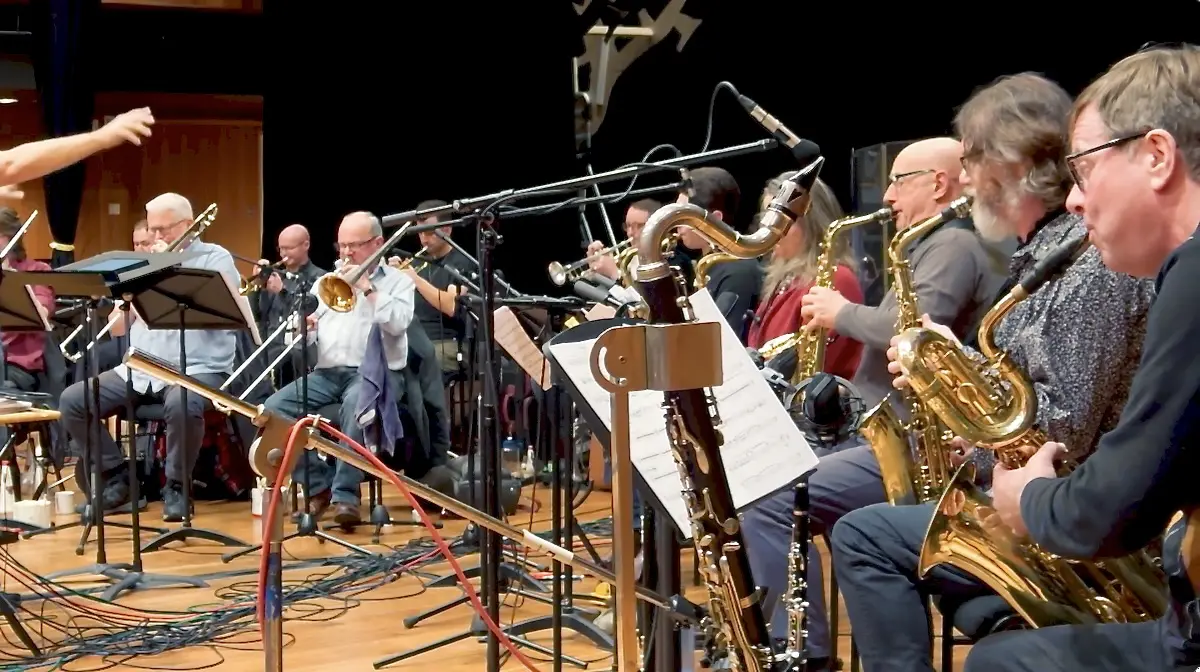
The contemporary jazz landscape is currently witnessing a significant period of diversification, characterized by a synthesis of traditional improvisation, cross-cultural archival research, and avant-garde experimentation. This wave of new releases highlights a global movement where artists are increasingly looking toward historical polymaths, ancestral hymns, and cutting-edge technology to redefine the genre. From the archival 10-hour collections of komungo pioneers to the quadraphonic experiments of modern ensembles, the following survey details the latest contributions to the international jazz canon, analyzing the technical specifications, historical contexts, and artistic implications of these works.
Intellectual Foundations and Thematic Explorations
At the forefront of this intellectual shift is the Kevin Harris Project with the release of Vitruvian Echoes. Harris, a pianist and composer recognized as a Yamaha Artist, has constructed a musical discourse that draws direct inspiration from the anatomical and philosophical insights of Leonardo da Vinci. The project seeks to bridge the gap between Renaissance humanism and modern musical expression, focusing on the often-overlooked contributions of artists who prioritize originality over convention.
To achieve the technical precision required for such a thematic undertaking, Harris collaborated with two stalwarts of the international jazz community: bassist Rufus Reid and drummer Neal Smith. Reid, whose career spans over five decades and includes work with legends such as Dexter Gordon and Stan Getz, provides a foundational stability that allows Harris to explore Da Vinci’s concepts of proportion and symmetry through improvisation. The album follows a successful international preview tour, during which Harris engaged with both established masters and emerging talents, signaling a commitment to the intergenerational continuity of the jazz tradition.
In a similar vein of personal and thematic depth, the Kirsten Sym Undectet presents Somehow It Will Be. As the debut for Perth-based composer Kirsten Symczycz, this 11-piece ensemble project functions as a sonic autobiography. The compositions are shaped by specific geographical locations and memories, reflecting the composer’s creative development within the Australian jazz scene. By utilizing an undectet—an eleven-piece configuration—Symczycz occupies the middle ground between a traditional small combo and a full big band, allowing for intricate textural layering that mirrors the complexity of her personal narrative.
Archival Discoveries and Legacy Preservation
The preservation of jazz history remains a critical component of the industry, as evidenced by several significant archival releases. Neuma Records has announced The Jin Hi Kim Collection, a monumental 10-hour, 9-CD set documenting the career of Jin Hi Kim. Kim is widely recognized as a pioneer of the komungo—a traditional Korean zither—and has spent decades integrating the instrument into the world of free improvisation and contemporary classical music.
This archival set is notable for its extensive list of collaborators, which reads like a directory of the late 20th-century avant-garde. The collection includes recordings with Derek Bailey, Bill Frisell, Hans Reichel, and Elliott Sharp, as well as performances with the Kronos Quartet and the American Composers Orchestra (ACO). The sheer scale of this release provides a comprehensive timeline of how non-Western instruments have been systematically integrated into the global improvisational framework.
Further contributing to the archival record is the late Chuck Mangione’s final album, Everything For Love. Released via Chesky Records, the project adheres to the label’s strict audiophile standards. Recorded using a single-microphone technique in a reverberant space without the use of overdubs, the album captures the flugelhorn maestro’s performance in its most natural state. This release serves as a final testament to Mangione’s melodic sensibility, which earned him two Grammy Awards and a permanent place in the popular consciousness through hits like "Feels So Good."
In the realm of legacy reissues, the inclusion of Charles Mingus’s Mingus Ah Um on the "Number One Essential" label reaffirms the lasting impact of the 1959 sessions. The album remains a cornerstone of the genre, featuring "Goodbye Pork Pie Hat"—a tribute to Lester Young—and "Better Git It in Your Soul," which synthesized gospel influences with hard bop. The reissue of such works ensures that the foundational innovations of the mid-20th century remain accessible to new generations of listeners and scholars.
Global Fusion and Cross-Cultural Synthesis
The intersection of disparate musical traditions is a recurring theme in the latest release cycle. Ray Lema & Ensemble Partage’s Passion Congo exemplifies this synthesis. Lema, a pianist and composer of international standing, has spent his career creating "sonic bridges" between the European classical repertoire and the traditional music of the Democratic Republic of Congo’s 200-plus ethnic groups. His work is not merely a mixture of styles but a profound linguistic fusion that challenges the boundaries of "world music" and "jazz."
Oddrun Lilja’s Muna further explores these global contours. Originally commissioned for the 50th anniversary of Vossa Jazz in 2023, the album blends Nordic modal shapes with Middle Eastern and Carnatic (South Indian) rhythmic structures. Lilja is joined by a formidable lineup of "nu-jazz" stalwarts, including keyboardist Bugge Wesseltoft and vocalist Beate Lech (Beady Belle). The inclusion of the langeleik (a Norwegian zither) alongside modern electric guitars and synthesizers creates a soundscape that is simultaneously ancient and contemporary.
Similarly, Charles Lloyd’s Sangam & Friends pays homage to the deep musical affinity between the legendary saxophonist and tabla master Zakir Hussain. The album is built around 2009 studio recordings from Mumbai, which were previously incomplete. Featuring an expanded ensemble with sitar, sarangi, and bansuri, the project represents a decade-long bridge between the spiritual jazz of the American West Coast and the classical traditions of India.
Experimental Formats and Large Ensemble Innovations
Innovation in the current market is also driven by experiments in recording technology and ensemble size. Arthur King’s UMN (Fantastic Planet) is the latest entry in a series of live quadraphonic scoring experiments. By utilizing a four-channel sound field, the ensemble creates an immersive environment for what they describe as "cosmic jazz." This approach emphasizes the spatiality of sound, allowing collective improvisation to unfurl in a three-dimensional plane.
In the United Kingdom, the Martin Speake Big Band has emerged as a significant new force. Featuring 18 leading musicians, including trombonist Mark Nightingale, the band performs arrangements by 24-year-old Charlie Rees. The project is a testament to the vitality of the UK’s large-ensemble scene, showcasing how Speake’s diverse catalogue can be reimagined through the lens of a younger generation’s orchestrational perspective.
The Italian scene contributes to this orchestral trend with Francesco Miniaci’s Pithagóras. This unique project features Miniaci on piano alongside the 22-member Falaut Flute Orchestra. The work explores the mathematical and philosophical foundations of music—referencing Pythagoras—while balancing the rigid structure of a flute choir with the fluid nature of jazz improvisation.
Chronology of Development and Release Timelines
The timeline of these releases indicates a sustained period of creative output following the global disruptions of the early 2020s.
- 2009-2010: Initial recordings for Charles Lloyd’s Sangam & Friends in Mumbai and the formation of the Kwella & Stowell guitar duo.
- 2014-2023: The Krupka Trio begins their series of Norwegian hymn arrangements, culminating in Vol. 3. Oddrun Lilja debuts Muna at Vossa Jazz.
- 2024-2025: Martin Speake Big Band records their debut; Møster records Bolts live in Bergen; Ole Matthiessen compiles Subcurrents to mark his 80th birthday.
- 2026: Scheduled releases for Nicola Meneghini’s Metropolitan Views (February) and Jason Miles’s 100 Miles For Miles Davis (May), timed to coincide with the centenary of Davis’s birth.
Analytical Implications and Market Trends
The current influx of jazz releases suggests several key trends within the industry. First, there is a clear movement toward independent and artist-led labels. Projects like Madre Vaca’s Tunnel to the Moon—a hybrid of rock opera and chamber music—are being released on self-owned imprints, allowing for total creative control over surreal and long-form narratives.
Second, the "one-day" recording session is regaining popularity as a method to capture raw, spontaneous energy. The duo of Kwella (Denmark) and Stowell (USA) recorded The Room in a single day without overdubs, a technique also mirrored by the Norwegian quartet Møster on their album Bolts. This "live-in-studio" approach serves as a counter-reaction to the highly processed production styles of contemporary pop, emphasizing the "shared language" developed through years of touring.
Finally, the geographical expansion of jazz continues unabated. From the Perth-based narratives of Kirsten Symczycz to the Uppsala-based fusion of Jay Matharu, the genre’s center of gravity is increasingly decentralized. Matharu’s Disillusion highlights this shift, as the British-born guitarist blends progressive rock and Indian classical influences within the Swedish jazz ecosystem.
Conclusion and Broader Impact
The collective impact of these releases reaffirms jazz as a resilient and evolving medium. By integrating historical tributes, such as Jason Miles’s salute to Miles Davis, with avant-garde experiments like Arthur King’s quadraphonic jams, the industry demonstrates a balanced respect for the past and a curiosity for the future. As these albums reach global audiences through labels like Blue Note, Storyville, and Dodicilune, they continue to facilitate a cross-border dialogue that transcends cultural and linguistic barriers. The sheer variety of formats—from 9-CD sets to audiophile vinyl—reflects a market that, while niche, remains deeply committed to the physical and intellectual value of recorded music.


![Sijya announces Leather and Brass [Retrofitted] EP, shares Do I Know [Rachika Nayar Edit]: Listen](https://empire-music.net/wp-content/uploads/2026/09/sijya-announces-leather-and-brass-retrofitted-ep-shares-do-i-know-rachika-nayar-edit-listen.webp)