Johan Budi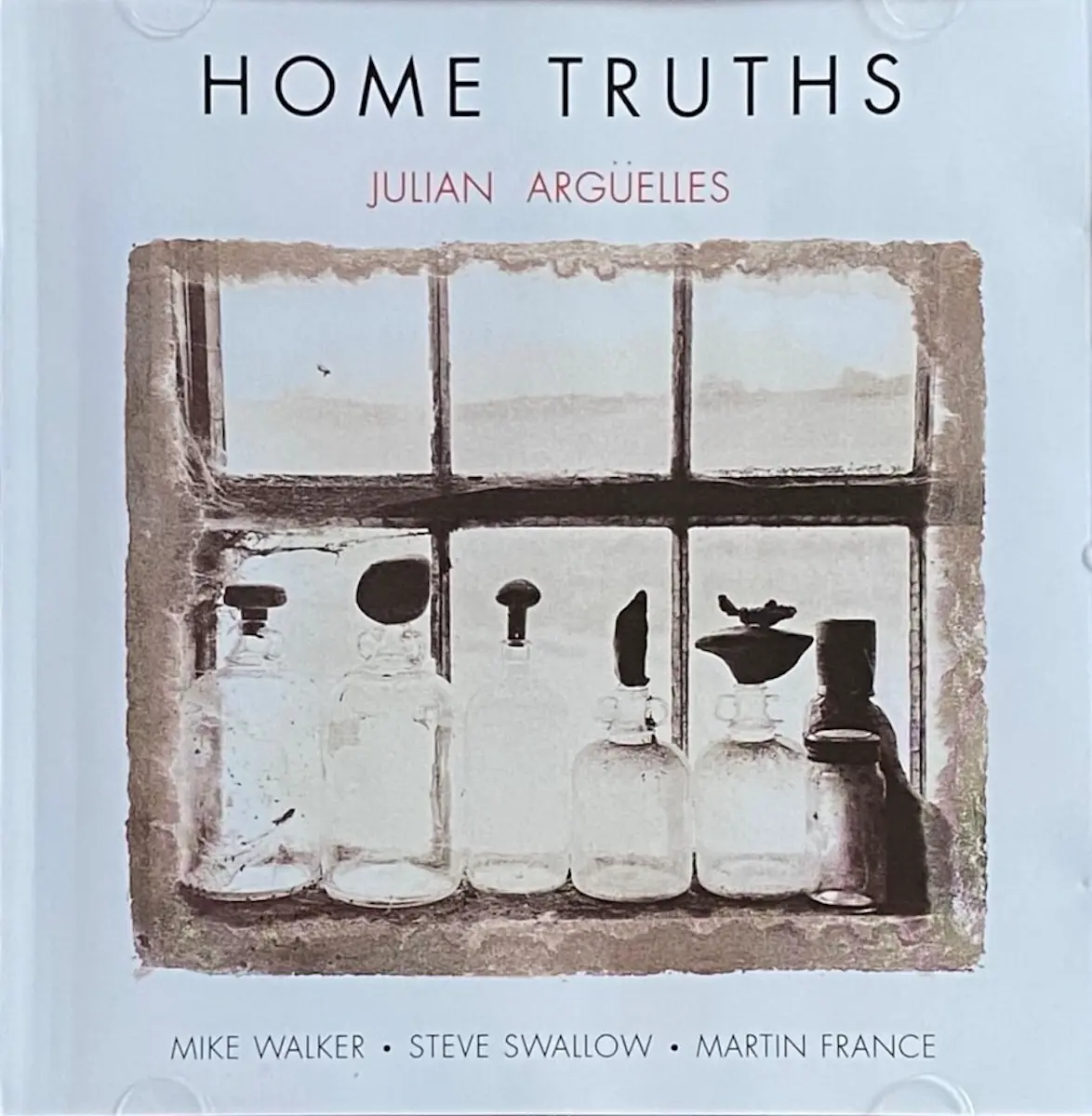
The contemporary landscape of British jazz has long been defined by a restless desire to push beyond standard harmonic boundaries, a tradition brilliantly upheld by saxophonist Julian Arguelles on his acclaimed 1995 studio release, Home Truths. Recorded in London across two intensive days on May 13 and 14, 1995, and subsequently issued on the Babel label under catalog number BDV 9503, the album captures a pivotal moment in the evolution of modern European improvised music. Arguelles, already recognized alongside contemporaries like Tommy Smith as a leading voice of the formidable generation of British saxophonists that emerged during the 1980s, assembled an exceptional transatlantic and cross-generational quartet for the sessions. Featuring the visionary electric guitarist Mike Walker, legendary American bassist Steve Swallow anchoring the rhythm section on electric bass, and dynamic drummer Martin France, the ensemble delivered a bracing collection of original compositions. Spanning ten tracks including Third Escapade, A Month In Tunisia, Sintra, Hix, Mr Mc, Which Way Out, First Escapade, 500 Broadway, Quietly Peeping Around Corners, and Wessex, the 61-minute and 16-second recording presents a uncompromising sonic vision that continues to resonate with critics and musicians alike.
Chronology and Recording Context
The trajectory leading to the creation of Home Truths reflects a period of profound artistic maturation for Julian Arguelles. Having established his reputation through high-profile collaborations with prominent British jazz institutions, including the Loose Tubes orchestra and the Kenny Wheeler large ensembles, Arguelles sought a more intimate yet intellectually demanding vehicle for his compositions. By the mid-1990s, the London jazz scene was experiencing a vibrant renaissance, characterized by a cross-pollination of contemporary chamber jazz, post-bop sensibilities, and abstract folk influences.
The sessions for Home Truths in mid-May 1995 brought together four distinct musical personalities whose prior associations ensured an immediate, high-level rapport. Martin France, a cornerstone of the UK rhythm section ecosystem, brought a loose, clattering textural approach to the drum kit—an aesthetic heavily indebted to the pioneering spontaneity of Paul Motian. Meanwhile, the inclusion of master bassist Steve Swallow provided a masterclass in harmonic foundation, utilizing his signature electric bass guitar to weave seamlessly beneath the intricate front-line interplay. Recorded directly in the heart of London, the project materialized swiftly, capturing the raw urgency and telepathic communication of an ensemble at the height of its creative powers.
Musical Analysis and Aesthetic Direction
At the core of Home Truths lies a deliberate departure from conventional swing tropes, though the capability of the quartet to swing with formidable authority remains unquestioned. Rather than relying on standard jazz-standard forms or straightforward blues structures, Arguelles charted a course toward an abstract reading of folk and blues idioms. This aesthetic choice invites immediate comparisons to the highly-strung folk-jazz-gospel amalgams explored by pianist Keith Jarrett during his celebrated American and European quartets of the late sixties and early seventies.
The resulting music is intentionally complex, proving not always immediately approachable or conventionally attractive to the casual listener. However, any potential shortfall in standard melodic accessibility is thoroughly compensated for by the sheer strength of the musicianship on display. As chief soloists, Arguelles—utilizing soprano saxophone, tenor saxophone, and bass clarinet—and Mike Walker on electric guitar demonstrate a remarkable capacity to decode and elevate abstruse forms and harmonies. Walker’s contribution, particularly showcased on the track Mix, stands out as a masterclass in contemporary guitar phrasing, balancing jagged modernism with lyrical depth.
Behind them, Steve Swallow operates with an utterly reliable, supportive gravity, allowing the front-line soloists the freedom to explore outer harmonic fringes without losing rhythmic orientation. Martin France’s drumming serves as a textural wash rather than a mere time-keeping device, propelling the compositions forward with a restless, organic energy that defines the album’s avant-garde edge.
Complete Track Listing and Technical Specifications
The finalized sequencing of Home Truths offers a comprehensive overview of Arguelles’ compositional range during this era. The complete track list, running at a total duration of 61 minutes and 16 seconds, comprises the following pieces:
- Third Escapade
- A Month In Tunisia
- Sintra
- Hix
- Mr Mc
- Which Way Out
- First Escapade
- 500 Broadway
- Quietly Peeping Around Corners
- Wessex
The personnel credits for the Babel release (BDV 9503) document the precise lineup that convened in London on May 13 and 14, 1995:
- Julian Arguelles – soprano saxophone, tenor saxophone, bass clarinet
- Mike Walker – electric guitar
- Steve Swallow – electric bass
- Martin France – drums
Industry Reception and Critical Assessment
Upon its commercial release, Home Truths elicited thoughtful discussions across the European jazz press, positioning itself as a benchmark for contemporary British instrumental music. Critics were quick to praise the uncompromised artistic integrity of the project, noting that Arguelles refused to pander to commercial expectations of what contemporary jazz should sound like.
Reviewers frequently highlighted the synergy between Arguelles and Walker, observing that their shared intuition allowed them to navigate complex modal shifts and jagged time signatures with deceptive ease. While some contemporary commentators remarked on the album’s demanding nature—pointing out that its austere beauty requires active, concentrated listening—the overarching consensus lauded it as a stimulating, superbly played milestone. The inclusion of Steve Swallow added an invaluable layer of transatlantic prestige, bridging the gap between American modernism and the burgeoning British contemporary jazz movement.
Broader Impact and Legacy in British Jazz
Looking back at the release of Home Truths offers vital context regarding the maturation of the UK jazz community leading into the twenty-first century. During the 1980s and 1990s, artists like Julian Arguelles helped dismantle the notion that innovative jazz had to be imported from the United States, forging a distinct European identity that valued composition, texture, and stylistic synthesis.
The album’s legacy lies in its refusal to settle into comfortable stylistic idioms. By treating folk and blues materials as raw, abstract building blocks rather than nostalgic touchstones, Arguelles and his quartet anticipated the genre-fluid explorations that currently characterize the modern international jazz scene. For younger generations of saxophonists and improvisers, Home Truths remains a study in rigorous composition, fearlessness in improvisation, and the profound results achievable when top-tier artists commit fully to an uncompromising aesthetic vision.