Johan Budi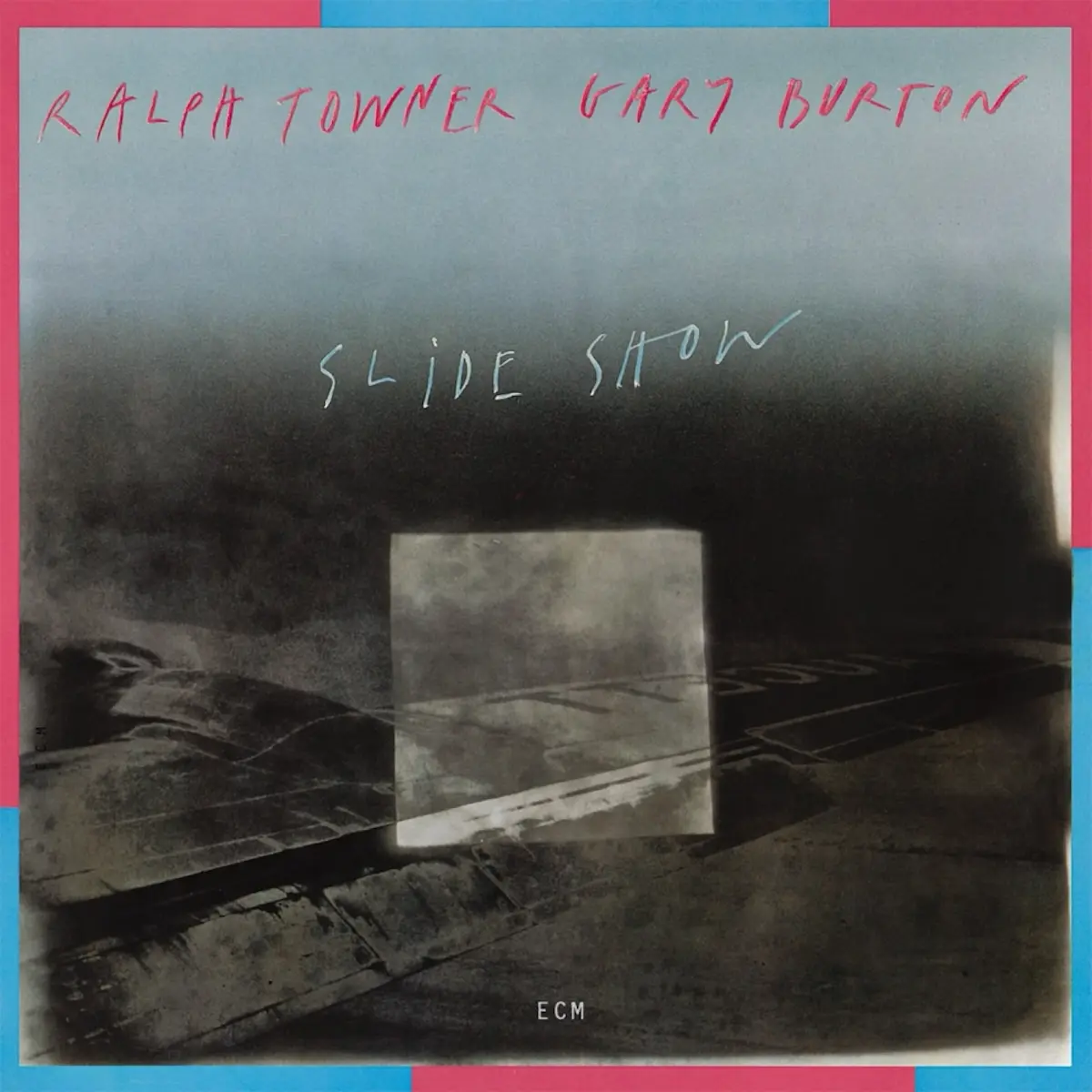
When critic Simon Adams sat down in the autumn of 1986 to review a unique collaborative recording for Jazz Journal, he approached the material with a heavy dose of skepticism. The pairing of acoustic guitar and vibraphone—traditionally viewed by purists as a configuration prone to either cloying sweetness or rhythmically disjointed noodling—did not initially promise a compelling listening experience. Yet, upon repeated spins of the record, Adams was forced to completely re-evaluate his initial preconceptions, ultimately hailing the project as his top recommendation of the month.
The album in question, Slide Show, brought together two titans of modern improvised music: classical and twelve-string guitar virtuoso Ralph Towner and master vibraphonist and marimbist Gary Burton. Recorded in May 1985 at the renowned Tonstudio Bauer in Ludwigsburg, Germany, and released on the prestigious ECM label (catalog number ECM 1306), the LP captured an unexpected synergy between two artists at the absolute height of their creative powers. Looking back at the critical reception and the subsequent legacy of this release reveals a fascinating snapshot of jazz collaboration during a period when genre boundaries were continuously being pushed, redefined, and elevated by European and American innovators alike.
The Genesis of a Masterclass Collaboration
To understand the magnitude of Slide Show, one must examine the respective trajectories of Ralph Towner and Gary Burton up to the mid-1980s. Both musicians had already established themselves as pioneers who operated comfortably outside the traditional bop and hard-bop paradigms, carving out distinct sonic identities that favored texture, space, harmonic sophistication, and cross-genre exploration.
Gary Burton, a legendary figure in the vibraphone world, had revolutionized the instrument in the 1960s by developing the four-mallet technique, allowing him to play chordal structures and counterpoint akin to a piano player. His work with guitarist Larry Coryell and later with Pat Metheny in the groundbreaking Gary Burton Quartet cemented his reputation as a master of chamber jazz and fusion. Burton possessed a remarkable ability to adapt to diverse instrumentation, bringing a shimmering, bell-like clarity to any ensemble he joined.
Ralph Towner, meanwhile, was internationally celebrated as the co-founder of the avant-garde acoustic ensemble Oregon. A multi-instrumentalist who excelled on classical guitar, twelve-string guitar, and piano, Towner brought a deep foundation in classical composition, folk traditions, and modal jazz to his improvisations. His ECM catalog, both as a solo artist and as a collaborator with artists like Eberhard Weber and Jan Garbarek, defined the label’s signature spacious, atmospheric aesthetic.
When ECM producer Manfred Eicher facilitated the studio pairing of Towner and Burton in Ludwigsburg in May 1985, expectations within the industry were naturally high, even if critics like Adams harbored private doubts about the timbral compatibility of the instruments. The resulting recording sessions proved that these two distinct musical personalities shared an intuitive, telepathic level of communication.
Chronology of the 1985–1986 Release Cycle
- May 1985: Ralph Towner and Gary Burton enter Tonstudio Bauer in Ludwigsburg, Germany, to record a series of original compositions and select standards under the production of Manfred Eicher.
- Late 1985 / Early 1986: ECM Records officially releases Slide Show to international markets, positioning it as a major release in the label’s spring catalog.
- September 1986: Jazz Journal publishes Simon Adams’s glowing review, in which he retracts his initial skepticism and crowns the album his "rave of the month."
- Post-1986 to Present: The album endures as a critical benchmark for acoustic duet recordings, frequently cited by jazz historians as a masterclass in textural interplay and dynamic restraint.
Musical Analysis: A Dynamic Interplay of Timbers
The core triumph of Slide Show lies in the manner in which Towner and Burton navigate the potential acoustic pitfalls of pairing a plucked string instrument with a percussive, sustained mallet instrument. In a standard review of the mechanics at play, Adams observed that Towner’s sharp, articulate pizzicato guitar lines served to sharpen the legato, sustained nature of Burton’s vibraphone, while the vibraphone provided a rich, warm tonal depth that anchored the guitar’s higher registers.
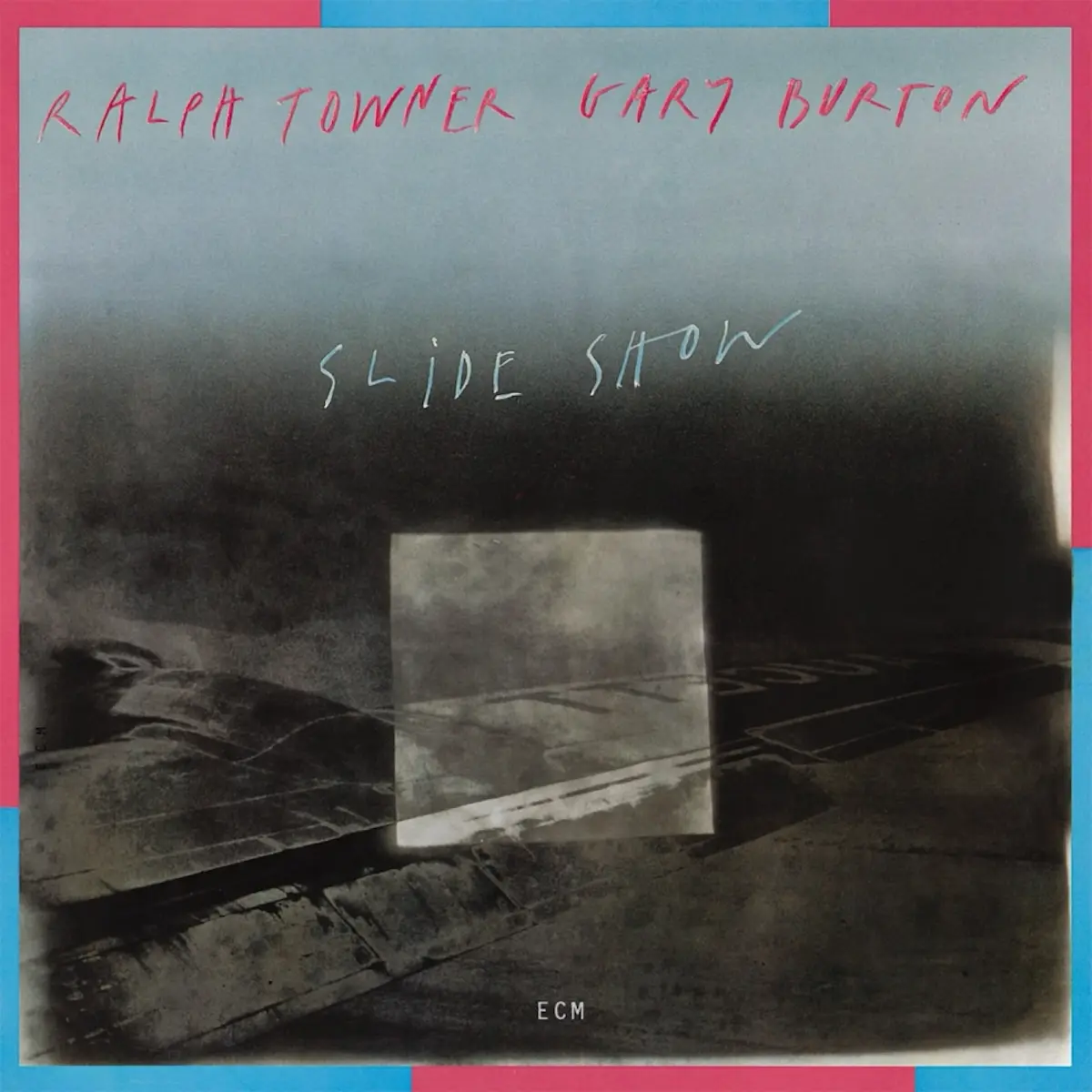
The tracklisting is divided across two distinct thematic and temporal blocks, showcasing a balanced program of intricate compositions:
Side One (Total Duration: 23:11)
- Maelstrom
- Vessel
- Around The Bend
- Blue In Green
Side Two (Total Duration: 22:51)
- Beneath An Evening Sky
- The Donkey Jamboree
- Continental Breakfast
- Charlotte’s Tangle
- Innocent
Tracks such as Maelstrom stand out for their sophisticated use of light, shade, and complex cross-rhythms, which maintain a relentless forward momentum without ever sounding cluttered. On pieces like Vessel, the strong, memorable melodies are propelled by a rare mutual empathy, with both musicians effortlessly trading roles between melodic lead and percussive rhythmic accompaniment. Meanwhile, high-tempo excursions like Around The Bend showcase a breathtaking technical fluency executed at full tilt, leaving listeners gasping at the sheer speed and precision of their interaction.
Conversely, more introspective cuts such as Beneath An Evening Sky demonstrate the quiet intimacy the duo could achieve, locking their respective instruments together in a tightly woven sonic fabric. Injecting a touch of buoyant levity into the set, the calypso-infused The Donkey Jamboree proved that high-art chamber jazz could also retain a sense of infectious joy and humor, effortlessly eliciting smiles from even the most cynical critics.
Broader Impact and Historical Implications
The critical acclaim garnered by Slide Show upon its 1986 release underscored several broader developments within the jazz landscape of the 1980s. First, it highlighted the commercial and artistic viability of ECM Records’ uncompromising vision. Under Manfred Eicher’s guidance, the label cultivated an aesthetic that bridged contemporary classical music, ambient soundscapes, and acoustic jazz, proving that adventurous instrumental albums could find a dedicated global audience.
Second, the album served as a masterclass in acoustic integration for future generations of musicians. In an era dominated by the growing dominance of synthesizers, digital production, and heavily amplified fusion, Towner and Burton chose to strip their sound down to pure, unadulterated acoustics. Their ability to generate massive dynamic range, rhythmic drive, and emotional resonance using strictly wood, steel, bars, and mallets stood as a testament to the enduring power of organic musicianship.
For Simon Adams and the wider readership of Jazz Journal, the record was a reminder of the dangers of stylistic prejudice. By approaching an unfamiliar instrumental pairing with an open mind, listeners were rewarded with one of the most exhilarating and cohesive duets of the decade. Four decades after its initial recording, Slide Show remains a shining monument to what can be achieved when two master craftsmen leave their comfort zones and discover a shared, borderless musical language.