Jia Lissa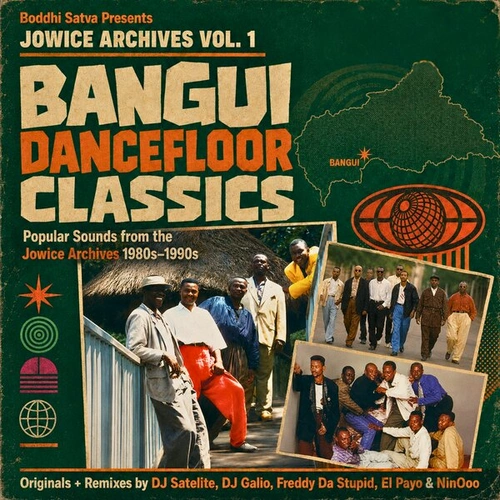
The highly anticipated compilation, ‘Jowice Archives Vol. 1: Bangui Dancefloor Classics,’ curated by the esteemed Boddhi Satva, marks a significant cultural intervention, opening a vital portal to the rich, often overlooked, musical heritage of the Central African Republic. The initial half of this groundbreaking release immediately immerses listeners in three authentic Bangui classics, resurrected from the analog depths of the cassette era. These recordings embody the quintessential Central African rumba style, characterized by its intricate interlocking guitar melodies, deeply resonant call-and-response vocal arrangements, and infectious, joy-infused rhythms that historically served as powerful social conduits within the community. This compilation is not merely a retrospective; it is a meticulously crafted bridge, bringing these foundational sounds into contemporary discourse through a series of thoughtful remixes that amplify, rather than overshadow, their original brilliance.
Unearthing Central African Rumba: A Historical Context
To fully appreciate the significance of ‘Jowice Archives Vol. 1,’ one must delve into the historical tapestry of Central African music, particularly the evolution of rumba in the region. Originating in the Democratic Republic of Congo (formerly Zaire) and Congo-Brazzaville, Congolese rumba emerged as a dominant musical force in the mid-20th century, profoundly influencing neighboring nations. Its distinctive blend of Afro-Cuban rhythms, indigenous vocal traditions, and the electric guitar quickly spread across the continent. In the Central African Republic, particularly its capital, Bangui, rumba took on a unique character, adapting to local dialects, instrumentation, and cultural nuances.
During the 1970s, 1980s, and early 1990s, Bangui experienced a vibrant musical flourishing. Despite periods of political instability, music remained a resilient force, providing solace, entertainment, and a platform for communal expression. Local bands and artists, inspired by pioneers like Franco Luambo Makiadi and Tabu Ley Rochereau, developed their own interpretations of rumba, often incorporating local folk elements and a distinct Central African rhythmic sensibility. Studios, though often modest, emerged to record these burgeoning talents, and the ubiquitous audio cassette became the primary medium for distributing music. Cassettes were not just commercial products; they were cultural artifacts, passed between friends, copied, and played incessantly in homes, on public transport, and at social gatherings, cementing the local rumba sound as the heartbeat of Bangui’s social life. This era, now affectionately termed the "cassette era," produced a wealth of material, much of which remained confined within the geographical borders of the CAR, largely inaccessible to a global audience due to limited international distribution channels and the fragility of analog archives. The ‘Jowice Archives’ project directly addresses this historical lacuna.
The Jowice Archives Project: Preservation and Global Outreach
The genesis of ‘Jowice Archives Vol. 1’ lies in the painstaking work of unearthing and preserving these invaluable recordings. The "Jowice Archives" itself refers to a treasure trove of historical musical material, likely compiled by a dedicated local collector, producer, or cultural enthusiast in Bangui over decades. The name Jowice, while not explicitly detailed in the initial release information, implies a foundational figure whose foresight ensured the survival of these audio documents through years when many such recordings might have been lost to time, degradation, or neglect. The meticulous process of digitizing and restoring these cassette-era masters is a testament to the dedication involved, transforming fragile analog tapes into high-fidelity digital assets suitable for contemporary release. This archival work is crucial for cultural preservation, ensuring that the voices, melodies, and rhythms of a bygone era are not only remembered but actively re-engaged by new generations.
Boddhi Satva, a celebrated DJ and producer of Central African descent, known for his pioneering work in blending traditional African sounds with modern electronic music, stands at the helm of this initiative. His involvement is pivotal. Having established a global reputation for his innovative Ancestral Soul sound, Satva possesses a unique understanding of how to honor African musical roots while propelling them onto the international stage. His curatorial vision for ‘Jowice Archives’ is clear: to present these Bangui classics with the respect they deserve, framed within a contemporary context that highlights their timeless appeal. This project aligns perfectly with Satva’s broader artistic mission, which often involves shining a spotlight on lesser-known African musical traditions and demonstrating their profound influence on global music. His ability to navigate both traditional and modern sonic landscapes makes him the ideal architect for this cross-generational and cross-cultural dialogue.
A Deep Dive into the Bangui Dancefloor Classics
The compilation’s opening tracks serve as an immediate immersion into the authentic soundscape of Bangui rumba. These original compositions are characterized by their intricate arrangements and deep emotional resonance. The guitar work, often featuring complex, interlocking melodic lines known as ‘sebene’ in Congolese rumba, creates a hypnotic foundation. The call-and-response vocals, a hallmark of many African musical traditions, foster a sense of communal participation, with lead vocalists exchanging phrases with a chorus, often in local languages such as Sango. The rhythmic structures, propelled by a combination of drums, percussion, and bass, are undeniably joyful and designed for collective movement, reflecting music’s intrinsic role in celebrations, storytelling, and social cohesion within Central African communities. These are not merely songs; they are sonic narratives of daily life, resilience, and communal spirit from a specific historical period.
The Art of the Remix: Amplifying the Originals
What sets ‘Jowice Archives Vol. 1’ apart is its intelligent approach to remixing. The producers involved have adopted a philosophy of enhancement rather than wholesale transformation. Their remixes "serve rather than overwrite their source," a critical distinction that respects the integrity of the original compositions while making them accessible to contemporary dancefloors and ears accustomed to electronic music production. This nuanced approach ensures that the essence of Bangui rumba remains at the forefront, with modern production techniques acting as a spotlight.
"Pauvreté" – Remixed by DJ Satelite & DJ Gálio:
The remix of "Pauvreté" by DJ Satelite and DJ Gálio exemplifies this respectful enhancement. The original track’s raw emotion is preserved, with the vocals brought "upfront and urgent," emphasizing their poignant narrative. Satelite, a Portuguese-Angolan DJ and producer known for his contributions to the Afro-house scene, alongside DJ Gálio, meticulously strips back the instrumental layers, allowing the powerful vocal delivery to command attention. Simultaneously, contemporary synths are introduced, but not arbitrarily. Instead, they "trace the original guitar line," reinterpreting the classic melodic structures with a modern sonic palette. This creates a compelling dialogue between the past and present, offering a fresh texture without losing the soulful core of the original. The result is a track that feels both deeply rooted and dynamically current, perfectly suited for global dancefloors while retaining its Central African spirit.
"Mbana na Mbana" – Remixed by NinOo:
NinOo’s remix of "Mbana na Mbana" demonstrates a different, equally effective, strategy. Here, the tempo is "dropped slightly," creating a more contemplative and groove-oriented feel. This subtle shift allows for a deeper appreciation of the original’s rhythmic subtleties and melodic contours. Furthermore, NinOo "pares back the detail of the topline," opting for a more minimalist arrangement that highlights specific instrumental phrases or vocal hooks. By reducing complexity, the remix amplifies the impact of the remaining elements, drawing listeners into a more intimate engagement with the music. This approach can reveal hidden depths in the original, offering a new perspective on its emotional landscape and rhythmic propulsion, making it resonate with audiences who appreciate a more stripped-down, atmospheric sound.
"Natacha" – Remixed by Freddy da Stupid & El Payo:
The remix of "Natacha" by Freddy da Stupid and El Payo is unequivocally positioned as "the compilation’s centre of gravity," a testament to its powerful fusion of tradition and innovation. This track masterfully orchestrates a dialogue where "guitar calls to bass," maintaining the call-and-response dynamic inherent in the original rumba. The addition of "gritty synth textures" introduces a contemporary edge, elevating the underlying groove without overwhelming it. This remix is a prime example of how modern electronic elements can serve to enhance, rather than distort, the organic feel of African traditional music. It strikes a delicate balance, being "modern enough to pull a new generation in" with its compelling electronic production, yet "grounded enough to hold them there" with the undeniable authenticity and rhythmic power of the original Bangui rumba. This particular remix is poised to be a standout, bridging diverse musical tastes and showcasing the enduring vitality of Central African sounds in a globally relevant format.
Broader Implications and Future Horizons
The release of ‘Jowice Archives Vol. 1’ carries significant cultural and historical weight, extending far beyond its immediate musical appeal. It represents a crucial step in the global recognition of Central African music, a region whose immense contributions have often been overshadowed by more widely disseminated genres from West and East Africa. This compilation helps to rectify historical imbalances in the music industry’s focus, decolonizing the narrative of African music by bringing previously marginalized voices to the forefront. Such initiatives are vital for a more equitable and comprehensive understanding of the continent’s diverse musical landscape.
The impact on contemporary African music and its diaspora is profound. By presenting these classics, Boddhi Satva and the Jowice Archives project provide a rich source of inspiration for a new generation of producers, musicians, and DJs. The raw material — the intricate guitar patterns, the soulful vocal harmonies, the complex rhythmic structures — offers fertile ground for sampling, reinterpretation, and fusion, encouraging a continuous dialogue between tradition and innovation. This can lead to a revitalization of interest in traditional forms, fostering a deeper connection between contemporary artists and their cultural heritage.
Furthermore, the project underscores the critical importance of cultural preservation and archival work, particularly in regions that have faced political turmoil or economic challenges. Many invaluable recordings from Africa’s cassette era are at risk of being lost forever due to neglect, improper storage, or the inherent degradation of analog media. Initiatives like ‘Jowice Archives’ serve as a powerful reminder of the urgent need for dedicated efforts to document, digitize, and disseminate these cultural treasures. They not only preserve history but also ensure that future generations can access and learn from their rich musical patrimony.
The anticipated market reception for ‘Jowice Archives Vol. 1’ is expected to be overwhelmingly positive. Critics, DJs, and enthusiasts of global music, Afro-house, and traditional African genres are likely to embrace its unique blend of historical significance and contemporary appeal. The compilation’s success could also pave the way for future volumes, suggesting that the "first door opened into a catalogue that deserved global ears decades ago" is indeed just the beginning. This potential for ongoing releases would further enrich the global musical canon and cement the legacy of Central African artists. Economically, such global exposure, coupled with proper licensing and royalty agreements, could also provide long-overdue financial recognition and support for the original artists or their estates, contributing to the sustainable development of the music ecosystem in the CAR.
Statements and Reactions
In a recent statement, Boddhi Satva articulated his passion for the project: "For years, I’ve felt a deep responsibility to share the incredible music of my ancestral home with the world. The Jowice Archives represent a profound discovery, a treasure chest of pure Central African soul. Our goal with ‘Vol. 1’ was not to reinvent these classics, but to respectfully amplify their inherent power and beauty, ensuring they connect with new audiences while honoring the spirit of the original artists. This is just the beginning; Central African music has so much more to say."
Dr. Amina Diallo, an ethnomusicologist specializing in Central African soundscapes, commented on the academic significance: "This compilation is a landmark release. It brings to light a crucial period of musical innovation in Bangui, showcasing the unique evolution of rumba in the CAR. Beyond its undeniable groove, it offers invaluable insight into the social fabric and cultural resilience of the region during challenging times. It’s a testament to the enduring power of music as a historical document and a source of identity."
Locally, there is a palpable sense of pride. Jean-Claude M’Bata, a retired musician from Bangui who remembers the cassette era vividly, expressed, "To hear these songs again, remastered and presented to the world, fills my heart. This music was our life, our joy, our story. For Boddhi Satva to bring it back, and for young people around the world to hear it, it is a dream come true for Bangui."
Conclusion
‘Jowice Archives Vol. 1: Bangui Dancefloor Classics’ transcends its identity as a mere music compilation. It stands as a profound cultural artifact, a meticulously curated bridge spanning decades and continents. Through the visionary efforts of Boddhi Satva and the preservation work of the Jowice Archives, the vibrant, historically rich sounds of Central African rumba are finally receiving the global recognition they have long deserved. By blending authentic cassette-era classics with respectful, enhancing remixes, the compilation not only celebrates the past but actively shapes the future of global music. It is a powerful affirmation that Central African music, with its intricate guitars, soulful vocals, and joyful rhythms, continues to be a vital and influential force, poised to captivate and move a new generation of listeners worldwide. This project unequivocally proves that Central African music has an enduring and compelling narrative yet to unfold.


![Sijya announces Leather and Brass [Retrofitted] EP, shares Do I Know [Rachika Nayar Edit]: Listen](https://empire-music.net/wp-content/uploads/2026/09/sijya-announces-leather-and-brass-retrofitted-ep-shares-do-i-know-rachika-nayar-edit-listen.webp)