 Kholidah
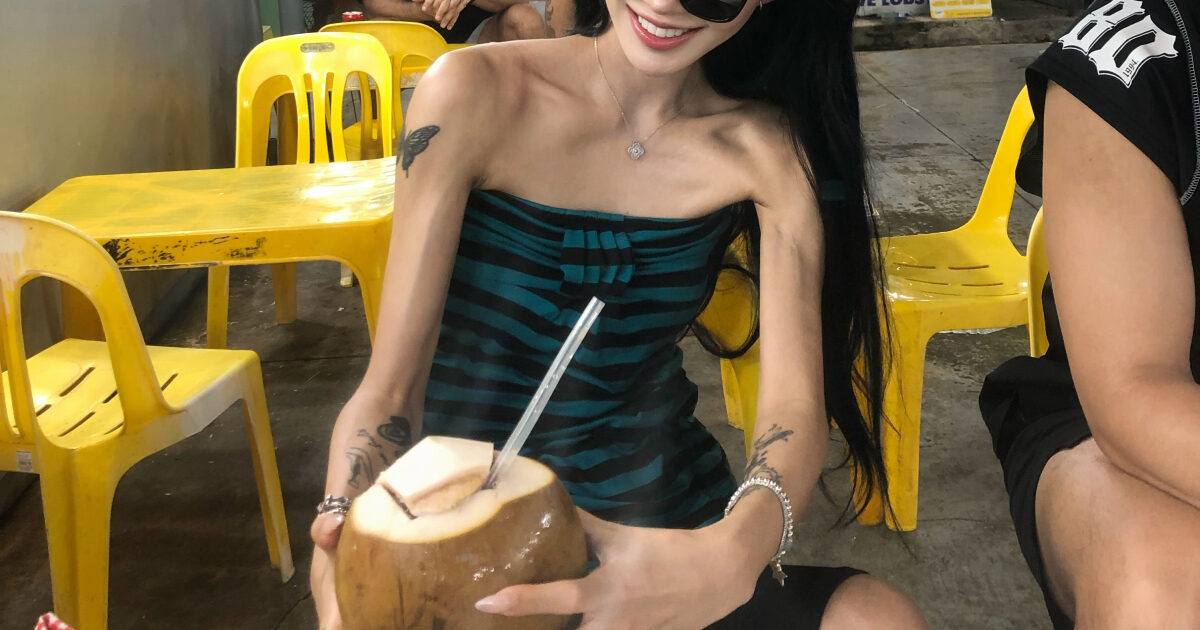
Choi Jun Hee, a prominent South Korean social media figure and the daughter of the late legendary actress Choi Jin Sil, has once again sparked a heated debate across digital platforms following the release of recent vacation photographs. On July 22, Choi shared a series of images on her Instagram account documenting her travels in Da Nang, Vietnam. The posts, which featured the influencer in various states of summer attire, showcased her significantly slender physique, leading to a wave of both concern and criticism from netizens regarding her physical health and the message her body image sends to her followers.
The photographs captured Choi enjoying the local amenities of Da Nang, including dining on local cuisine and relaxing by a pool. In her captions, she maintained a lighthearted and defiant tone, seemingly addressing the inevitable scrutiny her appearance would draw. "By the way, this is Da Nang city," she wrote. "It was a day I dressed up nicely, but after this day, it got so hot that I wandered around like a rag." She further commented on her dietary habits during the trip, stating, "Despite this, I’m feeling full. Spicy beef tripe pho is delicious. I maintained a good summer body, right?" She also included a playful nod to her partner, adding, "Oppa, give me a foot massage."
The Physical Transformation and Statistical Context
The controversy surrounding Choi Jun Hee is not merely a matter of aesthetic preference but is rooted in the stark reality of her physical metrics. Choi stands at 170 centimeters (approximately 5 feet 7 inches) and has publicly disclosed that her current weight fluctuates around 41 kilograms (approximately 90 pounds). According to the World Health Organization (WHO) and standard Body Mass Index (BMI) calculations, a person of her height and weight would have a BMI of approximately 14.2.
In clinical terms, a BMI below 18.5 is categorized as underweight, and a BMI below 15.0 is often classified as "severely underweight" or "anorexic-level" weight in a medical context. These statistics have fueled the fire of public discourse in South Korea, a nation already grappling with intense societal pressure regarding beauty standards and the "pro-ana" (pro-anorexia) subculture that has gained traction among younger generations. While Choi has consistently expressed confidence in her appearance, medical professionals often warn that maintaining such a low body mass can lead to a variety of health complications, including weakened immune function, bone density loss, and hormonal imbalances.
A History of Health Struggles: The Lupus Factor
To understand the public’s intense reaction to Choi Jun Hee’s current figure, one must look back at her complex medical history. Choi has been open with the public about her battle with Systemic Lupus Erythematosus (SLE), a chronic autoimmune disease that can cause inflammation and pain in any part of the body. In the earlier stages of her public life, Choi gained a significant amount of weight—peaking at approximately 96 kilograms—as a side effect of high-dose steroid treatments (prednisone) used to manage her Lupus symptoms.

The side effects of these medications, often referred to as "moon face" and rapid weight gain, made her a target of online bullying during her teenage years. Her subsequent journey to lose over 50 kilograms was initially met with praise for her discipline and recovery. However, as her weight continued to drop well below the average range for her height, the narrative shifted from one of health recovery to one of potential disordered eating or extreme dieting.
Choi has addressed these concerns in the past, stating, "People criticize my bony look as unconventional beauty, but so what? Being underweight feels better to live with." This statement highlights a psychological shift common among those who have experienced drastic weight fluctuations due to illness; the fear of returning to a state of being "overweight" or "unhealthy" (as defined by societal standards) often drives an individual toward the opposite extreme.
Chronology of Public Scrutiny and Defiance
The timeline of Choi’s public interactions reveals a pattern of increasing autonomy and a refusal to adhere to the traditional "meek" persona expected of celebrities in the Korean entertainment industry.

- Early 2019: Choi Jun Hee reveals her Lupus diagnosis, explaining her physical changes to a concerned public.
- 2021–2022: She documents her rigorous weight loss journey, utilizing a combination of diet and exercise. She becomes a brand ambassador for various diet supplements, which brings both commercial success and criticism.
- Late 2023: Netizens begin expressing alarm as her weight drops into the 40kg range. Choi responds by posting more "body-positive" content that focuses on her own satisfaction rather than health metrics.
- July 2024: The Da Nang posts serve as a flashpoint, where Choi’s "bone-thin" figure is displayed prominently in swimwear, accompanied by captions that prioritize her enjoyment of food and travel over the "worried" comments of her followers.
Societal Implications and the "Nation’s Daughter" Legacy
The intense scrutiny Choi Jun Hee faces is inextricably linked to her lineage. As the daughter of Choi Jin Sil—often referred to as the "Nation’s Actress" before her tragic passing in 2008—Jun Hee has been in the public eye since birth. The South Korean public often feels a sense of collective guardianship over her, leading to a "paternalistic" form of social media interaction where users feel entitled to comment on her health, relationships, and lifestyle choices.
However, this guardianship often manifests as "lookism," a pervasive social phenomenon in South Korea where a person’s value is frequently tied to their physical appearance. The irony of the current situation is not lost on cultural critics: for years, the industry and the public demanded that stars be thin; yet, when a public figure like Choi reaches the logical extreme of that demand, she is "slammed" for being too thin.
Reactions from Netizens and Related Parties
The reaction to the Da Nang photos has been polarized. On one side of the spectrum, many netizens have left comments expressing genuine fear for her well-being. "She looks like she could collapse at any moment," one user wrote on a popular community portal. "Being 170cm and 41kg is not a ‘summer body,’ it’s a medical emergency."

On the other side, a segment of her fanbase defends her right to bodily autonomy. These supporters argue that after years of being shamed for her weight gain during her Lupus treatment, Choi should be allowed to enjoy her body in whatever form she chooses. "She finally feels confident and happy," a supporter commented. "Let her live her life without constant monitoring."
While there have been no official statements from medical professionals specifically regarding Choi’s current state—due to patient privacy—the general discourse among health influencers in Korea has turned toward the dangers of "thin-spo" (thin inspiration). Analysts suggest that when influencers with high visibility promote a severely underweight physique as a "maintained summer body," it can inadvertently encourage dangerous dieting behaviors among their younger, more impressionable followers.
Broader Impact on the Influencer Industry
Choi Jun Hee’s refusal to yield to public pressure represents a growing trend among "Gen Z" influencers in South Korea who are rejecting the traditional "apology culture." In previous years, a celebrity caught in a controversy regarding their health or appearance might have issued a formal apology or taken a hiatus. Choi’s "giving no f*cks" attitude—characterized by her direct engagement with critics and her continued posting of the very content they find objectionable—marks a shift in how public figures manage their brand.

This defiance, however, presents a challenge for brands and advertisers. As Choi continues to promote diet-related products, the ethical implications of her physical state become a point of contention. Industry experts suggest that the "waif" aesthetic, while historically popular in high fashion, is increasingly under fire in a global market that is slowly moving toward body diversity and health-centric beauty.
Analysis of Implications
The situation involving Choi Jun Hee is a microcosm of the larger tensions within South Korean society regarding health, celebrity, and the legacy of trauma. Her journey from a child of tragedy to a woman battling a chronic illness, and finally to a defiant social media star, is a narrative of survival. Yet, the physical manifestation of that survival—her current weight—remains a polarizing subject.
From a journalistic perspective, the story is not merely about a vacation in Vietnam; it is about the intersection of public health and private autonomy. As Choi Jun Hee continues to navigate her life in the shadow of her mother’s fame and her own health challenges, her digital presence remains a powerful, if controversial, testament to her desire for self-definition. Whether her current physique is a temporary stage in her recovery or a long-term lifestyle choice, the conversation it has sparked regarding the "ideal body" is one that South Korea is not yet finished having.