Aveline Kirana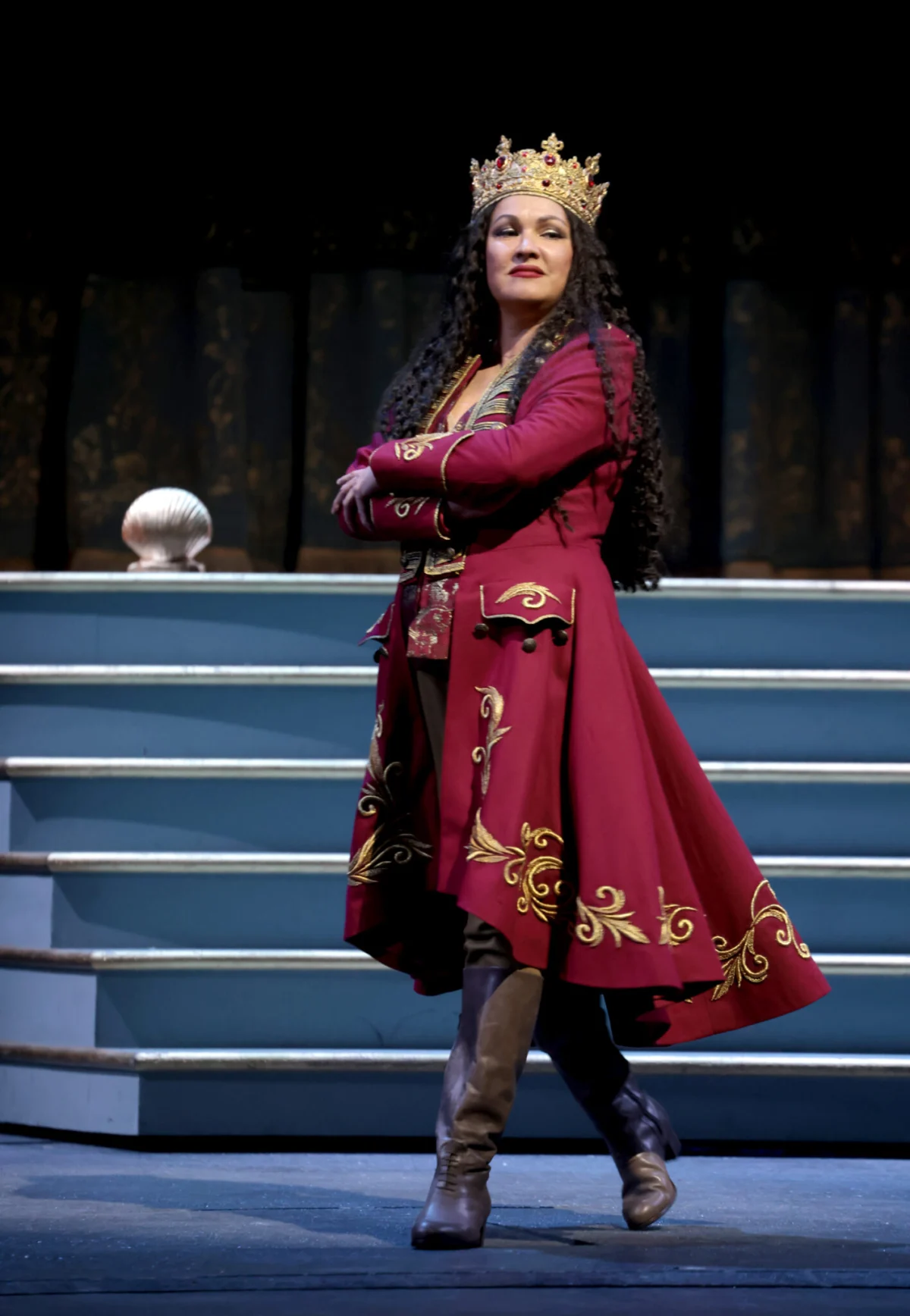
The iconic Teatro alla Scala has bid a poignant farewell to its esteemed Music Director, Riccardo Chailly, with a resplendent production of Giuseppe Verdi’s monumental opera, Nabucodonosor. This production, which unfolded as Chailly’s final engagement in his decade-long tenure, served as a powerful testament to both Verdi’s enduring genius and Chailly’s profound dedication to the composer’s early works. The choice of Nabucodonosor was not merely artistic; it resonated deeply with the opera’s own narrative of triumph emerging from profound adversity, mirroring Verdi’s own arduous journey to artistic salvation.
The Genesis of a Masterpiece: Verdi’s Crucible of Creation
The year 1842 marked a seismic shift in the trajectory of Giuseppe Verdi’s career, culminating in the triumphant premiere of Nabucodonosor at La Scala. This pivotal moment arrived after a decade of profound personal tragedy and professional setbacks that tested the young composer’s resolve to its very limits. Between 1832 and 1842, Verdi faced a series of crushing disappointments. His application to the prestigious Milan Conservatory was rejected, a blow that must have stung deeply for an aspiring musician. This professional setback was soon overshadowed by an avalanche of personal loss. His beloved sister, Giuseppa, passed away, a grief compounded by the devastating loss of his two young children, Virginia, who died at just fourteen months old, and Icilio, who followed at eighteen months. The ultimate heartbreak came with the death of his wife, Margherita Barezzi, leaving Verdi adrift in a sea of sorrow.
Adding to this personal crucible were the failures of his initial operatic ventures at La Scala. "Oberto, Conte di San Bonifacio," while eventually staged, garnered only lukewarm reception from both audiences and critics, failing to ignite the spark of fame Verdi so desperately sought. The subsequent opera, "Un giorno di regno," was a catastrophic failure, earning it the derisive nickname "Il finto Stanislao" (The Fake Stanislaus) and nearly extinguishing Verdi’s operatic ambitions.
Yet, it was precisely in this darkest hour that the resilience of the "Bear of Busseto," as Verdi was sometimes known, came to the fore. Crucially, he found an unlikely champion in the Superintendent of La Scala, Bartolomeo Merelli. Merelli, a man with an astute eye for talent, recognized the raw, untamed potential simmering within the grieving composer. Despite the prevailing indifference and past failures, Merelli commissioned Verdi to undertake a third opera, a bold act of faith that would irrevocably alter the course of operatic history. That commission was for "Nabucodonosor." The composer himself later reflected on this turning point, writing to his publisher Giulio Ricordi, “with this opera, it can truly be said that my artistic career began.” This statement underscores the profound significance of "Nabucodonosor," not just as a work of art, but as the very bedrock upon which Verdi’s legendary status was built.
Chailly’s Vision: Restoring Verdi’s Theatrical Vitality
Riccardo Chailly’s tenure as Music Director of La Scala, which concluded with this production, has been characterized by a deep-seated passion for early Verdi, particularly his commitment to recovering original versions of operas. This pursuit is driven by a desire to restore both the theatrical vitality and the historical authenticity that often become diluted through successive revisions and interpretations. Nabucodonosor proved to be the perfect canvas for Chailly’s artistic philosophy, offering a profound statement as his valedictory performance.
Chailly’s conducting was the undisputed focal point of the evening. His interpretation exuded a palpable sense of solidity, honed by years of experience, and an unquestionable clarity that guided the audience through Verdi’s intricate musical landscape. He masterfully balanced electrifying energy with refined lyricism, achieving a naturalness that was both captivating and compelling. The grand ensemble scenes were sculpted with meticulous precision, each rhythmic pulse and harmonic shift rendered with exemplary clarity. Conversely, the more introspective lyrical passages breathed with an intense, carefully measured melancholy, evoking the emotional depth of the drama.
The overture itself served as a powerful declaration of intent, foreshadowing the performance’s overall character. Incisive rhythms, urgent strette, exhilarating cabalettas, and the powerful concertati all emerged with an exemplary clarity that resonated throughout the opera. The Orchestra of La Scala, a consistently reliable ensemble, responded with a sound that was both compact and expansive, possessing almost symphonic proportions. Their performance demonstrated unwavering attentiveness to Chailly’s every demand, a testament to their collaborative synergy.
In line with his established practice, the seventy-three-year-old maestro also made the significant decision to reinstate the "Divertissements" composed by Verdi for the 1848 Brussels version of Nabucodonosor. This inclusion, historically and musically fascinating, offered a glimpse into a refined Verdi influenced by the French operatic school, yet still bearing the clear imprints of bel canto traditions. These passages, often omitted in standard performances, provided a richer, more nuanced understanding of Verdi’s evolving style during this formative period.
The Chorus as Protagonist: A Voice of History and Hope
Few operas place such a decisive and central role on the chorus as Nabucodonosor. Here, the chorus is not merely an accompaniment; it is a living, breathing protagonist, an embodiment of the Hebrew people’s suffering, resilience, and yearning for freedom. The La Scala Chorus, under the impeccable preparation of Alberto Malazzi, delivered an outstanding performance, as is their customary standard. Their rhythmic precision and dynamic variety were particularly striking, imbuing the choral numbers with a visceral power.
The immortal "Va, pensiero, sull’ali dorate" (Fly, thought, on golden wings) achieved a profound emotional impact. In the Italian cultural consciousness, this chorus transcends its operatic context, carrying a profound dual meaning. Within the opera’s narrative, it represents the lament of the Hebrew people exiled and subjugated by Babylonian rule. However, it also serves as a powerful symbol of the Risorgimento, the Italian unification movement. Many Italians, living under Austrian domination during Verdi’s time, saw in the plight of the Hebrew captives a reflection of their own struggles for freedom and national identity. Consequently, "Va, pensiero" has often been considered an unofficial national anthem, a testament to its enduring power and resonance.
A Spectacle of Symbolism: Talevi’s Visionary Direction
Complementing the musical excellence was Alessandro Talevi’s production, which embraced a highly spectacular and overtly symbolic visual language. Making his La Scala debut, the Johannesburg-born director crafted a visually rich spectacle, underpinned by evident psychological exploration of the characters, lending the production a potent theatrical dimension.
The staging was replete with striking effects. The monumental entrance of Nabucodonosor, depicted arriving on a chariot drawn by gigantic horses, immediately established a sense of awe and overwhelming power. The image of the king suspended in mid-air, seemingly caught in a dreamlike vision, offered a compelling psychological insight. Perhaps the most arresting visual was the final scene of Abigaille, whose demise was not a mere death but a literal consumption by fire, a visceral metaphor for her being devoured by her own tragic destiny. The success of this ambitious production owes a significant debt to the collaborative creative team that supported Talevi’s vision.
Gary McCann, responsible for both the sets and costumes, ingeniously conceived two distinct visual worlds. The Hebrew people were depicted gathered beneath a colossal suspended structure, subtly evoking the ruined dome of the Roman Pantheon, a symbol of lost grandeur and enduring spirit. In stark contrast, Babylon emerged as a world of towering structures, labyrinthine stairways, and rigorously geometric designs, signifying order, power, and perhaps a more sterile, imposing civilization.
The costumes stood out as one of the production’s greatest achievements. The Hebrews were arrayed in a palette of muted, dusty colors, reflecting their subjugation and spiritual austerity. The Babylonians, conversely, exploded in a rich chromatic display, characterized by uniforms of gold, red, and black, projecting an image of opulence and military might. Marco Giusti’s elaborate lighting design played a crucial role in amplifying the production’s symbolic impact. Moments such as the climactic endings of the second and third acts showcased meticulous visual planning, with intelligent use of overhead lighting to highlight protagonists within the vast choral masses, creating dramatic tableaux.
Vocal Performances: A Spectrum of Talent and Challenge
Vocally, the production presented a more uneven landscape, with moments of brilliance juxtaposed with significant challenges. A notable disappointment was Dmitri Platanias in the demanding title role of Nabucodonosor. Despite his reputation as a Verdi repertoire specialist, the Greek baritone’s portrayal lacked dramatic urgency and was hampered by evident vocal shortcomings. The voice that had captivated audiences fifteen years prior seemed a distant memory. The timbre had lost much of its former appeal, and the upper register presented considerable difficulties. While the instrument still possessed volume, the emission sounded open, with a tendency towards a throaty production as he ascended the scale. The middle register remained relatively healthy and pleasant. Although no indisposition was announced, it was clear that Platanias was not performing at his peak. His singing grew increasingly strained as the opera progressed. In the aria "Dio di Giuda!", his interpretation was particularly flat, rendering the moment almost unnoticeable. The subsequent cabaletta, "O prodi miei, seguitemi," revealed numerous technical problems, culminating in a notably cracked high note.
In striking contrast, Anna Netrebko delivered a truly remarkable performance as the immensely challenging Abigaille. The soprano’s profound musical intelligence and vast theatrical experience were evident throughout the evening. Her rendition of the aria "Anch’io dischiuso un giorno" was characterized by exceptionally elegant phrasing and a cadenza of the highest caliber, showcasing remarkable technical security. Her carefully crafted top notes and an admirable command of pianissimo were particularly noteworthy. The climactic death scene was one of the evening’s most intense moments, a masterful display of dramatic power and musicality, as Netrebko commanded the stage with effortless naturalness.
Francesco Meli offered a solid and high-caliber performance as Ismaele. Despite a tendency to sing predominantly between forte and fortissimo, the tenor’s voice projected with confidence and ease, even within the large ensemble numbers. The instrument’s brilliance was radiant and secure, and his musicality and elegant phrasing contributed to a thoroughly convincing portrayal. Bass Simon Lim proved exceptionally effective as Zaccaria. His legato and phrasing remained fully intact, and he delivered a strong stage performance, projecting a credible and commanding presence as the high priest.
Veronica Simeoni also made a very positive impression as Fenena. The mezzo-soprano’s interpretation was marked by elegance, emotional intensity, and an expressive sincerity that elevated the character beyond her often-assigned supporting role, imbuing her with a prominence that was both welcome and deserved. The supporting roles of Yongheng Dong (Abdallo), Haiyang Guo (High Priest of Baal), and Laura Lolita Perešivana (Anna) were all correct and seamlessly integrated into the ensemble, contributing to the overall strength of the cast.
A Legacy Affirmed: La Scala’s Fond Farewell to Chailly
As the final notes of Nabucodonosor faded, the expected ovations erupted, celebrating the principal artists and, most significantly, Riccardo Chailly. Beyond the undeniable artistic success of the production, the evening was imbued with the profound character of a farewell. Chailly departs from his position at the helm of La Scala, a role he assumed in 2015, with a repertoire that he has profoundly made his own. The Milanese audience responded with a heartfelt and deeply emotional demonstration of affection.
A particularly poignant moment occurred during the technical pause between the third and fourth acts. A spontaneous cry of "Grazie maestro!" (Thank you, maestro!) emanated from the loggione, the upper gallery often populated by the opera’s most ardent enthusiasts. This heartfelt tribute was immediately echoed by the entire theater, which erupted into thunderous applause for the conductor. Visibly moved, Chailly acknowledged the audience’s warm and spontaneous tribute, a fitting conclusion to his distinguished tenure. His legacy at La Scala is firmly established, marked by his unwavering commitment to artistic integrity and his profound reinterpretation of the operatic canon. The success of this Nabucodonosor is not merely an operatic triumph; it is a fitting tribute to a maestro who has profoundly shaped the musical landscape of one of the world’s most revered opera houses.