Lana Akmaluna
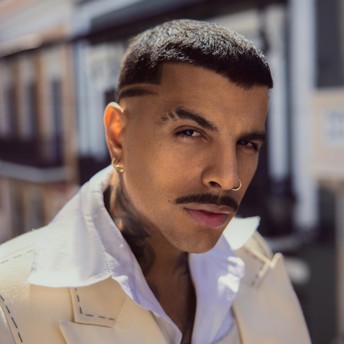
The Miami-Dade Sheriff’s Office has confirmed the death of Michael-Anthony "Mykee" Leones Espino, a highly regarded professional dancer who rose to prominence through his extensive work with international Latin superstars Rosalía and Rauw Alejandro. Leones Espino, 28, was discovered on Monday, July 13, in a residential area of Southwest Miami-Dade. According to official statements provided by law enforcement to media outlets, detectives have determined the cause of death to be an apparent suicide. The discovery followed an intensive search effort that began over the weekend after the dancer was reported missing by those close to him.
Leones Espino was last seen alive on Sunday, July 12, at approximately 12:30 p.m. leaving a residence in the 14200 block of Southwest 161st Court in Miami. His disappearance prompted an immediate missing persons investigation, with the Miami-Dade Sheriff’s Office issuing a public flyer and requesting the community’s assistance in locating the young artist. The search ended tragically when authorities located his body in the vicinity of Southwest 162nd Avenue and Southwest 138th Terrace, where he was pronounced dead at the scene.
A Career Defined by Movement and Global Stages
Michael-Anthony Leones Espino, known professionally and to his peers as "Mykee," was a fixture in the modern Latin music landscape. His career trajectory mirrored the explosive global growth of the Reggaeton and Latin Urban genres over the last decade. As a professional dancer, Leones Espino was not merely a background performer but a vital component of the high-concept visual storytelling that has come to define the live performances of the industry’s biggest names.
Leones Espino’s professional portfolio was highlighted by his long-standing collaboration with Puerto Rican singer Rauw Alejandro. Their professional relationship spanned eight years, a period during which Alejandro transitioned from a rising artist to a global phenomenon. Leones Espino was a core member of the dance troupes for several of Alejandro’s major tours, including the critically acclaimed Saturno World Tour. Most recently, his social media accounts documented his involvement in the Cosa Nuestra tour, which concluded in November 2025. This tour was noted for its complex choreography and high-energy production values, elements that Leones Espino helped bring to life on stages across the Americas and Europe.

In addition to his stage work, Leones Espino appeared in high-profile music videos, most notably the 2024 visual for "Touching the Sky," a single that further cemented Alejandro’s status as a leading figure in the contemporary pop-urban crossover movement. The music video showcased Leones Espino’s technical proficiency and screen presence, qualities that made him a sought-after talent in the competitive Miami dance scene.
Collaboration with Rosalía and the Motomami Era
Leones Espino’s influence extended to collaborations with Spanish singer-songwriter Rosalía. He was a featured dancer during the Motomami World Tour in late 2022 and early 2023. This tour was widely regarded by critics as a revolutionary moment in live music production, characterized by its minimalist aesthetic and innovative use of mobile cameras on stage.
Leones Espino’s contributions were particularly visible during the performance of the hit single "Despechá," a song that became a global anthem during the tour. His presence on the Motomami stage placed him at the center of one of the most artistically significant tours of the decade. Behind-the-scenes footage and photographs shared on his social media platforms, under the handle @mykeemooves, provided fans with an intimate look at the rigorous rehearsal schedules and the camaraderie shared among the elite group of dancers chosen to support Rosalía’s vision.
The Digital Legacy of @mykeemooves
In the modern entertainment industry, the role of the professional dancer has evolved significantly due to the influence of social media. Leones Espino was a prominent example of this evolution, maintaining a robust digital presence that bridged the gap between his professional accomplishments and his personal life. At the time of his passing, he commanded a following of approximately 54,500 on TikTok and 26,200 on Instagram.
His content served as both a portfolio for his professional skills and an inspiration for aspiring dancers. Through his platforms, he shared rehearsal clips, travel vlogs from international tours, and lighthearted backstage moments with fellow performers. This digital footprint allowed fans to connect with the person behind the performance, making the news of his death particularly impactful for the online dance community. His videos often highlighted the physical demands and the sheer joy of his profession, showcasing a life dedicated to the art of movement.
Tributes and Industry Reactions
The news of Leones Espino’s death has sent shockwaves through the Latin music community. Rauw Alejandro, who had earlier used his massive social media platform to share the missing persons flyer, expressed his grief through a poignant tribute on Instagram. Writing in Spanish, the singer reflected on their eight-year journey together, describing it as a "blessing, a privilege, and an honor" to have shared the stage with Leones Espino.
Alejandro’s statement touched on the deep personal bond formed through years of touring. "There are still so many things left to say, so many unfinished thoughts," Alejandro wrote. "Your smile and your light will always remain in my heart. We’ll keep dancing, laughing, and singing in the next one. Rest in peace, my brother."
The tribute highlights a significant aspect of the music industry: the "touring family" dynamic. For many artists and dancers, months spent on the road create bonds that transcend professional obligations. The loss of a core team member like Leones Espino is felt not just as a professional setback, but as a profound personal tragedy for the entire production crew. Representatives for Rosalía have been contacted for comment, as the dance and music communities continue to process the loss of a talented peer.
Chronology of Events
The timeline leading to the discovery of Leones Espino is as follows:
- Friday, July 12: Initial reports suggest Leones Espino was last seen or heard from, leading to growing concern among family and friends.
- Sunday, July 14: Authorities confirm Leones Espino was last seen at 12:30 p.m. leaving the 14200 block of Southwest 161st Court in Miami.
- Sunday Evening/Monday Morning: A missing persons flyer is circulated by the Miami-Dade Sheriff’s Office and shared widely on social media by artists and fans.
- Monday, July 15: Law enforcement discovers Leones Espino in the area of Southwest 162nd Avenue and Southwest 138th Terrace. He is pronounced dead.
- Tuesday, July 16: Official confirmation is released identifying the death as an apparent suicide, and tributes from the industry begin to surface.
Broader Implications and Mental Health in the Arts
The tragic passing of Michael-Anthony Leones Espino brings renewed attention to the mental health challenges faced by professionals in the high-pressure world of entertainment. While the external life of a professional dancer on a global tour often appears glamorous—filled with international travel, proximity to stardom, and the roar of thousands of fans—the reality can involve significant stressors.

The physical toll of performing high-intensity choreography night after night is compounded by the psychological demands of constant travel, separation from support networks, and the precarious nature of freelance work in the arts. Furthermore, the "post-tour blues"—a documented phenomenon where performers struggle to adjust to the quiet of everyday life after the adrenaline-fueled environment of a world tour—is a growing concern among industry advocates.
Industry analysts suggest that the death of a high-profile figure like Leones Espino may prompt touring productions to re-evaluate the mental health resources provided to support staff, including dancers, musicians, and tech crews. While lead artists often have access to extensive personal teams, the broader touring party may face different challenges in accessing consistent psychological support.
Support and Resources
The loss of Michael-Anthony "Mykee" Leones Espino serves as a somber reminder of the importance of mental health awareness and the availability of crisis resources. Public health officials emphasize that suicide is a complex issue and that help is available for those experiencing emotional distress or suicidal thoughts.
In the United States, the 988 Suicide & Crisis Lifeline offers 24/7, free, and confidential support. Individuals can call or text 988 to connect with trained counselors who can provide guidance and resources. The transition to the three-digit 988 number was designed to make mental health support as accessible as emergency services, reflecting a national commitment to addressing the mental health crisis.
As the Miami-Dade Sheriff’s Office concludes its investigation into the circumstances of Leones Espino’s death, the dance community remains in mourning. Leones Espino’s legacy will be remembered through the recorded performances that captured his talent and the personal memories of the artists and colleagues who stood beside him on the world’s biggest stages. His contributions to the visual language of modern Latin music remain a testament to his skill, dedication, and the "light" that his friends and collaborators have so vividly described.