 Aveline Kirana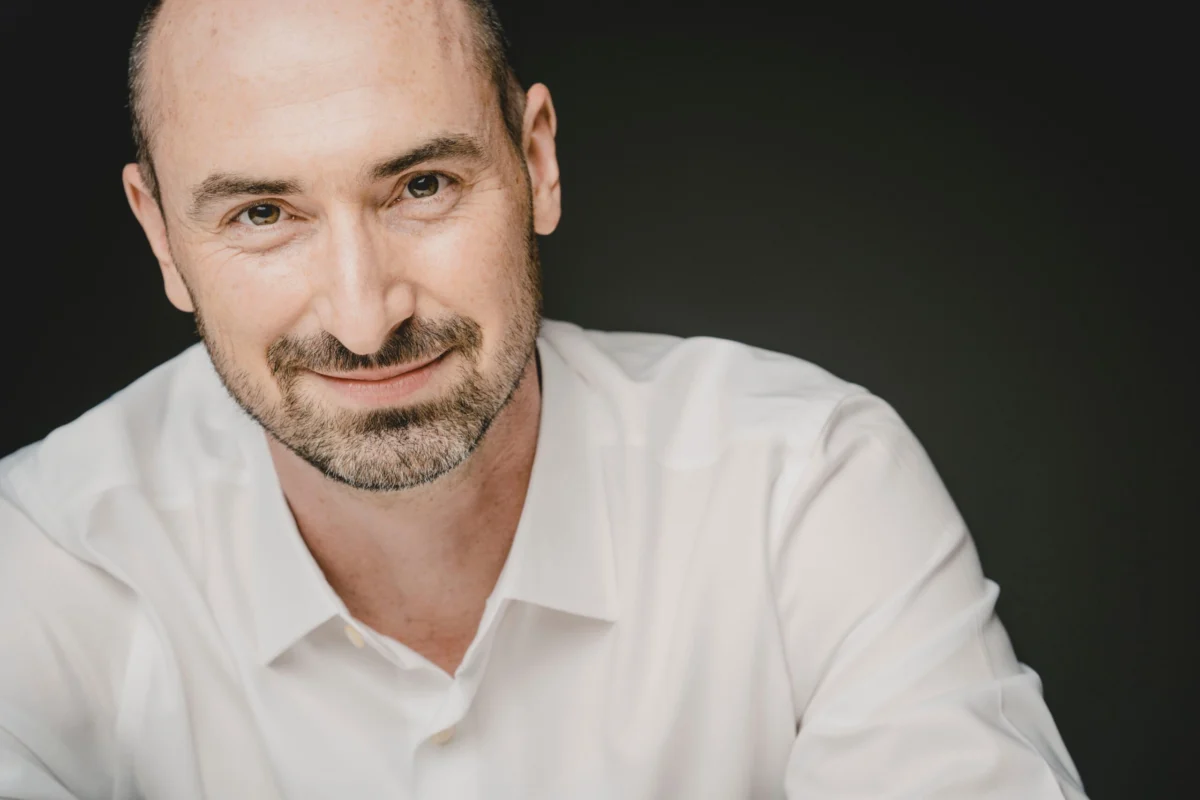
Peter Whelan, a celebrated Olivier Award winner renowned for his dynamic and versatile approach to historical performance, is set to make a significant mark on the summer festival circuit with his debut at the prestigious Caramoor Festival. Whelan will be at the helm of the Philharmonia Baroque Orchestra, conducting George Frideric Handel’s rarely performed opera, "Tolomeo." This engagement marks a pivotal moment in Whelan’s burgeoning career, coinciding with his upcoming assumption of major leadership roles with prominent orchestras, including Artistic Partner with the National Symphony Orchestra Ireland starting January 2026 and Music Director of Philharmonia Baroque Orchestra from the 2026-27 season.
A Visionary Leader Takes the Stage
Whelan’s reputation precedes him as one of the most insightful and commanding interpreters of early music today. His current roles as Artistic Director of the Irish Baroque Orchestra and Curator for Early Music of the Norwegian Wind Ensemble underscore his expansive influence across the early music landscape. The announcement of his appointment as Artistic Partner with the National Symphony Orchestra Ireland and his forthcoming directorship of the Philharmonia Baroque Orchestra signals a significant expansion of his curatorial and conducting scope, promising a new era of artistic exploration for these esteemed institutions.
The Caramoor Festival, an annual celebration of classical music held in a picturesque estate in Katonah, New York, has long been a sanctuary for both established artists and emerging talents. Its intimate setting and commitment to presenting diverse programming have made it a sought-after venue for artists seeking to connect with audiences on a deeper level. Whelan’s debut here, particularly with a work as emotionally charged as "Tolomeo," is anticipated to be a highlight of the festival’s 2024 season.
"Tolomeo": A Deep Dive into Handel’s Psychological Depths
Ahead of his Caramoor performance, Whelan shared his insights with OperaWire, discussing the enduring misconceptions surrounding early music, the specific challenges and rewards of performing "Tolomeo," and the meticulously curated cast he has assembled for this production.
"Almost everything," Whelan responded when asked about his anticipation for performing at Caramoor with the Philharmonia Baroque Orchestra for the first time. He elaborated on the venue’s unique acoustic properties and its inherent intimacy, which he believes are ideally suited for Baroque opera. "Caramoor is one of those rare venues that seems to have been designed specifically with music in mind rather than as an afterthought, and there’s a genuine intimacy there that suits Baroque opera beautifully."
Beyond the venue’s aesthetic appeal, Whelan emphasized the profound personal significance of this engagement. "This is the beginning of something significant for me," he stated, referring to his upcoming role as Music Director of the Philharmonia Baroque. "Taking up the Music Director role with Philharmonia Baroque is one of the most exciting chapters of my professional life, and I’m at that wonderful early stage of a relationship where you’re still discovering each other. I find that energy feeds directly into performance." This nascent but potent connection between conductor and orchestra is expected to imbue the performance of "Tolomeo" with a palpable sense of discovery and shared artistic intent.
Unveiling "Tolomeo": A Neglected Gem of Handel’s Repertoire
The choice of "Tolomeo" for his Caramoor debut is a deliberate one, aiming to bring to light a work that Whelan considers unjustly overlooked. "Tolomeo," first staged in 1728, falls at the tail end of the first major era of opera at London’s King’s Theatre. Whelan describes it as "one of Handel’s most psychologically intense operas, and one of the most unjustly neglected."
The opera’s narrative is characterized by its rapid-fire unfolding of dramatic events: "betrayal, poisoning, assumed death, disguise, madness, reunion." Whelan draws a compelling parallel to the dramatic complexities of late Shakespearean plays, where "tragedy is only narrowly averted and the reunion, when it comes, feels almost unbearably hard-won." This compressed emotional landscape, he argues, sets "Tolomeo" apart from more overtly ceremonial works like "Giulio Cesare."
"This is not ‘Giulio Cesare,’ which has enormous ceremonial sweep," Whelan clarified. "‘Tolomeo’ is chamber-scale emotionally, and that felt right for Caramoor, and right for a new relationship between a conductor and an orchestra that is itself in the process of deepening." The opera’s intimate scope and intense emotional core are thus perfectly aligned with the artistic sensibilities of both the venue and the developing artistic partnership.
Beyond the "Hallelujah Chorus": A Different Handel Revealed
Whelan addressed the common perception of Handel, often reduced to the composer of the universally recognized "Hallelujah Chorus." While acknowledging Handel’s capacity for triumphant, extroverted, and magnificent music, Whelan insists that "Tolomeo" unveils a far more nuanced and introspective facet of the composer’s genius.
"The public image of Handel can flatten him into the man who wrote the Hallelujah chorus: triumphant, extrovert, magnificent. And he is all of those things," Whelan conceded. "But ‘Tolomeo’ reveals a completely different Handel: inward, chromatic, willing to sit in extraordinarily painful harmonic territory for extended periods." He describes moments within the opera where the harmonic language is "almost unsettling, where Handel seems to be reaching for something that won’t fully resolve."
This exploration of dissonant and unresolved harmonic passages, Whelan suggests, is a testament to Handel’s masterful use of the formal constraints of opera seria. These conventions, rather than stifling his creativity, appear to have fostered an intense, concentrated dramatic expression. "The formal constraints of opera seria seem to produce a kind of intensity under pressure here, like a compressed spring," he explained. Even the recurring da capo arias, often perceived as mere decorative elements, are reinterpreted by Whelan as profound "emotional reckonings" within the opera’s dramatic arc.
Debunking Myths: The Rigor and Liberation of Historically Informed Performance
Whelan also tackled prevalent misconceptions surrounding the performance of Baroque music, particularly the notion that it is inherently "easy." "The biggest misconception is that it’s easy, that because the textures are transparent and the structures clear, the music will more or less conduct itself," he stated emphatically. He countered this by explaining the profound transparency of Baroque textures, which leaves "nowhere to hide" for performers. "Precisely because there is nowhere to hide in Handel, every decision is audible: tempo, articulation, ornamentation, the weight you give to a bass line."
Another significant misconception, according to Whelan, is that historically informed performance practice (HIP) is primarily about restriction. He firmly believes the opposite to be true: "I think it’s actually enormously liberating." Whelan argues that a deep understanding of the rhetorical conventions, the codified expressions of "affect" (emotion) in Handel’s time, and the flexibility afforded to performers regarding the written text, collectively "opens the music up."
He illustrated this point by emphasizing how understanding the dramatic function of ornamentation in da capo arias transforms it from mere decoration into a form of "dramatic commentary." This nuanced approach, he contends, fundamentally alters the performer’s engagement with the music.
For Whelan as a conductor, the paramount challenge lies in mastering the art of pacing. He views the conductor’s role as "architectural," responsible for shaping the "dramatic arc across an evening so that the cumulative emotional effect is greater than any individual moment." This requires a keen awareness of how each musical phrase contributes to the overarching narrative and emotional trajectory of the opera.
A Stellar Cast: Precision, Intelligence, and Trust
The success of any operatic production hinges significantly on the caliber of its cast, and Whelan has assembled a group of artists renowned for their exceptional talents. "Tolomeo" presents particular vocal demands, requiring a rare blend of technical prowess and profound emotional insight. Whelan emphasized that Handel wrote for "exceptional singers," and these roles demand "a combination of technical agility and deep emotional intelligence that isn’t common."
His casting process began with a rigorous assessment of the music’s specific needs. Aryeh Nussbaum Cohen, in the titular role of Tolomeo, is praised as "simply one of the finest countertenors working today," bringing the "lyrical beauty and dramatic intensity" essential for the part. Lauren Snouffer, as Seleuce, is lauded for her ability to "inhabit text," ensuring that "the music and the words feel like separate things" is never an issue. Kangmin Justin Kim’s portrayal of Alessandro is noted for its "exceptional refinement," while Dashon Burton, as Araspe, provides a grounding presence with "real authority."
Whelan’s past collaborations have clearly informed his casting choices. He recalled working with Nicole Heaston on Gluck’s "Orfeo" at San Francisco Opera, a collaboration that demonstrated her exceptional qualities as an artist. "I knew from that experience that she was exactly the artist you want beside you in this kind of repertoire: her intelligence and vocal security make a role debut feel less like a leap of faith and more like an inevitability." This reliance on established trust and shared artistic understanding underscores Whelan’s belief that "Opera at its best is an ensemble art, and trust, the kind that develops through shared experience, is genuinely irreplaceable."
The Essence of Baroque Interpretation: Rhetoric, Affect, and Emotional Courage
Whelan articulated his fundamental approach to interpreting Baroque music, emphasizing the crucial relationship between music and language. "Speech," he declared, is the most important element he brings. He views Baroque music as inherently rhetorical, designed to "say something specific and trying to move someone."
He elaborated on the concept of "affekt" in the Baroque context, distinguishing it from mere mood or atmosphere. "Affekt in the Baroque sense isn’t just mood or atmosphere; it’s an active force, something music was understood to literally produce in the listener’s body." This understanding imbues "every phrase with a purpose."
Beyond this rhetorical focus, Whelan prioritizes "clarity of texture, which is not the same as thinness; flexibility of rhythm and pulse, which is not the same as unsteadiness; and emotional courage." He advocates for allowing slow movements to be "genuinely, uncomfortably slow when the music demands it," and for dramatic passages to possess "real physical force." His philosophy is clear: "Baroque music does not need to be polite." This suggests a commitment to raw, unvarnished emotional expression, pushing beyond conventional notions of politeness or decorum to reveal the music’s profound impact.
Future Aspirations: Expanding the Baroque Horizon
When asked about future conducting aspirations, Whelan expressed a keen desire to delve into the vast and largely unexplored Baroque repertoire. "The Baroque repertoire is so vast and so much of it remains rarely performed that I feel I could work for several lifetimes and still be discovering things."
However, he singled out one particular work that holds significant promise: Jean-Philippe Rameau’s "Castor et Pollux." Whelan considers it "one of the genuine masterpieces of eighteenth-century music." He lauded Rameau’s "extraordinary" orchestral language, describing it as "harmonically daring in a completely different way from Handel, almost hallucinatory at times." This ambitious project, he hopes, is on the horizon.
Whelan’s upcoming performances at the Caramoor Festival, his deepening relationship with the Philharmonia Baroque Orchestra, and his expanding leadership roles across the globe firmly establish him as a transformative figure in the realm of historical performance. His commitment to illuminating neglected masterpieces and challenging conventional interpretations promises to enrich the understanding and appreciation of Baroque music for audiences worldwide. The "Tolomeo" production at Caramoor is not merely a performance; it is a statement of artistic vision, a testament to the enduring power of Handel’s genius, and a harbinger of exciting developments to come in the world of early music.