 Johan Budi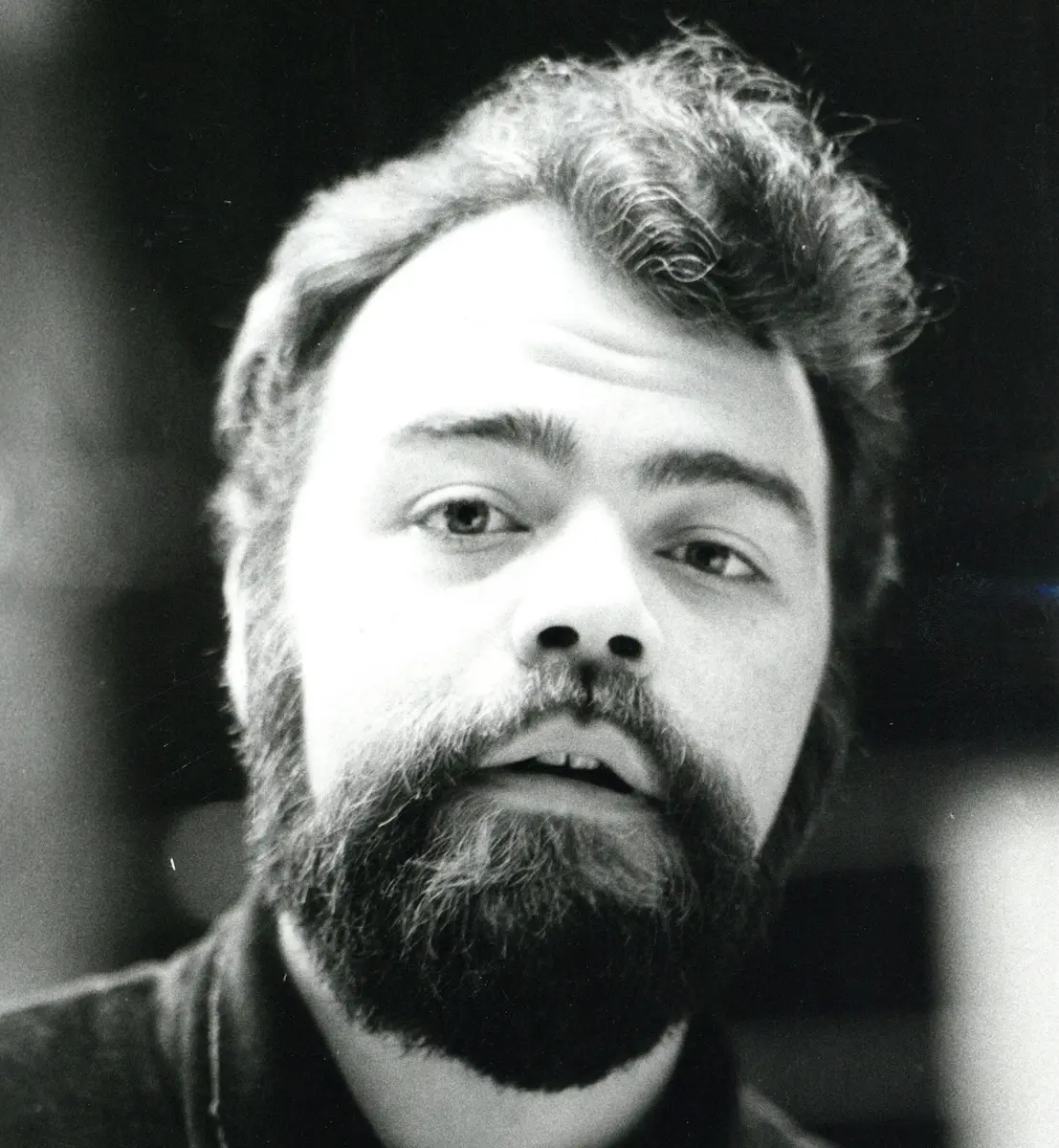
The global jazz landscape continues to be shaped by both contemporary reinterpretations and archival rediscoveries, as evidenced by three notable recent releases spanning different eras and stylistic approaches. From the introspective, master-class guitar work of the late Mick Goodrick on his 1978 session In Passing, to the expansive European orchestral vision of the Orchestre National De Jazz interpreting Carla Bley, and finally to a foundational 180-gram vinyl reissue showcasing the contrasting swing and early avant-garde periods of the Sun Ra Arkestra, contemporary listeners are offered a comprehensive look at the genre’s multifaceted history. These releases not only highlight individual artistic triumphs but also underscore the ongoing preservation of jazz pedagogy, collective improvisation, and historical documentation.
The Pedagogical Legacy and Studio Mastery of Mick Goodrick
First and foremost, the late guitarist Mick Goodrick regarded himself as an educator and teacher rather than a musician seeking commercial performance opportunities. Despite his reluctance to aggressively pursue the spotlight, Goodrick left an indelible mark on modern jazz guitar. Over the course of his career, he recorded only half a dozen albums under his own name, though his contributions as a sideman were far more extensive. Prior to his leadership debut, In Passing, Goodrick served as a regular member of the celebrated Gary Burton group, appearing on five distinct albums from that ensemble, four of which were released on the prestigious ECM label. His subsequent influence on generations of students at institutions like the New England Conservatory—shaping the early development of luminaries such as John Scofield and Bill Frisell—cements his status as a foundational pillar of modern jazz academia.
Recorded in Oslo in 1978 and released via ECM Records (ECM 1139), In Passing features a concise running time of 42 minutes and 38 seconds, bringing together a quartet consisting of Goodrick on guitar, John Surman on soprano saxophone, baritone saxophone, and bass clarinet, Eddie Gomez on double bass, and Jack DeJohnette on drums. For this date, Goodrick was supported by heavyweights whose technical prowess effortlessly complemented his naturally laid-back style. Surman navigated the five original compositions with purpose across his three horns, while Gomez provided mobile, articulate foundational lines, and DeJohnette delivered characteristically impeccable percussion throughout the session.
What the guitarist ultimately brought to the session was a set of compositions that highlighted his lyrical style, despite his well-documented aversion to traditional tune-writing. His musical statements were consistently unexaggerated, avoiding superfluous flourishes and never wasting a note. This economy of phrasing demanded close attention from the listener and consistently showcased his ability to interact dynamically with his ensemble peers. Even the title track, often categorized by critics as a piece of free improvisation, avoided the typical excesses associated with the genre. Centered around a single foundational chord, the four musicians wove intricate, cohesive patterns without a single suggestion of discord. Observers and musicologists note that Goodrick’s resistance to commercial self-promotion often kept him from the widespread public prominence enjoyed by some of his peers, yet his contributions to both jazz guitar methodology and collaborative composition remain vital study material for contemporary musicians.
Orchestre National De Jazz Reimagines Carla Bley
The Orchestre National De Jazz (ONJ) has remained a cornerstone of the European large-ensemble scene since its inception in 1986. Established at the behest of the French Ministry of Culture, the institution has historically provided a stable big-band environment where musicians can gain extensive large-ensemble experience. Over the decades, its rotating personnel has included notable international artists, such as British musicians Chris Biscoe and Harry Beckett. Far from remaining confined to traditional big-band swing, the ONJ has routinely embraced the diverse works of respected musical figures, incorporating the compositions of Duke Ellington, Robert Wyatt, and Astor Piazzolla into its far-ranging repertoire.
In 2025, ONJ Records released a double-CD project (ONJ Records 534444) titled With Carla, which serves as a sweeping tribute to the legacy of the late composer and pianist Carla Bley. The release features a sprawling 19-piece ensemble comprising Sylvaine Helary on flute; Remi Sciuto on alto saxophone, baritone saxophone, clarinet, and musical saw; Lea Ciechelski on alto saxophone and flute; Hugues Mayot on tenor saxophone and bass clarinet; Sylvain Bardiau on trumpet; Quentin Ghomari on trumpet and flugelhorn; Jessica Simon on trombone; Mathilde Fevre on French horn; Fanny Meteier on tuba; Anne Le Pape and Laure Frenz on violins; Guillaume Roy on viola; Juliette Serrad on cello and voice; Antonin Rayon on piano and organ; Ilya Amar on vibraphone and percussion; Sebastien Boisseau and Mathias Allamane on double basses; and Franck Vaillant on drums.
The core of the project consists of eight Carla Bley originals, which have been systematically re-envisioned through the arrangements of Remi Sciuto. Rather than serving as slavish reproductions, these pieces are designed as "extensions" that capture the foundational spirit and intent of the original compositions. This core is supplemented by three original compositions by Sciuto and Bley’s personal arrangement of Carl Ruggles’s Exaltations.
The structural flow of the double-CD release (CD1 running 47:27 and CD2 running 37:35) demonstrates a rejection of predictable rhythmic repetition. CD1 opens with Musique Mecanique, introduced by a string section that establishes a stylistic mélange of chamber music and Spanish-tinged melody, underscored by a prominent flute solo from Helary. Preludevi functions as a direct prelude to Utviklingssang, featuring a resonant cello line, surging ensemble dynamics, and a wide-ranging alto saxophone solo from Sciuto. Sciuto returns on the musical saw for Ups And Downs, a track that eventually transitions into robust solos by trumpeter Quentin Ghomari and tenor saxophonist Hugues Mayot. The music generally avoids conventional swing patterns, favoring frequent tempo shifts, contrasting textural sequences, and sudden thematic dissolutions. Only Ups And Downs maintains a relatively steady, conventional swing feel throughout its duration.
CD2 continues this exploratory trajectory with In India, a sombre piece introduced by the string section, followed by the energetic Wrong Key Donkey, which features striking solos from tubist Fanny Meteier and trombonist Jessica Simon. Hypotheses, a slow and rich ensemble piece composed by Sciuto, carries a hymn-like quality introduced by the Hammond organ. This leads directly into Religious Experience and Major, both of which incorporate explicit references to church music. The collection concludes with End Of Vienna, a composition rooted in classical traditions, propelled forward by the interplay of cello, flute, and piano. Through these meticulous arrangements, the Orchestre National De Jazz delivers a fitting tribute to Carla Bley, honoring the core principle that defined her career: unyielding artistic creativity.
Sun Ra: Archival Insight via Sound Sun Pleasure!! and We Travel The Space Ways
Rounding out this trio of notable releases is an audiophile 180-gram vinyl package (Pan Am Records 9152340) that pairs two foundational albums by the visionary bandleader Sun Ra: the 1959 release Sound Sun Pleasure!! and We Travel The Space Ways, a compilation largely drawn from 1960 recordings alongside additional undated sessions from the Chicago era spanning 1956 to 1961. This archival release offers listeners a clear window into the dual nature of Sun Ra’s early output, contrasting his more accessible interpretations of traditional jazz standards with the burgeoning cosmic experimentation of the Arkestra.
The first side of the vinyl package comprises the six tunes originally featured on Sound Sun Pleasure!!. During this late-1950s period, a ten-piece iteration of the Arkestra—heavily populated by prominent saxophonists—focused its efforts on standard repertoire and compositions contributed by trumpeter Hobart Dobson, who is prominently featured across the tracks. These performances are conventionally arranged and sit squarely within the swing and ballad traditions of mid-century jazz. Vocalist Hattie Randolph lends her voice to notable renditions of Round Midnight and Back In Your Own Backyard, illustrating the band’s capability as a sophisticated, blues-infused vocal and instrumental ensemble.
Conversely, We Travel The Space Ways introduces listeners to the idiosyncratic universe of Herman Blount, featuring arrangements and solos of striking clarity that lean closer to avant-garde conceptualization. Notable exceptions to the more conventional big-band approach include Interplanetary Music and the title track, both of which feature the ensemble chanting their respective titles in unison. The title track famously dissolves into the acoustic sound effects of a mechanical robot, foreshadowing the theatricality that would define Sun Ra’s later decades. Throughout these recordings, Sun Ra primarily performs on acoustic piano, utilizing an instrument that frequently exhibits the distinct sonic character of an un-tuned pub piano, an aesthetic choice that added a raw, earthy texture to his avant-garde arrangements.
Musicologists and jazz historians generally regard both albums as crucial components of the Sun Ra discography, primarily because they illustrate how much of his mid-century output maintained an accessible, listener-friendly facade before plunging fully into uncompromised cosmic abstraction. When viewed alongside Mick Goodrick’s cerebral guitar studies and the Orchestre National De Jazz’s sweeping orchestral tributes, this Sun Ra reissue reinforces the enduring importance of historical preservation, pedagogical dissemination, and fearless genre experimentation within the global jazz community.