Kholidah
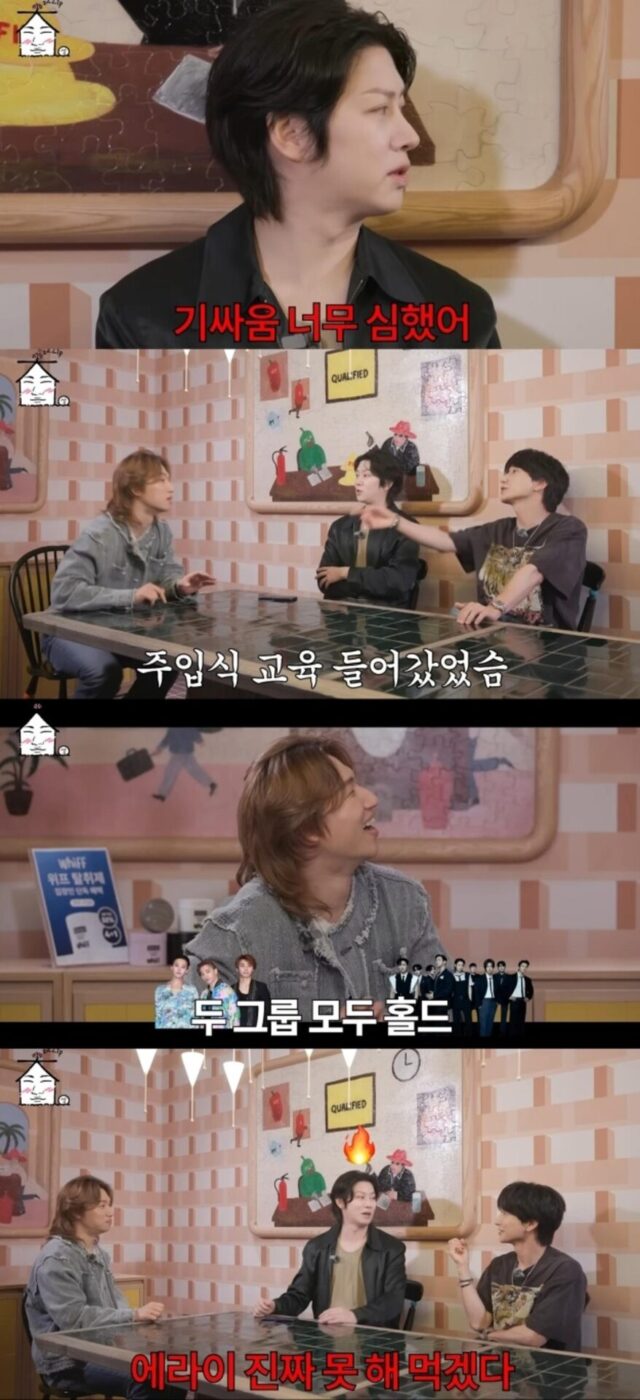
On July 17, a significant dialogue regarding the historical structural challenges and internal pressures of the South Korean music industry was brought to light through a digital broadcast featuring three of the most influential figures of the "second generation" of K-pop. Appearing on the YouTube channel ZIP DAESUNG, Super Junior members Leeteuk and Heechul joined BIGBANG’s Daesung to provide a rare, candid retrospective on the industry’s mid-2000s landscape. Their conversation highlighted a period defined by intense corporate rivalries, rigid promotional hierarchies, and a work culture that often prioritized agency prestige and broadcast relationships over the physical and mental well-being of the artists.
The discussion serves as a vital primary-source account of the "Golden Age" of K-pop, a time when the genre began its aggressive expansion into global markets but remained governed by domestic "old-guard" entertainment protocols. By detailing the friction between SM Entertainment and YG Entertainment—the two dominant forces of the era—the idols shed light on the systemic "duopoly" that dictated the careers of dozens of performers.
The Corporate Duopoly and Forced Rivalries
Leeteuk, the leader of Super Junior, opened the discussion by characterizing the music industry of the 2000s as a high-stakes power struggle dominated by a few key players. According to Leeteuk, the power of entertainment agencies during that period was absolute, far exceeding the influence of the artists themselves. He specifically identified a duopoly between SM Entertainment and YG Entertainment, noting that the competitive atmosphere was not merely a byproduct of market forces but a deliberate strategy fostered by management.
"Back then, the power of the companies was really strong," Leeteuk remarked, explaining that during active promotion cycles, any agency outside of one’s own was viewed as a direct adversary. This sentiment was echoed by Daesung, who noted that such a mindset was "instilled" in the artists from their training days. This corporate-mandated rivalry often created unnecessary tension between idol groups who, in private, might have otherwise shared amicable relationships. The singers revealed that while the public often perceived inter-group "feuds" as organic competition between talented peers, they were frequently the result of agency directives designed to secure market dominance and brand loyalty among fanbases.
The Symbolic Battle for the Music Show Ending Stage
One of the most revealing segments of the interview focused on the "ending stage" of weekly music programs—a coveted slot reserved for the most popular or senior artist of the day. In the hierarchy of South Korean broadcasting, the final performance and the subsequent group gathering on stage during the winner’s announcement are considered ultimate symbols of status.
Heechul recounted an incident involving Super Junior and BIGBANG, where both groups were caught in a stalemate orchestrated by their respective agencies. "When we were busy, we just wanted to do the opening and go home quickly, but the companies insisted we wait around to go on for the ending stage," Heechul explained. He detailed a scenario where both SM and YG refused to let their groups perform earlier, each wanting the prestige of the final slot.
The standoff reached a point where Heechul, frustrated by the lack of concern for the artists’ time and exhaustion, chose to leave the venue entirely. "I got angry and just went home," he stated, a move that was considered radical at the time given the strict discipline expected of idols. This anecdote illustrates the disconnect between corporate ego and artist welfare; the "ending stage" was less about the music and more about a visual demonstration of agency power.
The Barter System: Variety Shows as Gatekeepers
The participants also discussed the grueling "barter system" that existed between entertainment agencies and major broadcasting networks (KBS, MBC, and SBS). During the second generation, appearing on a music program to promote a new single was often contingent upon the artist appearing on the network’s variety shows.
Leeteuk and Daesung identified several flagship programs that functioned as mandatory stepping stones, including Star Golden Bell, Challenge 1000 Songs, Open Concert, and Law of the Jungle. "It’s not like this now, but back then, you had to appear on certain shows to get on music programs," Leeteuk noted. This system forced idols into a perpetual cycle of filming. A typical schedule might involve filming a variety show for 12 to 15 hours, followed immediately by music show rehearsals and live broadcasts.
This "package deal" arrangement allowed networks to maintain high ratings for their variety content by leveraging the popularity of idols, while agencies were forced to comply to ensure their artists received the airtime necessary for commercial success. This era predated the dominance of social media and independent platforms like YouTube or TikTok, meaning television networks held an effective monopoly on visibility.
Health and Labor Standards in the Pre-Reform Era
Perhaps the most sobering part of the conversation involved the discussion of physical injuries and the "no rest" policy that defined the industry before modern labor reforms. Heechul, who famously suffered a major leg injury in a car accident in 2006—an event that required the insertion of metal pins and years of rehabilitation—recalled being forced to maintain his broadcast schedule regardless of his physical state.
"Even while on crutches, if someone said, ‘Heechul must not like our broadcasting station,’ I had to run over," he shared. The implication was clear: a refusal to appear, even for medical reasons, could be interpreted as a slight against a powerful producer or network, leading to a potential "blacklist" for the entire group.
Leeteuk added a contemporary context to this, mentioning he had been in a minor car accident just the day before the YouTube filming after driving 700 kilometers. In a joking but poignant comparison, he noted that in the past, he would have been forced to attend regardless of his condition, whereas today’s industry has begun to accept that "resting when you’re sick is the right way."
Historical Context: The Evolution of the "Slave Contract"
To understand the weight of these revelations, one must look at the broader timeline of the South Korean entertainment industry. The second generation of K-pop (roughly 2003–2011) was the era of the "Slave Contract" controversy. It was during this period, specifically in 2009, that members of TVXQ (another SM Entertainment group) filed a landmark lawsuit against their agency over 13-year contracts and unfair profit distribution.
This legal battle led the Fair Trade Commission (FTC) to introduce a "Standardized Contract" in 2010, which capped contract lengths at seven years and improved labor conditions. The stories shared by Leeteuk, Heechul, and Daesung reflect the final years of the "wild west" era of K-pop, where artists had little to no legal recourse against grueling schedules and corporate overreach.
Industry Implications and the Shift Toward Artist Autonomy
The transition from the second generation to the current fourth and fifth generations has seen a massive shift in how K-pop operates. The rise of multi-label systems (such as the HYBE model) and the decentralization of media have reduced the absolute power that individual networks and "Big 3" agencies once held.
Furthermore, the mental and physical health of artists has become a public-facing priority. In recent years, major idols from groups like TWICE, SEVENTEEN, and Stray Kids have taken official "health hiatuses" to recover from anxiety or physical ailments—a practice that Heechul noted would have been impossible during his heyday.
The candid reflections of these veterans highlight a narrative of progress. While the K-pop industry remains highly competitive and demanding, the "forced rivalries" and "crutches-on-stage" era represent a historical hurdle that the industry has largely moved past. The ZIP DAESUNG episode serves not only as a nostalgic trip for fans but as a documented critique of a systemic culture that once viewed artists as interchangeable assets in a corporate chess match.
As the global influence of K-pop continues to grow, the testimonies of pioneers like Super Junior and BIGBANG remain essential in ensuring that the mistakes of the past—characterized by the "hallmark of no rest"—are not repeated in the pursuit of international success. The shift from a duopoly of power to a more diversified, artist-centric model marks the maturity of the South Korean entertainment export, moving toward a sustainable future where the personhood of the idol is finally beginning to outweigh the prestige of the agency.