Johan Budi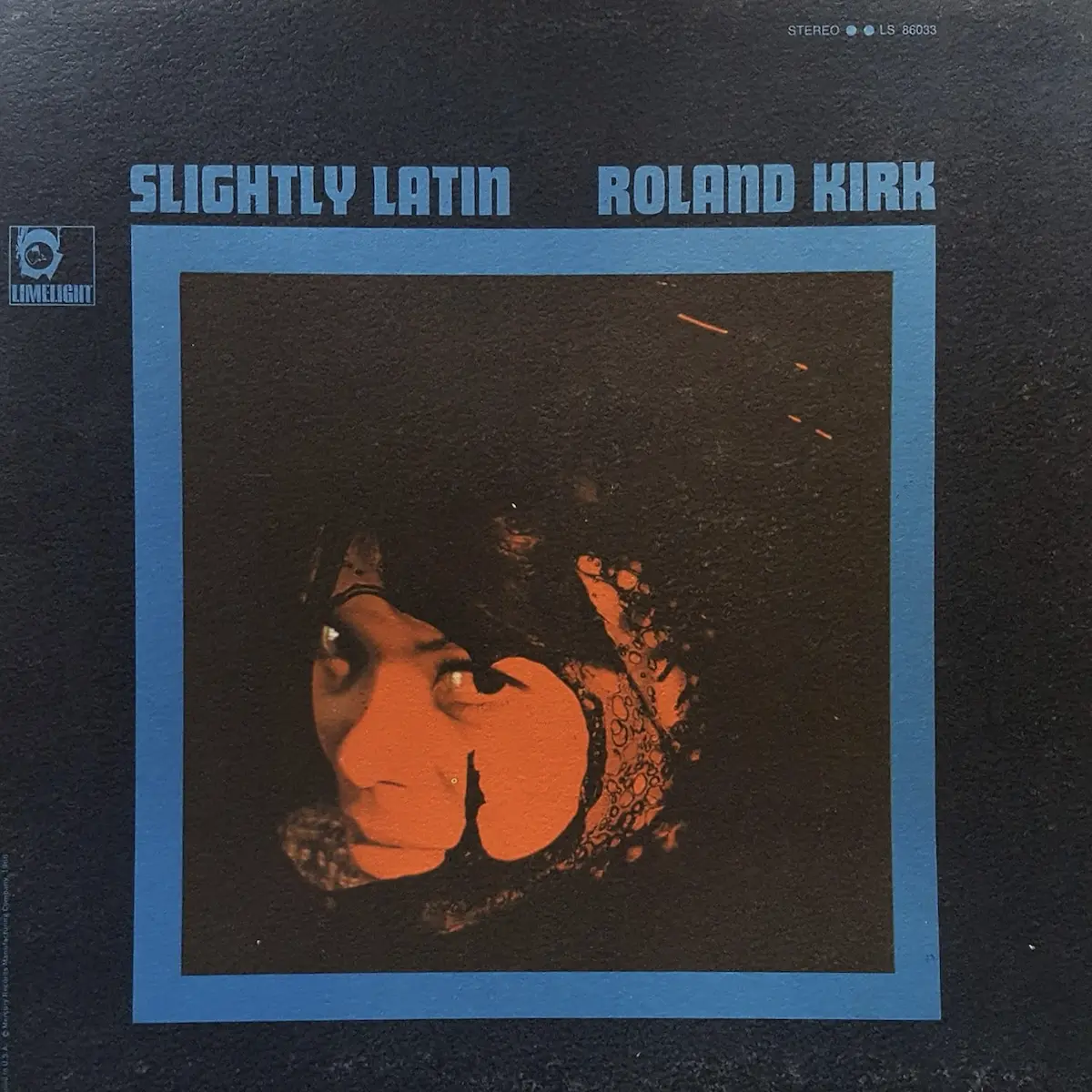
The restless musical evolution of multi-reedist Roland Kirk continues to captivate and challenge the contemporary jazz landscape with the release of his latest studio project, Slightly Latin, issued via Limelight Records under catalog number LML 4019. Recorded across two intensive sessions on November 16 and November 17, 1965, the album represents a significant artistic rebound from his previous output, which faced mild critical reservations due to superfluous electronic manipulation. Instead, this new long-player showcases Kirk’s signature boundless energy, steering his exploratory impulses toward a more cohesive, vibrant synthesis of Latin rhythms, avant-garde textures, and traditional jazz orchestration.
The sessions brought together an exceptional cadre of musicians in the studio, establishing a dynamic ensemble capable of translating Kirk’s idiosyncratic compositional vision into reality. Alongside Kirk—whose arsenal for the dates encompassed piccolo, strich, bagpipe chanter, manzello, various flutes, whistle, siren, tenor saxophone, and baritone saxophone—the lineup featured trumpeter Virgil Jones, trombonist Garnett Brown, and flugelhornist Martin Banks in the brass section. The rhythm and percussion department was equally formidable, anchored by pianist Horace Parlan, bassist Edward Mathias, and drummer Gerald Brown, with supplementary percussion delivered by Manuel Ramos and conga specialist Montego Joe. Vocal arrangements for the project were helmed by Coleridge Perkinson, integrating a choir that added an unexpected yet purposeful dimension to several arrangements.
Main Facts and Track-by-Track Breakdown
The album commences with an aggressive auditory salvo, pairing the tracks Walk On By and Raouf. Rather than offering a gentle entry point, these opening numbers evoke the atmosphere of a high-stakes musical confrontation, functioning as an energetic jam session loosely oriented around the overarching themes of the record. This blistering start quickly gives way to a more measured approach on subsequent tracks.
Among the standout cuts is a rendition of It’s All In The Game, taken at a medium, bouncing tempo. This arrangement highlights the telepathic musical partnership between Kirk and pianist Horace Parlan, whose sympathetic accompaniment and articulate solos demonstrate the deep musical rapport the two artists have cultivated over years of collaboration. Parlan’s contributions provide a stabilizing anchor against Kirk’s characteristically angular and agitated improvisational lines.
One of the most notable technical developments on the record is Kirk’s introduction of the baritone saxophone to his recorded repertoire. This is prominently displayed on the track Juarez, a composition heavily redolent of Charles Mingus’s Tijuana suite. The track benefits immensely from mellowing brass contributions, featuring expressive flugelhorn work by Martin Banks and modern trombone phrasing from Garnett Brown, whose stylistic outlook has clearly been enriched by rhythm-and-blues performance experience. Kirk’s approach to the baritone sax proves to be intensely dynamic, though notably less feral than his work on his smaller, higher-pitched reeds. Driven by a rhythm section operating at maximum capacity, Juarez emerges as one of the most exhilarating compositions on the album.
Garnett Brown’s role in shaping the album extends well into the realm of arrangement. Industry observers have noted his hand in Shaky Money, a piece that bears distinct stylistic similarities to the arranging signatures of Slide Hampton. Following a clever introductory passage, the track features an arresting duet between trombone and a bagpipe chanter—a sonic juxtaposition that can only be described as unprecedented in a standard jazz context. The resulting texture bears a startling resemblance to the expressive mouth-harp stylings of blues harmonicist Sonny Terry. While musicologists and critics alike have praised the inclusion of this novel instrument for its singular textural contribution, industry consensus suggests that such avant-garde experiments are best utilized sparingly to avoid diminishing their impact.
Chronology and Recording Context
The historical timeline of the Slightly Latin sessions places Kirk at a critical juncture in his mid-1960s career. Having established himself as a formidable, if frequently misunderstood, voice through his tenure with Charles Mingus and his subsequent work as a bandleader for labels like Mercury and Limelight, Kirk was perpetually searching for new acoustic horizons. The November 1965 dates reflect a calculated effort to institutionalize his sonic explorations without sacrificing the raw, kinetic energy that defined his live performances.
The sessions progressed rapidly, moving from the straight-ahead jazz frameworks of the opening tracks to more conceptually dense territory in the latter half of the tracklist. On Nothing But The Truth, the vocal choir returns for a Latin-flavored blues vehicle featuring fat-toned tenor saxophone from the leader. While the choir’s necessity to the core composition has been a subject of debate among contemporary reviewers—with some arguing the tracks could stand just as effectively without vocal accompaniment—their presence undeniably contributes to the dense, multi-layered sonic tapestry without obstructing the principal soloists. Parlan once again delivers a stellar solo turn before the performance dissolves into a surreal maze of vocal gibberish and playful cacophony.
Conversely, the bassist Edward Mathias composition Safari offers a more polarizing listening experience. Conceived as an atmospheric feature for the bass, the track utilizes the entire ensemble to play auxiliary rhythm on various non-traditional household objects. Layered with atmospheric flute from Kirk, the piece prioritizes mood over traditional melodic development. While polarizing among contemporary critics—with some hailing it as the most daring artistic statement on the album and others finding its impressionistic nature less accessible—it underscores Kirk’s refusal to pounce on conventional song structures.
The album’s eclecticism extends to contemporary pop adaptation with a Latin-inflected reading of the Lennon-McCartney composition And I Love Her. Kirk navigates the melodic framework utilizing tenor saxophone and manzello, proving that his interpretive capabilities extend seamlessly into popular song forms. His fluency in Latin musical idioms throughout the project suggests a deep, intuitive understanding of rhythmic structures far beyond the borders of standard American jazz.
The recording concludes with Ebrauqs, a piece preceded by an assortment of ambient sound effects, wooden flutes, and percussion. Kirk has remarked that these unorthodox introductions might challenge traditionalist listeners, but the resulting track delivers substantial musical rewards. Featuring a bevy of Mingus-esque vocal groans, the arrangement incorporates a Japanese Nagoya harp, custom-built "trick sticks with pipes" constructed by Kirk himself, chimes, bells, and celeste. Amidst this dense forest of timbre, trumpeter Virgil Jones delivers a stout-hearted, commanding solo that grounds the avant-garde experiment in solid jazz tradition.
Broader Impact and Industry Implications
As Slightly Latin begins making its way to record store shelves via Limelight, initial critical reception points toward a triumphant phase in Kirk’s career trajectory. By successfully integrating disparate elements—ranging from brass-heavy arrangements and vocal choirs to bagpipes and indigenous percussion instruments—Kirk has managed to produce a body of work that is simultaneously fiercely modern and remarkably coherent.
From a commercial and sociological standpoint, the album reflects the broader mid-1960s jazz movement toward cross-cultural pollination, particularly the integration of Afro-Cuban and Latin American rhythms into hard bop and avant-garde frameworks. However, unlike many of his contemporaries who utilized Latin styles as a superficial commercial gloss, Kirk treats the genre as a legitimate vehicle for deep structural exploration. The addition of players like Garnett Brown and Martin Banks has provided Kirk with the harmonic and textural cushion necessary to translate his famously agitated lines into broadly accessible, highly engaging sonic statements.
For the jazz listener navigating the increasingly complex landscape of mid-decade releases, Slightly Latin offers a masterclass in balance. It demonstrates that experimentalism and listenability are not mutually exclusive. As Roland Kirk continues his tireless quest for uncharted sonic territory, this Limelight release stands as a vital benchmark, proving that his artistic vision is as disciplined as it is boundary-pushing.