Mia Khoirunisa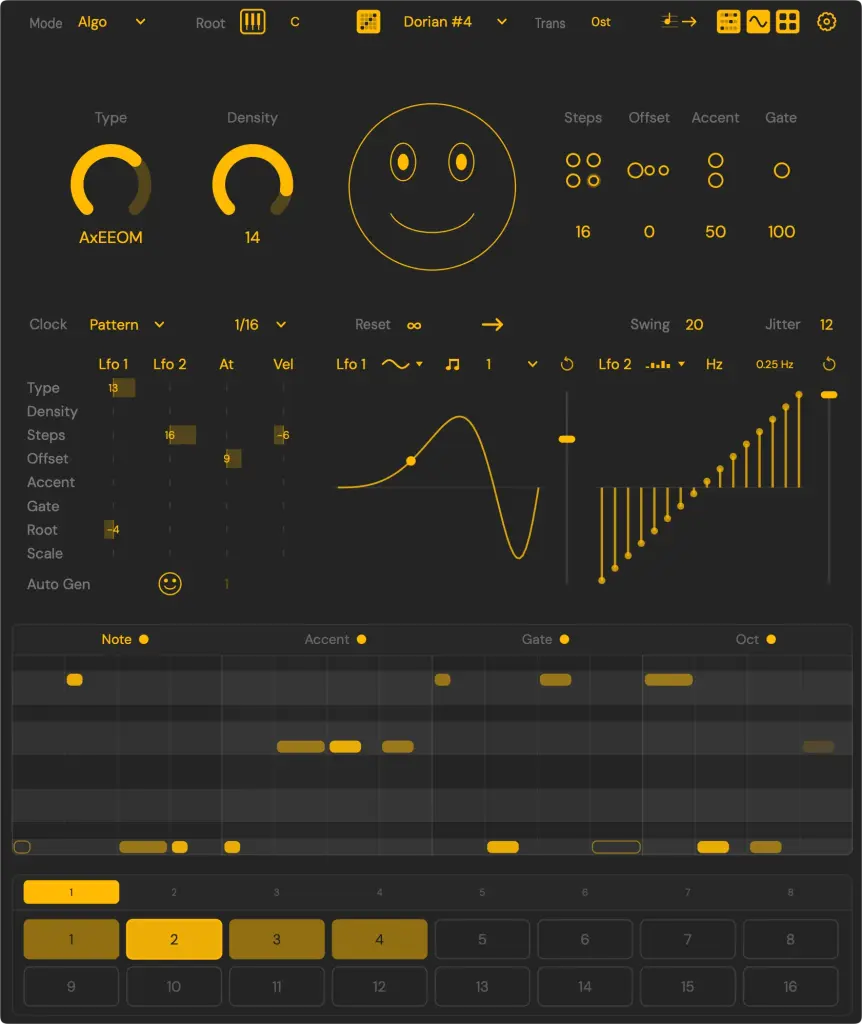
Electronic music producer and software developer Iftah has officially liberated his acclaimed generative composition tool, Sting, from the confines of Ableton’s Max for Live framework. Long celebrated by underground producers and live performers for generating squelchy, unpredictable acid basslines and intricate rhythmic patterns, Sting is now available as a fully standalone plugin supporting VST3, AU, and CLAP formats across macOS, Windows, and Linux operating systems.
This major technical leap marks a new chapter for a software utility that has steadily evolved over the past decade. By shedding its ecosystem exclusivity, Sting opens its doors to digital audio workstation (DAW) users across platforms like Bitwig Studio, Logic Pro, Reaper, and Cubase, significantly broadening its user base while maintaining the hands-on, improvisational ethos that made its predecessor a cult favorite.
From Skinnerbox Beginnings to Modern Generative Power
The lineage of Sting stretches back to the formative years of Skinnerbox, the electronic music duo in which Iftah served as one half. During that era, the tool first materialized as STING!64, a brightly colored, yellow Max-for-Live device bearing a signature smiley face and a reputation for generating hypnotic, organic acid lines on the fly. Backed by straightforward controls for density, velocity, transpose, length, and swing, it quickly became a secret weapon for hardware-minded producers looking to inject stochastic variation into their sequences without surrendering total control to static MIDI clips.

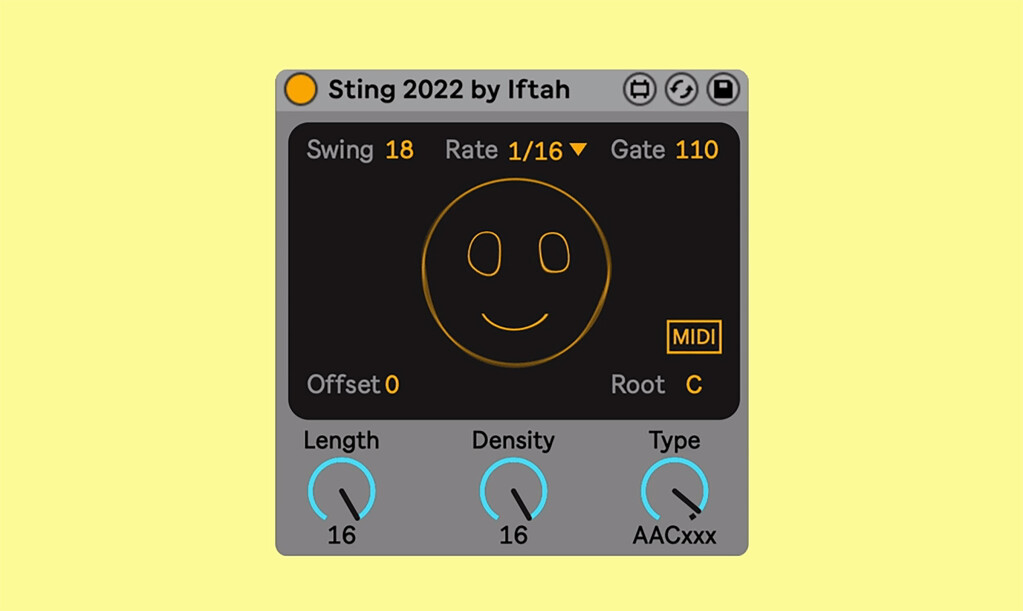
By 2022, Iftah had refined the concept significantly, introducing a revamped Max for Live iteration characterized by a sleek UI, expanded length and density knobs, and the crucial addition of the "Type" control. This version cemented Sting’s reputation as an expressive algorithmic sequencer capable of handling far more than traditional TB-303 emulations.
Now, the transition to native VST3, AU, and CLAP formats represents a complete architectural overhaul. No longer constrained by the performance overhead of Max for Live, the modern Sting plugin operates with heightened efficiency, bringing advanced modulation routing, multi-voice counterpoint generation, and deep hardware integration to a wider spectrum of music producers.
Hands-On Hardware Control and Algorithmic Expression
At its core, Sting challenges the modern trend of relying on conversational artificial intelligence bots or passive text-to-music generators to compose material. Instead, it doubles down on tactile ergonomics and human muscle memory. The software is designed to be played, manipulated, and sculpted in real time using physical interfaces rather than abstract text prompts.
This hardware-first philosophy is powerfully demonstrated through Iftah’s implementation of dedicated takeover modes for popular grid controllers. Users of the Novation Launchpad series can seamlessly map the plugin’s core parameters directly to the hardware grid, allowing for fluid, tactile manipulation of steps, offsets, accents, gates, and scale controls on the fly. Furthermore, native integration with Monome grid controllers provides open-source hardware enthusiasts with an alternative tactile environment for live improvisation.
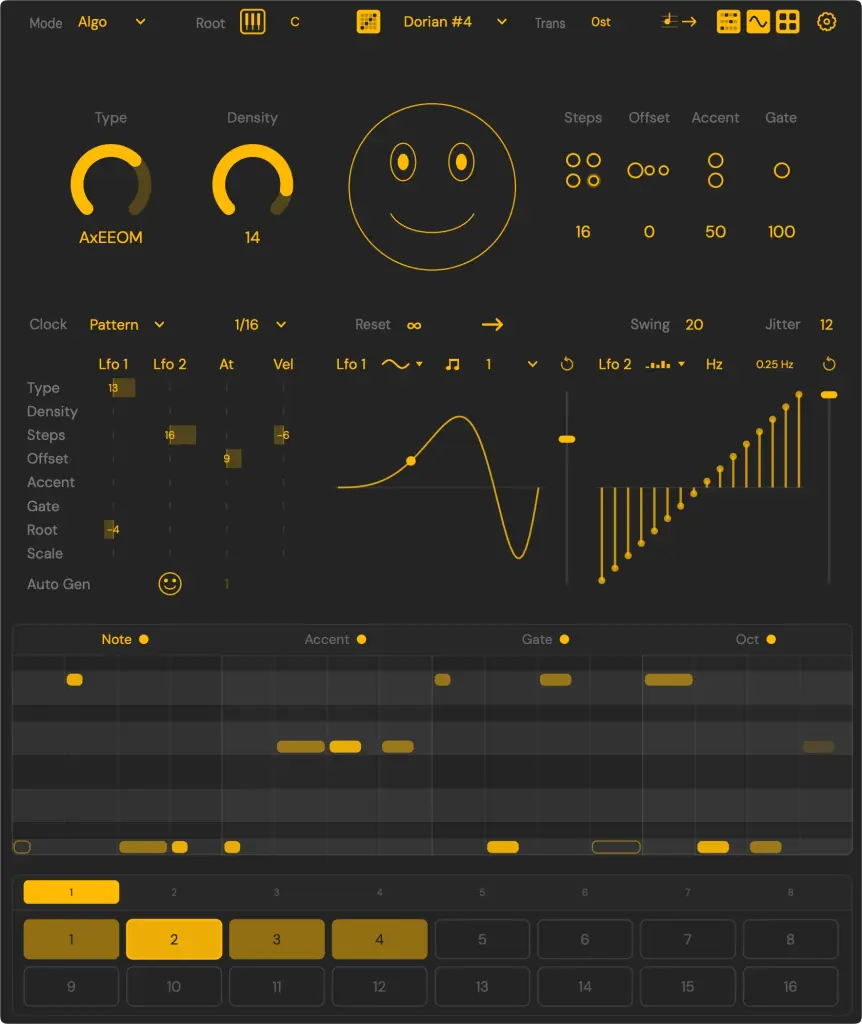
Rather than acting as a rigid step sequencer, Sting functions as an algorithmic partner. It bridges the gap between chaotic generative music and deliberate composition, allowing producers to steer unpredictable patterns using intuitive parameters.
Advanced Features and Expanded Architecture
The transition to a multi-format plugin has allowed Iftah to introduce a suite of powerful compositional features previously unavailable in its Max for Live predecessors:
- Multi-Voice Counterpoint Mode: Users are no longer limited to single-line monophonic patterns. The new counterpoint engine can simultaneously generate two independent melodic lines, supporting rich chord structures and dynamic basslines.
- Comprehensive Modulation Section: A deeply integrated modulation matrix allows users to map internal and external LFOs and envelopes to virtually any parameter, ensuring that patterns evolve organically over time rather than looping monotonously.
- MIDI File Import: Producers can now feed existing MIDI files into Sting, using pre-existing musical ideas as raw source material for algorithmic transformation and generative reinterpretation.
- Advanced Scale and Pitch Controls: Comprehensive quantization and scale mapping tools ensure that even the wildest generative algorithms remain musically coherent within specific harmonic contexts.
Groundbreaking Accessibility in Music Software
One of the most noteworthy advancements in the release of the modern Sting plugin is its built-in commitment to accessibility. Recognizing that the software audio industry has historically lagged in serving blind and visually impaired producers, Iftah engineered Sting from the ground up to support screen readers and tactile workflows.
Every parameter, menu, and control within the plugin interface has been optimized for screen reader compatibility, ensuring that visually impaired musicians can navigate the complex generative architecture with the same fluency as sighted peers. Industry analysts and accessibility advocates have pointed to Sting as a benchmark for independent software developers, demonstrating that inclusive design can be successfully integrated into complex music production tools without compromising advanced functionality.
Pricing Strategy and Distribution Model
Reflecting the immense development costs associated with modern cross-platform plugin engineering—including managing Apple silicon compatibility, JUCE framework dependencies, and rigorous multi-platform testing—Sting is sold as a commercial product rather than a freeware utility.
However, in keeping with the developer’s community-oriented ethos, Iftah has implemented a unique distribution model. The official website features a live-updating counter that grants seven free downloads every single day. This daily allocation allows financially constrained producers or curious hobbyists a fair chance to acquire the software at no cost, provided they time their visits to the platform. Comprehensive documentation and extensive video walkthroughs are also provided on the developer’s site to assist new users in mastering the plugin’s multifaceted workflow.
Industry Implications and Future Outlook
The release of Sting as a cross-platform plugin signals a broader shift within the electronic music software landscape. As producers increasingly seek alternatives to subscription-heavy software models and opaque AI text prompts, niche boutique developers are finding commercial viability in tools that champion human-machine collaboration, tactile hardware integration, and uncompromising accessibility.
By preserving the character of its hardware-derived acid roots while expanding into sophisticated counterpoint and multi-format stability, Sting bridges the gap between vintage analog emulation and forward-thinking generative composition. As more producers integrate the plugin into their hybrid setups, Iftah’s creation stands as a testament to the power of independent, user-focused instrument design in contemporary music production.