Aveline Kirana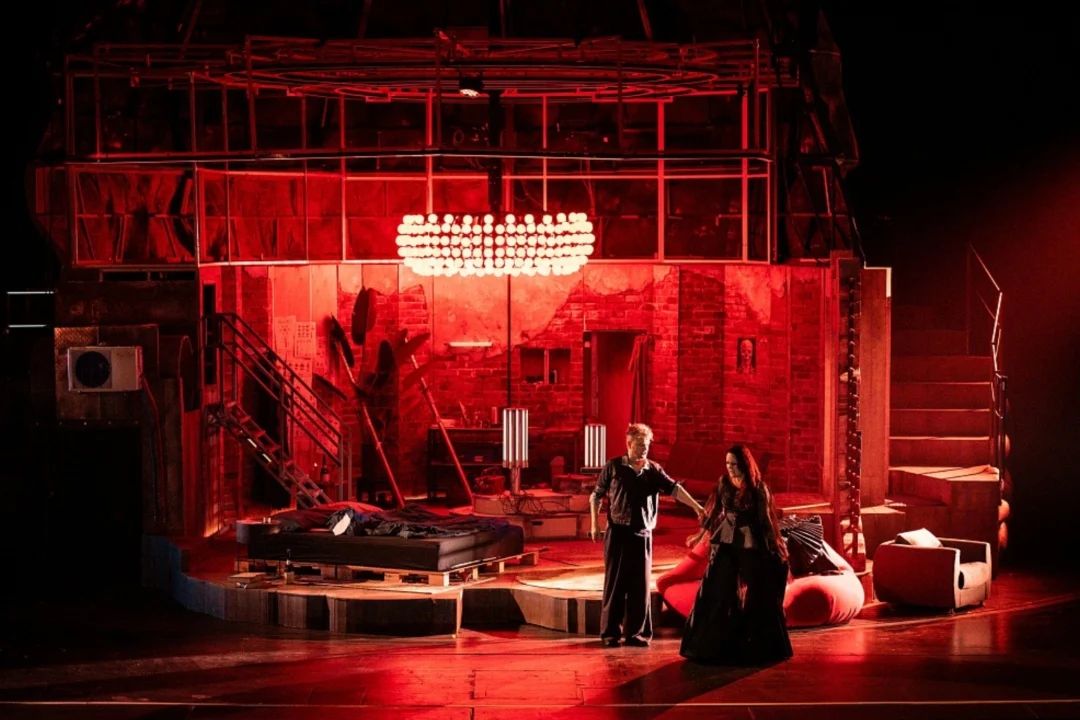
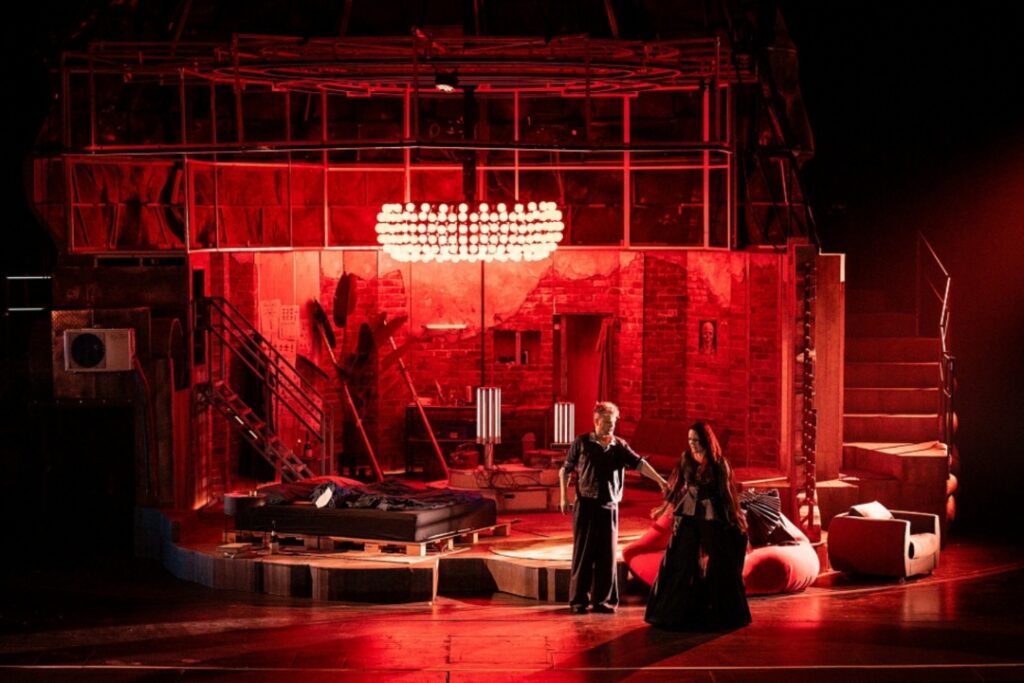
After a month-long hiatus for essential renovation works, the Latvian National Opera dramatically reopened its doors to the public on the cusp of summer’s end, inaugurating its new season with a highly anticipated production of Giacomo Puccini’s timeless opera, "La Bohème." This return to the stage, under the direction of Laura Groza, offered a bold reimagining of the beloved work, transporting the bohemian artists of 19th-century Paris to a stark, dystopian future. The visual landscape of this production, heavily influenced by the atmospheric aesthetics of Ridley Scott’s iconic 1982 film "Blade Runner," presented a world awash in vibrant, almost overwhelming colors and dramatic lighting, a stark contrast to the often-lost protagonists navigating its intricate reality.
Groza’s directorial vision seamlessly integrated contemporary elements into this futuristic setting. The first act, for instance, eschewed traditional operatic conventions for a strikingly modern portrayal of youthful need and connection. Mimì, the ailing seamstress, approaches Rodolfo, the aspiring poet, not with a plea for a light, but for a mundane yet relatable necessity: a phone charger. This contemporary update was further amplified during Mimì’s poignant aria, "Mi chiamano Mimì," where she introduces herself not through spoken word alone, but by sharing personal photographs on her mobile phone with Rodolfo, a gesture that resonated with the digital age’s omnipresent nature of self-representation.
The production’s visual intensity softened in the second act, allowing the inherent drama of Puccini’s narrative to take precedence over the earlier chromatic spectacle. A particularly innovative and theatrically arresting element was the depiction of Mimì’s progressive illness. This was realized through a small ensemble of dancers who physically embodied the disease’s insidious march, their movements mirroring the physical and emotional toll it took on Mimì. During the pivotal moment when Mimì overhears Rodolfo and Marcello discussing her declining health, the dancers converged around her, their convulsive and anguished gestures powerfully conveying the overwhelming anguish that consumed her. This choreographic interpretation was lauded by critics as one of the most compelling theatrical moments of the evening, a testament to the power of abstract representation in conveying profound emotional states.
However, despite these striking individual elements, a prevailing sentiment among observers was that the production, as a cohesive whole, leaned heavily into the realm of high fashion and visual spectacle. The striking stage designs by French designer Fabien Lédé and the meticulously crafted costumes by Fjodors Podgornijs, while undeniably captivating, were perceived by some to overshadow the emotional and dramatic core of Puccini’s drama. The opera, in this interpretation, seemed to serve primarily as a vehicle for a distinct scenic concept, one that deviated significantly from the spirit and intentions of the original libretto. Critics noted a lack of genuine cohesion between the visual narrative and the dramatic development, suggesting that the aesthetic choices, while impressive, did not always enhance or illuminate the characters’ emotional journeys.

Musical Direction: A Disconnect Between Pit and Stage
The musical direction of this ambitious production was entrusted to Maestro Arvo Volmer, a conductor with a distinguished international career. The orchestra, under his baton, commenced the performance with a highly precise interpretation. The tempi, at times, adopted a rather agitated pace, particularly in the opening passages. The woodwind and brass sections distinguished themselves with impeccable execution, responding with confidence and clarity to the conductor’s chosen tempo, setting a technically sound foundation for the opera.
However, a discernible disconnect between the orchestra in the pit and the singers on stage began to emerge as the performance progressed. Despite the orchestra’s evident preparation and technical proficiency, a lack of synchronicity with the vocalists often weakened a crucial element of Puccini’s musical language: rubato, the subtle flexibility of tempo that breathes life and emotional nuance into the music. This temporal disunity was particularly evident in the first act, especially during the duet between Mimì and Rodolfo. Listeners could sense a constant, almost strenuous effort to align the vocal lines with a rhythmically constrained and somewhat inflexible tempo. This resulted in moments of perceived rigidity, where the singers appeared to struggle to find a comfortable footing within the established pulse. The absence of a truly fluid and adaptable atmosphere for the performers ultimately hindered the development of a natural, expressive rubato, thereby limiting the full emotional resonance of Puccini’s score. While Maestro Volmer’s efforts to maintain ensemble unity and bring order to the musical material were commendable, the overall impact was not entirely successful in achieving the seamless integration required for a truly transcendent operatic experience.
The challenges in maintaining stage-pit cohesion were further exacerbated in the second scene, following Musetta’s vibrant aria. The introduction of the chorus and the children’s chorus introduced additional layers of complexity, leading to several instances of ensemble displacement. While these were swiftly corrected by the conductor, the moments underscored the ongoing struggle for unified musical execution. Fortunately, by the commencement of the second act, a greater degree of musical solidity began to manifest. As the visual impact of the costumes and scenery receded slightly, the staging appeared to foster a more focused engagement with the dramatic essence of the opera. This shift allowed for a partial reconstruction of Puccini’s tragedy, elements of which had remained somewhat obscured by the earlier visual dominance. Concurrently, a more fluid and organic dialogue began to develop between the orchestra and the cast. The duet between Marcello and Mimì in this act was cited as one of the most authentic and pure moments of the evening, a testament to the potential for emotional connection when musical and dramatic elements align.
Despite these improvements, the overarching impression throughout the opera was that the drama was indeed represented, but it did not fully come alive. The performance met the fundamental musical requirements, but the dramatic narrative lacked the vital breath of life. Consequently, it failed to elicit a genuine and profound emotional impact commensurate with the weight of the tragedy unfolding on stage.
Cast Highlights: Moments of Brilliance Amidst Challenges
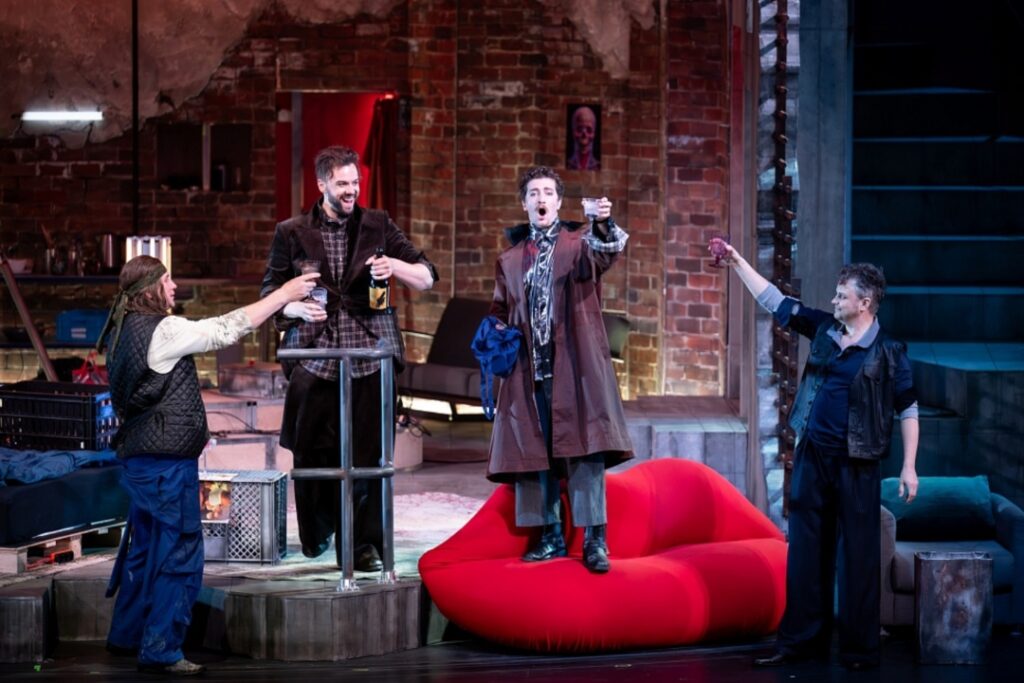
Amidst the production’s mixed fortunes, several cast members delivered standout performances, offering glimpses of the dramatic power inherent in Puccini’s work. Daniils Pogoriless, as Schaunard, commanded the stage with considerable charisma and a commanding presence. His vocal delivery was characterized by solid projection and a confident command of the role, effectively balancing his innate theatrical instincts with the vocal demands of the part. Pogoriless demonstrated a remarkable ability to imbue his character with a vibrant energy that resonated throughout his scenes.
Bass-baritone Rihards Mačanovskis also drew positive attention, particularly in the ensemble scenes with the Bohemians and with a particularly impactful performance in the final act. His performance was distinguished by a dark, resonant vocal timbre and effective phrasing, contributing significantly to the ensemble’s dynamic.
Jānis Apeinis, portraying Marcello, was responsible for one of the most significant dramatic awakenings of the performance. His duet with Mimì in the second act provided a much-needed injection of emotional authenticity, offering a genuine balance between the two voices that had been largely absent in the preceding act. Apeinis’s performance was characterized by good vocal projection, solid phrasing, and a moderate yet effective use of rubato. During this passage and in his subsequent interventions, the drama within the opera finally appeared to stir, demonstrating the profound impact of sensitive musical and dramatic interaction.
Latvian soprano Katrīna Paula Felsberga delivered a convincing interpretation of Musetta, exhibiting assured stagecraft and a captivating portrayal of the character. However, like other members of the cast, Felsberga’s performance seemed to be affected by the overarching production choices. The staging, which offered limited contribution to the dramatic development, coupled with the aforementioned musical tensions, appeared to constrain the character’s full extroverted potential. Vocally, Felsberga offered an attractive timbre and vibrato, characterized by a rounded emission and well-executed coloratura passages. Nevertheless, a recurring issue that impacted several singers was the inconsistent vocal projection, which did not always assert itself fully within the hall. The delicate balance with the orchestra, at times, felt less than organic, preventing the voice from fully commanding its space and asserting its full presence.
More Cast Details: Vocal Pillars and Evolving Performances
Ukrainian tenor Dmytro Popov, as Rodolfo, experienced a somewhat challenging initial act. His vocal projection throughout much of the first act was described as "veiled," creating difficulties in projecting over the orchestral texture and contributing to a degree of imbalance in his crucial duet with Mimì. His musical performance in the opera’s early stages also failed to reach its full potential. During the opening duet, Popov appeared to follow his own tempo at times, and in climactic moments, such as the iconic "O soave fanciulla," he encountered noticeable intonation issues. However, by the second act, a significant improvement in his relationship with the orchestra was evident. Both in terms of tempi and vocal projection, his performance became more assured and engaging, culminating in an enjoyable portrayal of Rodolfo in the opera’s concluding sections.
Latvian soprano Inga Štobiša-Kanceviča, in the pivotal role of Mimì, emerged as the undisputed vocal pillar of the entire performance. Her performance was marked by clear projection that consistently transcended the orchestral texture, a rounded and appealing timbre, and remarkable vocal agility. Štobiša-Kanceviča shone throughout the evening, demonstrating a profound connection to the character and a masterful command of her instrument.
Despite the earlier mentioned issues concerning tempo and coordination between the pit and the stage, which demonstrably limited the dramatic development of her lines, particularly in "Mi chiamano Mimì," the soprano sustained the character with unwavering assurance. Her interaction with the ballet ensemble during the depiction of Mimì’s illness was particularly effective, serving as a significant contributing factor to the dramatic construction of the character and her tragic arc. Štobiša-Kanceviča concluded the opera with a deeply convincing final scene, immersing herself in the delirium of Mimì’s final moments with poignant authenticity. The audience’s subsequent ovation served as a well-deserved acknowledgment of her exceptional contribution, which injected a vital and distinct dramatic dimension into an otherwise visually driven production.
The Latvian National Opera’s reopening, while presenting a visually arresting and conceptually ambitious "La Bohème," highlighted the enduring tension between innovative staging and the preservation of operatic tradition. The production’s success lay in its visual ingenuity and certain compelling individual performances, yet it underscored the critical importance of a cohesive balance between spectacle and substance, ensuring that the emotional heart of the drama remains the guiding force.