Indra Aziz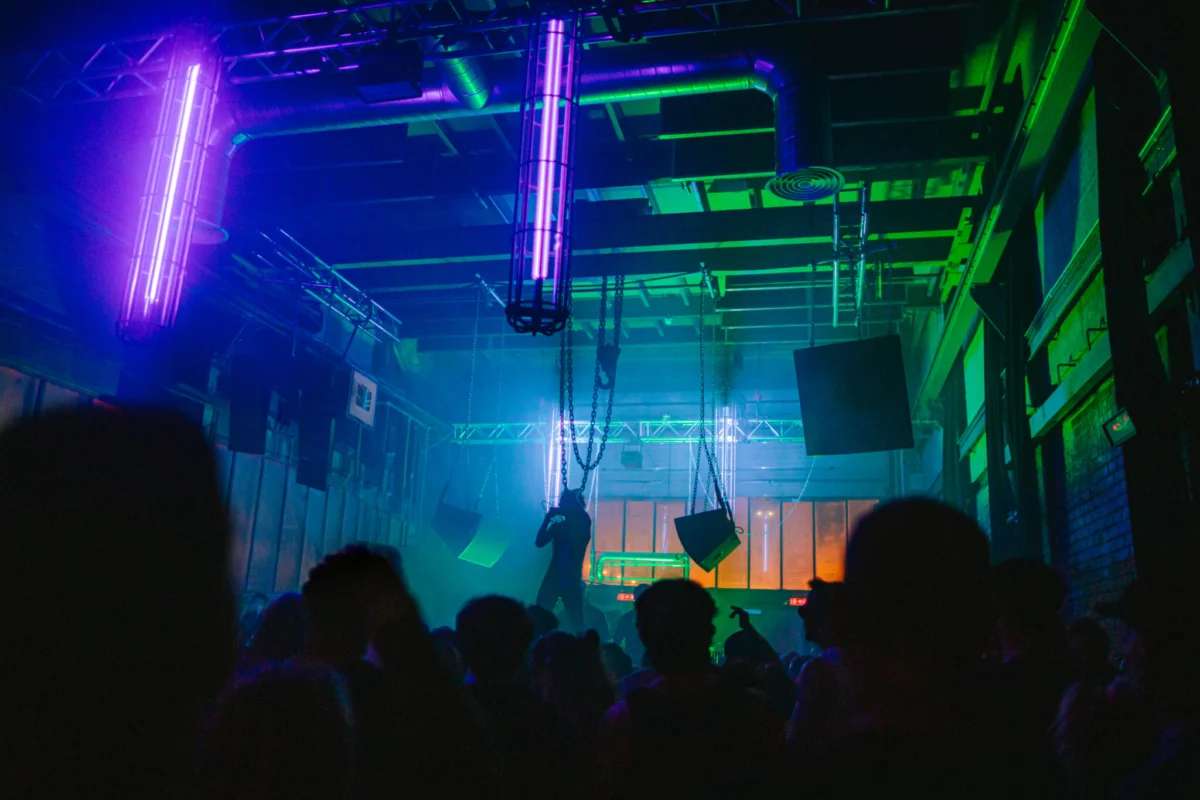
The modern festival landscape is increasingly fragile, vulnerable to the shifting tides of local government bureaucracy, licensing restrictions, and the ever-present threat of planning permissions collapsing at the eleventh hour. For the independent electronic music festival Waterworks, these systemic pressures materialized in May 2026 when long-awaited plans for its fifth-anniversary edition at Gunnersbury Park fell through just months before the gates were scheduled to open. Rather than canceling the milestone event, organizers executed a remarkable logistical pivot, relocating to East London’s iconic venue, The Cause, to birth Waterworks Extended: an unprecedented 36-hour continuous celebration of underground club culture held across September 12 and 13, 2026.
The crisis response not only saved the festival from cancellation but inadvertently forged a new template for urban electronic music events. By abandoning the expansive open-air park model in favor of The Cause’s brutalist architecture, multi-room labyrinth, and industrial terraces, Waterworks transformed a devastating setback into a masterclass in adaptability. This strategic redirection proved that the festival’s core identity was never fundamentally tied to green grass or conventional festival infrastructure; rather, it relied on uncompromising musical curation, community resilience, and a deep-rooted dedication to the UK underground.
A Chronology of Crisis and Adaptation
The journey to Waterworks Extended began nearly half a decade prior. Established in 2019 under the defiant motto "getting away with it since 2019," the festival carved out a vital space for independent electronic music, bridging the gap between established pioneers and emerging fringe talents. Over five years at Gunnersbury Park, the event steadily expanded its footprint, culminating in ambitious blueprints for 2026 that would have marked its first two-day iteration, featuring 83 distinct sets, live shows, and back-to-back performances spread across five purpose-built outdoor stages.
Everything changed in May 2026. With tickets sold and production schedules locked in, local planning permissions were denied, rendering the Gunnersbury Park site unusable. Co-founder Simon Denby recalled the immediate aftermath, noting that the entire team—from artists and production partners to behind-the-scenes crew members—was devastated. Months of meticulous planning had evaporated. However, guided by the ethos popularized by the late, revered British DJ Andrew Weatherall—"Fail We May, Sail We Must"—the organizing team resolved to honor their commitments to the audience and the artistic community.
The solution required unprecedented operational agility. Collaborating with The Cause in East London, organizers conceptualized Waterworks Extended: a grueling, highly ambitious 36-hour marathon spanning seven distinct concrete dancefloors, indoor warehouses, and open-air terraces. To the knowledge of industry veterans, no independent electronic music festival of this scale had ever successfully transitioned into an uninterrupted, multi-room indoor-outdoor marathon within a central London club infrastructure on such short notice.
Redefining Space: Architecture Meets Audio
Moving from the sprawling expanses of a West London park to the industrial, multi-level confines of The Cause fundamentally altered the sensory experience of the festival. Yet, rather than attempting to disguise the venue or force it to mimic an outdoor green-field site, Waterworks leaned entirely into the brutalist character of its new home.
The physical layout encouraged continuous movement and exploration. Attendees drifted fluidly from the concrete courtyard terrace—framed by weathered balconies, overhead walkways, and spilling greenery—into pitch-black warehouses and intimate studio spaces. This architectural fragmentation eliminated the traditional festival bottleneck, replacing rigid stage timetables with an invitation to drift, discover, and surrender to the acoustics of diverse indoor environments.
To elevate the venue transformation, organizers partnered with renowned spatial and visual designers, including Nicole Gordon, Ke Peng, and the London-based visual collective badweather. In the main Warehouse, Gordon and Peng engineered a massive, rotating polycarbonate and mirrored chandelier integrated with custom lasers and reactive lighting, casting fractured red beams across a densely packed crowd. Meanwhile, the Hot House utilized an advanced IVL Photon Array, and the Terrace featured bespoke VJ installations that blurred the boundary between fine art installation and underground rave culture.
A Masterclass in Curatorial Depth
The programming across the 36-hour window was designed to match the labyrinthine layout of The Cause, prioritizing extended sets, genre-fluid transitions, and deep musical discovery over commercial crowd-pleasing. With seven sonic spaces operating concurrently, the festival showcased a cross-section of global electronic music, moving seamlessly from afternoon deep house and Detroit techno to high-BPM jungle, dubstep, and leftfield club mutations.

Among the standout daytime moments was the four-hour back-to-back set between Bradley Zero and Erol Alkan in the Gallery. The pairing bridged distinct eras of London’s electronic music history, merging Alkan’s legendary genre-defying expertise with Zero’s deep-rooted connection to the city’s modern club ecosystem. As the room swelled to capacity, the audience engaged in an unspoken battle for the room’s most precious commodities: acoustic sweet spots near the Funktion-One stacks and occasional drafts of air conditioning. The set’s meticulous pacing—initially driven by hypnotic, chugging techno before weaving through subtle acid lines and an unexpected, floor-shaking rework of The Stone Roses’ "I Wanna Be Adored"—exemplified the earned gratification that defined the weekend.
Out on the terrace under the fading September sun, Moxie teamed up with Parisian house stalwart Dyed Soundorom. Alice Moxom, whose two-decade career has anchored NTS Radio and the On Loop label, combined forces with the DC10 and Panorama Bar regular to deliver an effervescent journey through disco, deep house, and leftfield electronics. Later, Cologne-based DJ Sweet6teen and Gene On Earth maintained the momentum, praising the venue’s capability to foster intimate yet high-energy crowd engagement.
As daylight dissolved into night, the festival’s "outdoor by day, indoor by night" framework took full effect. Inside the Warehouse, Chicago legend Eris Drew—a DJing veteran active since 1994—wielded her signature vinyl-mixing prowess and philosophical commitment to the "Motherbeat." Beneath the rotating mirrored chandelier, Drew steered the crowd through obscure left turns and classic club anthems like Nightcrawlers’ "Push The Feeling On," sending the room into a euphoric frenzy.
Collaborative Power: Sunday’s Curated Takeovers
If Saturday was defined by the raw adaptation of space, Sunday demonstrated the cultural solidarity of the UK underground. Rather than relying solely on a conventional artist lineup, Waterworks handed key stages over to some of the most influential crews and platforms shaping modern British bass music, including Outlook Festival, Rupture, Keep Hush, and EC2A.
The Outlook Festival takeover served as a masterclass in generational bass music curation. A standout moment arrived when Octo Octa delivered an uncompromising drum and bass vinyl set, dropping Bad Company’s iconic "Planet Dust" to an eruption of approval from the Workshop floor. Demonstrating true community resilience, when artist cancellations threatened the schedule, organizers orchestrated an impromptu three-way collision between Tim Reaper and Dwarde (performing as Globex Corp) alongside Neffa-T, seamlessly pivoting from intricate techno into high-velocity 160 BPM mutations.
Additional performances from jungle pioneers such as DJ Storm, Double O, and Sully reinforced the historical depth of the programming. By embedding these foundational curators alongside contemporary platforms, Waterworks avoided historical pastiche, instead creating a living, breathing dialogue between the architects of classic UK rave and the artists pushing those sonic boundaries into the future.
Broader Implications for the Independent Festival Sector
The success of Waterworks Extended carries significant implications for the wider UK music festival ecosystem. In an era marked by soaring operational costs, tightening licensing restrictions, and the vulnerability of outdoor sites to municipal planning disputes, independent promoters face an existential crisis. The knee-jerk reaction to a major site loss is often outright cancellation, resulting in catastrophic financial losses for artists, production crews, and independent businesses alike.
Waterworks demonstrated that institutional survival in the modern climate requires radical flexibility and a willingness to decentralize the traditional festival format. By leaning into the grit, architecture, and established community networks of an indoor clubbing institution like The Cause, the festival proved that authentic music culture does not require pristine acreage or corporate green-field gloss to thrive.
Ultimately, the logistical detour of 2026 forced Waterworks to uncover an alternative identity—one that prioritized physical immersion, architectural character, and unyielding community spirit over sheer scale. As the final basslines faded on Sunday evening, the consensus among artists, promoters, and ravers was clear: while a return to Gunnersbury Park may still feature in future planning discussions, Waterworks Extended proved that the soul of the festival resides not in any specific geographic coordinate, but in the collective resilience of the people who build it.