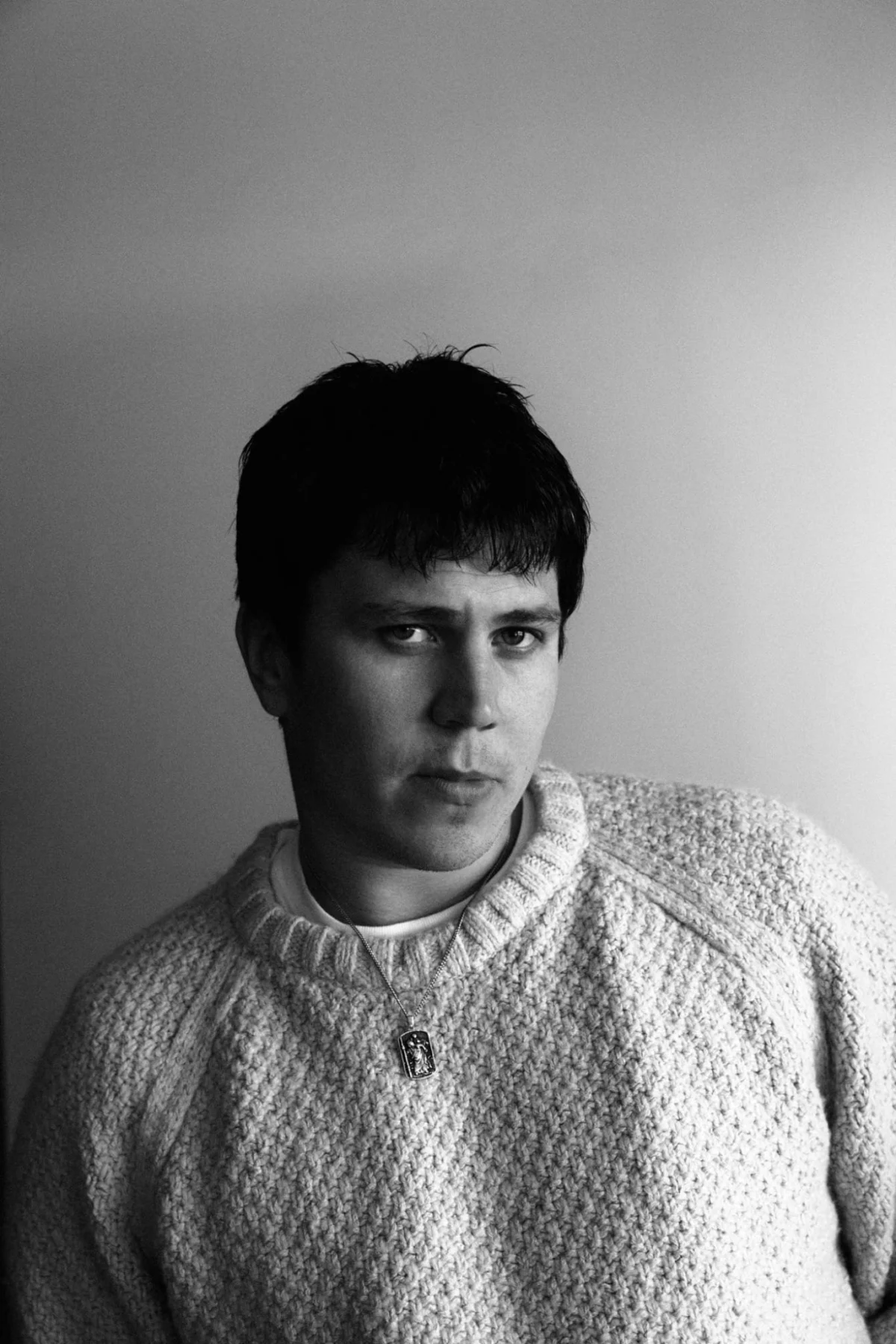
Johan Budi
The contemporary jazz landscape in 2025 continues to be defined by a rigorous exploration of social themes and personal histories, as evidenced by two significant new releases from the British collective Empirical and the American pianist Yvonne Rogers. These recordings, though distinct in their geographical origins and ensemble configurations, share a common thread of high-concept composition and a rejection of traditional genre tropes in favor of more complex, often challenging, sonic structures. Empirical’s "Like Lambs: To The Slaughter," released on Whirlwind Recordings, and Yvonne Rogers’ "The Button Jar," issued by Pyroclastic Records, represent a pivotal moment for jazz as it navigates the intersection of technical precision and emotional resonance in a post-modern era.
Empirical and the Exploration of the Post-Truth Era
Empirical, a group that has long been at the forefront of the United Kingdom’s jazz scene, returns with a long-form suite that attempts to capture the zeitgeist of the mid-2020s. According to the project’s liner notes, penned by the acclaimed saxophonist and composer Soweto Kinch, the album is a thematic exploration of "alienation, destruction, and restoration in the post-truth age." This conceptual framework places the music within a socio-political context, suggesting that the "clinical precision" often associated with the group’s output is a deliberate aesthetic choice designed to mirror the complexities of modern life.
The ensemble—consisting of Nathaniel Facey on alto saxophone, Ivo Neame on piano, David Preston on guitar, Tom Farmer on bass, and Shaney Forbes on drums—demonstrates a level of technical synchronization that has become their hallmark. Recorded at the legendary RAK Studios in London on February 11 and 12, 2025, the album captures a quintet that has evolved beyond simple improvisation into a cohesive unit capable of executing dense, through-composed material with remarkable fluidity.
Structural Analysis of Like Lambs: To The Slaughter
The album is structured as a suite, beginning with "The Garden Of Beginnings: Innocence and Bliss." This opening movement sets a rhapsodic tone, characterized by a calm yet deliberate pacing. However, the production choice to utilize fade endings on several tracks, including the opener and the subsequent "Giants," has been noted as a point of contention among listeners who prefer the traditional "live" feel of jazz recordings. From a journalistic perspective, these fades suggest a studio-centric approach where the music is treated as a modular entity rather than a continuous performance.
"Giants" showcases the group’s ability to manipulate time signatures and rhythmic density, reflecting an engagement with the "passing moments" described in the album’s promotional materials. The piece relies heavily on the intuitive understanding between Forbes and Farmer, providing a foundation for Facey and Neame to explore melodic fragments that appear and disappear with rapid succession.
In "Drogon," the quintet shifts its focus toward instrumental color and texture. Moving away from a maximalist approach, the track emphasizes subtlety and nuance, utilizing the guitar of David Preston to create atmospheric layers that deviate from standard hard-bop or post-bop conventions. The suite concludes with "The Garden Of Beginnings: Divine Revelation," which serves as a thematic bookend. Here, Nathaniel Facey’s alto saxophone takes on a vocal quality, aiming to bridge the gap between rhetorical complexity and spiritual contemplation.
Yvonne Rogers and the Introspection of The Button Jar
While Empirical explores the macro-level anxieties of the "post-truth age," pianist Yvonne Rogers turns her focus inward with "The Button Jar." This solo piano project is deeply rooted in Rogers’ personal history, specifically her childhood in a rural environment. The album, recorded in Mount Vernon, New York, on September 20, 2025, is a testament to the power of memory as a compositional tool.
Released on Pyroclastic Records—a label known for its support of uncompromising and avant-garde jazz—"The Button Jar" avoids the pitfalls of sentimentality. Instead, Rogers employs a "quasi-forensic" sensibility, treating her memories not as nostalgic artifacts but as raw material for rigorous musical investigation.
Compositional Depth and Technical Restraint
The album opens with "Luster," a track that defines Rogers’ approach to the instrument. Rather than displaying virtuosity for its own sake, she utilizes profound understatement. The piece allows for an "inner voice" to emerge, creating a mood that is simultaneously tranquil and unsettling. This duality is a recurring theme throughout the 14 tracks of the album.
In "Cloud Chorale," Rogers acknowledges the influence of jazz masters like Bill Evans, particularly in her use of space and harmonic tranquility. However, she distinguishes herself through a unique approach to fragmentary melody. Her phrasing suggests a modern sensibility that prioritizes the "unspoken" over the obvious, a technique further explored in "Thread The Needle." In the latter, the judicious use of silence evokes the vastness of a rural landscape, aligning the music’s structure with its geographical inspiration.
"Little Dance" serves as a subversion of expectations. While the title might suggest a lighthearted, upbeat tempo, Rogers maintains a measured pace. This refusal to engage in "vacuous gestures" ensures that the album maintains its intellectual integrity from start to finish. The discography, including titles like "Monkey’s Fist," "Linear Gel," and "Puzzle Building," suggests a fascination with tactile objects and manual craft, mirroring the physical nature of piano performance.
Chronology of Production and Release
The production timelines for both albums highlight the rapid turnaround and high level of activity in the 2025 jazz calendar:
- February 11–12, 2025: Empirical records "Like Lambs: To The Slaughter" at RAK Studios, London. The choice of RAK, a studio historically associated with high-fidelity pop and rock recordings, indicates a desire for a crisp, contemporary sound.
- Late Spring 2025: Whirlwind Recordings begins the mastering and promotional cycle for Empirical, emphasizing the suite’s "restorative" qualities in marketing materials.
- September 20, 2025: Yvonne Rogers records "The Button Jar" in a single-day session in Mount Vernon, NY. The speed of the recording reflects the intimate, spontaneous nature of solo piano performance.
- Late 2025: Both albums are released to international markets, sparking discussions regarding the divergence between the "clinical" British jazz school and the "forensic" American solo piano tradition.
Supporting Data and Technical Specifications
Empirical: Like Lambs: To The Slaughter
- Label: Whirlwind Recordings (WR4854)
- Duration: 51 minutes, 10 seconds
- Personnel: Nathaniel Facey (alto sax), Ivo Neame (piano), David Preston (guitar), Tom Farmer (double bass), Shaney Forbes (drums).
- Track List Highlights: "Innocence And Bliss," "Giants," "Like Lambs: To Our Own Demise," "Drogon," "Divine Revelation."
Yvonne Rogers: The Button Jar
- Label: Pyroclastic Records (PR47)
- Duration: 47 minutes, 46 seconds
- Personnel: Yvonne Rogers (solo piano).
- Track List Highlights: "Luster," "Cloud Chorale," "Little Dance," "Thread The Needle," "Exhale."
Official Responses and Critical Context
Industry analysts have noted that these releases signify a shift in how jazz albums are conceptualized for a modern audience. A spokesperson for Whirlwind Recordings indicated that Empirical’s move toward a long-form suite was a response to the "increasingly fragmented way in which music is consumed," aiming to provide a "substantial, immersive experience that demands the listener’s full attention."
Conversely, the team at Pyroclastic Records has emphasized that Yvonne Rogers represents a new wave of pianists who are "reclaiming the solo format as a space for radical honesty and architectural precision." Critics have observed that while Empirical’s work may feel "alienating" to those accustomed to the warmer, more improvisational styles of the 20th century, it is precisely this "clinical" nature that makes it a relevant document of the 21st-century experience.
Broader Impact and Implications for the Genre
The release of these two albums has several implications for the future of contemporary jazz. First, it reinforces the importance of the "concept album" in a genre that has traditionally been dominated by collections of standards or loosely related original compositions. By anchoring their music in specific themes—post-truth politics for Empirical and rural memory for Rogers—these artists are providing listeners with a narrative framework that transcends the notes themselves.
Second, the albums highlight the ongoing dialogue between the UK and US jazz scenes. While Empirical maintains a quintessentially British focus on ensemble precision and social commentary, Rogers continues the American tradition of the "rugged individualist" at the piano, albeit with a modern, unsentimental twist.
Finally, the technical aspects of these recordings—the use of RAK Studios for Empirical and the focused solo session for Rogers—point toward a continued investment in high-quality audio engineering. In an era of digital saturation, the "depth and substance" offered by these albums serve as a reminder of the enduring value of the recorded artifact. As Rogers’ music "reveals its secrets only slowly," it challenges the listener to engage in a deeper, more forensic form of listening, a trend that is likely to define the next decade of jazz evolution.