 Johan Budi
Nearly three decades after his passing, Frank Sinatra’s monumental influence on the landscape of popular and vocal jazz music remains as potent as ever. This enduring legacy is underscored by a unique cultural moment: the simultaneous release of two distinct vocal jazz albums directly shaped by the Chairman of the Board’s stylistic footprint. Sam Furlonger’s debut studio album, Get Out And Get Under The Moon, and Linda Purl’s eclectic new record, From My Heart, arrive at a time when contemporary interpreters of the Great American Songbook are continuously forced to negotiate the towering shadow left by 20th-century vocal icons. While both artists operate firmly within the traditions of classic American standards, their respective approaches highlight the distinct challenges, historical contexts, and artistic choices facing modern jazz interpreters in 2026.
The Debut of Sam Furlonger: A Study in Sinatra-Era Minimalism
Sam Furlonger’s entry into the recording industry via Get Out And Get Under The Moon has immediately captured the attention of jazz critics and purists alike. Recorded at StudiOwz in Pembrokeshire, the independent release stands out not only for its vocal performances but for its deliberate structural economy. In an era where digital streaming platforms encourage bloated tracklists—frequently pushing albums beyond the fourteen-song threshold to maximize algorithm exposure—Furlonger has taken a radically minimalist approach.
The album consists of just eight tracks, resulting in a lean running time of thirty-one minutes and fifty-two seconds. This concise framework is widely interpreted by musicologists as a direct homage to Sinatra’s early catalog with Capitol Records. Specifically, Sinatra’s seminal 1954 ten-inch vinyl long-playing albums, Songs For Young Lovers and Swing Easy, famously utilized an eight-song format.
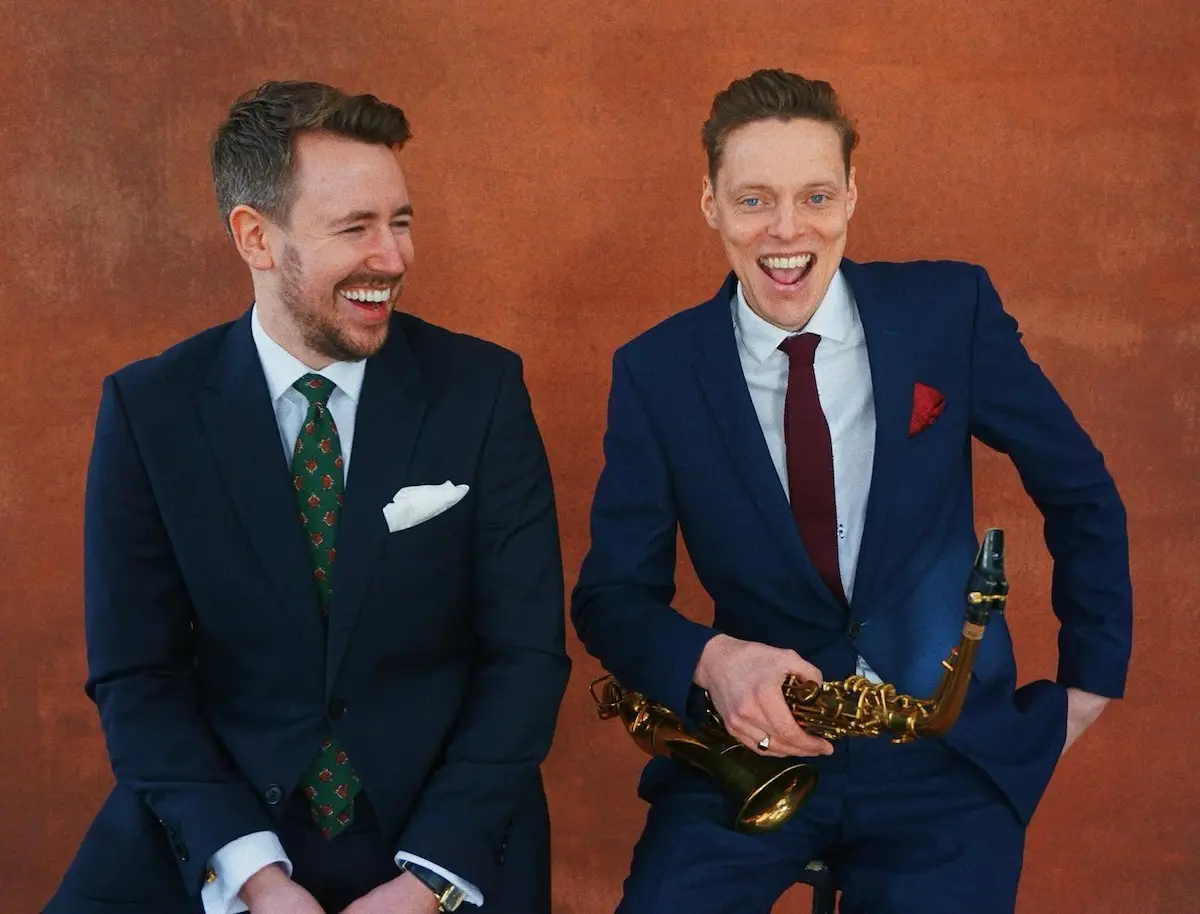
According to the album’s liner notes, Furlonger collaborated closely with pianist and arranger Fraser Urquhart to establish a musical environment that replicates the textures of Sinatra’s 1962 touring and recording quintets. For this debut project, Urquhart expanded the foundational lineup to encompass a versatile ensemble featuring Fraser Smith on tenor and alto saxophone, Darren McCarthy on bass, Harry Sankey on guitar, and Joe Dessauer on drums. The resulting soundscape pays careful reverence to the arrangements that defined mid-century vocal jazz.
Chronology and Background of the Furlonger Project
The conceptualization of Get Out And Get Under The Moon represents the culmination of years of targeted study and performance by Furlonger and Urquhart. Initially, the duo toured successfully with a live repertoire exclusively dedicated to unearthing and performing authentic Sinatra material using a strict period-accurate quintet.
Transitioning from a tribute-centric live act to a debut studio recording required a broader stylistic foundation. Urquhart expanded the musical scope to include broader selections from the era when Sinatra was at the height of his active recording career. The resulting tracklist—featuring "Wrap Your Troubles In Dreams," "The Right Kind Of Love," "Get Out And Get Under The Moon," "I’m In Love Again," "Half Way Down The Street," "Keeping Out Of Mischief Now," "She’s Funny That Way," and "This Is Always"—serves as a curated cross-section of mid-century American popular song.
Technical Execution and Stylistic Nuance
Vocal jazz critics have noted fascinating stylistic parallels and ironies in Furlonger’s delivery. Having undertaken rigorous musical training, Furlonger’s phrasing draws comparisons to the meticulous vocal delivery of the Mabel Mercer lineage, where lyrical clarity and enunciation are paramount. This stands in distinct historical contrast to stylists like Nat King Cole, whose relaxed approach to diction prioritized emotional delivery over strict phonetic precision.
Furlonger’s execution on Get Out And Get Under The Moon showcases both the strengths and hazards of tackling the Great American Songbook on a debut recording. His interpretation of the album’s sole out-and-out ballad, "She’s Funny That Way," delivers a deeply felt, lingering emotional weight. However, critics have observed structural sequencing choices, such as immediately following the heavy balladry with a jaunty, upbeat reading of "This Is Always"—a song traditionally resistant to such an accelerated treatment.
Despite minor sequencing critiques, the instrumental backing across the record has been universally praised for its technical precision. Harry Sankey’s guitar work on the Cole Porter composition "I’m In Love Again" has received particular acclaim. Notably, Furlonger incorporates an extra, rarely performed historical chorus into the Porter standard, correcting historical misattributions frequently found in contemporary online jazz reviews that have occasionally miscredited the 1924 Greenwich Follies gem to later songwriters. Furthermore, the inclusion of Kim Gannon’s "Halfway Down The Street" serves as a welcome musicological excavation, pulling a forgotten arrangement style reminiscent of Sinatra’s tenure with the Tommy Dorsey Orchestra out of historical obscurity.
Linda Purl’s From My Heart: An Eclectic Repertoire and Broad Appeal
Operating concurrently in the vocal jazz space is Linda Purl, whose new album, From My Heart, offers a starkly different conceptual approach. Recorded between March 2 and March 5, 2026, at Tritone Recording in Glendale, California, and released via Lexicon Classics, Purl’s album embraces a sprawling, middle-of-the-road aesthetic designed to appeal to a wide demographic of listeners.
Backed by an immaculate rhythm section featuring Tedd Firth on piano, Kevin Axt on bass, and David Rokeach on drums, Purl navigates a dense thirteen-track tracklist that spans nearly forty-nine minutes. The project functions on a "something-for-everyone" curatorial philosophy, blending traditional jazz standards with unexpected contemporary selections.
Repertoire Analysis and Historical Accuracy
From My Heart presents an eclectic mix of material that crosses musical genres and decades. The tracklist includes "I’m All Smiles," "Destination Moon," "Bewitched, Bothered And Bewildered," "All I Do Is Dream Of You," "You Are There," "I Didn’t Know What Time It Was," "When You Find The Right One," "Something Happens To Me," "Everything Must Change," "I Like You, You’re Nice," "Dedicated To You," Sting’s "If I Ever Lose My Faith In You," and a gentle, ballad-driven rendition of the American folk classic "Home On The Range."
The album has drawn scrutiny from musicologists regarding its liner note documentation. Notably, the track "I’m All Smiles" is incorrectly credited in the physical packaging to the legendary songwriting duo Richard Rodgers and Lorenz Hart. In historical reality, the song was composed by Michael Leonard with lyrics by Herbert Martin for the 1965 Broadway production The Yearling. Because Lorenz Hart passed away in 1943—more than two decades before the composition of the song—the attribution error highlights persistent archiving challenges within the modern jazz industry. Ironically, the album does feature two genuine compositions by Rodgers and Hart—"Bewitched (Bothered And Bewildered)" and "I Didn’t Know What Time It Was"—alongside modern additions such as Blossom Dearie’s whimsical "I Like You, You’re Nice."
Industry Implications and the State of Vocal Jazz in 2026
The simultaneous release of albums by Sam Furlonger and Linda Purl provides valuable insight into the commercial and artistic health of vocal jazz in 2026. Both records demonstrate that while the Great American Songbook remains an inexhaustible wellspring for contemporary interpreters, the methods of engagement are diverging.
On one hand, Furlonger’s tightly focused, vinyl-conscious debut represents a purist revivalism. By intentionally limiting his track count to mirror the physical constraints and artistic pacing of 1950s Capitol long-players, Furlonger appeals directly to audiophiles and traditionalists seeking historical continuity. This strategy prioritizes depth of concept over streaming volume, positioning the artist as a careful archivist of mid-century performance practices.
Conversely, Purl’s From My Heart illustrates the viability of a broader, more inclusive stylistic umbrella. By synthesizing traditional standards with unexpected pop and folk crossover material—ranging from Sting to traditional Americana—Purl targets a diverse contemporary audience that values variety over stylistic purity. Supported by elite West Coast instrumentalists, the project reflects the ongoing evolution of the middle-of-the-road vocal tradition.
Broader Impact on the Preservation of the Great American Songbook
As the chronological distance between the golden age of American popular song and the modern era widens, the responsibility of interpreting these foundational works falls increasingly to artists who did not experience the genre’s mid-century apex firsthand. The critical reception of both Furlonger’s and Purl’s latest works emphasizes the critical importance of rigorous musicological research, accurate liner notes, and respectful arrangement practices.
Whether through Furlonger’s meticulous recreation of Sinatra-era quintet dynamics or Purl’s eclectic cross-genre exploration, contemporary vocalists continue to prove that the standard repertoire is not a static museum piece, but a living, malleable tradition. As both independent and label-backed releases find their respective audiences throughout 2026, the enduring resonance of Sinatra’s stylistic blueprint ensures that the art of the jazz vocal standard will continue to adapt, survive, and inspire new generations of performers.