Johan Budi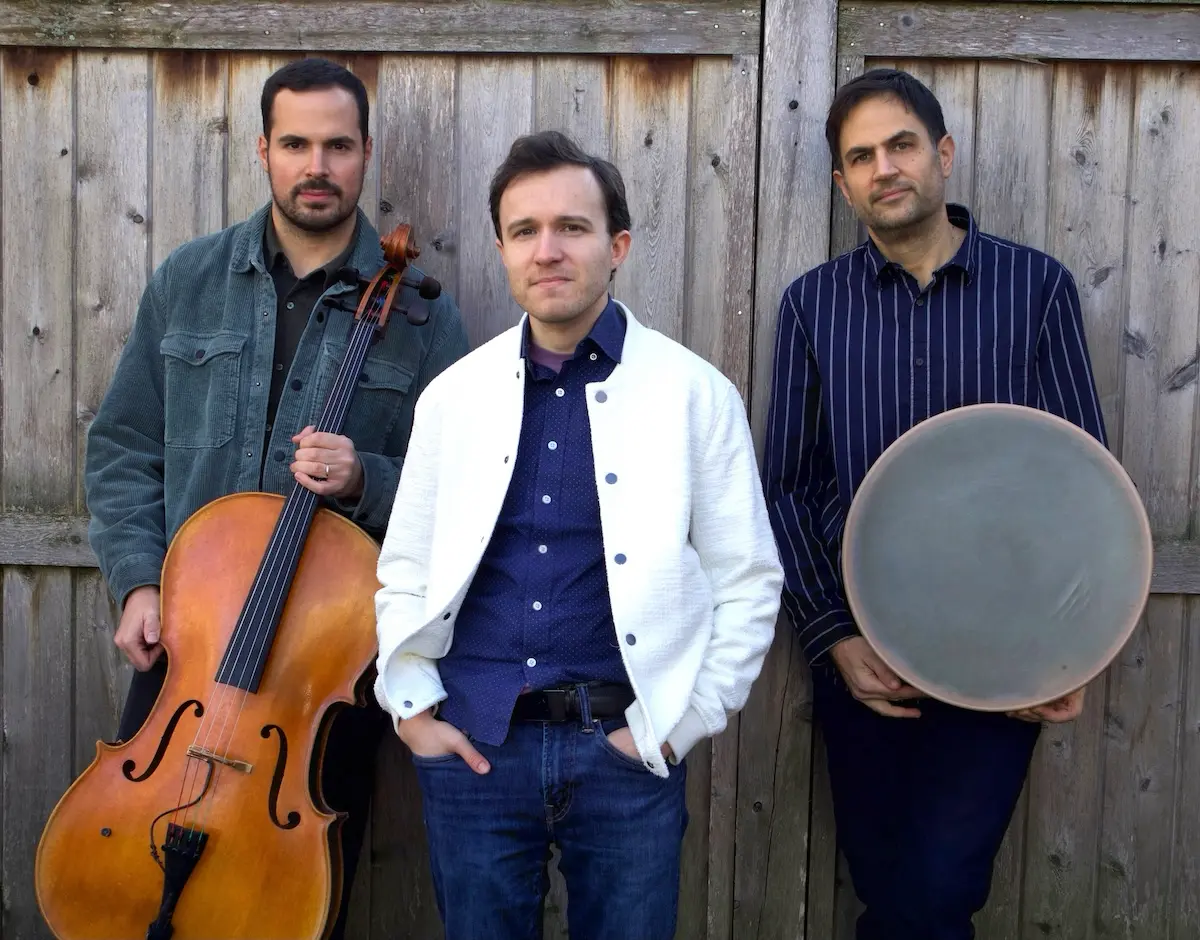
The landscape of contemporary jazz and world music in 2025 is increasingly defined by the dissolution of traditional borders, both geographic and stylistic. Three recent releases—Global Prayer by the Ize Trio, Current by Vivienne Aerts, and Formas Al Desaparecer by Martina Liviero—exemplify this shift toward multicultural interaction, electronic experimentation, and the synthesis of classical and folk traditions. These projects, though distinct in their sonic palettes, share a common objective: to leverage musical polyphony as a medium for cultural dialogue and environmental reflection. As the recording industry continues to evolve toward independent production and niche distribution, these works provide a window into the sophisticated methodologies employed by modern composers to navigate an interconnected global stage.
Ize Trio and the Reimagining of Middle Eastern-Jazz Fusion
The Ize Trio, led by American pianist Chase Morrin, has emerged as a significant force in the realm of cross-cultural musical exploration. Their latest project, Global Prayer, serves as a manifesto for multiculturalism, bringing together a diverse array of influences ranging from Western jazz and classical structures to the intricate modal systems of the Middle East. The trio is anchored by Morrin on piano, George Lernis on percussion, and Naseem Alatrash on cello. This configuration allows for a unique interplay between melodic lyricism and rhythmic complexity.
The recording sessions for Global Prayer took place in two distinct phases, occurring on January 12-13, 2023, and May 24, 2025. This timeline suggests a long-gestating project that allowed the compositions to mature over a two-year period. The involvement of high-profile guest artists, such as veteran bassist John Patitucci, adds a layer of technical gravitas to the release. Other contributors include saxophonist Lihi Haruvi, violinist Layth Sidiq, and specialists in traditional Mediterranean instruments, such as Vasilis Kostas on the laouto and Yaniv Yacoby on the bouzouki.
Structural Analysis and Rhythmic Dominance
A core feature of the Ize Trio’s approach is the sophisticated interaction between the ensemble members. In smaller jazz formations, the "conversation" between instruments is paramount. On Global Prayer, this dialogue is characterized by a deliberate use of tension and resolution. In the track "Jam For The End Of The World," listeners observe a rhythmic battle for dominance between the piano and percussion. While the piece incorporates Latin flavors, it resists strict categorization, favoring a "loose" structural feel that allows for improvisational freedom.
However, the experimentation is not without its risks. Some critical analysis of the work suggests that the project’s desire for expansiveness occasionally leads to wandering compositions. For instance, the track "Snæfellsjökull," which runs for a significant duration, undergoes a major directional shift at the 4:45 mark. Observers have noted that such shifts could potentially function as independent movements or separate tracks to maintain a tighter narrative focus. Furthermore, the technical challenge of balancing traditional acoustic instruments like the laouto and bouzouki against modern jazz instrumentation is evident; in certain passages, the lightness of these strings can be overshadowed by the more robust piano and cello. Despite these minor imbalances, the project remains a laudable attempt to weave disparate cultural threads into a cohesive sonic tapestry.
Vivienne Aerts and the Convergence of Environmental Sound and Electronic Jazz
While the Ize Trio focuses on cultural fusion, Dutch artist Vivienne Aerts explores the intersection of music and the natural environment in her project, Current. Released under the New Amsterdam Sounds label, the album is a testament to the possibilities of indie-jazz production in the mid-2020s. Aerts, serving as vocalist, composer, and synth-player, utilizes a palette of environmental noises to ground her music in a specific physical reality.
Recorded in the Netherlands during the summer of 2025, Current is characterized by its use of "found sounds," particularly those associated with water. The opening tracks introduce listeners to the sounds of rocking boats and breaking waves, which are then integrated into the musical framework through synthesizers and post-production effects. This approach positions the album at the crossroads of jazz, indie-experimentalism, and "New Age" aesthetics.
Production Techniques and Stylistic Evolution
To compensate for the absence of a large orchestral ensemble, Aerts employs a suite of modern production techniques. The use of reverb, overdubbing, and self-harmonization allows her to create a dense, immersive atmosphere. In tracks like "Watch Its Show" and "Gathered Here," the "watery" quality of the backing tracks draws comparisons to the atmospheric work of artists like Enya, particularly the 1988 landmark release Watermark. This connection to the New Age genre provides a melodic accessibility that balances the project’s more avant-garde tendencies.
Aerts’ work also demonstrates a clear trajectory from experimentalism to melodic clarity. Tracks such as "When I’m Gone" and "Where Is The Sun" utilize repetition and vocal layering to establish a "sing-song" vibe that contrasts with the more abstract improvisations found elsewhere on the album. By collaborating with musicians such as harmonica player Hermine Deurloo, saxophonist Susanne Alt, and bassist Adina Meertins, Aerts ensures that the electronic and environmental elements are anchored by high-level instrumental performance. The result is a unique texture that pushes the boundaries of traditional jazz without alienating the listener.
Martina Liviero and the Argentinian Classical-Folk Synthesis
The third pillar of this contemporary musical exploration is Martina Liviero’s Formas Al Desaparecer. An Argentinian guitarist and vocalist, Liviero brings a sophisticated sense of organization and narrative flow to her work, blending her South American heritage with rigorous classical influences. The album, released on Hilo Records, was recorded at New Doors Studio in Belo Horizonte, Brazil, highlighting a significant "South-South" cultural exchange between two of Latin America’s most vibrant musical hubs.
Liviero’s compositions are notable for their maturity, balancing instrumental virtuosity with dusky, emotive vocals. The track "Florecer" serves as a centerpiece of the album, utilizing a swaying rhythm that provides momentum for the instrumental and vocal layers to skate upon. Unlike some forms of Hispanic music from the Caribbean or North America, Liviero’s style is not strictly bound by heavy rhythmic parameters. Instead, the percussion and bass—provided by a team including Martin Nevin and Rafael Martini—function with the fluidity of a jazz ensemble, propelling the tracks forward while maintaining a sense of openness.
Classical Overtones and Traditional Influences
As the album progresses, Liviero’s classical training becomes more prominent. Tracks like "Un Intersticio" and "Valsa" evoke the works of legendary composers such as Alberto Ginastera, Isaac Albéniz, and Manuel de Falla. There is a "misterioso" quality to the arrangements that suggests a visual, almost cinematic narrative. The use of the Spanish guitar interjects a romantic air, but it is tempered by a darker, more modern tone.
The ensemble for Formas Al Desaparecer includes a diverse range of instruments, from the organ and marimba played by Rafael Martini to the synthesizers of Alé Fonseca. This blend of acoustic and electronic textures allows Liviero to experiment with "forms as they disappear," a theme suggested by the album’s title. The project indicates a deep devotion to the craft of composition, where every note is placed with intention to honor both the folk traditions of Argentina and the formal structures of classical music.
Comparative Chronology and Technical Specifications
The release of these three albums within the 2023–2025 window suggests a concentrated period of creative output in the global jazz community. The following data summarizes the technical and chronological details of these projects:
- Global Prayer (Ize Trio): Recorded January 2023 and May 2025. Total runtime: 46:46. Tracks include "Flying," "The New Order," and "Taqsim." Features a mix of traditional Mediterranean and modern jazz instruments.
- Current (Vivienne Aerts): Recorded Summer 2025 in the Netherlands. Total runtime: 43:38. Tracks include "Nothing Needs The World," "Water Lock (Improv 2)," and "Outside Inside Out." Focuses on vocal layers and environmental synthesis.
- Formas Al Desaparecer (Martina Liviero): Recorded in Belo Horizonte, Brazil. Total runtime: 36:44. Tracks include "Primeras Luces," "Hilo Azul," and "Refugio." Emphasizes the blend of Argentinian folk and European classical music.
Industry Implications: The Rise of Independent Global Collaborations
The emergence of these works reflects broader trends in the music industry, specifically the rise of independent labels and the globalization of the jazz idiom. Ize Trio’s self-titled release, Aerts’ partnership with New Amsterdam Sounds, and Liviero’s work with Hilo Records demonstrate that artists are increasingly looking toward specialized platforms to reach a global audience.
Furthermore, these albums highlight the importance of "musical migration." The members of the Ize Trio represent a convergence of American, Greek, and Palestinian backgrounds, while Liviero’s move to record in Brazil underscores the importance of regional hubs in the Southern Hemisphere. This cross-pollination of ideas is no longer a peripheral phenomenon but a central driver of innovation in the genre.
From a technical standpoint, the integration of environmental sounds (as seen in Aerts’ work) and the use of traditional folk instruments (as seen in the Ize Trio and Liviero projects) indicate a move toward "hyper-textural" music. In this environment, the timbre and "feel" of a sound are as important as the harmonic or melodic content. This trend is likely to continue as recording technology becomes more portable and accessible, allowing artists to capture sounds from around the world and integrate them into their digital workstations.
Broader Impact and Future Directions
The impact of Global Prayer, Current, and Formas Al Desaparecer extends beyond the immediate jazz community. These projects serve as cultural artifacts that document the anxieties and aspirations of the mid-2020s. Whether it is the Ize Trio’s call for multicultural beauty, Aerts’ reflection on the fluidity of nature, or Liviero’s exploration of disappearing forms, these artists are using music to navigate a complex world.
In conclusion, the contemporary music scene is witnessing a period of profound synthesis. By breaking down the silos between jazz, classical, folk, and electronic music, these artists are creating a new vocabulary for the 21st century. As Global Prayer ushers in future convergences, and Current explores the boundaries of accessibility, the musical world remains a vibrant space for experimentation and cultural exchange. The success of these projects suggests that there is a significant audience for music that is both intellectually rigorous and emotionally resonant, paving the way for the next generation of global composers.