 Johan Budi
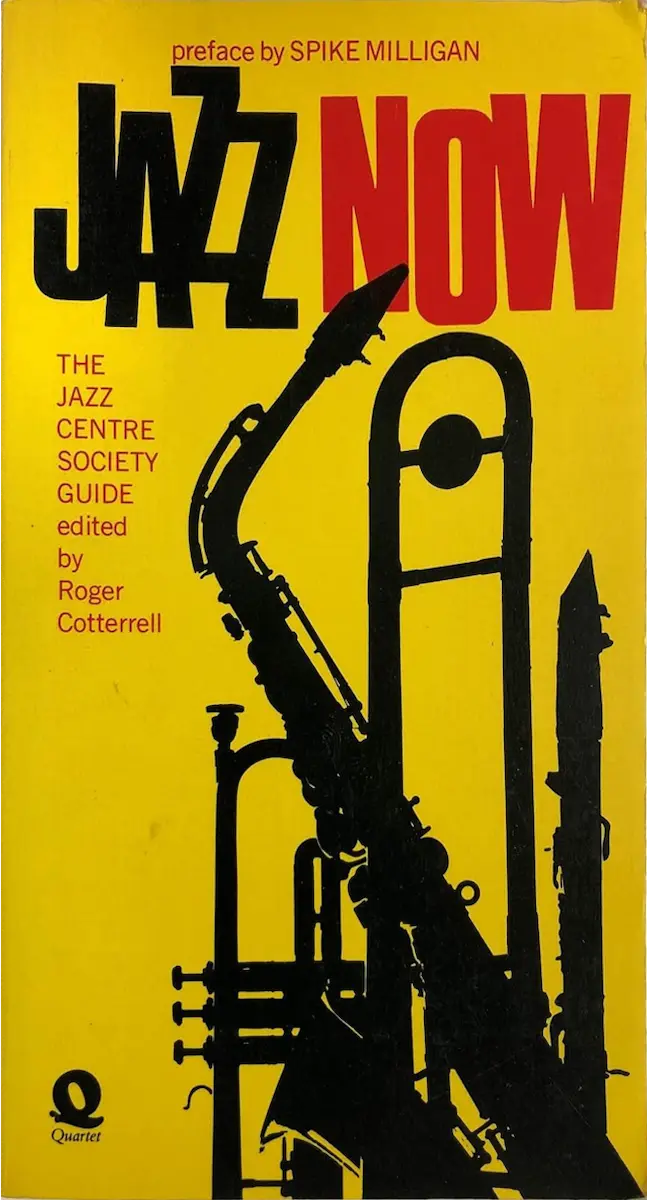
The contemporary landscape of British jazz literature has expanded significantly with the release of Jazz Now, a meticulously compiled guide and anthology edited by Roger Cotterrell and published in association with the Jazz Centre Society by Quartet Books. Released as a paperback original priced at £1.75, the 216-page volume arrives as a timely intervention in a burgeoning musical subculture, offering both critical commentary and an unprecedented practical directory of musicians currently active within the United Kingdom. Quartet Books, a relatively recent entrant to the publishing sphere, continues to solidify its reputation for high-caliber music titles, following its previous successes with Ross Russell’s biography of Charlie Parker, The Bird, Dick Sudhalter’s definitive work on Bix Beiderbecke, and John Chilton’s Billie’s Blues. Despite the notoriously protracted timelines that typically afflict the publishing industry, Jazz Now achieves a remarkable degree of currency, capturing the fast-paced ecosystem of British jazz with exceptional precision.
Editorial Structure and Critical Essays
The architecture of Jazz Now is divided into two distinct halves, the first of which is dedicated to critical essays, historical overviews, and personal reflections penned by some of the most respected authorities in jazz journalism and performance. The anthology opens with a preface by the celebrated entertainer and jazz aficionado Spike Milligan, setting a tone that is both reverent of the art form and accessible to the general reader.
Among the standout contributions in the essay section is Peter Clayton’s analytical examination of the methodology behind interviewing jazz personalities, a piece that offers rare insight into the interpersonal dynamics of music journalism. Charles Fox contributes a comprehensive exploration of ragtime, tracing its foundational impact on the evolution of syncopated rhythms, while Ron Atkins navigates the more challenging terrain of the avant-garde, charting its contentious reception and development. John Chilton provides his customary authoritative scholarship in an appreciation of trumpeter Billy Butterfield, and Dick Sudhalter engages a panel of "yesterday’s men" in a dialogue assessing the historical trajectory and contemporary state of jazz in Britain.
Further depth is added by Brian Case, who trains his focus on the Skidmore family, and pianist Michael Garrick, who articulates the internal psychology and external pressures experienced by the working jazz musician. Tony Russell delivers a rigorous overview of the blues, grounding the entire collection in its foundational African American idiom, while editor Roger Cotterrell examines the pervasive influence of folk roots within modern improvisational music.
However, the emotional epicenter of the book’s first half is undeniably Brian Blain’s affectionate and deeply moving word portrait of the late drummer Phil Seamen. Seamen, widely regarded as a titanic figure in British jazz whose career was simultaneously fueled and compromised by personal demons, receives a tribute that avoids hagiography in favor of a clear-eyed, poignant memorialization. This critical section is further enhanced by a series of full-page photographic portraits, though publishers have noted a minor production error resulting in the reversal of captions for the Skidmore photographs.
The Reference Directory and Practical Utility
While the critical essays provide intellectual ballast, the second half of Jazz Now transitions into a reference section that transforms the publication from a standard anthology into an indispensable operational tool for promoters, musicians, and enthusiasts. This segment features approximately 250 concise biographies of jazz instrumentalists who form the bedrock of the live circuit, spanning venues from central London spots like Seven Dials and The Phoenix to regional clubs across the country.
What distinguishes this directory from conventional biographical dictionaries is its unprecedented inclusion of direct contact information. Musicians routinely list their private telephone numbers and home addresses—such as trumpeter Hank Shaw, who provides his current Whitstable residence and telephone coordinates. For years, the logistics of booking live jazz in the United Kingdom relied on an informal, highly tortuous chain of personal associations. Promoters frequently had to navigate elaborate communication webs, such as calling saxophonist Ray Warleigh merely to secure Bryan Spring’s number in order to ultimately contact drummer Spike Wells. By embedding direct contact details within the biographies, Jazz Now streamlines the booking process, drastically reducing administrative friction for live music organizers.
In addition to contact data, the biographical entries systematically document notable recorded works, historical performance dates, and, where applicable, dates of birth. The temporal proximity of the generation is underscored by personal observations within the text; one reviewer noted, with characteristic dry humor, being exactly two months younger than Stan Tracey and two months older than Ken Colyer. These entries are accompanied by a selection of intimate, smaller-format photographs that document the human element of the scene.
Industry Listings, Directories, and Analytical Oversights
Beyond the artist directory, Jazz Now broadens its scope to encompass comprehensive listings of vital institutional infrastructure. The volume maps out the network of jazz societies and promoters operating across the nation, alongside dedicated sections cataloging jazz-related cinema and print media.
A particularly valuable component for collectors and musicians alike is the inclusion of specialized listings for record companies and specialist importers. Yet, this section also reveals the immense difficulty of capturing a rapidly shifting commercial ecosystem. A notable omission occurs within the importer listings: labels of significant critical and commercial importance—such as Queen Disc, SteepleChase, and Dogwood—are imported exclusively into the United Kingdom by Tony Williams of Spotlite records, yet Williams himself is omitted from the importer directory. Such oversights, while minor in the broader context of the book’s vast informational yield, highlight the challenges inherent in documenting an independent, underground market that resists centralized organization.
Chronology and Publishing Context
The publication of Jazz Now in October 1976 reflects a critical juncture in the history of British jazz. Throughout the late 1960s and early 1970s, the genre had undergone a fragmentation and decentralization away from the traditional trad-jazz boom of the previous decade toward a more pluralistic environment encompassing bebop, free jazz, European avant-garde, and fusion.
The Jazz Centre Society, with which Quartet Books partnered for this release, had been operating as a vital advocacy and promotional body, fighting for the institutional recognition and financial support of improvised music in Britain. The release of a comprehensive, directory-style paperback targeted specifically at the domestic working musician was a direct response to the community’s need for infrastructure. By consolidating artist availability, recording histories, and promotional contacts into a single portable volume, the book acted as a catalyst for professional networking during a period of economic austerity and cultural shifting.
Official Responses and Critical Reception
Early critical reception of Jazz Now has been overwhelmingly positive, focusing primarily on its staggering density of information and its immediate practical utility. Industry observers have praised Roger Cotterrell for his editorial stamina and organizational industry in synthesizing disparate sources into a cohesive, highly readable format.
While certain minor logistical errors—such as the aforementioned caption reversal on the Skidmore photographs and the omission of key figures like Tony Williams from the importer index—have been pointed out by reviewers, these critiques are vastly overshadowed by praise for the book’s overall utility. Commentators have emphasized that the directory sections alone justify the cover price, transforming what could have been a standard collection of essays into a living, breathing directory of the British jazz community.
Broader Impact and Market Implications
The release of Jazz Now carries significant implications for the future of jazz publishing and infrastructure in the United Kingdom. By establishing a direct bridge between artists, promoters, and audiences through transparent contact data and rigorous historical context, the book addresses structural inefficiencies that had long plagued the live music sector.
Furthermore, the commercial success of Quartet Books in producing high-profile jazz titles demonstrates a viable market for serious music literature outside of mainstream academic publishing. Observers within the literary and musical communities have expressed a collective hope that the sales velocity of Jazz Now will prove robust enough to warrant an annualized updating process. Given the notoriously transient nature of musicians’ addresses, phone numbers, and gig schedules, the transformation of Jazz Now from a standalone monograph into a recurring annual directory would provide an invaluable institutional memory and operational framework for the British jazz scene for years to come.