Indra Aziz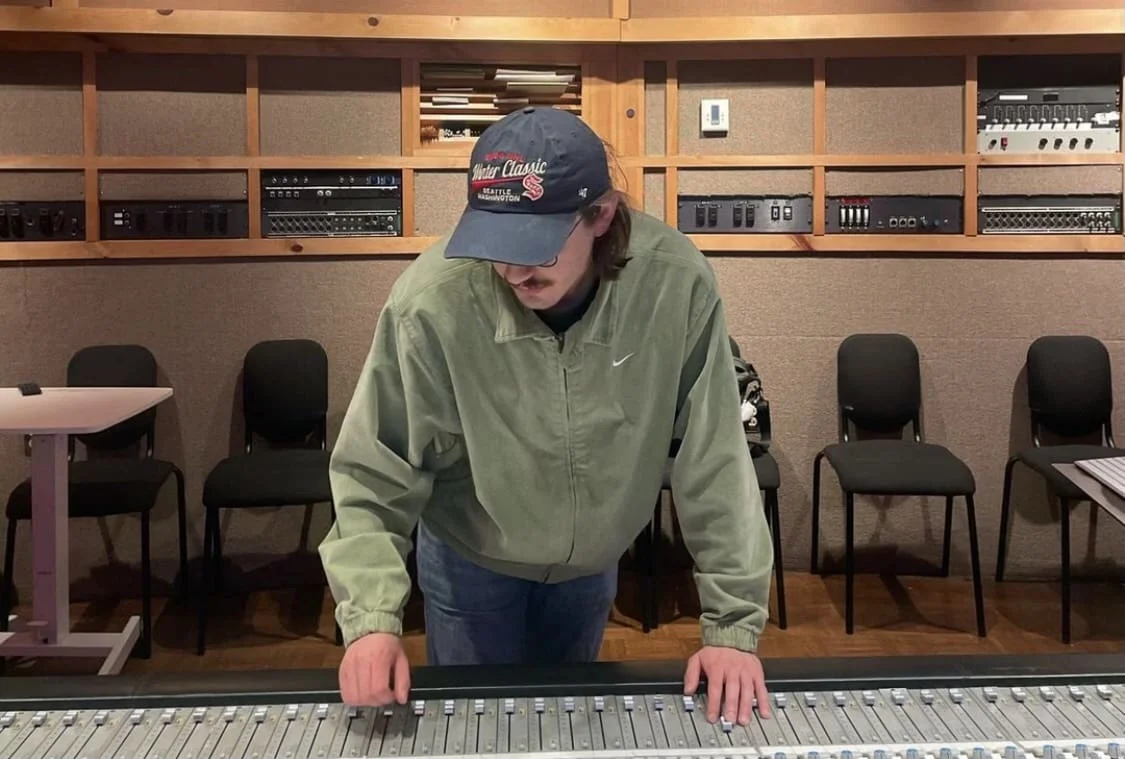
The vibrant and ever-evolving landscape of music production is being significantly impacted by the innovative approach of Leonardo Cococcia, an emerging talent hailing from the Abruzzo region of Italy. Cococcia is rapidly establishing himself as a producer to watch, distinguished by his multifaceted productions that blend artistic vision with technical prowess. His unique perspective is not only capturing the attention of industry insiders but also forging a distinctive path that promises to resonate throughout the music industry in the coming years.
The Genesis of a Sound: From Abruzzo to Global Studios
Born and raised in Abruzzo, a region known for its dramatic landscapes and rich cultural heritage, Leonardo Cococcia’s early exposure to music likely played a foundational role in shaping his artistic sensibilities. While specific details of his formative years are not elaborated upon, it is common for individuals who achieve prominence in creative fields to have cultivated their passions from a young age. His journey into the intricate world of music production is a testament to a dedication that transcends geographical origins.
Cococcia’s current trajectory suggests a deliberate and strategic ascent within the music industry. His arrangements have drawn comparisons to the sophisticated sonic palettes of artists like Mk.gee and Dijon, renowned for their ability to craft atmospheric and emotionally resonant soundscapes. However, Cococcia distinguishes himself by infusing these sophisticated structures with a pronounced pop sensibility and an R&B-adjacent groove, creating a sound that is both contemporary and broadly appealing. This fusion suggests an understanding of current musical trends while simultaneously pushing the boundaries of conventional genre definitions.
A Foundation Built in Legendary Spaces: BerkleeNYC and The Power Station
A significant milestone in Cococcia’s burgeoning career is his association with BerkleeNYC, an esteemed institution dedicated to the study and practice of music and audio. His role within the audio staff at BerkleeNYC places him in an environment steeped in musical history and innovation. The institution is strategically located within the iconic Power Station, a recording studio that has witnessed the creation of some of the most influential music of the past several decades.
The Power Station, now known as Power Station at BerkleeNYC, has been the crucible for a remarkable roster of artists. Legendary figures such as Bruce Springsteen, Madonna, and Coldplay have all utilized its hallowed halls to shape their seminal works. Springsteen, for instance, recorded much of his seminal album "Born in the U.S.A." there, a project that redefined American rock music. Madonna’s "Like a Virgin" also benefited from the studio’s acoustics, cementing its status as a vital hub for groundbreaking sound. Coldplay’s "Mylo Xyloto" is another testament to the studio’s enduring appeal for artists seeking a world-class recording experience. Cococcia’s presence in this environment signifies not only his technical aptitude but also his immersion in a lineage of sonic excellence. Working within such a space provides invaluable exposure to the workflows and creative processes that have defined generations of music.
Collaborations and Performances: A Multifaceted Artist
Cococcia’s professional journey is further enriched by his collaborations and performance experiences, underscoring his versatility. He has had the privilege of working alongside Tatsuya Sato, a highly respected audio engineer with an impressive discography that includes work with iconic artists such as Michael Jackson, Lauryn Hill, and Juice WRLD. Sato’s extensive experience, particularly with artists who have left an indelible mark on popular music, offers a valuable mentorship and learning opportunity for Cococcia. The opportunity to collaborate with an engineer of Sato’s caliber suggests Cococcia’s commitment to refining his craft under the guidance of seasoned professionals. Michael Jackson’s innovative production techniques, Lauryn Hill’s soulful artistry, and Juice WRLD’s contemporary appeal all represent diverse facets of the music industry that Sato has navigated successfully.
Beyond his studio work, Cococcia has also established himself as a performing musician. His performance credits include engagements at significant venues and diplomatic institutions. He has graced the stage at the Italian Embassy in Washington, D.C., a testament to his international appeal and the recognition of his artistic contributions. Further performances at NYC City Hall and the renowned Teatro Ghione in Rome highlight his engagement with both American and Italian cultural scenes. These performances, alongside countless others, demonstrate a well-rounded artistic profile that encompasses both the technical aspects of production and the expressive demands of live performance.
Innovation in Tuning: A New Language for the Guitar
Relocating to Rome has provided Cococcia with a fertile ground for experimentation and the development of his unique artistic methodologies. A particularly noteworthy innovation is his development of a proprietary tuning system for the guitar. This system allows him to explore the instrument from novel perspectives, unlocking new sonic possibilities and harmonic complexities. The guitar, a cornerstone of many musical genres, has a rich history of tunings beyond the standard E-A-D-G-B-E. However, Cococcia’s approach suggests a systematic and deliberate exploration of these possibilities, moving beyond serendipitous discovery to a more structured and intentional expansion of the instrument’s sonic vocabulary.
This dedication to re-imagining fundamental aspects of musical creation speaks to Cococcia’s inquisitive and continually experimental nature. His approach is not merely about replicating existing sounds but about forging new sonic territories. This kind of innovation is crucial for the advancement of music, as it challenges established norms and opens up avenues for future creative exploration by other musicians. The impact of such a tuning system could be far-reaching, potentially influencing the writing and performance styles of guitarists across various genres.
Mastering as Creative Expansion: A Philosophical Approach to Audio Engineering
Cococcia articulates a profound philosophy regarding his role as an audio engineer, particularly in the realm of mastering. He views mastering not as a purely technical process, but as a critical stage of "creative and emotional expansion of the music." This perspective challenges the traditional perception of mastering as solely a final polish or a loudness adjustment. Instead, Cococcia emphasizes its potential to imbue a track with enhanced depth, nuance, and emotional resonance.
His approach is significantly inspired by his mentors, specifically referencing the team of Dave Kutch. Kutch is a highly regarded mastering engineer whose work on Grammy-winning albums for artists such as The Chainsmokers, Justin Timberlake, and Kendrick Lamar has earned him widespread acclaim. Working under the tutelage of such a respected figure undoubtedly hones Cococcia’s technical skills while also fostering his understanding of how to serve the artistic intent of a piece of music.
Furthermore, Cococcia draws energy from the raw, honest approach of Steve Albini, a legendary recording engineer and producer known for his minimalist philosophy and his work with influential bands like Nirvana, Pixies, and Shellac. Albini’s ethos emphasizes capturing the essence of a performance with minimal interference, prioritizing authenticity and sonic integrity. Cococcia’s admiration for Albini suggests a deep appreciation for unadulterated sound and the power of genuine musical expression. The engineers at The Bunker Studios in Brooklyn, a facility renowned for its analog warmth and commitment to sonic fidelity, also contribute to Cococcia’s inspiration. This diverse range of influences – from the creative expansion of mastering to the raw authenticity of recording – showcases Cococcia’s holistic understanding of the production process.
Implications for the Music Industry: A New Wave of Sonic Innovation
Leonardo Cococcia’s emergence represents a significant development within the music production sphere. His unique blend of technical expertise, innovative artistic vision, and a deep understanding of musicality positions him as a key figure in shaping the future sound of music. As he continues to refine his craft and collaborate with a wider array of artists, his influence is likely to grow.
The data supporting the importance of production in the modern music industry is substantial. According to a 2023 report by MIDiA Research, the global recorded music market is projected to reach $77.4 billion by 2026, with production and artist development being crucial drivers of this growth. Furthermore, the rise of independent artists and DIY music creation has placed an even greater emphasis on the quality of production. Artists are increasingly seeking producers who can not only execute technical requirements but also contribute creatively to their vision. Cococcia’s ability to offer both, as evidenced by his innovative tuning system and his philosophical approach to mastering, makes him a valuable asset to this evolving ecosystem.
The chronological progression of Cococcia’s career, from his origins in Abruzzo to his current standing within globally recognized institutions and alongside industry veterans, highlights a deliberate and impactful journey. His early exposure to music, his academic and professional development at BerkleeNYC, his collaborations with engineers like Tatsuya Sato, and his unique approach to guitar tuning all contribute to a rich narrative of artistic growth.
The broader implications of Cococcia’s work extend beyond individual productions. His commitment to exploring new sonic territories and his philosophy of mastering as creative expansion could inspire a new generation of producers and engineers to adopt more holistic and artist-centric approaches. In a music industry constantly seeking fresh sounds and authentic expressions, innovators like Leonardo Cococcia are not just participants; they are architects of what comes next. His ability to synthesize technical mastery with profound artistic insight suggests a future where production is not merely a service, but a vital component of the creative narrative, pushing the boundaries of what is sonically and emotionally possible in music.