Aveline Kirana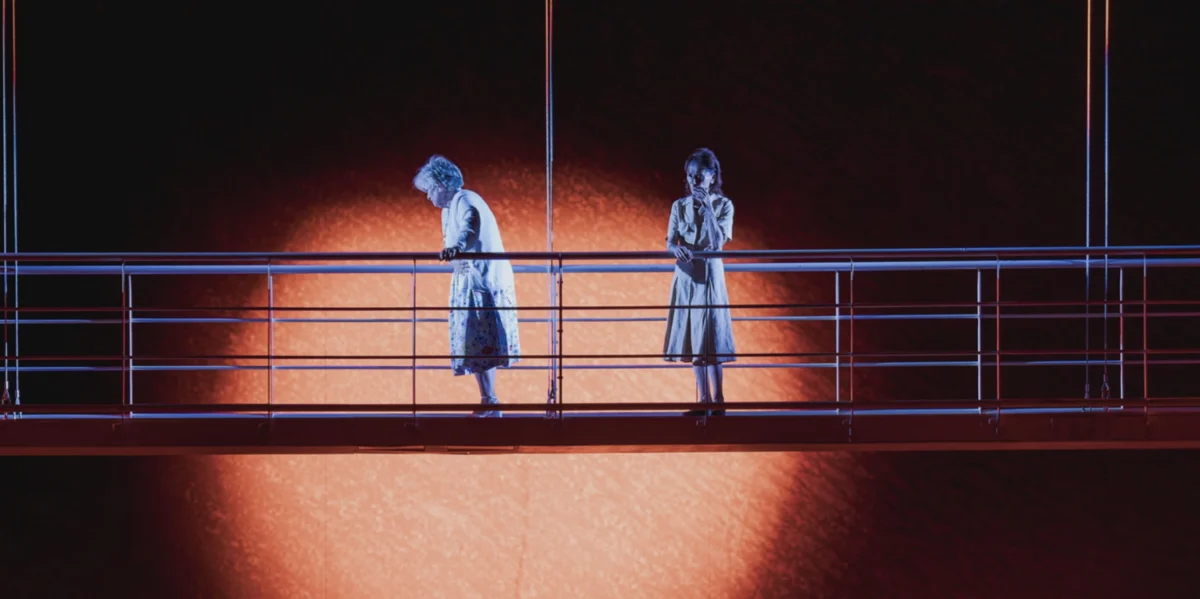
The opera "The Death of Klinghoffer," by composer John Adams and librettist Alice Goodman, has once again found itself at the epicenter of controversy, this time with its new production at the Maggio Musicale Fiorentino. The work, which dramatizes the 1985 hijacking of the cruise ship Achille Lauro and the subsequent murder of Leon Klinghoffer, a 69-year-old Jewish American man in a wheelchair, continues to provoke strong reactions from various factions. While previous stagings have faced accusations of glorifying terrorism and antisemitism, the Florentine production encountered objections from pro-Palestinian protesters who alleged a "biased" portrayal of the events. This recurring controversy underscores the operatic work’s inherent tension when confronting the deeply entrenched and emotionally charged Israeli-Palestinian conflict.
The opera’s genesis lies in the tragic events of October 7, 1985. A group of Palestinian Liberation Front (PLF) militants, seeking to leverage the ship as a bargaining chip to secure the release of Palestinian prisoners held in Israel, seized control of the Achille Lauro as it sailed from Genoa to Alexandria, Egypt. The hijacking escalated dramatically when the militants, in a brutal act of violence, murdered Leon Klinghoffer, a retired businessman from New York, and disposed of his body overboard. The incident drew international condemnation and significantly heightened tensions surrounding the Israeli-Palestinian conflict.
Adams and Goodman, in their artistic endeavor, have consistently sought a complex and multifaceted approach, attempting to present the human dimensions of the conflict rather than adhering to a simplistic narrative of good versus evil. This very neutrality, however, has placed them in a precarious position, drawing criticism from both sides of the political spectrum. Those who view the hijacking as a heinous act of terrorism decry any attempt to humanize the perpetrators or explore their motivations. Conversely, pro-Palestinian advocates argue that the opera fails to adequately contextualize the actions of the hijackers within the broader historical narrative of Palestinian dispossession and struggle, thus imposing a perceived moral equivalence that diminishes the gravity of the atrocity.
The latest production, helmed by acclaimed director Luca Guadagnino, has navigated these treacherous waters with a reportedly sensitive interpretation. Guadagnino’s approach, as described in reviews, deliberately de-emphasized the religious and nationalistic fervor of the participants, focusing instead on the universal human drama and the devastating impact of conflict. The murder of Leon Klinghoffer was presented as an unequivocally heinous act with profound personal consequences. However, Guadagnino reportedly framed this singular act of violence within the larger tapestry of historical conflict, where motivations are often obscured and judgments become less certain. The terrorists were depicted not as monolithic villains but as individuals caught in the maelstrom of war, embodying a spectrum of idealism, misguided conviction, and outright malice. The opera, in this reading, suggests that even horrific acts can be rendered as tragically small events when viewed against the immense, often inscrutable, forces that shape the destinies of nations. This nuanced perspective, critics suggest, aligns perceptively with the intricate musical and textual landscape crafted by Adams and Goodman.
The Indispensable Role of the Chorus
A defining characteristic of "The Death of Klinghoffer" is the monumental role assigned to the chorus. The Maggio Musicale Fiorentino’s Coro del Maggio Musicale Fiorentino, under the masterful direction of chorusmaster Lorenzo Fratini, delivered a performance that has been widely lauded for its exceptional quality. The opera features seven substantial choral sections, each serving as a crucial repository of historical, philosophical, and moral observations that illuminate the intertwined perspectives of Israelis and Palestinians and provide the narrative’s driving force.
In the opera’s opening scenes, the chorus articulates the profound yearning of both peoples for a homeland free from violence. The Florentine chorus masterfully conveyed these desires, enabling the audience to empathize with the aspirations of both sides, even as the inherent impossibility of simultaneously satisfying all outcomes became starkly apparent. This effectively established the intractable nature of the conflict and drew the audience into its complex web.
Throughout the opera, other choral passages are strategically placed, continually reinforcing the human tragedy of Klinghoffer’s murder within a broader historical and existential context. For instance, the "Desert Chorus" from the second act evokes the stark, indifferent expanse of the Arabian desert. Yet, it also draws parallels between this desolation and the devastation wrought by war, underscoring humanity’s ultimate reliance on divine providence for sustenance and solace.
Guadagnino’s directorial vision for the choruses was instrumental in shaping the audience’s perception of the production. Rather than diminishing the distinctions between the collective voices and the intimate personal drama of Klinghoffer’s fate, Guadagnino chose to delineate them almost entirely. The chorus functioned as an external, observing agency, deliberately detached from the historical period of the soloists. Dressed in neutral, timeless designs, they occupied a different dimension, their presence suggesting an eternal, higher commentary on human events.
The Coro del Maggio Musicale Fiorentino’s performance was distinguished by its profound sensitivity, capturing the full spectrum of emotions and the dynamic energy inherent in each choral piece. Their exceptional clarity and articulation of the English text rendered surtitles largely superfluous, allowing for an uninterrupted immersion in the opera’s unfolding narrative.
This sense of ethereal detachment was further amplified by Ella Rotschild’s compelling choreography. The dancers moved in a parallel dimension to the chorus, sometimes accompanying them. Their routines, characterized by anxious, dislocated, and often jerky movements, created a palpable sense of unease that, while at odds with conventional dance, was always in perfect sync with the music and the dramatic tenor of the opera. These choreographed interludes, often appearing static, were brilliantly animated, breathing life into potentially inert scenes.
A Coherent and Impactful Narrative Presentation
With the substantial ballast and contextual depth provided by the exceptional chorus and dancers, the soloists were empowered to concentrate on the dramatic core of Klinghoffer’s murder. This division of focus allowed for the maintenance of dramatic momentum, enabling the passengers and terrorists aboard the Achille Lauro to enact their roles in what felt like the latest chapter of an age-old conflict. Guadagnino skillfully utilized the stage space to manage the rising tensions onboard. During solo monologues, for instance, terrorists might be depicted in threatening postures at the rear of the stage, while at other times, they would attempt to pacify the distressed passengers, adding layers of complexity to their characters and the unfolding events.
Guadagnino, who also served as the production’s scenographer, opted for a realistic staging, unequivocally set aboard the cruise ship. The stage was ingeniously divided into two or three levels, featuring a rail around the upper deck. The set’s flexibility, with the ability to be raised or lowered, seamlessly revealed cabins and larger interior spaces below, creating a dynamic and immersive environment. The choral sections were predominantly performed on a more minimalist, uncluttered stage, emphasizing their role as an overarching commentary.
Marta Solari’s costume designs were deliberately understated, effectively blending with the audience’s perception of 1980s tourists and Palestinian militants. Peter van Praet’s lighting design was masterfully executed, creating the precise atmospheric impressions required for both the choral interludes and the intense dramatic scenes, enhancing the overall impact of the production. Despite occasional minor challenges with scene transitions, the staging coalesced into a remarkably successful presentation, with the dramatic narrative weaving seamlessly through the substantial choral blocks, creating a cohesive melding of immediate human drama and its broader historical context.
Stellar Cast Elevates the Performance
The entire cast delivered compelling acting performances, each bringing to life their individual characters with remarkable depth. There was a notable absence of reliance on stock theatrical gestures, exaggerated emoting, or facile characterizations. The protagonists emerged as nuanced, living entities, allowing the audience to engage with them beyond the conventional archetypes associated with their roles. This contributed significantly to the drama’s convincing degree of realism, most vividly exemplified in the portrayal of the four terrorists.
Roy Cornelius Smith, as Molqi, the leader of the terrorist group, presented a chilling depiction of a vicious idealist. His approach was practical and largely unemotional, framing Klinghoffer’s murder and the terrorization of passengers as, in his view, necessary actions. This interpretation offered a stark glimpse into a mindset where violence is perceived as a pragmatic tool for achieving political ends.
In contrast, Rambo, as portrayed, was a character seething with hatred. He appeared to revel in the potential for inflicting violence upon the defenseless passengers and crew. The sneering, contemptuous tone he employed left no room for doubt regarding his malevolent intentions.
Mezzo-soprano Marvic Monreal offered a layered portrayal of Yazmir, the sole female terrorist. While clearly dedicated to the cause, her performance revealed moments of unexpected sympathy. Her full-bodied, rich vocal delivery effectively conveyed the assertiveness of her convictions, yet she also managed to evoke a sense of empathy for Mrs. Klinghoffer’s plight, adding a complex human dimension to her character.
Baritone Levent Bakirci delivered a sensitive interpretation of Mamoud, presenting him as a reflective, idealistic, and fundamentally humane individual. Bakirci’s performance conveyed Mamoud’s genuine concern about the group’s actions and his profound doubts about the path they had taken. At one point, Mamoud left the stage and moved among the audience, a poignant plea for understanding that resonated deeply due to Bakirci’s clear, articulate, and emotionally resonant phrasing.
The opera’s central figures, Leon Klinghoffer and his wife, received expressive and profoundly touching interpretations. Baritone Laurent Naouri expertly embodied the fear and courage that defined Leon Klinghoffer. While projecting an outward calm and defiance in the face of extreme intimidation, Naouri skillfully conveyed the underlying vulnerability. His sensitive rendition of the soliloquy "The Falling Body" beautifully captured its psychological layers and metaphorical significance, a poignant prelude to the "Day Chorus," which depicts the dismemberment of his submerged form.
Soprano Susan Bullock created a deeply moving portrayal of Marilyn Klinghoffer. The occasional subtle frailty in her voice allowed her to effectively convey the emotional devastation she endured in witnessing her husband’s death. Her final monologue, which brings the opera to a close, was particularly impactful, showcasing Bullock’s beautiful vocal quality and her sensitive handling of Adams’s melodies.
Bass-baritone Daniel Okulitch was a strong, authoritative, and morally grounded Captain. His monologues allowed him to effectively showcase his thoughtful, courageous, and interpretive qualities. His character provided a stable, rational presence amidst the chaos.
Bass Andreas Mattersberger delivered a forthright, forceful, and passionate reading of the First Officer, adding a vital layer of authority and urgency to the ship’s command structure.
Mezzo-soprano Janetka Hošco offered an amusing and delightfully eccentric interpretation of the British Dancing Girl, whose persona seemed to have stepped directly from the vibrant stages of a West End musical, providing a moment of unexpected levity.
Mezzo-soprano Marina Comparato impressed with two distinct and well-defined characterizations as the Swiss Grandmother and the Austrian Woman, adding further texture to the diverse passenger roster.
The Orchestra del Maggio Musicale Fiorentino, under the baton of Lawrence Renes, provided a dramatically sensitive accompaniment, meticulously synchronized with the staging. The orchestra’s control over dynamics, momentum, and expressive force expertly managed the fluctuating levels of intensity and urgency inherent in the music, generating the requisite atmosphere and tension. However, it was the exquisite, detailed textures that Renes elicited from the orchestra that truly distinguished the performance, revealing the profound depth and complexity of Adams’s score.
One common critique leveled against "The Death of Klinghoffer" is its oratorio-like structure, with its extensive choral passages and occasional static scenes. However, Guadagnino’s imaginative staging effectively countered this perception, demonstrating that the work is indeed a viable and potent opera. His handling of the choruses allowed the drama to breathe and find its own narrative space without diminishing the collective voices’ crucial role. It became evident that the opera’s exploration of Palestinian and Israeli perspectives could easily be transposed to the combatants in numerous other conflicts. The underlying themes of displacement, trauma, and the cyclical nature of violence are tragically relevant across a wide array of historical and contemporary wars, and atrocities akin to Klinghoffer’s murder, regrettably, are more pervasive than many societies care to acknowledge.