Aveline Kirana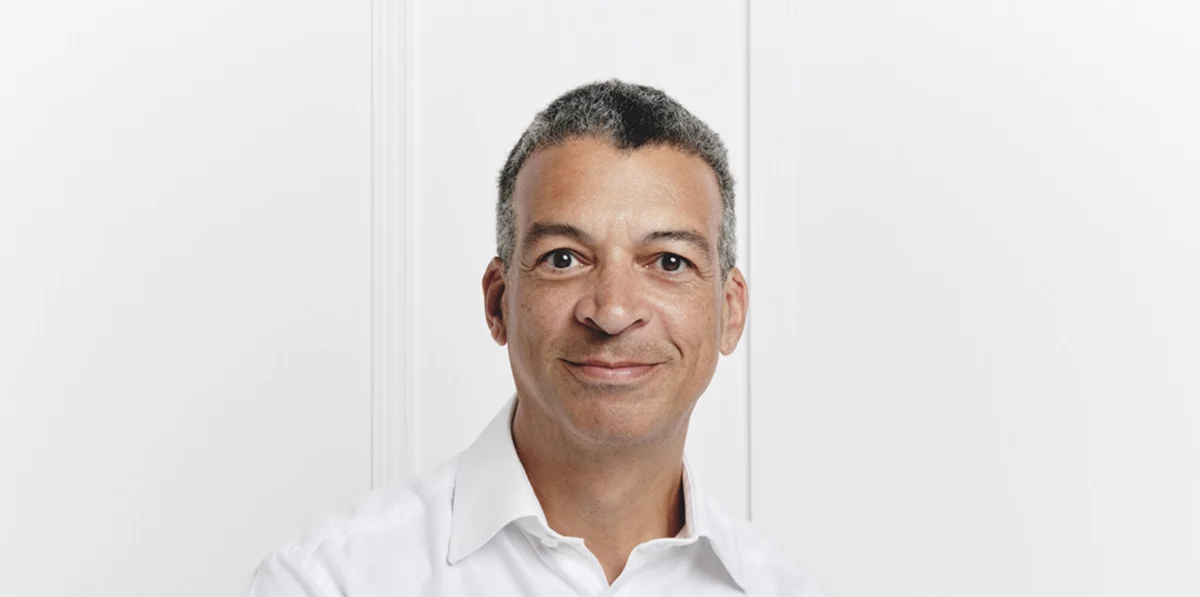
The picturesque setting of Paxton House will once again resonate with the sounds of chamber music in July 2026, as the estate prepares to host its annual festival. Now in its twentieth year, the festival has cultivated a distinguished reputation for showcasing a diverse range of classical chamber music, from intimate solo recitals to complex small ensembles. Its programming spans centuries of instrumental and vocal repertoire, demonstrating a commitment to both historical depth and contemporary interpretation. Beyond its core classical offerings, the festival has also embraced cross-genre collaborations, notably including folk music, broadening its appeal and reinforcing its status as a significant cultural event in Scotland.
This year’s iteration promises a stellar lineup of performers, continuing a tradition of attracting high-caliber artists. Among the confirmed participants are the acclaimed pianist Angela Hewitt, the renowned Dunedin Consort, pianist Steven Osborne, and the talented guitarist Samrat Majumder, alongside numerous other distinguished musicians. The consistent quality of performers over two decades has solidified the Paxton Festival’s position as a must-attend event for chamber music aficionados and a platform for artistic excellence.
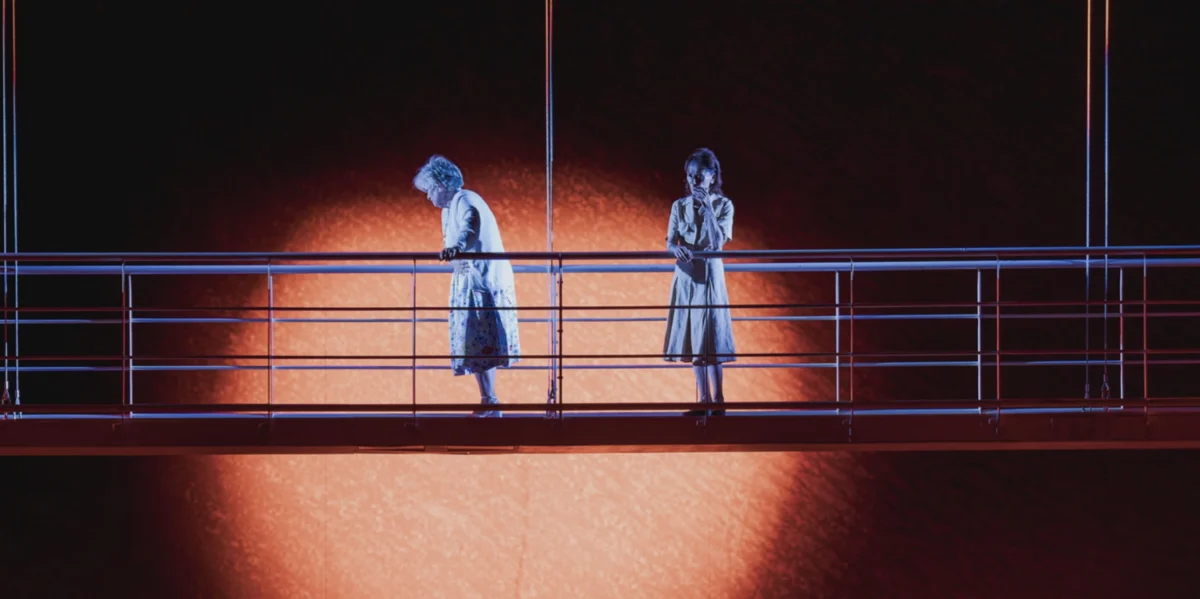
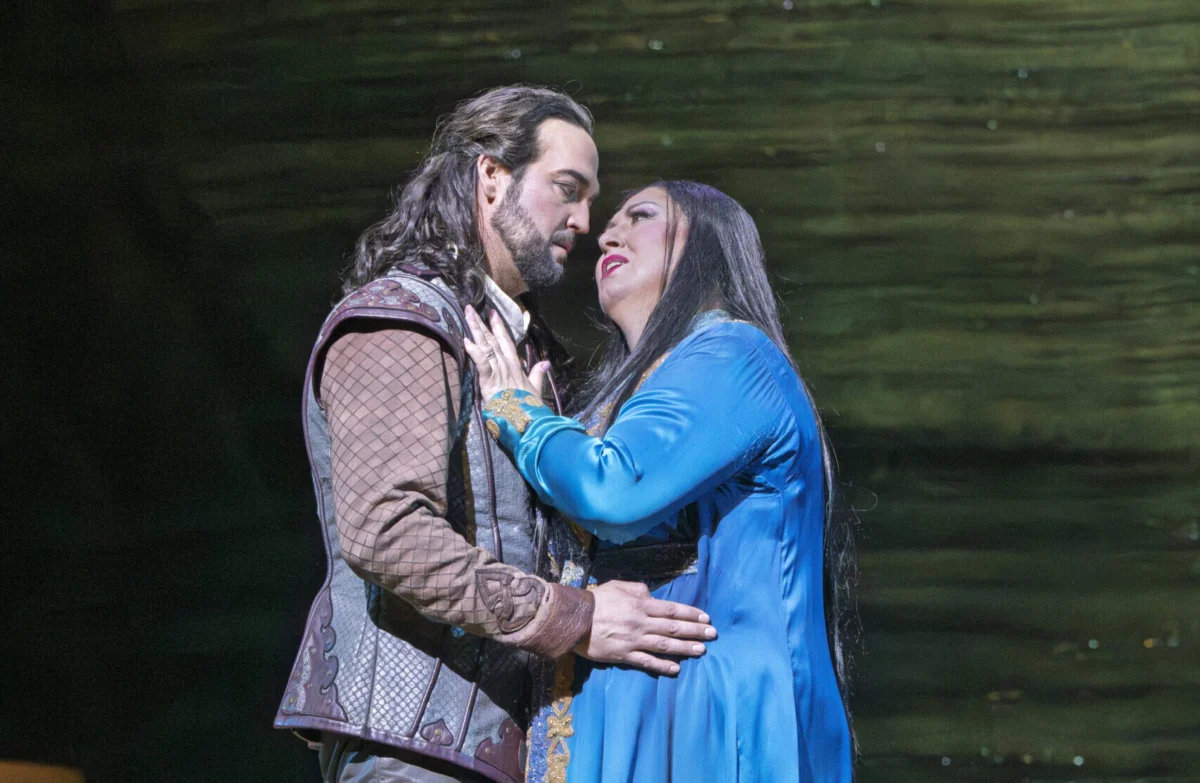
A significant aspect of this year’s festival is the participation of baritone Roderick Williams, a headline performer whose presence underscores the event’s artistic caliber. Williams, met with OperaWire in Amsterdam, was concurrently engaged in a groundbreaking production at the city’s Opera Forward Festival. He is performing in Michele Van der Aa’s new opera, “Theory of Flames,” a work that exemplifies the cutting edge of operatic innovation. This opportune encounter provided a unique platform for an in-depth interview, delving into Williams’s artistic perspectives and his experiences with contemporary opera.
The Intersection of Technology and Artistry in Van der Aa’s Operas
The conversation with Roderick Williams quickly turned to the distinctive compositional and directorial style of Michele Van der Aa. Williams’s long-standing relationship with the composer dates back twenty years to his first collaboration on Van der Aa’s opera “After Life.” He recounted his initial apprehension upon learning that Van der Aa would also be directing the production, stemming from a limited prior knowledge of his work.
“My first thought was, ‘Uh oh, this could be awkward,’” Williams admitted, recalling the email notification about the role. “I knew very little about him at this point.” However, any concerns were quickly dispelled by Van der Aa’s multifaceted expertise. “Michel has an incredible background in many disciplines, including composing, directing, writing libretti, making films and sound engineering,” Williams explained. “He has an incredibly innovative approach towards opera, so much so that he has to push the boundaries of the available technologies to their limits and even beyond.”
Williams cited a specific example from “After Life” where he had to perform a quartet with himself, a feat achieved by integrating three recorded images of himself with his live performance. This early experience foreshadowed the sophisticated integration of recorded and live elements that has become a hallmark of Van der Aa’s work.
“Theory of Flames”: A Seamless Blend of Recorded and Live Performance
In “Theory of Flames,” the fusion of recorded and live ensemble singing reached new heights. Williams detailed the intricate process involved, highlighting the challenge of creating a cohesive performance when so much of the visual and sonic material was pre-recorded.
“A film crew had been working on the piece months before I became involved with the production,” Williams stated. “When the singers were given the score, we had no idea of what was happening in certain scenes; the score contained hundreds of bars of rests because these parts are all on film.” The composer’s holistic vision was crucial to navigating this complexity. “Michele would talk us through what was going to happen, but we still had no concrete knowledge of what this would actually entail. Michele was the only person who knew how everything fitted together.”
The filmed segments, featuring Julia Bullock in the role of the Scientist, were shot nearly a year before the live performers had even seen their parts. “She had no idea what the rest of the score was going to contain, as Michele had not written it,” Williams elaborated. “As no changes to the film score were possible, everything had to be written around it. It was like writing the letter scene in ‘Eugen Onegin’ first and then going forwards and backwards to write the rest of the opera.”
The illusion of real-time interaction between recorded and live performers was particularly striking. Williams expressed his amazement at witnessing Mary Bevan and Aphrodite Patoulidou singing duets with Bullock’s recorded presence, creating an uncanny sense of genuine connection. “The chemistry between them was amazing,” he remarked.
The success of these complex productions hinges critically on the sound mixing team. Williams emphasized their indispensable role, noting that their work transcends that of standard amplified opera performances. “The sound mixing team is crucial for Michele’s operas, even more so than for miked performances of standard operas,” he explained. “If you have ever watched a performance in which the singers have been miked, then you know that they sound as if they are singing through the speakers and not from the stage, and it can be quite frustrating. Michele cannot tolerate this, so he and his extraordinary team had to devise ways to overcome the problem so that the component parts of the sound are integrated into a whole.”
Van der Aa’s Vision: Redefining the Operatic Experience
Williams firmly believes in the success of Van der Aa’s innovative approach, asserting that it offers a fundamentally different way of storytelling. He drew a parallel with contemporary viewing habits, contrasting typical opera attendance with the widespread popularity of streaming services like Netflix.
“If you stopped people in the street and asked them if they go to the opera, I expect maybe 1 in 100 will say yes, but if you asked them if they watch Netflix, then almost everyone would say yes,” Williams observed. “Yet there is nothing in Van der Aa’s music or the narrative he conveys on the screens that would surprise them. It’s a soundtrack that tells a story. When you watch something on Netflix, you are focused on what you are seeing and the music is there to enhance the narrative; it is a means to an end.”
Van der Aa’s operas, according to Williams, create a hybrid of this experience, where live music, performed with intense dedication by musicians, is meticulously synchronized with the filmed elements. “He has live music with a band playing their socks off to make sure the music fits with the live singers and the screened film track,” he described.
The composer’s commitment to developing bespoke technology for each dramatic concept is another key aspect. Williams cited “The Sunken Garden,” where three live singers are augmented by 3D images of two additional singers for a quintet, blurring the lines between reality and illusion. This deliberate ambiguity is a consistent feature in Van der Aa’s work, as seen in “Theory of Flames” where a choir appears to materialize from the fire.
“He loves to push at boundaries and challenge people’s perceptions,” Williams noted. He recalled “Upload,” where Julia Bullock performed live while Williams’s filmed image was projected in various sizes, illustrating Van der Aa’s fascination with questioning the nature of reality. “What is it that is real, and what does that actually mean?” Williams pondered.
The Synergy of Technology and Artistic Intent
Addressing the question of whether Van der Aa prioritizes technology over art, Williams affirmed that it is a harmonious integration of both. He acknowledged the potential frustrations the composer might face in translating his ambitious artistic visions into tangible stage productions.
“Obviously, it is both,” Williams stated. “I think it must be frustrating being Michele. He has these amazing ideas and stories that he wishes to bring to the stage, such as uploading consciousness into a machine, but is then faced with the problems of conveying them. How can he integrate a soundtrack with live music that is able to breathe with the conductor, rather than the conductor following the soundtrack?” Ultimately, Williams concluded, “Everything he does is done to promote his artistic vision.”
The unique nature of Van der Aa’s operatic creations raises questions about their stageworthiness without his direct involvement. Williams suggested that directing a Van der Aa opera independently would be an extraordinary challenge, given the composer’s comprehensive control over every component.
“Conventional composers write an opera and the company takes it away and does with it what they want,” Williams explained. “I don’t know if there are any productions of Michele’s operas that he has not directed himself. It probably relies on him to put it on stage; he is the only person who knows the mechanics of the piece. He is more Wagnerian than Wagner! He has a total vision of the complete work. I have no idea what the work would be if you removed Michele from the directorial process. I just cannot conceive of a company taking one of his works and then bringing in another director.”
Regarding the potential obsolescence of Van der Aa’s technologically driven works as technology advances, Williams offered a nuanced perspective. He drew a parallel with the enduring relevance of older operas, which are continually reinterpreted with contemporary technological and artistic approaches.
“To a certain extent, his operas are rooted in the technology he has available to him,” Williams conceded. “However, today, we use 21st-century technology to stage operas written over 400 years ago. Monteverdi may not recognize today’s sets and costumes or interpretations, but as soon as he heard the music he would know exactly what was happening. And who knows what new technologies will exist in the future and how they could be used by directors of the future to bring van der Aa’s works alive. Also, there is no reason why directors of the future could not go back in time and reuse the old technologies and present his operas from a historically informed perspective.”
Roderick Williams at Paxton House: A Recital of Poetic Landscapes
The interview then shifted focus to Roderick Williams’s forthcoming recital at Paxton House, a cornerstone event of the festival that highlights his deep commitment to the art song repertoire. Williams’s involvement with the Paxton Festival is rooted in a long-standing personal connection.
“When I lived in London, I used to live a few roads away from Angus Smith,” Williams recalled. “We used to sing together in a choir. When he became the artistic director of the Paxton Festival, he invited me to do a recital and a masterclass.”
Paxton House, a historic Scottish country house situated on the banks of the River Tweed near the English border, provides an idyllic and intimate venue for the festival. Williams finds the house’s modest hall, adorned with imposing portraits, to be perfectly suited for small-scale performances. “I love its size; the audience is fairly small and this allows for an intimate connection to develop,” he said. His previous performance at Paxton in 2022, shortly after the lifting of COVID-19 restrictions, was a memorable experience, and he expressed his pleasure at the opportunity to return.
Addressing the practicalities of performing in smaller venues, Williams acknowledged the challenge of adapting vocal projection. “To be honest it is instinctive,” he stated. “I cannot hear my own voice from a distance; I can only rely on someone telling me. I tend to aim my voice at the people sitting at the back of the room.” His past experience as a classroom music teacher, he believes, cultivated an essential "instinct for the room" that aids him in this regard.
Williams expressed his particular enjoyment of recitals, valuing the variety they offer in contrast to opera. “I like variety and the fact that it offers something different from opera,” he explained. He also cherishes the increased artistic control afforded by recitals, where the program is typically a collaborative decision between the singer and the pianist. “With opera, I have the director and conductor bringing their own ideas and insights and taking many of the decisions, which, of course, makes sense for an event of that nature. But I appreciate the opportunity presented by recitals to be able to fashion my performance in my own way.”
"From the Forest of Dean to the Appalachians": Crafting a Programmatic Narrative
The program for Williams’s recital, titled “From the Forest of Dean to the Appalachians,” is a thoughtfully curated journey through poetry and music. The inspiration for the recital originated from an invitation to perform Douglas Weiland’s “Six Songs to Dymock Poets” at the Three Choir Festival in Gloucester the following year.
“I looked at the songs and decided that rather than shoehorning them into a recital, I would base the concert around them,” Williams explained. The first half of the program is dedicated to songs featuring texts by Dymock poets, including works by Ina Boyle and Herbert Howells, creating a substantial 40-minute segment.
The second half evolved from a poem by the American poet Robert Frost, which concludes Weiland’s cycle. This inclusion of an American poet prompted Williams to explore British composers who found inspiration in the United States. This led him to discover numerous settings of Walt Whitman by composers like Stanford and Vaughan Williams, as well as songs by Arthur Bliss with lyrics by American female poets.
His research revealed a broader scope to Vaughan Williams’s folk song collections. “It was through my research that I realized that Vaughan Williams did not just collect folk songs from the UK but also from further afield, including the Appalachians and New England,” Williams stated.
Thematic Resonance: The Forest of Dean and the Appalachians
The inclusion of the Forest of Dean in the title is a natural connection, given its proximity to the village of Dymock and its likely influence on the poets. The presence of the Appalachians, however, required further explanation.
“No, they aren’t,” Williams clarified when asked if all American pieces originated from the Appalachians. He revealed that his involvement in a project to record Vaughan Williams’s folk songs for AO records unearthed a wealth of material. “I found a couple that I really liked and so filed them away for later use, which included the two Appalachian folk songs that I will be singing in the recital.” These songs, he noted, possess a strong resemblance to English folk songs, lacking a distinctively American lilt, which he attributes to the songs being carried by British emigrants. These two Appalachian folk songs will serve as the closing pieces of the recital, explaining their prominent mention in the title.
Folk Music and Art Song: A Complex Relationship
Williams’s extensive work with art songs derived from folk music prompted a discussion about his personal relationship with folk music. While he appreciates its influence, he admitted that it is not a genre he actively seeks out.
“I wouldn’t say no, but if you asked me if I would seek out folk music or attend a folk festival, then no, I wouldn’t, in the same way I wouldn’t go to musicals like ‘Hamilton,’” he confessed. “This is because I have only limited time on the planet and I want to concentrate on the things that I specialize in.”
He also acknowledged that the process of transforming folk songs into art songs inevitably involves a loss of their original character. “Absolutely!” he exclaimed when asked if something is lost in the process. “It is the same with jazz songs. When you decide to transpose them into art songs, you lose the spontaneity and improvisation. When you take anything from another field and then present it on a stage in a suit, you change it; at a folk festival, for example, there is plenty of beer, which is missing in a theater.”
Williams finds it amusing that composers like Britten, Vaughan Williams, Holst, and Stanford meticulously crafted piano accompaniments and formalized folk songs into fixed compositions, thereby diverging from the fluid nature of traditional folk singing. He recalled a request to transcribe a folk song for a Zulu singer aiming to copyright it, noting that each repetition varied, suggesting that the act of notation itself could undermine the song’s spirit.
The "Manicuring" of Folk Ballads
When pressed on whether performing art song versions of folk ballads constitutes "corrupting or manicuring" them, Williams opted for the latter. “Manicuring them definitely!” he affirmed. “This is partly done to make them acceptable to the audience.”
He offered the example of Vaughan Williams’s popular composition “Linden Lea,” based on a poem by William Barnes. While it sounds like a folk song, Williams discovered that Barnes’s original poem was written in the Dorset dialect and had been “tidied up” for publication. He noted the presence of diacritics over vowels, suggesting a broader pronunciation in the original dialect, which he believes transmitted a stronger sense of place and belonging.
Williams has recorded both the Dorset dialect and the “tidied-up” versions of “Linden Lea,” finding them to possess distinctly different intents. He muses on the potential reaction of publishers to the original dialect and contemplates William Barnes’s own thoughts on the alterations.
The Enduring Value of Art Song
Despite these transformations, Williams sees significant benefits in singing art song versions of folk music. “They offer us a connection with our past, with our identity and lost ways of life,” he stated. These songs, he explained, often contain narratives, including cautionary tales, and, most importantly, beautiful words and melodies that might have been lost if not preserved through art song arrangements.
The Art of Teaching: Workshops and Masterclasses
In addition to his recital, Williams is also conducting a workshop, an activity he clearly enjoys. “Many audience members like to see how things are made. They like to see under the bonnet, so to speak, and I like to work in this sort of environment,” he said. His background as a teacher fuels his passion for nurturing young singers.
“I also learn a lot from them; it gives me a chance to explore my own thoughts on what art song is all about and to check that we are all on the same page,” Williams added. He emphasizes the importance of such engagement in a niche market to maintain relevance and ensure the art form’s continuity.
The workshop participants primarily hail from The Royal Conservatoire of Scotland, with a few from further afield. Williams focuses on providing feedback and advice on performance rather than vocal technique. “You can’t listen to someone sing one song and then start mucking about with their vocal technique: it can be dangerous thing to do and can go very wrong,” he cautioned. He also encourages audience participation, fostering a collaborative and supportive atmosphere, a stark contrast to the more critical approaches of the past.
“I want them to leave the class feeling better than when they arrived,” Williams concluded, recognizing the long-term impact of his mentorship. “Remember I might be working with them five years down the line!” His dedication to fostering the next generation of artists, coupled with his insightful performances, ensures that the Paxton Festival continues to be a vibrant platform for both established and emerging talent.