Nana Wu
Billboard Japan’s acclaimed Women in Music (WIM) interview series has made its highly anticipated return, spotlighting the boundary-pushing quartet ATARASHII GAKKO! The initiative, established in 2022, stands as a cornerstone of Billboard Japan’s commitment to celebrating the pivotal contributions of female artists, producers, and executives within the vibrant Japanese music and entertainment landscape. Mirroring the esteemed global Billboard Women in Music honors, this series aims not only to acknowledge success but also to inspire future generations of women through the impactful work of their predecessors. The current feature with ATARASHII GAKKO! is a prominent highlight within Japan’s broader WIM project, underscoring the group’s escalating influence both domestically and internationally.
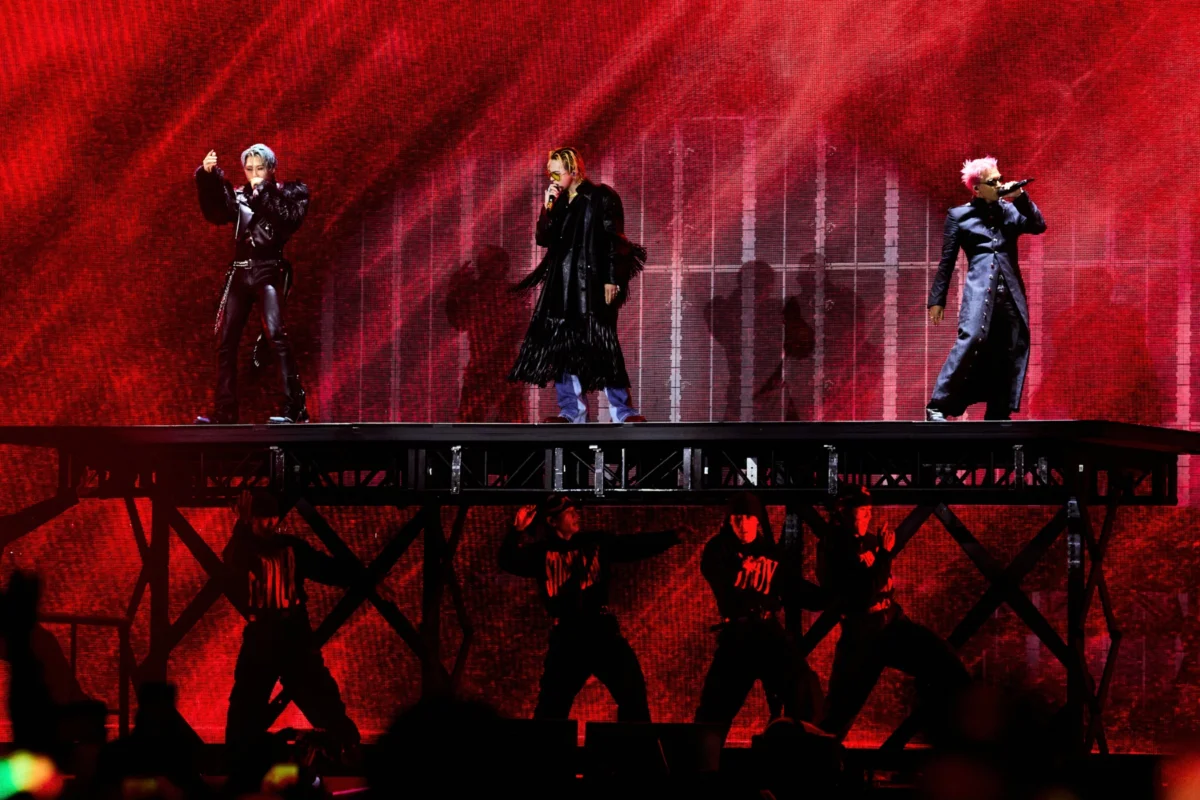
This latest in-depth interview with the four members of ATARASHII GAKKO! – SUZUKA, MIZYU, RIN, and KANON – arrives as a significant precursor to the exclusive one-night-only special live event, "Women in Music – EQUAL STAGE," presented by Billboard Japan and Spotify on June 9. Marking their second appearance in this prestigious interview series, the group, now in its eleventh year since formation, continues to champion its foundational concept of "going beyond (hamidashi) through individuality and freedom." Renowned writer Rio Hirai engaged with the quartet to delve into their distinctive philosophy of standing out, the profound bonds that unify them, and the unique energy they intend to bring to the eagerly awaited June 9 performance.
The Genesis and Evolution of Billboard Japan’s Women in Music
Billboard Japan’s Women in Music initiative represents a strategic and culturally significant expansion of the global Billboard brand into the nuances of the Japanese market. Launched two years ago, the series quickly established itself as a vital platform for recognizing and elevating the voices of women who are shaping the industry. In a traditionally male-dominated sector, and even within the global music landscape, initiatives like WIM play a crucial role in promoting gender equality, celebrating diverse talents, and fostering an environment where female professionals can thrive. The program is not merely about recognition; it actively seeks to create role models and mentors, inspiring younger women to pursue careers in music and entertainment without inhibition.
The partnership with Spotify for the "EQUAL STAGE" event further solidifies the initiative’s reach and impact. Spotify, as a leading global audio streaming service, brings unparalleled access to a vast audience and a commitment to championing artists from diverse backgrounds. Their collaboration with Billboard Japan on "EQUAL STAGE" underscores a shared vision to provide a powerful platform for female artists, ensuring their music and messages resonate widely. Such collaborations are instrumental in breaking down barriers and fostering a more equitable and representative music industry.
ATARASHII GAKKO!: A Decade of Defiance and Global Ascent
ATARASHII GAKKO!, officially translated as "New School Leaders," has carved a unique niche in the global music scene since their debut. Their distinct blend of J-pop, rock, dance, and performance art, characterized by their iconic sailor-style school uniforms and highly energetic choreography, has captivated audiences worldwide. The group’s "hamidashi" philosophy – a concept that embraces individuality and freedom within established norms rather than outright rebellion – has become their enduring mantra, resonating deeply with fans who seek authenticity and self-expression.
Reflecting on their journey, SUZUKA, the group’s dynamic frontwoman, shared insights into their mindset as they navigate their eleventh year. "Coming off our tenth anniversary and stepping into year eleven, hitting double digits felt like the right moment for a fresh start," she noted. This period has seen them actively pursue a "back to basics" approach while simultaneously projecting a "forward-charging version of ourselves, one with an eye on the future." This dual strategy highlights their maturity as artists, balancing a reverence for their roots with an insatiable drive for innovation and expansion.
The year 2026 is proving to be a landmark year for ATARASHII GAKKO!, marked by an ambitious international touring schedule that speaks volumes about their rapidly expanding global footprint. In July, they are slated to perform at Lollapalooza in Berlin, a significant milestone for any international artist. This will be followed by anniversary celebrations in the Czech Republic and London, underscoring their growing European appeal. September will see them making a stop in Seattle, further cementing their presence in North America. The year will culminate with a comprehensive Latin America tour in December, including dates in Chile, Brazil, and Mexico. These extensive international engagements are indicative of their burgeoning global fanbase and their successful efforts to transcend language and cultural barriers through their universally appealing artistry.
Personal Philosophies and Memorable Moments of 2026
The interview provided a platform for the members to reflect on their individual philosophies and the most impactful moments of the first half of 2026. KANON reiterated her unwavering commitment to "living fully in the present," a sentiment she first articulated in their previous WIM interview. "That hasn’t changed at all. We always say, ‘As long as the four of us are living fully in the present together, that’s our seishun (youth).’ Every day, I’m giving everything I have to the here and now," KANON affirmed. This philosophy of embracing the immediate moment is a powerful testament to their collective resilience and shared passion.
RIN highlighted a particularly meaningful event from their recent calendar: "After finishing our hall tour, we put on a solo show in April built around the theme of an entrance ceremony." This highly conceptual performance, featuring traditional red-and-white curtains, a large lectern, and an audience welcomed with applause, was designed to evoke the nostalgic feeling of school entrance ceremonies deeply ingrained in Japanese culture. RIN described it as "a really meaningful show for us where we dug deeper into what ATARASHII GAKKO! is all about," demonstrating their commitment to artistic exploration and cultural connection.
MIZYU emphasized the cumulative nature of their experiences, stating, "Every single day has been memorable. The shows, of course, but also the days of creation leading up to them, and the days after when we take in the audience’s reactions." She also pointed to a significant focus on music production: "We also heavily focused on producing new music in the first half of the year, so each day has felt truly precious." SUZUKA enthusiastically concurred, reinforcing the collective sentiment of a period rich in creative output and experiential learning.
Transcending Borders: Performance as a Universal Language
ATARASHII GAKKO!’s ability to connect with diverse audiences globally, often in regions where Japanese is not spoken, is a testament to the power of their performance. RIN elaborated on their approach: "Even if there’s a language barrier, we have performance as our weapon. So we use facial expressions and big movements to convey ‘this is what we’re saying right now’ and ‘this is what joy looks like,’ bringing the same energy we give in Japan, just with everything dialed up." This deliberate amplification of their stage presence ensures their message and emotion transcend linguistic divides.
Their iconic sailor-type school uniforms, while second nature to them, are perceived as something profoundly "iconic" by international audiences, further enhancing their unique appeal. SUZUKA provided a vivid example of cultural resonance: "Like our ‘attention, bow!’ routine, which is totally familiar in Japan. When we do it in other countries, just that one gesture gets a huge roar of applause." This observation highlights the fascinating interplay between cultural familiarity and exotic novelty, where everyday Japanese gestures transform into captivating performance elements for a global audience. The group’s understanding and skillful deployment of these cultural nuances are key to their international success, making them compelling cultural ambassadors for modern Japan. Their rising popularity aligns with a broader global surge of interest in J-pop and Japanese culture, with groups like ATARASHII GAKKO! at the forefront of this cultural exchange.
Despite their growing international acclaim, SUZUKA maintains a grounded perspective on their journey. "I think we still have a long way to go," she asserted. While acknowledging the "amazing" number of fans they’ve garnered over a decade, she emphasized that "just being satisfied with that would be a waste – we should be using that as fuel to keep growing." This relentless pursuit of self-improvement and discovery underscores their artistic integrity. "We always want to be on an adventure and want to discover sides of ourselves we haven’t seen yet," SUZUKA added, encapsulating their philosophy of continuous evolution and boundless potential.

The Enduring Bonds: 11 Years of Evolution and Synergy
The eleven-year journey of ATARASHII GAKKO! has forged an extraordinary bond among its members, who have known each other since junior high. SUZUKA reflected on this shared history: "We’ve known each other since around the second year of junior high, so we really went through those formative adolescent years together. We have bigger bones now. [Laughs]" This shared developmental period has laid an unbreakable foundation for their professional collaboration. She highlighted the dynamic balance within the group: "When we’re making songs or choreography, we each draw inspiration from our daily lives and bring it to the group. There’s always some kind of new change happening, but at the same time there’s the complete opposite, a sense of comfort and stability. It’s an interesting balance."
MIZYU elaborated on this unique synergy: "The foundation doesn’t change, but everyone keeps sharpening the individuality they’ve built through their own adventures, and we find the shape that fits each new edge. It feels like each piece keeps updating and slotting together. Maybe things like curiosity, and the drive to keep evolving are actually growing stronger. I do think we’ve matured." This insightful description paints a picture of a group that celebrates individual growth while maintaining a cohesive unit.
RIN pinpointed the core of their enduring connection: "The reason the four of us can keep fitting with each other is because we all have a deep respect for that moment twelve years ago when we first met and burst out laughing together. Even as we change, we each hold the same feeling that being the four of us is something to cherish." KANON echoed this sentiment, marveling at their evolving dynamics: "We’re together almost every day, and the conversations when all four of us get together keep evolving too. Even if the shape of someone’s feelings shifts, somehow it still fits, and there are no holes. It’s a remarkable kind of relationship." These statements collectively illustrate a profound interpersonal harmony that serves as the bedrock of ATARASHII GAKKO!’s artistic and personal resilience.
Deconstructing "Hamidashi": A Philosophy of Creative Freedom
The group’s central tenet of "hamidashi" (going beyond the norm) is meticulously defined by SUZUKA, distinguishing it from mere rule-breaking. "The concept is hamidashi, not ‘marudashi’ (anything goes). The latter means breaking rules, violating the school code. Hamidashi is about how much freedom and individuality you can find within the rules that exist," she explained. This nuanced interpretation positions "hamidashi" not as rebellious defiance but as ingenious creativity within established frameworks. "When you shift your perspective, you’ll find there’s plenty of room for adventure just by pushing to the limit of what the rules allow. It works because the four of us are intuitively tuned to each other," SUZUKA added, emphasizing the collective understanding and shared vision that enables this philosophy to flourish.
KANON expanded on the global application of "hamidashi," particularly concerning cultural sensitivity during their international performances. "When you step outside Japan, the rules are really completely different from country to country. Even with choreography, something totally fine in Japan can carry a slightly different meaning overseas," she observed. This awareness leads to practical adjustments: "When that happens, we ask people locally and change the moves on the same day. There’s always been a spirit of wanting to respect the rules of each country in order to be accepted by people around the world." This adaptable approach demonstrates a sophisticated understanding of cultural diplomacy, allowing them to remain true to their "hamidashi" spirit while honoring local customs.
Empowerment Through Individuality: Advice for Aspiring "Hamidashis"
Addressing those who might find the concept of "going beyond the norm" intimidating, the members offered profound and encouraging advice. SUZUKA acknowledged the inherent fear: "I understand the fear. There are moments when even we feel uncertain about how far we can go." However, she quickly reframed failure as a necessary stepping stone: "But you can’t see new scenery without breaking something open first. I think the anxiety comes from being scared of failure, but I think you should just treat failure as the starting point. Failure is normal." Her pragmatic advice continued: "Learn from it, take it as material pointing you toward success, and just be like, ‘Oh, I failed’ in a matter-of-fact way. As long as you’re not dead, you’ll be okay. Go on the adventure, crash and burn, and get back up." She also emphasized the importance of self-care: "And if you need something to help you get back up, reach for music, look up at the sky – find whatever heals and replenishes you in your own way." This holistic perspective on resilience and self-compassion offers a powerful message of empowerment.
MIZYU stressed the highly personal nature of "hamidashi": "I think how you interpret ‘going beyond the norm’ is completely up to you. Wanting to do something different is one form of it. Just living each day as yourself, that also counts." She alleviated pressure, advocating for personal pace and collective support: "You don’t have to feel pressured to be like that, and you don’t have to do it alone. Finding people to do it with might be a form of going beyond the norm, too. No pressure, just do it in the direction you want to, when you feel ready. That’s the important thing."
KANON’s advice focused on internal validation: "Even something like being able to tell yourself ‘I like this’ about something you’d hold back from saying out loud because you’re worried about what people think – that counts too. I want everyone to always honor their own feelings." RIN further elaborated on the collaborative and flexible nature of "hamidashi": "‘Going beyond the norm’ can sound a bit aggressive, or like you have to charge ahead on your own, but that’s not necessarily the case. You can have someone to do it with, and sometimes just asking someone, ‘I’m thinking of ‘going beyond the norm,’ what do you think?’ is enough to feel more secure about it." She concluded with a liberating thought: "You don’t have to do it right now, either. Everyone has their own pace in life, their own comfort zone. Do it when you want to, and if it’s not the right time, that’s fine too. I live with the belief that human beings are allowed to be far freer than they think."
"Women in Music – EQUAL STAGE": A Confluence of Female Talent
The upcoming "Women in Music – EQUAL STAGE" event on June 9 promises to be a landmark occasion, bringing together ATARASHII GAKKO! with a stellar lineup of diverse female artists: Awich, Hitsujibungaku, and LANA. RIN expressed immense excitement for the unique blend of talent: "All women, all different generations, all completely different genres. We’ve performed with Awich a few times and she always empowers us. LANA is younger than us but carries such a powerful energy. And Hitsujibungaku are a duo now, and I imagine they have a whole different presence."
The event is anticipated to foster new musical discoveries for attendees. RIN envisioned, "I think it’ll be a day where even fans of one artist discover an entirely new genre. Someone who comes to see us might be struck by the strength of a female rapper or shaken by Hitsujibungaku’s crystalline voice. That kind of new discovery is what music is all about, so I’m really looking forward to seeing a wide range of people taking in the energy of Japanese female artists." This cross-pollination of genres and fanbases is a core objective of the "EQUAL STAGE" concept.
SUZUKA aptly described the lineup’s dynamic: "The lineup has this quality of being both healing and provocative at the same time. If everyone in that room is open to all of it, the venue will absolutely come alive with a sense of unity. We’re just gonna be us, through and through." MIZYU shared her enthusiasm for the venue itself: "We actually just did our own show at SGC Hall Ariake for its opening in April, so we know firsthand what a wonderful venue it is. I’m excited to go back and feel a completely different atmosphere in the same space." SUZUKA added a historical note, stating, "It might actually be the first time an all-women event has been held at SGC Hall. When I think about that, it feels even more significant." KANON concluded by emphasizing the broader human connection: "Beyond the whole ‘women’ framing, what I’m really excited about is being able to explode with energy as human beings, as ATARASHII GAKKO! This will be the first time these four acts perform together like this, and I can’t wait to see what kind of energy gets unleashed, and what kind of audience we’ll meet."
Broader Implications: Shaping the Future of Japanese Music
The Billboard Japan Women in Music initiative, spearheaded by compelling narratives like that of ATARASHII GAKKO!, is poised to have significant implications for the future trajectory of the Japanese music industry. By actively highlighting female talent across various roles and genres, Billboard Japan is contributing to a cultural shift towards greater inclusivity and recognition. Such platforms are vital in an industry where women have historically been underrepresented in leadership roles and often face unique challenges in achieving global visibility.
The success of ATARASHII GAKKO! on the international stage serves as an inspiring blueprint for other Japanese artists. Their ability to bridge cultural gaps through authentic self-expression and innovative performance demonstrates the immense potential of J-pop to captivate diverse audiences worldwide. Their "hamidashi" philosophy, which encourages creative exploration within boundaries, offers a valuable lesson in adaptability and cultural respect, essential traits for artists navigating a globalized music market.
The "EQUAL STAGE" event, with its diverse lineup and collaborative spirit, further exemplifies this forward momentum. By bringing together artists from different generations and genres, it fosters a sense of community and mutual empowerment among female musicians. This collective strength can lead to increased visibility, greater artistic collaboration, and ultimately, a more vibrant and equitable music ecosystem in Japan and beyond. The partnership with Spotify also amplifies these efforts, leveraging digital platforms to ensure that these powerful female voices reach every corner of the globe, thereby playing a crucial role in shaping the narrative of contemporary Japanese music.