Johan Budi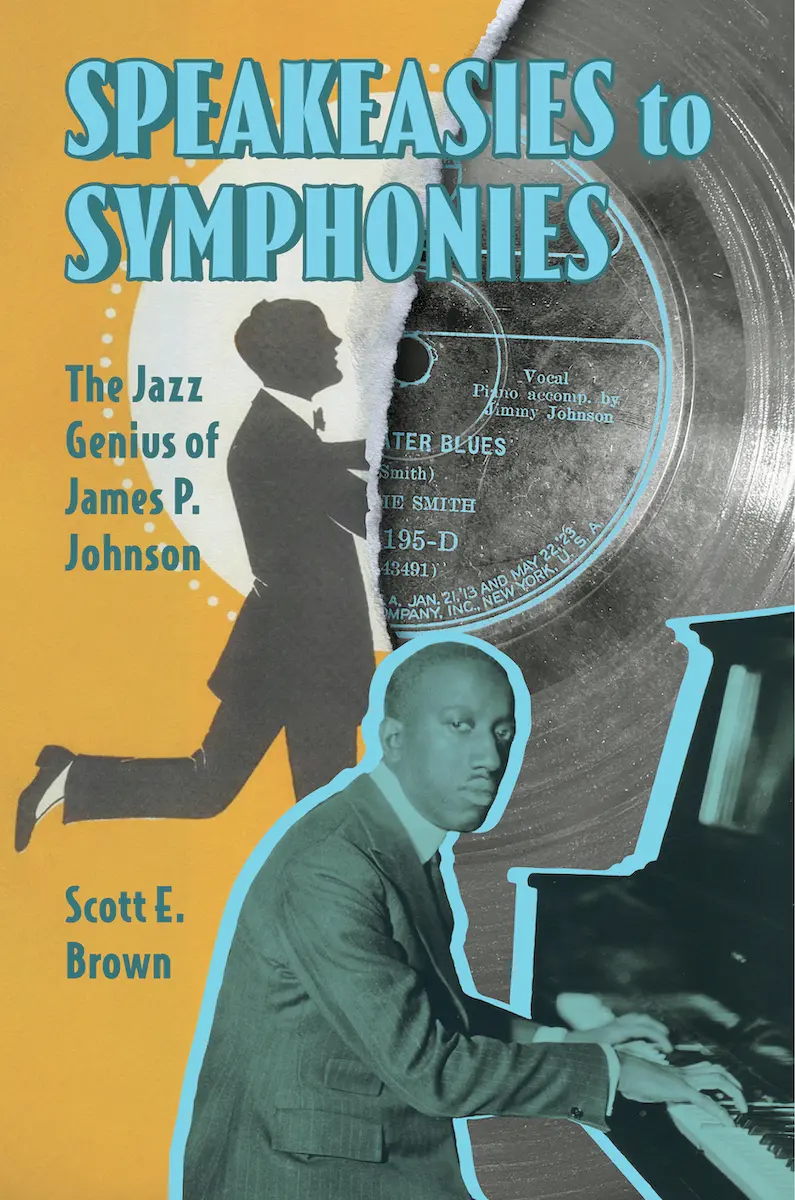
The University Press of Mississippi has released a comprehensive biographical study titled Speakeasies To Symphonies – The Jazz Genius Of James P. Johnson, authored by Scott E. Brown. This publication marks the culmination of four decades of research by Brown, who is widely regarded as the foremost authority on the life and legacy of the man frequently called the "Father of Stride Piano." The work serves as a significant expansion and revision of Brown’s 1986 volume, James P. Johnson – A Case Of Mistaken Identity, providing new insights into the genealogical, social, and professional facets of a musician whose influence shaped the course of American jazz and popular music.
James Price Johnson (1894–1955) occupies a pivotal position in music history, serving as the bridge between the formal structures of ragtime and the improvisational freedom of early jazz. While Brown’s earlier work included a detailed discography, this new 380-page edition focuses on the narrative depth of Johnson’s life, supported by 48 pages of meticulous notes. The book arrives at a time of renewed academic interest in the Harlem Renaissance and the African American composers who sought to integrate jazz idioms into the Western classical tradition.
Genealogical Roots and Early Influences
Scott Brown’s research delves deep into the Johnson family history, uncovering a lineage that reflects the broader African American experience in the 19th century. Records indicate that Johnson’s maternal grandfather was born into slavery in 1805 but achieved his freedom by the mid-19th century. James Price Johnson was born on February 1, 1894, in New Brunswick, New Jersey. The middle name "Price" was derived from a white family that maintained a long-standing relationship of employment and protection with the Johnsons, a common social dynamic in the post-Reconstruction era.
The family moved to Jersey City and later to New York City in 1908, placing the young Johnson in the heart of a burgeoning musical culture. One of the most significant revelations in Brown’s research is the role of Alberta Simmons, a piano teacher who instructed the young James. In a notable historical intersection, Simmons also taught a young Thelonious Monk several years later. This connection highlights a direct pedagogical line between the stride masters of the early 20th century and the bebop innovators of the mid-century.
The Development of the Stride Style
The book provides an exhaustive analysis of the "stride" piano style, a technique characterized by a "striding" left hand that alternates between a single bass note or tenth on the first and third beats and a chord on the second and fourth beats. Meanwhile, the right hand performs highly syncopated melodies and improvisations.
Brown argues that Johnson did not merely play piano; he orchestrated for it. His style was a synthesis of the various sounds he encountered in the "Jungles" (a district of New York’s Hell’s Kitchen inhabited by workers from the South), including ring shouts, blues, and cotillion dances. By 1914, Johnson was already a respected figure in the New York piano scene, competing in "cutting contests" against other titans of the keyboard.
A Chronology of the Life and Career of James P. Johnson
To understand the scope of Brown’s research, it is essential to view Johnson’s career through a chronological lens:
- 1894: Born in New Brunswick, New Jersey.
- 1908: Moves to New York City, becoming exposed to the ragtime and blues of the San Juan Hill and Harlem neighborhoods.
- 1917: Records his first piano rolls, including "Steeplechase Rag" and "Twilight Rag." He becomes one of the first African American musicians to be extensively recorded on piano rolls.
- 1921: Records "Carolina Shout," a composition that would become the benchmark for all jazz pianists of the era.
- 1923: Composes the music for the Broadway revue Runnin’ Wild, which featured "The Charleston," the song that defined the Flapper era and the Roaring Twenties.
- 1927: Premiere of Yamekraw: A Negro Rhapsody, Johnson’s first major foray into symphonic jazz, later conducted by William Grant Still.
- 1930: Records a series of influential piano duets with Clarence Williams.
- 1940s: Despite several strokes, Johnson continues to compose and perform, though his health begins a steady decline.
- 1951: A final, severe stroke leaves him paralyzed and unable to play.
- 1955: Passes away in New York City at the age of 61.
Commercial Success and Financial Stability
Unlike many of his contemporaries who struggled with poverty, James P. Johnson maintained a degree of financial security throughout much of his life. This was largely due to his success as a songwriter and his membership in ASCAP. "The Charleston" became a global phenomenon, and the royalties from this and other hits like "Old Fashioned Love" provided a steady income for his family.
Brown notes that Johnson was a prolific collaborator, performing with and accompanying nearly every major figure in early jazz and blues, from Bessie Smith and Ethel Waters to Louis Armstrong and Sidney Bechet. His professional reputation was such that he was respected by both the "popular" musicians of the speakeasies and the "serious" musicians of the concert halls.
The Struggle for Symphonic Recognition
A central theme in Speakeasies To Symphonies is the dual nature of Johnson’s ambitions. While he was the undisputed king of Harlem’s social music scene, his heart was increasingly set on being recognized as a serious composer of orchestral works. He composed several large-scale pieces, including Harlem Symphony, Symphony in Brown, and the opera De Organizer, with a libretto by Langston Hughes.
However, Johnson faced significant barriers. The racial prejudices of the time meant that major American orchestras were largely closed to Black composers. While George Gershwin achieved immense fame with Rhapsody in Blue—a work deeply indebted to the stride style Johnson pioneered—Johnson himself struggled to get his symphonic works performed or published. Brown’s research indicates that this lack of recognition was a source of profound regret for Johnson in his later years.
Scholarly Analysis and Critical Reception
Brown’s work has been praised for its granular detail, though some critics note that the sheer volume of names and peripheral characters can occasionally obscure the central narrative. The book identifies hundreds of musicians, promoters, and associates, many of whom have been lost to the margins of history. This approach, while potentially overwhelming for the casual reader, provides an invaluable resource for historians of the Harlem Renaissance.
The book also addresses the personal challenges Johnson faced, particularly his struggle with alcohol. The author posits that the heavy drinking associated with the nightlife of the 1920s and 30s contributed significantly to the series of strokes that eventually ended Johnson’s career. Despite these personal failings, the book portrays Johnson as a man of great dignity and intellectual depth, far removed from the "happy-go-lucky" entertainer stereotype often imposed on Black musicians of that era.
Implications for Modern Musicology
The publication of Speakeasies To Symphonies has broader implications for how jazz history is taught and understood. For decades, the narrative of jazz piano often skipped from ragtime directly to the swing era of Duke Ellington or the virtuosity of Art Tatum. Brown’s work reinforces the fact that James P. Johnson was the essential link in this chain.
Furthermore, the book contributes to the ongoing re-evaluation of "Symphonic Jazz." By documenting Johnson’s orchestral ambitions, Brown challenges the notion that jazz and classical music were separate spheres. Instead, he presents a vision of an American musical landscape where the two were constantly in dialogue.
Data Points and Publication Details
- Speakeasies To Symphonies – The Jazz Genius Of James P. Johnson
- Author: Scott E. Brown
- Publisher: University Press of Mississippi
- Format: Paperback, 380 pages (plus 48 pages of notes)
- ISBN: 978-1-4968-5753-8
- Subject Matter: Biography, Jazz History, Musicology, Harlem Renaissance
- Key Figures Mentioned: James P. Johnson, Fats Waller, Thelonious Monk, Alberta Simmons, Langston Hughes, Clarence Williams.
Conclusion
Scott E. Brown’s Speakeasies To Symphonies – The Jazz Genius Of James P. Johnson stands as a definitive record of a foundational American artist. By meticulously documenting Johnson’s life from his grandfather’s emancipation to his own final days in New York, Brown has ensured that Johnson’s contributions to both the speakeasy and the symphony hall are preserved for future generations. While the book acknowledges the tragedies of Johnson’s later life—his failing health and the relative obscurity of his classical compositions—it ultimately celebrates a genius whose "Carolina Shout" still echoes in the technique of every jazz pianist who sits down at the keys today.