Johan Budi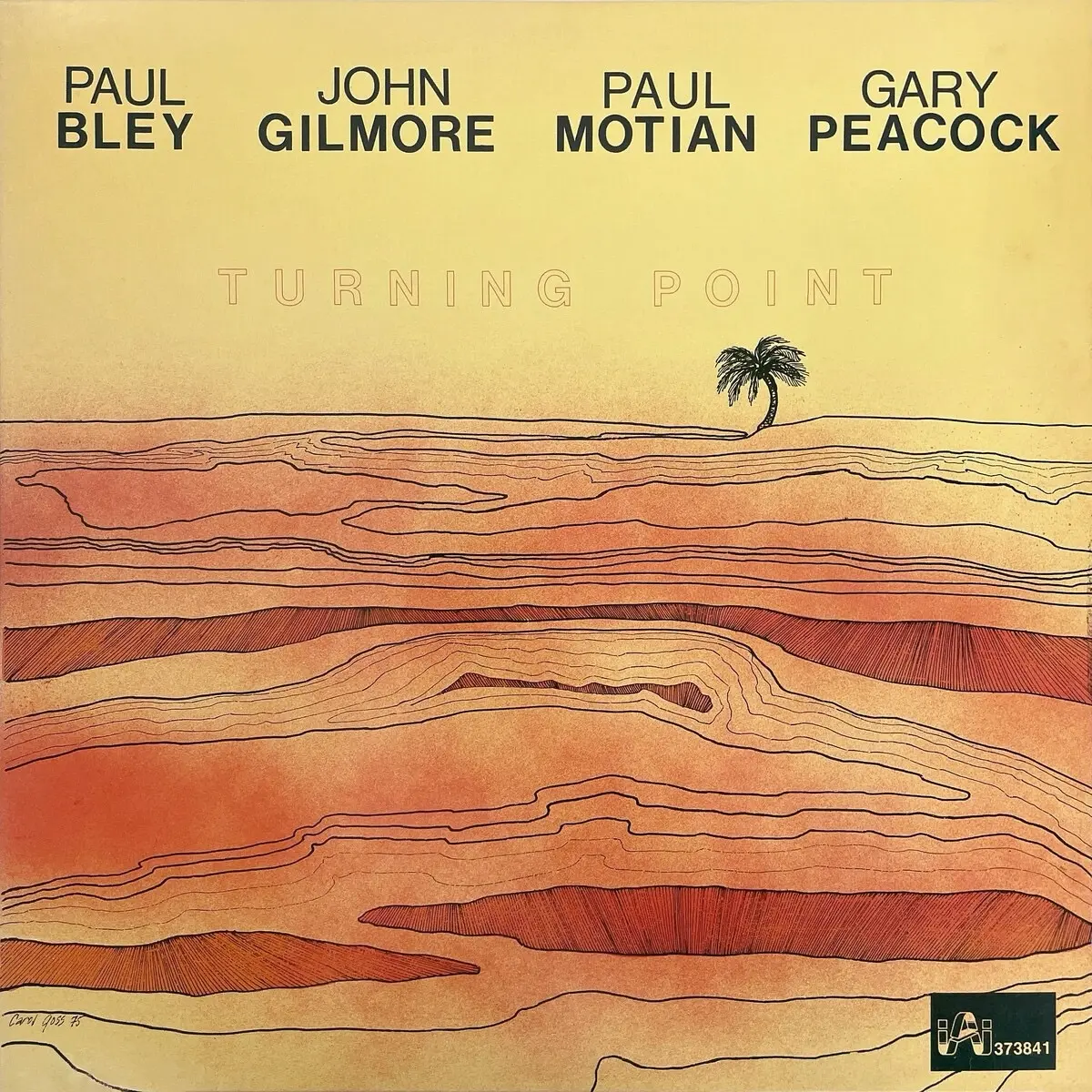
The landscape of contemporary jazz is undergoing a significant shift as the esteemed pianist Paul Bley formalizes his commitment to artistic autonomy with the launch of his independent label, Improvising Artists (IAI). This venture debuts with a trifecta of releases that not only showcase Bley’s evolution as a visionary of the avant-garde but also signal a new era for musician-led distribution. The inaugural releases—the solo effort Alone Again, the collaborative Quiet Song, and the archival quartet session Turning Point—serve as a comprehensive survey of Bley’s aesthetic, spanning from his high-energy explorations of the mid-1960s to the introspective, minimalist "chamber jazz" that has come to define his recent output.
By establishing Improvising Artists, Bley joins a growing movement of jazz musicians in the 1970s who are seeking to reclaim control over their creative output and business interests. This movement, which includes initiatives like Charles Tolliver and Stanley Cowell’s Strata-East and the Jazz Composer’s Orchestra Association, reflects a broader desire within the creative community to bypass traditional industry gatekeepers. Bley’s label, however, distinguishes itself through its specific focus on the intersection of spontaneous improvisation and high-fidelity production, a hallmark of the pianist’s meticulous approach to the recording process.
The Minimalist Architecture of Alone Again
The solo piano album, Alone Again, recorded in Oslo in August 1974, represents the pinnacle of Bley’s current stylistic trajectory. In many ways, this recording functions as a spiritual successor to his previous work on the ECM label, specifically the 1972 masterpiece Open, To Love. The album is characterized by an extreme introversion, where silence is treated with the same weight as sound. Bley’s use of space is not merely a lack of activity but a deliberate structural element that allows the listener to absorb the resonance of the instrument.
Technically, the album is a masterclass in harmonic selection. Bley frequently utilizes sparse two- and four-note chords that are beautifully chosen for their color and emotional resonance rather than their function within a traditional jazz progression. The sense of "tempi" on the record is intoxicating, despite the absence of a stated, continuous pulse. Instead, Bley employs an almost continuous rubato, creating a fluid sense of time through the use of sustained notes punctuated by moving groups of figures. This technique involves lengthening notes as melodic groups proceed, creating a natural, breath-like rhythm that defies metronomic constraints.
While the album leans toward the avant-garde, it remains deeply rooted in the jazz tradition. Blue notes are integrated seamlessly into the modernist framework, and tonality, though often stretched to its limits, generally prevails. Bley also experiments with the physical capabilities of the piano, utilizing large melodic jumps and occasional glissandi performed directly on the strings inside the instrument. These textures often resolve into chords sustained by the keys, bridging the gap between traditional pianism and experimental soundscapes. The result is a highly meaningful album that reaffirms Bley’s position as one of the most significant solo piano voices of the century.
Collaborative Nuance and the Giuffre-Bley-Connors Trio
The second release in the inaugural IAI catalog, Quiet Song, brings Bley together with two distinct voices: the legendary reed player Jimmy Giuffre and the guitarist Bill Connors. This recording marks a continuation of Bley’s long-standing association with Giuffre, a partnership that famously challenged the boundaries of jazz in the early 1960s with their drumless trio featuring Steve Swallow. However, Quiet Song moves in a different direction, leaning into a more atmospheric, at times sentimental, aesthetic.
Giuffre, playing clarinet, flute, and tenor saxophone, displays a range of influences on this set. His clarinet work often takes on an "oriental-sounding" quality, utilizing microtonal inflections and modal structures that reflect the global influences permeating the New York jazz scene. On the tenor saxophone, there are audible echoes of John Coltrane’s late-period phrasing, though filtered through Giuffre’s more reserved, cool-toned sensibility. Bill Connors, known for his work with Chick Corea’s Return to Forever, provides a sensitive, if at times overly deferential, accompaniment on acoustic guitar. While Connors is a formidable technician, his contributions here are more textural than forceful, serving to fill the spaces left by Bley and Giuffre.
Critically, the album has drawn mixed reactions for its occasional lapses into sentimentality, particularly during the flute-led sections and on the track "Carol." These moments contrast sharply with the more robust improvisations found elsewhere on the disc. The highlight of the album for many is "Play," where Bley delivers a solo that is significantly more extroverted and rhythmically assertive than the material found on Alone Again. Additionally, the track "Goodbye" stands out for its poignant emotional depth, featuring effective clarinet slides and a powerful, well-earned climax.
Archival Significance: The 1964 Quartet and the 1968 Trio
Perhaps the most historically significant of the three releases is Turning Point, which unearths recordings from Bley’s 1964 quartet and 1968 trio. The 1964 sessions feature a powerhouse lineup consisting of tenor saxophonist John Gilmore, bassist Gary Peacock, and drummer Paul Motian. This was a pivotal year for Bley, coming on the heels of the "October Revolution in Jazz," and the music on this disc reflects the "fierce" energy of that era.
The track "Ictus," a composition by Carla Bley, serves as a centerpiece for the 1964 quartet. It is an almost completely free performance, characterized by rapid-fire exchanges and a high degree of rhythmic flexibility. John Gilmore, a mainstay of the Sun Ra Arkestra, is particularly impressive here, demonstrating a command of harmonics and a raw, visceral tone that provides a perfect foil to Bley’s more analytical piano style. Gary Peacock also shines on the track "Calls," where his use of rapid scalar motives allows him to impose a strong personal identity on the music. While Peacock occasionally over-relies on these rising scales on the title track "Turning," his overall contribution remains a benchmark for avant-garde bass playing.
The album also includes two tracks from a 1968 trio session in Seattle, featuring Bley with Motian and drummer Billy Elgart. These tracks are outtakes from the sessions that produced the Mr. Joy LP. While they are enjoyable and showcase Bley’s mastery of rhythmic subtlety, some critics have noted that they lack the sheer substance and historical weight of the 1964 quartet material. Nevertheless, Turning Point as a whole is an exciting document of Bley’s transition from the post-bop tradition into the realms of total improvisation.
The Economic and Artistic Context of Improvising Artists
The founding of Improvising Artists is not merely a musical event but a strategic response to the economic realities of the 1970s jazz market. As major labels increasingly pivoted toward fusion and pop-oriented jazz, avant-garde and "creative" musicians found themselves marginalized. By controlling the production, packaging, and distribution of his music, Bley is ensuring that his vision is presented without compromise.
The label is a partnership between Bley and the video artist Carol Goss, which hints at a multidisciplinary future for the venture. There are plans to integrate visual media with music, reflecting Bley’s long-standing interest in how different art forms can inform one another. The high quality of the recording engineering on these first three LPs—ranging from the pristine studio sound of Oslo to the gritty, authentic capture of the New York sessions—suggests that IAI will prioritize audio fidelity as much as musical innovation.
Broader Impact and Future Outlook
The release of these three albums has been met with significant interest from the jazz community. For Bley, the label represents a "turning point" in his own right, providing a stable platform for his prolific output. The inclusion of archival material alongside new recordings suggests that IAI will serve as both a living laboratory for new music and a repository for the history of the avant-garde.
The implications for the jazz industry are clear: the era of the "musician-entrepreneur" is in full swing. Bley’s success with these initial releases could provide a blueprint for other artists looking to secure their legacies. As the label looks toward the future, there is a palpable sense of anticipation for succeeding issues. Critics and fans alike have expressed a particular interest in more material from the mid-1960s, a period that remains one of the most fertile and under-documented eras in Bley’s long career.
In conclusion, the launch of Improvising Artists with Alone Again, Quiet Song, and Turning Point is a landmark achievement. These records offer a comprehensive look at one of jazz’s most enigmatic and influential figures. Whether through the sparse beauty of a solo piano, the delicate interplay of a chamber trio, or the raw power of a free-jazz quartet, Paul Bley continues to redefine the boundaries of the genre. His new label ensures that this journey of exploration will continue on his own terms, providing a vital resource for listeners who value innovation, integrity, and the pursuit of the "new" in music.