Jia Lissa
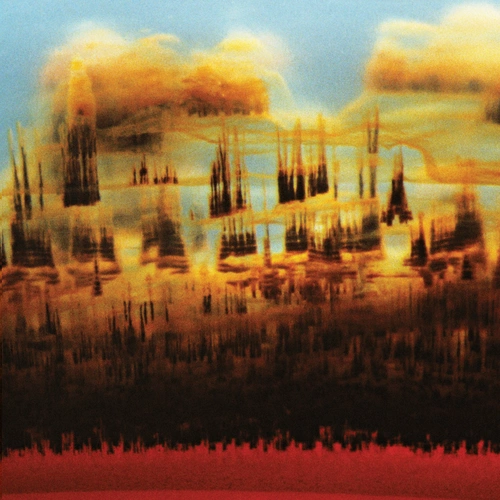
Thomas Bangalter, one half of the seminal electronic music duo Daft Punk, has unveiled a new single titled ‘Mirage: Part II’, offering a further glimpse into his evolving artistic landscape. This latest release is drawn from his eagerly anticipated forthcoming album, Mirage – Ballet For 16 Dancers, which was formally announced yesterday. The album serves as the intricate score for a 60-minute ballet of the same name, a collaborative masterpiece that premiered to critical acclaim last May at the prestigious Grand Théâtre de Genève. The ambitious ballet project brought together the visionary choreography of Damien Jalet and the distinctive contemporary artistic direction of Kōhei Nawa, creating a multi-sensory experience that transcends traditional artistic boundaries.
The Mirage album, structured into eight distinct parts, represents a significant exploration into the realms of contemporary classical composition. Bangalter has cited the groundbreaking work of Greek-French composer Iannis Xenakis as a primary inspiration, signaling a deep dive into mathematically informed and architecturally conceived soundscapes. Set for release on June 5th, the album will be distributed through Erato, a revered classical music label under the Warner Classics umbrella, underscoring the serious classical intent behind this new venture. This project continues Bangalter’s remarkable trajectory since the dissolution of Daft Punk, solidifying his reputation as a composer capable of crafting profound and evocative orchestral narratives for the stage.
The Genesis of Mirage: A Multidisciplinary Collaboration
The Mirage ballet is more than just a dance performance; it is a profound artistic convergence. Its premiere at the Grand Théâtre de Genève in May of the previous year marked a significant event in the contemporary arts calendar. The collaboration between Bangalter, choreographer Damien Jalet, and visual artist Kōhei Nawa represents a synthesis of their respective disciplines, aiming to create a holistic and immersive experience.
Damien Jalet, a Belgian-French choreographer renowned for his physically demanding and ritualistic works, brings a unique sensibility to Mirage. His choreographic style often explores themes of transformation, community, and the human body’s relationship with space and time. Jalet’s previous works have frequently involved collaborations with musicians, visual artists, and architects, making him an ideal partner for Bangalter’s cinematic compositional approach. His ability to translate complex conceptual ideas into dynamic movement sequences is central to the ballet’s impact. The choice of 16 dancers for the piece is likely deliberate, allowing for both intricate individual expressions and powerful group formations, mirroring the multi-layered complexity often found in Bangalter’s scores.
Kōhei Nawa, a prominent Japanese contemporary artist, contributes the visual dimension to Mirage. Nawa is celebrated for his diverse practice, which spans sculpture, installation, and media art, often incorporating cutting-edge technology and unconventional materials. His ‘PixCell’ series, where objects are encased in glass spheres, and his mesmerizing foam installations, demonstrate his fascination with perception, surface, and the digital realm. In Mirage, Nawa’s artistic direction likely manifests through stage design, lighting, and perhaps even interactive visual elements, creating an environment that complements and amplifies the music and choreography. The interplay between Nawa’s visual artistry and Jalet’s movement is crucial for the ballet’s narrative, potentially exploring themes of illusion, reflection, and the ephemeral nature implied by the title "Mirage."
Musical Inspirations: The Shadow of Iannis Xenakis
Bangalter’s explicit reference to Iannis Xenakis as an inspiration for Mirage provides significant insight into the album’s potential sound and structure. Xenakis (1922-2001) was a towering figure in 20th-century music, an architect, engineer, and composer whose work radically pushed the boundaries of musical composition. A pioneer of stochastic music, Xenakis employed mathematical models, probability theory, and set theory to compose works that were often grand in scale and strikingly original. His compositions frequently featured dense textures, clusters of sound, and dramatic contrasts, often evoking natural phenomena or architectural forms.
For Bangalter, an artist celebrated for precision and innovation in electronic music, the influence of Xenakis is particularly intriguing. Daft Punk’s music, while electronic, always possessed a meticulous structure and a profound understanding of sonic architecture. Bangalter’s journey into orchestral composition naturally leads him to explore masters who approached music with similar rigor. Xenakis’s architectural background—he worked with Le Corbusier—meant he conceived sound in spatial terms, designing soundscapes rather than merely writing melodies. This resonates with Bangalter’s own experience in creating immersive sonic worlds, whether for dance floors or, now, for ballet stages. The "eight parts" structure of Mirage could reflect Xenakis’s modular approach, where distinct musical blocks are arranged to form a larger, cohesive whole, perhaps employing mathematical sequences or algorithms to guide their development. This intellectual rigor, combined with Bangalter’s innate musicality, promises a score that is both challenging and deeply engaging.
A New Chapter: Thomas Bangalter’s Orchestral Endeavors
The release of Mirage – Ballet For 16 Dancers marks a continuation, and perhaps a refinement, of Bangalter’s dedicated exploration into orchestral composition following the highly publicized end of Daft Punk in 2021. His pivot from electronic music pioneer to classical composer has been a deliberate and remarkably successful artistic evolution.
His previous solo album, Mythologies, released in 2023, served as a foundational statement in this new chapter. Mythologies was also an orchestral score for a ballet, commissioned by the Opéra National de Bordeaux and choreographed by the esteemed Angelin Preljocaj. The work premiered in July 2022 and its subsequent album release showcased Bangalter’s mastery of traditional instrumentation, moving away from the electronic synthesizers that defined much of his earlier career. Mythologies was praised for its intricate orchestration, emotional depth, and ability to weave classical themes into a contemporary narrative. It signaled his serious commitment to the orchestral form, demonstrating a profound understanding of symphonic structure and timbre. The critical reception to Mythologies largely affirmed his successful transition, with many noting the seamless quality of his compositional voice in a new medium.
Further cementing this direction, Bangalter also produced the soundtrack for the dance piece Chiroptera Matiere Premiere. Initially released in a limited capacity, the full soundtrack album, Chiroptera, saw a wider release in 2024, notably including a six-hour extended version. This extended version is particularly noteworthy, highlighting Bangalter’s interest in immersive, long-form sonic experiences that can evolve and unfold over vast durations, a concept that aligns with the expansive nature of contemporary dance and performance art. The sheer scale of the Chiroptera project underscores his dedication to crafting detailed and expansive sound environments, moving beyond conventional album structures to create truly enveloping auditory journeys.
These projects collectively demonstrate a clear artistic trajectory: Bangalter is not merely dabbling in classical music but is deeply engaged in its creation, working with leading figures in ballet and contemporary art to realize ambitious, multidisciplinary visions. His choice of collaborators, from choreographers like Preljocaj and Jalet to visual artists like Nawa, indicates a desire to contribute to a broader artistic dialogue, integrating his musical ideas into larger performance contexts.
The Unexpected Return to the DJ Booth
While his classical endeavors have defined his post-Daft Punk compositional work, Bangalter surprised many by making an unexpected return to the DJ booth. This return, after a hiatus of 16 years, created significant buzz within the electronic music community and showcased a different facet of his current artistic engagement.
His first public DJ appearance in 16 years occurred at the Centre Pompidou in Paris last year. This landmark event saw him perform alongside French electronic music stalwarts Busy P (Pedro Winter, Daft Punk’s former manager and head of Ed Banger Records) and Erol Alkan. The context of this set was highly symbolic; Busy P’s events often celebrate the rich history of French house music, a genre heavily influenced by Daft Punk. The energy of the Centre Pompidou set was palpable, a moment of reunion and celebration for fans who had long yearned for Bangalter’s return to live performance. This appearance was not merely a nostalgic trip; it demonstrated his enduring connection to the electronic music scene and his willingness to engage with it on his own terms.
The momentum continued with a highly anticipated back-to-back (b2b) set with contemporary electronic music sensation Fred again.. at Alexandra Palace. Fred again.. has rapidly ascended to global stardom with his emotive and genre-blending productions, known for their innovative use of samples and raw, intimate energy. The collaboration between Bangalter, a legend of electronic music, and Fred again.., one of its most exciting new voices, was a generational bridge, drawing immense attention from across the music spectrum. The set, which brought together their distinct styles, was met with widespread enthusiasm. Its subsequent release for full streaming via Apple Music allowed a global audience to experience the dynamic synergy between the two artists, further solidifying Bangalter’s unexpected, yet welcome, re-engagement with DJ culture. These DJ sets, while distinct from his orchestral compositions, highlight his versatile musicianship and his continued influence across different musical domains. They suggest an artist who is not confined by genre, but rather explores all avenues of sound creation and performance.
Broader Impact and Artistic Implications
Thomas Bangalter’s post-Daft Punk trajectory, marked by a profound dive into orchestral composition for ballet alongside surprising returns to the DJ booth, carries significant artistic and cultural implications. His journey represents a compelling case study in artist reinvention and the fluidity of creative identity in the 21st century.
Firstly, his successful pivot to classical composition challenges conventional notions of genre boundaries. An artist synonymous with electronic music is now earning respect in the traditionally more conservative classical world. This crossover appeal not only broadens his own artistic scope but also helps to demystify classical music for audiences primarily familiar with electronic genres. His involvement brings a contemporary sensibility and a new audience to ballet and orchestral works, invigorating these art forms with fresh perspectives. The collaboration with figures like Damien Jalet and Kōhei Nawa underscores a broader trend in the arts where multidisciplinary projects are increasingly valued for their capacity to create richer, more complex experiences.
Secondly, Bangalter’s work since Daft Punk’s dissolution speaks to a deep intellectual curiosity and an unwavering commitment to artistic exploration. The choice of Iannis Xenakis as an inspiration for Mirage is particularly telling. It indicates a composer who is not content with superficial gestures but seeks to engage with the theoretical and philosophical underpinnings of music. This intellectual rigor, combined with his innate musicality, positions him as a serious contemporary composer whose works are both aesthetically pleasing and conceptually rich.
Finally, his intermittent return to DJing, particularly the high-profile b2b with Fred again.., serves as a powerful reminder of his enduring legacy in electronic music. It suggests that while his primary creative focus may have shifted, his roots remain firmly planted in the culture that he helped to define. These appearances are not merely nostalgic; they are moments of genuine artistic exchange, bridging generations of electronic music enthusiasts and demonstrating that his influence continues to resonate across the dance music landscape.
In conclusion, Thomas Bangalter’s Mirage – Ballet For 16 Dancers and its accompanying single ‘Mirage: Part II’ are more than just new releases; they are integral pieces of a larger, evolving artistic narrative. They solidify his position as a multifaceted composer capable of traversing diverse musical terrains, from the intricate soundscapes of contemporary classical ballet to the energetic pulse of the DJ booth. His current work exemplifies a profound commitment to artistic growth and innovation, ensuring that his creative journey continues to captivate and inspire audiences worldwide.