Aveline Kirana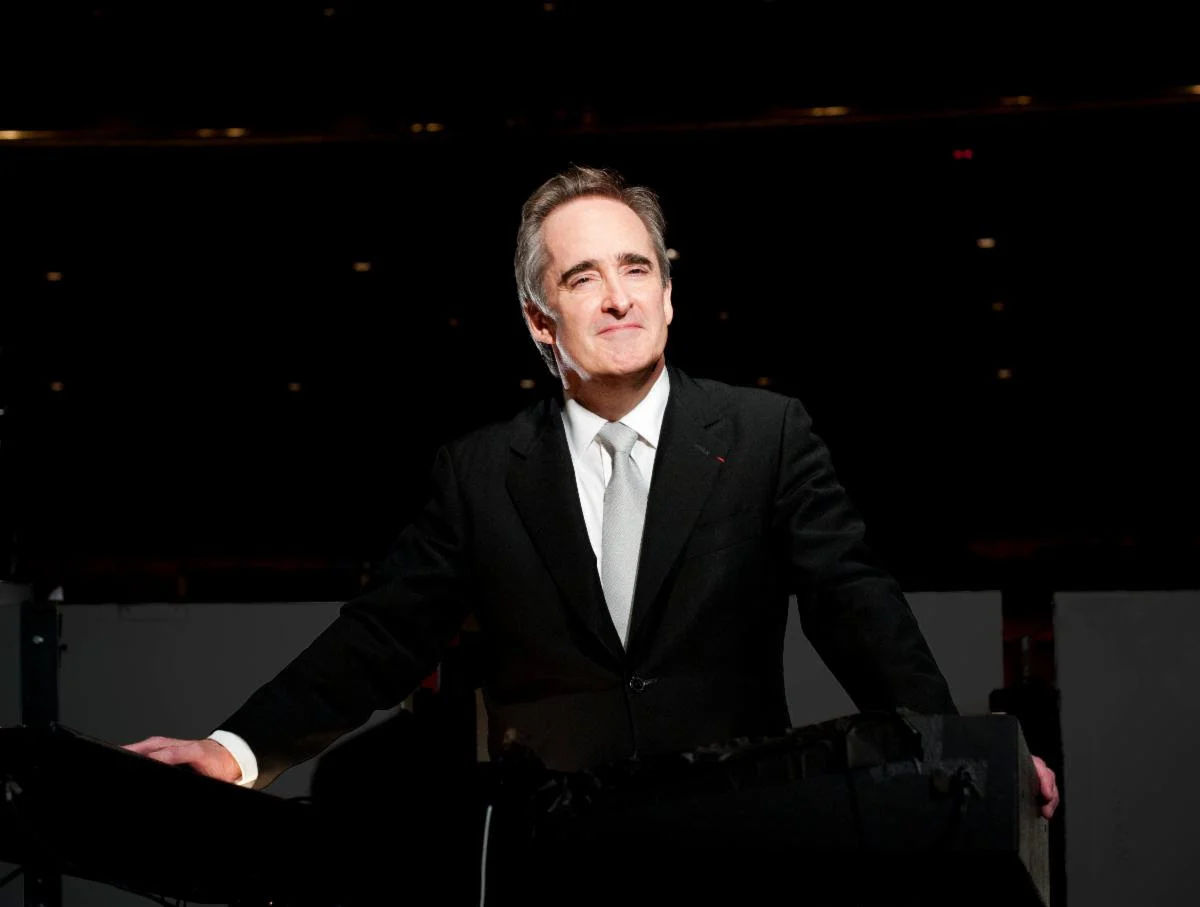
James Conlon, a towering figure in the operatic and symphonic worlds for over fifty years, is stepping back from the helm of the Los Angeles Opera after a remarkable two-decade tenure. His career, characterized by its breadth and depth, has left an indelible mark on major institutions on both sides of the Atlantic. From his formative years in New York to extensive residencies in Europe and his impactful leadership in Los Angeles, Conlon’s journey is a testament to unwavering dedication and artistic vision. As he prepares for an appearance at the Ravinia Festival, conducting Mozart’s “The Abduction from the Seraglio,” Conlon shared insights into his legacy, his enduring connection with Mozart, and his vision for the future, which includes a profound commitment to recovering and championing music suppressed under the Nazi regime.
Conlon’s relationship with the Ravinia Festival, the summer home of the Chicago Symphony Orchestra, spans an impressive duration. He served as its Music Director for eleven years, a period that solidified a bond with the orchestra that now approaches half a century. This enduring connection underscores his status as the American orchestra with whom he maintains the longest continuous professional relationship. "The most special part of being music director at Ravinia, of course, was the Chicago Symphony," Conlon stated in a recent interview with OperaWire. "In fact, I made my debut with the Chicago Symphony at Ravinia in 1977. So in one more year, it will be 50 years. And it has been more or less continuous over all of these years. It is actually the American orchestra with whom I have the longest ongoing relationship."
The Chicago Symphony Orchestra, renowned for its power, precision, and remarkable interpretive flexibility, has been an ideal partner for Conlon. He described the orchestra as "without question one of the greatest orchestras in the world, and it always was. They are capable of anything and they’re capable of playing in any style." Conlon highlighted their agility, noting, "They are very flexible, very quick. You can stop, you explain what sound you’re going for, and they’re able to give it back to you very quickly. So it’s an ideal instrument to work with."
Among his most cherished memories at Ravinia are the complete Mahler symphony cycle and the concertante or semi-staged Mozart operas. The Mahler cycle, performed in its entirety from beginning to end, including lesser-known works like “Das Klagende Lied” and the “Mahler Tenth,” stands out as a particularly significant undertaking. The tradition of performing Mozart operas at Ravinia, which began during his tenure and continues when he returns as a guest conductor, has fostered a unique artistic synergy. "I started doing it – we usually did it every two years – and now when I go back as a guest, they continue to ask me to do it and I do it with great pleasure," he remarked.
A Twenty-Year Symphony at LA Opera
Conlon’s departure from the Los Angeles Opera marks the end of an era. His twenty-year tenure as Music Director is one of the longest and most artistically fruitful relationships between a conductor and an American opera company in recent history. When he initially accepted the position, offered by Plácido Domingo, he envisioned a tenure of only three to four years. The longevity of his commitment speaks volumes about the profound and unexpected satisfaction he found in Los Angeles. "Frankly, my age is the only reason that it’s coming to an end," Conlon explained. "My own priorities, but also theirs. It’s the time for it to go into younger hands, and that’s fine. It’s exactly as I would have imagined it. The 20 years have been an enormous satisfaction to me, an enormous surprise, because I went out there thinking four years."
The decision to conclude his directorship with Mozart’s "The Magic Flute" was a deliberate choice, not mere serendipity. Conlon’s final months as Music Director were marked by an exclusive focus on Mozart’s oeuvre. "From now until the middle or end of July, I’ll conduct nothing else but Mozart," he revealed. "I’ll do ‘The Magic Flute’ here until it’s finished, then ‘Abduction’ at Ravinia, and then an all-Mozart program at the Aspen Festival." This dedication to Mozart stems from a deep, lifelong admiration. "I love Mozart; that goes without saying," he stated.
Conlon views Mozart, Verdi, and Wagner as the foundational pillars of any opera house. His programming choices at LA Opera aimed to reflect this philosophy. "I did want my final operas here to be the final operas of both Verdi and Mozart, as they represent what I consider the three pillars of any opera house: Mozart, Verdi, and Wagner," he said. His final Verdi opera was "Falstaff," and "The Magic Flute" served as his concluding Mozart production. Although a Wagner opera wasn’t staged in his final season, a significant excerpt from "Meistersinger" was performed at a gala concert honoring his two decades of service.
His initial apprehension about leading an opera company in California, given his New York upbringing and extensive European experience, dissolved into genuine enjoyment. "I had almost no history of California as a conductor," Conlon admitted. "I went a few times to the Bowl when I was very young, and a few times to the San Francisco Symphony. But when I accepted the job at the opera, I was not a regular anywhere in California. I’m a New Yorker. I grew up in New York, my career started in New York, and I spent roughly 20 years living full time in Europe. So the surprise was how much I’ve enjoyed it, how much I’ve enjoyed living here, and how much I enjoyed the years at the opera. Those are all pleasant and wonderful surprises."
The Enduring Allure of Mozart
Conlon’s passion for Mozart is palpable, extending beyond operatic works to encompass his symphonies, concertos, and choral music. He estimates having conducted over 220 to 225 performances of Mozart operas throughout his career. "I love all of Mozart. I’m convinced he never wrote a bad piece of music, not just operas," he asserted. His fascination with "The Abduction from the Seraglio," which he will conduct at Ravinia, dates back to his youth. He recalls seeing it for the first time around the age of thirteen, even before experiencing "The Magic Flute" or "Così fan tutte."
Despite its status as a masterpiece, Conlon acknowledges that "The Abduction from the Seraglio" is sometimes perceived as less frequently performed. He attributes this to several factors. Firstly, the title itself, with the word "seraglio," is unfamiliar to many in America. Secondly, the opera presents significant casting challenges. "You have to have a great Constanze," Conlon stressed. "If somebody can’t sing ‘Martern aller Arten’ and the rest of it, you don’t have a show. And if you don’t have a bass with all those low notes, you don’t have Osmin. Without Osmin and Constanze, the opera is not going to be successful."
The singspiel element, characterized by spoken dialogue, is another point often cited, though Conlon dismisses it as a significant impediment, drawing a parallel to "The Magic Flute." He has, however, developed a practical approach to managing the spoken passages. For his Ravinia performance, he plans to significantly shorten the dialogues, utilizing a skilled actor to serve as a narrator who summarizes the plot, retaining only essential exchanges. This method, which he has successfully employed before, aims to maintain dramatic momentum while providing historical and cultural context for the audience. He recalled a performance in Germany where the full dialogue was retained, which he described as "not a success would be an understatement."
Conlon firmly places "The Abduction from the Seraglio" among Mozart’s seven great operas, a canon he defines as including the three Da Ponte operas ("The Marriage of Figaro," "Don Giovanni," and "Così fan tutte"), "The Magic Flute," "La Clemenza di Tito," "Idomeneo," and "The Abduction from the Seraglio." He even extends this praise to lesser-known works like "La Finta Giardiniera," suggesting that even such pieces would be considered masterpieces in their own right.
The Art of Interpretation: Mozart vs. Verdi
Conlon’s approach to conducting varies significantly depending on the composer, emphasizing the conductor’s role in embodying the spirit of the music. "A conductor has to become the music he or she is performing," he stated. "To become Giuseppe Verdi, to try to intuit the soul of his music and then render it, is totally different from doing Wagner or Mozart or Debussy or Berg or Bach." He elaborated that this is not a conscious shift in strategy but rather an organic relationship developed with the composer and the work. Mozart’s vast musical output across multiple genres requires a broad and horizontal experience, whereas composers like Verdi and Wagner, whose primary output is opera and music drama respectively, present a more focused artistic profile. The goal, Conlon believes, is to become a conduit for the composer’s unique voice. "You don’t want to go to a Mozart concert and make it sound like Stravinsky," he concluded.
A Future Focused on Advocacy and Legacy
At 76, James Conlon’s perspective on his career has shifted. While he remains passionate about conducting, his future ambitions are less about accumulating directorial roles and more about intellectual and advocacy-driven pursuits. "I can assure you I will not become a music director again," he declared. "I’ve been doing that work for 47 years and I don’t want any of the responsibility that comes with it. That part I feel is a liberation." His immediate priorities are his health, his mental acuity, and his family.
However, his musical life remains vibrant. He intends to continue guest conducting, focusing on repertoire that brings him pleasure and, he hopes, to his audiences. A significant part of his future will be dedicated to writing. "I have a lot on my mind, and I have written a lot, though most of it is in my computer waiting to be edited and prepared and hopefully find the right publishers." He also cherishes his experience with public speaking, particularly the pre-performance talks he delivered at LA Opera, which were met with great enthusiasm.
"I feel that advocacy of classical music and the arts is a very important responsibility, one I’m happy to continue," Conlon stated. He believes the arts require robust defense in contemporary society.
Crucially, he remains committed to his lifelong mission of unearthing and promoting music suppressed during the Nazi era. This endeavor, which he continues through his work with the Colburn School, aims to educate and inspire a new generation of musicians to carry forward this vital cultural reclamation. "That is a life’s mission. And I’m working very closely now with the Colburn School to prepare another generation to carry that work forward, because it will not be accomplished quickly and it needs the advocacy of young people." This commitment to historical musical justice, alongside his continued conducting and writing, paints a picture of a maestro embracing a rich and purposeful next chapter.