 Johan Budi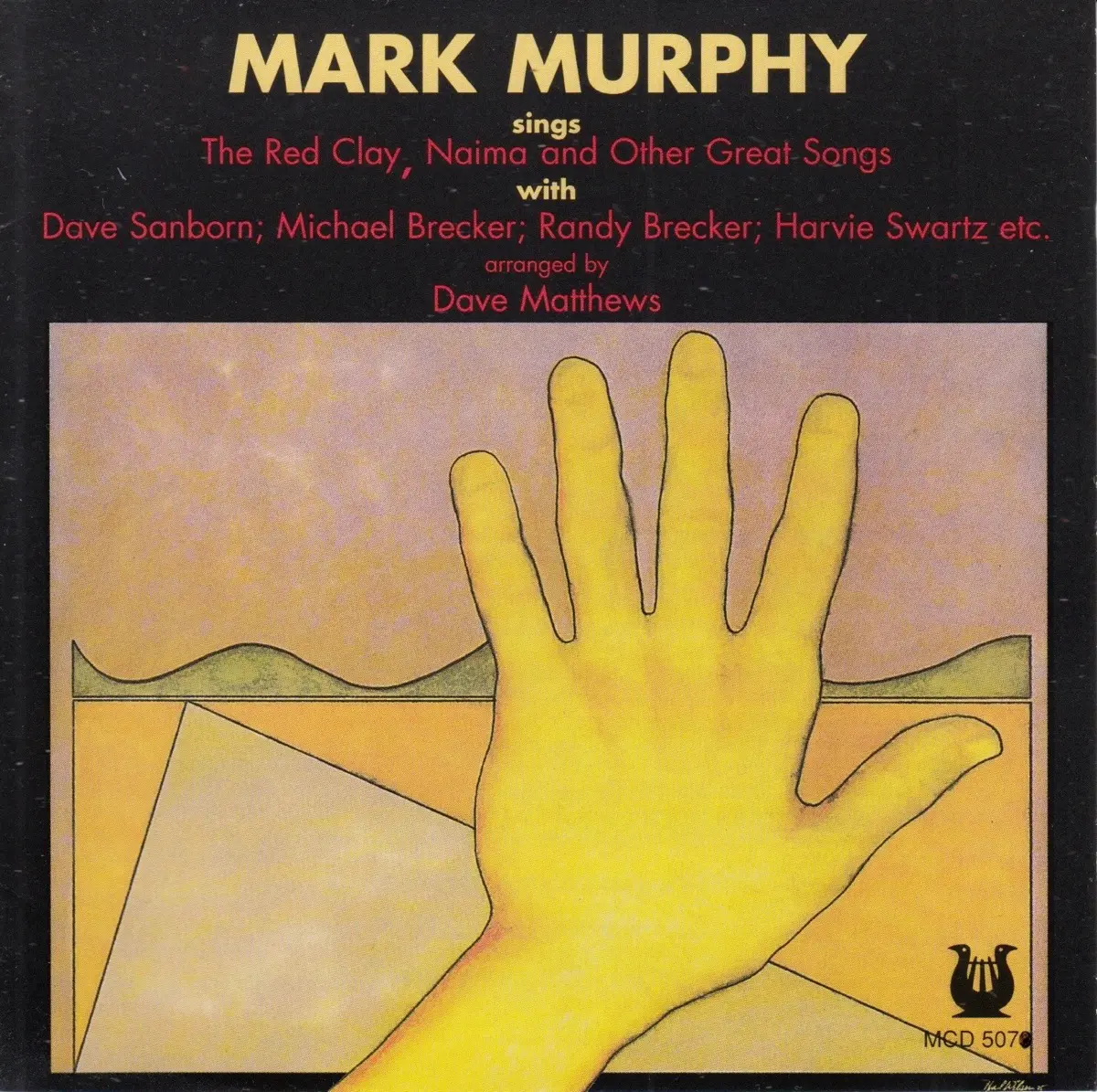
The mid-1970s represented a period of significant transition for the jazz genre, as traditional acoustic forms increasingly vied for relevance against the surging popularity of jazz-fusion and rock-influenced arrangements. Within this shifting cultural landscape, the 1975 release of Mark Murphy’s sessions for Muse Records (catalog number 5078) stands as a definitive document of a veteran vocalist successfully navigating the complexities of modern instrumentation. Recorded over three days in New York City from June 17 to June 19, 1975, the album captures Murphy—already established as a premier practitioner of vocalese—collaborating with a younger generation of musicians who were then defining the "studio slick" and high-energy fusion sound of the era.
The ensemble assembled for these sessions included some of the most prolific session musicians of the decade, most notably the Brecker brothers—Randy on trumpet and Michael on tenor saxophone—alongside David Sanborn on alto saxophone. The inclusion of these performers signaled a departure from Murphy’s earlier recordings, which often featured more traditional swing or bop-oriented accompaniment from figures like Clark Terry and Joe Wilder. By embracing the contemporary idiom of the younger musicians, Murphy demonstrated a remarkable capacity for adaptation, proving that the nuanced dynamics of jazz vocals could survive and thrive within the higher volume and rhythmic rigidity of the fusion movement.
Historical Context: Jazz in the Mid-1970s
To understand the significance of this recording, one must consider the prevailing sentiment among jazz critics and purists in 1975. There was a widespread perception that the genre was facing a "dearth" of young talent, as many instrumentalists under the age of 40 were being drawn toward the commercial success of rock and R&B. This era saw the rise of the "workmanlike" session musician—players who possessed immense technical facility but were sometimes criticized for a perceived lack of the "soul" found in the previous generation’s masters.
The Brecker brothers, Randy and Michael, were often the focal point of this discussion. While their technical prowess was undeniable, their ubiquity in the New York studio scene led some critics to view them as efficient technicians rather than avant-garde pioneers. However, their contribution to the Murphy sessions reveals a deeper level of artistry. The album serves as a bridge between the sophisticated phrasing of the Great American Songbook and the electric, funk-inflected energy of the 1970s. Murphy’s ability to move into their idiom, rather than forcing the instrumentalists to revert to an older style, marked the album as a "remarkable achievement" for a singer who had already been active for two decades.
Personnel and Production Excellence
The technical backbone of the album was provided by a rhythm section consisting of Don Grolnick on keyboards, Harvie Swartz on bass, Joe Puma on guitar, Jimmy Madison on drums, and Sue Evans on percussion. This lineup provided the dense, textured foundation necessary for Dave Matthews’ arrangements. Matthews, a prolific arranger for the CTI and Muse labels, was instrumental in crafting a sound that felt contemporary without sacrificing the harmonic complexity required for Murphy’s improvisational style.
The recording sessions took place in New York City, the epicenter of the fusion movement. The three-day window in June 1975 allowed the ensemble to develop a cohesive sound that balanced the raw energy of live performance with the precision of studio production. This was a hallmark of the Muse Records label, founded by Joe Fields in 1972. Muse became a vital outlet for jazz artists during a time when major labels were dropping their jazz rosters in favor of pop and disco acts.
Detailed Track Analysis and Lyrical Contributions
The album’s repertoire is a blend of jazz standards and contemporary instrumental pieces for which Murphy provided original lyrics. This practice of "vocalese"—writing and singing lyrics for previously instrumental solos or themes—was a specialty of Murphy’s, and it reached a pinnacle on this recording.
The Fusion Pillars: Red Clay and Canteloupe Island
The album opens with "On The Red Clay," a vocal rendition of Freddie Hubbard’s iconic fusion anthem. Murphy’s decision to write lyrics for this piece was a bold move, as the original instrumental version was already a staple of the jazz-funk canon. His interpretation maintains the driving energy of the original while adding a narrative layer that complements the "earthy" tone of the composition.
Similarly, Murphy tackled Herbie Hancock’s "Canteloupe Island" (listed as "Canteloupe"). This track features Murphy engaging in his signature scat singing before giving way to a "searing" alto saxophone solo by David Sanborn. Michael Brecker also provides a "fat, lyrical solo" on this track, showcasing the tenor saxophonist’s ability to blend bebop vocabulary with modern tonal qualities. These tracks exemplify the album’s central theme: the integration of the human voice into the high-octane environment of electric jazz.
The Ballads: Body And Soul and How Are You Dreaming
While the fusion tracks provided the album’s commercial appeal, Murphy’s treatment of ballads remained his strongest suit. His version of "Body And Soul" is cited by many as one of his "best ever recordings." In a genre where this standard has been covered by almost every major vocalist, Murphy managed to find a "triumphant" new perspective, utilizing his poise and confidence to navigate the song’s demanding melodic leaps.
"How Are You Dreaming" introduced audiences to a "fine new ballad," performed with only the rhythm section for accompaniment. This stripped-back setting highlighted Murphy’s mastery of dynamics—a quality that was often lost in other vocalists of the era who struggled against the volume of rock-influenced backing bands.
The Challenge of Coltrane’s Naima
Not every experiment on the album was met with universal acclaim. The inclusion of John Coltrane’s "Naima" proved to be a point of contention. As a melody widely regarded as one of the most beautiful and delicate in the jazz repertoire, critics noted that it "will not stand tinkering about with." While Murphy was praised for his musicianship and his ability to "negotiate the pitfalls" of the composition, some felt that the track did not reach the heights of Coltrane’s original or the New Jazz Orchestra’s renditions. Nevertheless, Murphy’s attempt to vocalize the piece was seen as a tribute to his technical ambition.
Technical Specifications and Discography
The Muse 5078 release was structured to showcase Murphy’s range across two sides of a vinyl LP:
- Side A (Total Time: 17.5 minutes):
- On The Red Clay
- Naima
- Body And Soul
- Young And Foolish
- Side B (Total Time: 21 minutes):
- Empty Faces
- Maiden Voyage
- How Are You Dreaming
- Canteloupe Island
The album was priced at £3.99 upon its release in the United Kingdom, reflecting the standard pricing for imported or specialty jazz labels at the time. The production quality remains a high point for the Muse label, capturing the crispness of the percussion and the warmth of Murphy’s baritone with clarity.
Broader Implications for Jazz Vocals
Mark Murphy’s work on this album had lasting implications for the role of the jazz singer. By the mid-70s, many vocalists were relegated to performing standards in a cabaret style or attempting to transition fully into pop music. Murphy’s refusal to abandon his jazz roots while simultaneously embracing the tools of fusion—such as electric keyboards and the aggressive horn lines of the Breckers—carved out a middle ground.
His success on this record demonstrated that the "lack of dynamics and subtlety" found in many rock-influenced singers was not an inevitable consequence of the instrumentation, but rather a failure of technique. Murphy’s poise and control served as a masterclass for future generations of vocalists, such as Kurt Elling, who would later cite Murphy as a primary influence.
Furthermore, the album’s focus on instrumental covers (Hancock, Hubbard, Coltrane) helped bridge the gap between vocal and instrumental jazz. It reinforced the idea that the voice could function as a primary instrument in an ensemble, capable of the same improvisational complexity as a trumpet or a saxophone.
Conclusion: A Legacy Reaffirmed
The 1975 Muse sessions marked a triumphant return to form for Mark Murphy after several years of relative obscurity in the United States. His ability to adapt to "changing instrumentation" while maintaining the high standards of his earlier work (such as his collaborations with Clark Terry) solidified his reputation as a musician’s singer.
In retrospect, the album serves as more than just a collection of songs; it is a historical snapshot of a moment when jazz was searching for its future. Through the "remarkable achievement" of this recording, Murphy and his "top-tier" backing group proved that even in an era dominated by rock and flat-out volume, there was still a place for the sophisticated, nuanced, and deeply felt art of the jazz vocal. The album remains a cornerstone of Murphy’s extensive discography and a testament to the enduring power of the Muse Records era.