Mia Khoirunisa
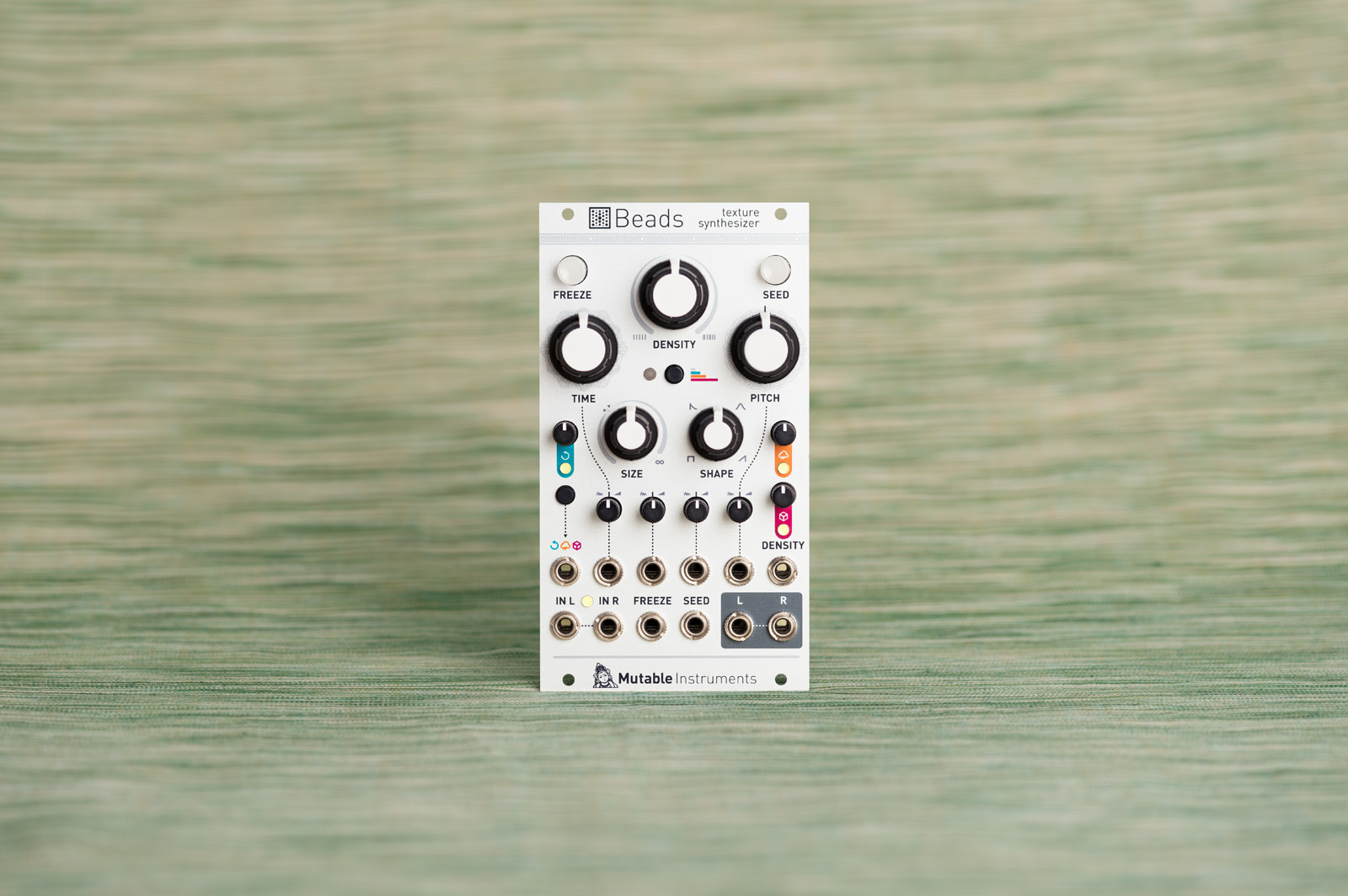
The entire hardware and software ecosystem of Mutable Instruments’ acclaimed Eurorack modules is now fully open source following the quiet repository update of Beads, designer Emilie Gillet’s final and perhaps most refined granular processor. Spotted early this morning on the GitHub account of creator Emilie Gillet (pichenettes), the release of the source code and licensing details marks a definitive chapter for the influential modular synthesizer manufacturer. For years, Beads stood as the sole major omission from the open-source release policy that defined the rest of the Mutable Instruments catalog, leaving DIY builders and software developers without official access to its architecture. With this final code release, the complete historical lineage of Mutable Instruments hardware is now accessible to the global community under open licensing frameworks.
Background and Historical Context of Mutable Instruments
Founded by Emilie Gillet, Mutable Instruments revolutionized the electronic music and Eurorack landscape through its distinct digital synthesis modules, high-density audio processing, and distinctive visual identities crafted in collaboration with designers such as Hannes Pasqualini and Elizabeth Busani of papernoise. Modules like Braids, Plaits, Rings, and Clouds established a new standard for DSP (Digital Signal Processing) in a format traditionally dominated by analog circuits.
Clouds, introduced in 2015, became an industry-standard granular texture synthesizer, inspiring countless ambient and experimental patches across the globe. However, as hardware components evolved and Gillet sought to refine the concept from the ground up, Beads was conceived as a spiritual successor and technical evolution. Released to critical acclaim, Beads offered a broader and crisper sound palette, enhanced playability, direct feature access, and improved polyphony controls, quickly cementing itself as a modern classic in modular synthesis.
The Chronology of the Beads Open-Source Release
The journey toward the open-sourcing of Beads has been a subject of discussion within the modular community for several years. While earlier modules and desktop synthesizers produced by Mutable Instruments were routinely made open source upon or shortly after their commercial lifecycles, Beads remained proprietary. Industry observers and community members frequently speculated on the reasons behind the omission, pointing toward potential proprietary dependencies, code architecture complexities, or personal decisions by the designer following the winding down of active manufacturing operations.
During this period of proprietary status, third-party developers and hardware manufacturers were restricted from creating authorized software emulations or hardware clones of Beads—unlike its predecessor Clouds, which saw widespread software integration via VCV Rack’s Audible Instruments and hardware adaptations by manufacturers like After Later Audio.
The status quo shifted overnight when updates to the pichenettes GitHub repository introduced the complete source files and licensing documentation for the module. This final update bridges the gap, ensuring that the complete hardware design files and software source code are now accessible to the public domain of open-source development.
Licensing Structure and Developer Guidelines
The release of Beads follows the rigorous licensing standards established by Mutable Instruments throughout its operational history. The hardware design files are published under a Creative Commons Attribution-ShareAlike 3.0 (CC BY-SA 3.0) license, while the software components—tailored for the module’s STM32F microcontroller architecture—are released under the permissive MIT license.
These licenses carry explicit operational boundaries. Developers and DIY enthusiasts utilizing the source code or hardware schematics are strictly prohibited from using the commercial trademarks "Mutable Instruments" or "Beads" on newly fabricated units to prevent consumer confusion. Furthermore, any derivative hardware iterations must strictly adhere to the attribution and share-alike requirements of the Creative Commons framework, reinforcing that open-source hardware remains distinct from the public domain.

Beyond functional utility, the codebase itself has drawn praise from software engineers and developers for its meticulous documentation and human-readable formatting. In an era increasingly influenced by automated code generation and assistive artificial intelligence, the Beads repository stands out for its deliberate commenting structure and transparent architecture, reflecting Gillet’s commitment to educational software design.
Implications for the Modular Community and Software Emulation
The immediate implications of this release are substantial for both hardware DIYers and software developers. Modular enthusiasts now possess the blueprints required to construct their own hardware iterations of Beads, subject to licensing compliance. Furthermore, the release paves the way for software developers to create authorized digital emulations, potentially bringing the granular processor to platforms such as VCV Rack through community-driven ports like Audible Instruments.
Beyond the technical accessibility, the release carries profound symbolic weight for the electronic music community. Beads represents the concluding chapter of Mutable Instruments’ commercial output—a swan song that encapsulated years of digital audio research and user-experience design. By opening the source code, Gillet ensures that the intellectual and technical legacy of the module will not remain static, but will instead continue to evolve through community education, modification, and preservation.