Reynand Wu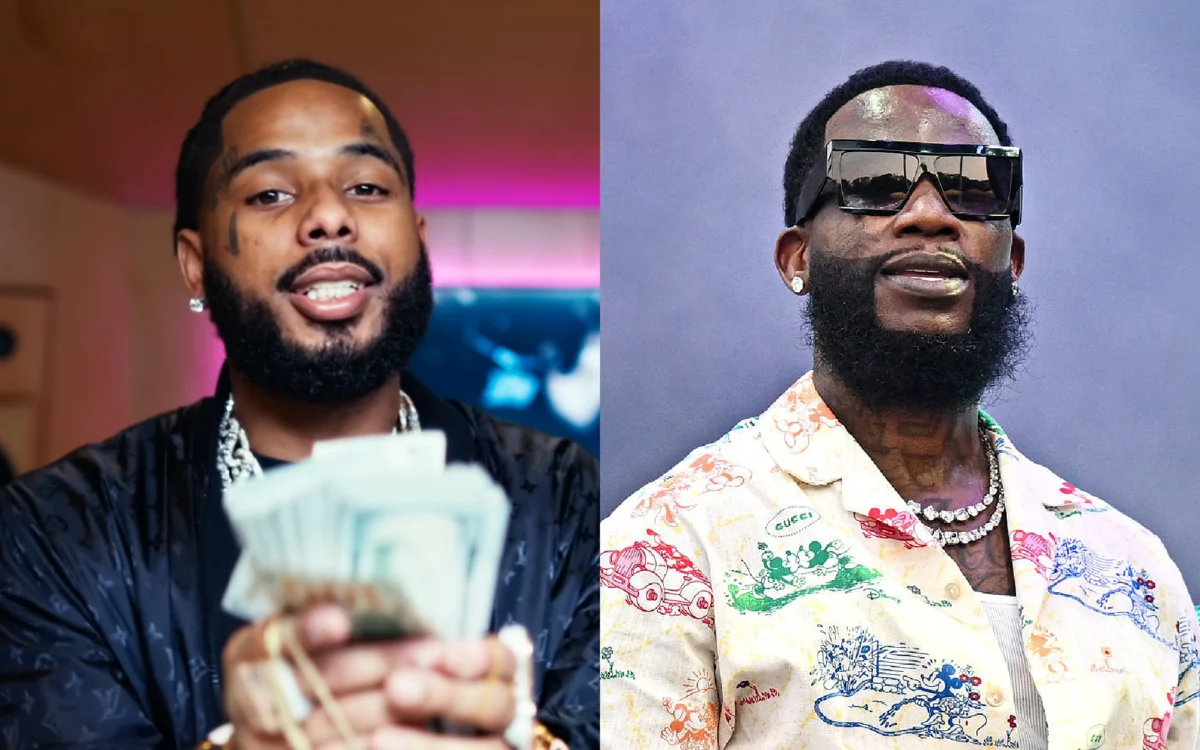
The Memphis-born rapper Lontrell Williams Jr., professionally known as Pooh Shiesty, has been taken into federal custody alongside his father, Lontrell Williams Sr., and fellow artist Big30, following a series of grave allegations stemming from a violent confrontation in Dallas, Texas. The arrests, announced this week by federal authorities, mark a dramatic escalation in a legal saga that has already seen the 1017 Records affiliate navigate significant run-ins with the justice system. The defendants face multiple felony counts, including kidnapping and armed robbery, for an incident that allegedly targeted their own label head, Gucci Mane, and two industry associates earlier this year.
The Alleged Incident: A Coordinated Takeover
According to a detailed criminal complaint filed by the Department of Justice (DOJ), the incident took place on January 10 at a recording studio in Dallas. Investigators allege that Pooh Shiesty orchestrated the meeting under the guise of negotiating a release from his recording contract with 1017 Records. Gucci Mane, along with two other music industry professionals identified in court documents as M.M. and B.P., arrived at the location under the impression that they were engaging in standard business discussions.
The situation turned volatile the moment the victims entered the studio. Federal prosecutors describe the scene as a "coordinated armed takeover." According to the DOJ, Pooh Shiesty brandished an AK-style pistol, using the weapon to coerce Gucci Mane into signing documentation that would terminate his contractual obligations to the label. The intimidation did not stop at the contract; the complaint alleges that Shiesty proceeded to strip the veteran rapper of high-value personal effects, including his wedding ring, a luxury timepiece, earrings, and a significant amount of cash.
The violence extended to the other occupants of the room. Authorities report that Big30 physically barricaded the studio exit to prevent the victims from fleeing while other members of the group brandished their own firearms. The associate identified as M.M. allegedly endured physical assault, including being choked until he neared unconsciousness, as the group systematically relieved the victims of Rolex watches and additional jewelry.
A Timeline of Escalation and Recidivism
The charges arrive at a precarious time for Pooh Shiesty, who had only recently transitioned back into society. In October 2025, the rapper was released from a four-year prison stint related to a firearms conspiracy conviction in Florida. At the time of this January incident, Shiesty was still serving a term of home confinement, a condition of his supervised release that mandated strict adherence to federal law.
The chronology of this case reveals a pattern of behavior that investigators have spent months piecing together. Following the January 10 incident, law enforcement utilized a digital footprint to bridge the gap between the crime scene and the suspects. Forensic evidence, including fingerprint analysis recovered from the studio, was cross-referenced with rental car records that placed the defendants at the scene. Furthermore, the DOJ highlights that social media activity—specifically posts uploaded by the suspects mere hours after the robbery—showed the defendants in possession of items that closely matched the descriptions of the stolen property.
Legal Implications and Federal Charges
The case involves eight defendants currently in custody, with a ninth individual still being sought by authorities. Given the nature of the charges—kidnapping, armed robbery, and firearms-related offenses—the potential for severe sentencing is high. Under federal guidelines, the combination of these offenses carries a maximum penalty of life imprisonment.
The inclusion of Lontrell Williams Sr. adds a layer of complexity to the case, suggesting a level of organization that federal prosecutors often use to build racketeering or conspiracy narratives. Legal analysts suggest that the DOJ’s decision to pursue this case at the federal level indicates a desire to utilize the more stringent mandatory minimums associated with interstate commerce and federal firearm violations, rather than relying on state-level prosecution.
Contextualizing the 1017 Records Environment
The relationship between Pooh Shiesty and Gucci Mane had been one of the most commercially successful pairings in recent southern hip-hop history. Shiesty’s breakout single, "Back in Blood," cemented his status as a marquee artist under the 1017 Records banner. However, the music industry has long grappled with the complexities of label relationships, particularly when artists attempt to navigate their way out of long-term contracts.
While the alleged motive of contract termination is common in civil litigation, the use of armed force to achieve this end represents an extreme departure from standard legal channels. The incident raises broader questions regarding the security protocols of professional recording studios and the increasingly blurred lines between creative management and personal safety in the industry.
The Silence of the Parties
As of this reporting, representatives for Pooh Shiesty, Big30, and Gucci Mane have remained silent. This lack of public statement is standard practice in federal cases of this magnitude, where defense attorneys typically advise clients against making any comments that could be used as evidence in court. Gucci Mane, a figure who has successfully rebranded himself as a mentor and executive within the industry, has yet to issue a statement regarding the trauma of the alleged kidnapping or the state of his label’s operations in the wake of the arrests.
Analysis of Future Impacts
The arrest of a high-profile artist like Pooh Shiesty, especially while under active federal supervision, serves as a stark warning within the entertainment industry. The use of digital evidence—specifically social media posts displaying stolen goods—highlights the increasing efficacy of law enforcement in using open-source intelligence to secure convictions.
Furthermore, this case serves as a critical test for the Department of Justice’s strategy regarding violent crime within the music industry. By charging multiple defendants as a single unit, the government is signaling that they intend to treat the studio robbery as an enterprise-level criminal event rather than an isolated altercation.
As the legal proceedings move forward, the hip-hop community and the legal system will be watching closely. For Pooh Shiesty, the outcome of this case will not only determine his freedom but will likely conclude his career as a recording artist. The complexity of the charges, coupled with his prior record, makes the defense’s task particularly daunting. The case is expected to be a lengthy, high-profile trial that will likely dominate industry headlines for the foreseeable future.
The public is reminded that all individuals named in the federal indictment are presumed innocent until proven guilty in a court of law. As investigators continue to search for the remaining suspect, the focus of the public and the industry remains on the upcoming pre-trial motions, where the defense is expected to challenge the admissibility of the digital evidence that has thus far formed the cornerstone of the prosecution’s case.