Jia Lissa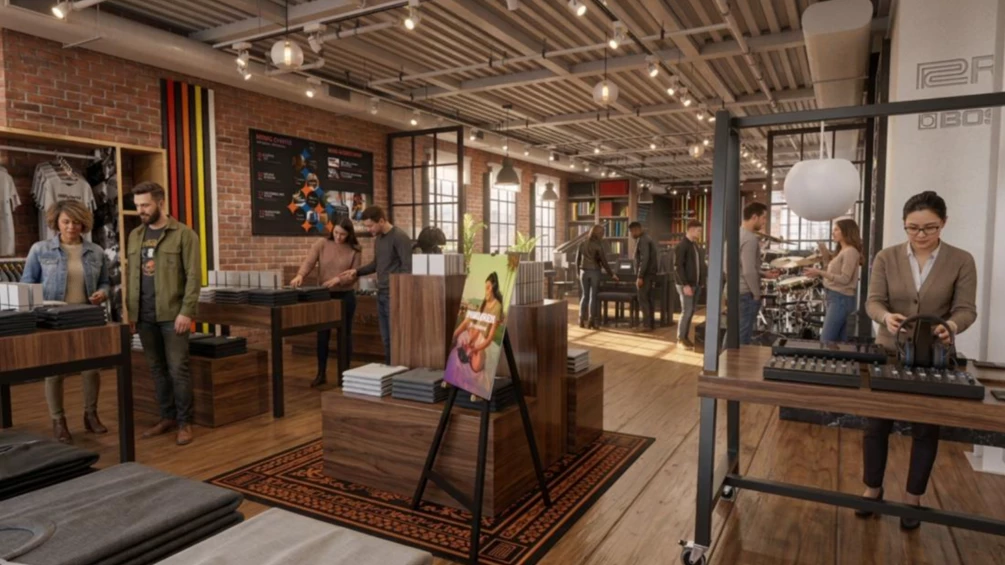
Musical instrument and technology giant Roland has officially confirmed plans to open its first-ever standalone retail establishment in the United States, choosing Manhattan’s vibrant Meatpacking District as the home for a sprawling, highly immersive 9,000-square-foot flagship destination. Scheduled to officially open its doors to the public early next month following an exclusive, invite-only opening ceremony on October 10, the new warehouse-style facility marks a major milestone in the Japanese corporation’s global retail strategy. Located at 414 West 14th Street, the multi-faceted space is designed not merely as a traditional music retail shop, but as a comprehensive community hub, creative incubator, and experiential showroom for musicians, producers, sound designers, and audio enthusiasts of all levels.
The ambitious U.S. debut follows the successful establishment of Roland’s high-profile flagship retail locations in global cultural capitals such as London and Tokyo. By planting its flag in New York City—a metropolis historically renowned as a crucible for groundbreaking musical genres, technological experimentation, and subcultural movements—Roland aims to bridge the gap between hardware manufacturing and end-user creative communities. Staffed entirely by highly trained Roland product experts and specialists, the expansive venue will showcase the absolute cutting edge of audio technology from Roland, alongside products from iconic sister brands BOSS and DW (Drum Workshop), both of which fall under the broader Roland corporate umbrella.
Inside the Meatpacking District Warehouse
Spanning an impressive 9,000 square feet, the architectural layout of the New York flagship has been meticulously engineered to cater to diverse segments of the modern music production landscape. Visitors navigating the vast warehouse space will encounter a series of thoughtfully curated, distinct zones tailored to specific instruments, workflows, and historical legacies.
At the heart of the venue sits the main showroom floor, an expansive area dedicated to the core catalog of Roland innovations. This central zone features an extensive array of electronic and acoustic-electric pianos, cutting-edge electronic drum kits, contemporary guitars, synthesizers, dance and DJ gear, and software integrations tied directly into the Roland Cloud ecosystem. For keyboardists and traditionalists, the destination offers a rare luxury: Roland’s first and only dedicated grand piano showroom, providing an acoustic and digital sanctuary for pianists to test premium instruments in an optimized acoustic environment.
Perhaps recognizing the profound historical impact of its rhythm machines on contemporary music, Roland has also carved out a dedicated, specialized space honoring the iconic TR-808 Rhythm Composer. This legendary piece of hardware revolutionized hip-hop, electronic dance music, and pop production following its release in the early 1980s. The dedicated 808 zone will not only display the hardware in various iterations but will also host specialized educational sessions, collaborative workshops, and historical retrospectives tracing the profound cultural legacy of the machine.
Beyond standard product displays, the physical environment of the store itself acts as a living, breathing technological installation. Roland has integrated its proprietary, immersive AI-powered music system known as Roland Soundscapes. This sophisticated sonic architecture dynamically responds to ambient environmental factors, including human movement throughout the store, MIDI input generated by visitors, the time of day, and even live outdoor weather conditions, ensuring that no two visits to the store sound exactly alike.
Personalized Services and Consumer Engagement
Understanding that high-end music technology requires hands-on exploration and specialized knowledge, the Roland Store in New York City has placed a heavy emphasis on personalized customer service and continuous education. Unlike traditional retail environments where gear is locked behind glass or left uncalibrated, Roland is inviting musicians to thoroughly test equipment via a structured one-on-one appointment system, which can be easily scheduled online prior to a visit.
Furthermore, the location will serve as an educational center by offering regular 30-minute workshops designed to help producers demystify complex gear configurations, sound design techniques, and live performance setups. In a move aimed at fostering long-term brand loyalty and consumer satisfaction, the store will also provide free after-sales training for individuals who purchase Roland, BOSS, or DW gear, ensuring that owners can maximize the full potential of their hardware and software investments.
Corporate Leadership Perspectives
The decision to establish a permanent brick-and-mortar retail presence in the United States reflects a broader commitment by Roland’s executive leadership to deepen direct connections with American musicians and creators at a grassroots level.
Roland Corporation CEO Masahiro Minowa emphasized the profound cultural synergy between the brand’s mission and the host city, stating, "New York has long been a place where new sounds, ideas, and creative movements take shape, making it a natural home for Roland’s US flagship store." Minowa’s comments underscore the company’s historical awareness of how New York producers, DJs, and songwriters have historically adopted Roland instruments—from early analog synthesizers to sampling workstations—to forge entirely new sonic territories.
Echoing these sentiments, Manuele Barbini, CEO of Roland Americas, highlighted the community-oriented vision driving the project. "We’re excited to give musicians, producers, and creators in New York a space where they can explore the latest Roland, BOSS, and DW innovations, connect with our team, and be part of a new creative hub for the city," Barbini noted. By assembling a local team of experts, Roland aims to position the Meatpacking District storefront as a trusted sounding board and collaborative gathering space for visiting international touring artists and local bedroom producers alike.
A Comprehensive Showcase of Brands: Roland, BOSS, and DW
The integration of sister brands BOSS and DW into the New York flagship ensures that the product offering extends far beyond synthesizers and drum machines, covering a vast spectrum of the instrumental ecosystem.
Visitors looking for guitar and bass amplification, stompbox effects, and multi-effects processing will find a comprehensive display of BOSS gear, catering to the needs of modern rock, metal, ambient, and experimental guitarists. Concurrently, the inclusion of SP-series samplers addresses the demands of beatmakers and electronic music producers who rely on portable, rugged hardware for on-the-fly sampling and live performance manipulation.
Furthermore, the incorporation of DW products brings legendary acoustic drum engineering into the mix. Known for their world-class craftsmanship in drum shell construction, hardware, and custom finishes, DW rounds out the percussion section alongside Roland’s industry-leading V-Drums electronic kits, offering a holistic physical and electronic percussion experience under one roof.
Recent Corporate Innovations and Digital Expansion
The launch of the New York flagship store arrives during a particularly active and innovative period for Roland on both the hardware and software fronts. The company has aggressively expanded its digital ecosystem to meet the shifting demands of modern hybrid producers who seamlessly blend hardware instruments with software digital audio workstations (DAWs).
Earlier this year, Roland made waves across the production community by releasing the CR-78 Software Rhythm Composer, a virtual emulation of the legendary hardware unit that famously underpinned classic tracks such as Phil Collins’ "In the Air Tonight" and Blondie’s "Heart of Glass." By meticulously modeling the analog quirks, programming quirks, and sonic warmth of the original 1970s rhythm machine, Roland successfully bridged vintage nostalgia with modern DAW workflows.
More recently, the Japanese technology developer announced the rollout of an advanced AI-assisted melody-generation plug-in titled Melody Flip. Designed specifically to assist producers struggling with writer’s block or looking for fresh harmonic inspiration, the tool leverages artificial intelligence algorithms to spark creative ideas, demonstrating Roland’s forward-looking integration of machine learning into traditional music creation pipelines.
Market Implications and the Future of Music Retail
The opening of a massive, experiential flagship store in one of the world’s most competitive retail markets signals a calculated evolution in how musical instrument manufacturers approach consumer engagement in the digital age. While e-commerce platforms and online marketplaces continue to dominate global sales volume, companies within the high-end audio sector increasingly recognize the irreplaceable value of physical touchpoints.
By transforming retail space into an immersive cultural venue, Roland is positioning its brand not just as a hardware vendor, but as an experiential destination. In an era where musicians often consume gear reviews digitally through video platforms and social media, a physical storefront equipped with Roland Soundscapes AI architecture, grand piano showrooms, and expert-led workshops offers a tangible sensory advantage that online shopping simply cannot replicate.
Moreover, anchoring the store in Manhattan’s Meatpacking District places Roland at the intersection of fashion, technology, art, and commerce, expanding the demographic reach of the brand beyond traditional musicians to include multimedia artists, fashion show producers, film scorers, and digital creators.
As the countdown to the invite-only opening ceremony on October 10 continues, anticipation within the local and national music community is palpable. With its robust blend of historical hardware reverence, cutting-edge AI integration, educational programming, and top-tier customer service, the Roland New York flagship store is poised to redefine the standard for musical instrument retail in the United States, cementing the brand’s enduring legacy in the evolution of modern sound.